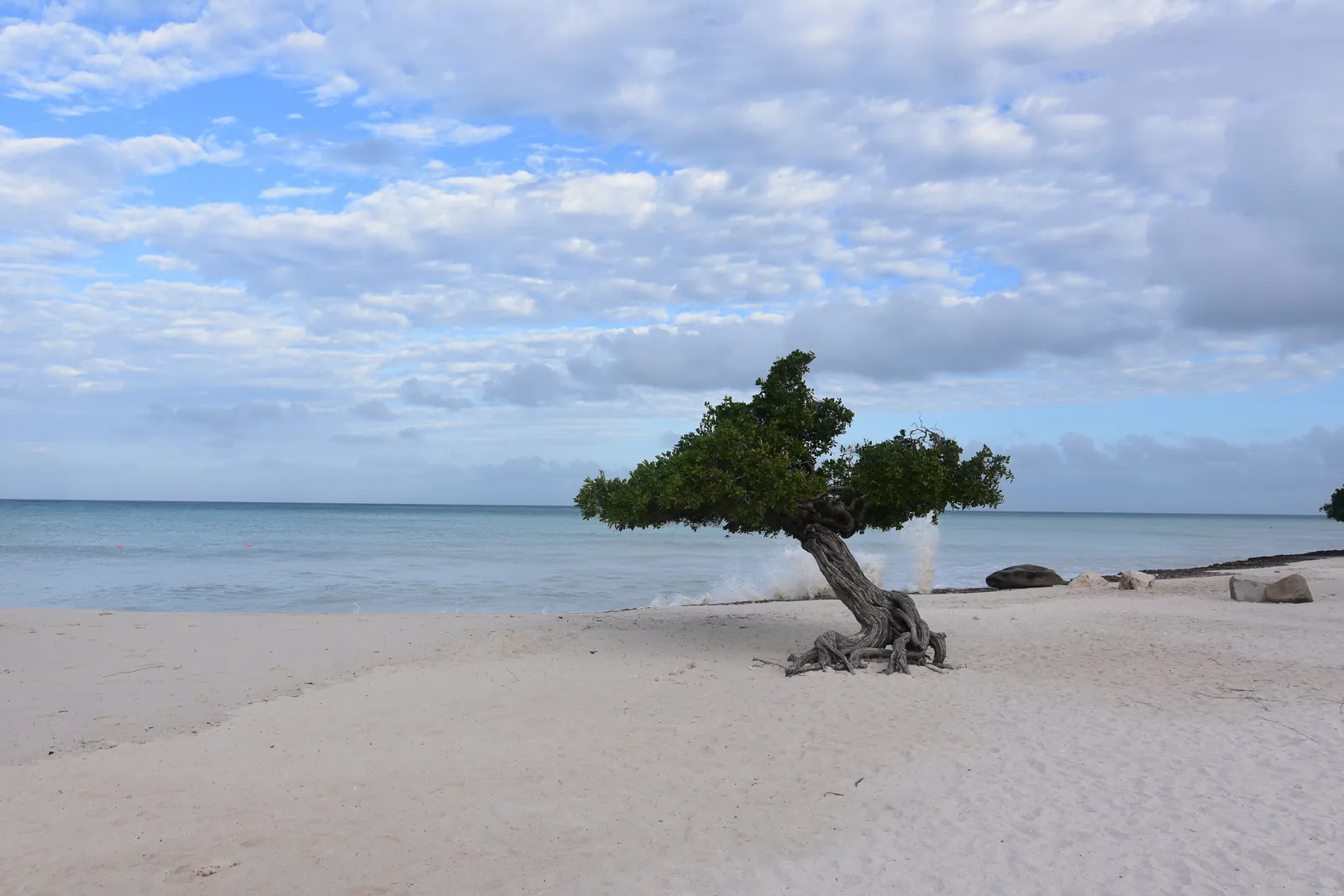
Short answer: The top places to visit in Aruba are Eagle Beach, Palm Beach, Arikok National Park and its Natural Pool, Oranjestad, Baby Beach and the murals of San Nicolas, the California Lighthouse and Arashi Beach, the Casibari and Ayo rock formations, Alto Vista Chapel and the north coast, Mangel Halto, and the Antilla shipwreck. Aruba is small, so four days covers the highlights and a week lets you see the whole island at an easy pace.
Aruba is only about 20 miles (32 km) long, but it packs in more variety than its size suggests: a calm west coast of white sand and turquoise water, a dry, cactus-covered interior of giant boulders and old chapels, and a wild, wave-battered north coast inside a national park. This list is ordered the way we would recommend the places for a first visit. For each one you get why it made the list, when to go, what not to miss, how to get there and how long to stay, and a practical note.
The weather is sunny and breezy all year, with afternoon highs of about 87–92°F (30–33°C), so there is no bad month. February to May is the driest time, and from late April to mid-December prices are lower. Our best time to visit Aruba guide explains it month by month.
1. Eagle Beach
Why it made the list: this is the Aruba of the postcards: a very wide strip of fine white sand, gently sloping turquoise water and the twisted fofoti trees, shaped by the trade winds, that photographers line up for at sunrise. It is public, uncrowded for its size, and backed by smaller, low-rise hotels.
Best time to go: any month. For space and quiet, come between late April and mid-December; in winter, arrive early to claim a shade hut.
Don’t miss: sunrise at the fofoti trees, then a lazy morning in the calm water.
Getting there and how long: it is a few minutes north of Oranjestad, with free parking along the road, and Arubus buses run along the hotel strip. Plan at least one full beach day; many visitors base themselves here.
Practical note: the fofoti trees are fragile: photograph them, but please don’t sit or climb on them. From about March to December, sea turtles nest on the beach, and nests are marked and should be left alone. See our Aruba travel guide.
2. Palm Beach
Why it made the list: Aruba’s liveliest stretch, with calm, clear water, high-rise resorts, piers with bars and a promenade of restaurants and shops. It is the place for water sports and boat trips.
Best time to go: all year. Catamaran and snorkel trips run in every season, with the smoothest sailing from September to November, when the wind eases.
Don’t miss: a catamaran sunset cruise from one of the piers, often with a snorkel stop on the way.
Getting there and how long: taxis from the airport charge fixed fares, and the main Arubus routes run along the strip. Stay here if you want restaurants and nightlife on your doorstep.
Practical note: all of Aruba’s beaches are public by law, even in front of resorts, though the sunbeds belong to the hotels. Stay inside the buoyed swimming zones, as water-sports boats operate close to shore. See our Aruba travel guide.
3. Arikok National Park and the Natural Pool
Why it made the list: a large part of eastern Aruba is protected in this rugged park of cactus-covered hills, caves, old farmsteads and a coastline of crashing surf. It shows a completely different Aruba from the resort beaches.
Best time to go: December to March for slightly cooler afternoons; in any month, start before 9 a.m. The Natural Pool is only safe on calm days.
Don’t miss: the Natural Pool, or Conchi, a pool of calm water enclosed by volcanic rock on the north coast, and Quadirikiri Cave, where sunlight streams through holes in the roof.
Getting there and how long: the main entrance is near Santa Cruz. The track to the Natural Pool is very rough, so go by 4×4 or on a guided jeep or UTV tour; fit hikers can walk it in about three to four hours round trip. Allow a full day, or two half days.
Practical note: the park charges an entrance fee for adults, paid at the entrance. Never swim at the Natural Pool when waves are breaking over the rocks, and follow the rangers’ advice. Carry plenty of water: there is little shade. See our Aruba travel guide.
4. Oranjestad
Why it made the list: Aruba’s small, walkable capital is painted in pastel colors and has the island’s history, from the Caquetío, its first people, to Dutch rule. It is the best place for an afternoon out of the sun.
Best time to go: any time, but avoid cruise-ship days, mainly in winter, when the shops and nearby beaches fill up. On Tuesday evenings, the Bon Bini Festival at Fort Zoutman offers local music, dance and food.
Don’t miss: Fort Zoutman, the island’s oldest building, with the Willem III Tower beside it, and the National Archaeological Museum Aruba.
Getting there and how long: the airport is just southeast of town and the main bus station is in the center. Half a day to a day.
Practical note: the US dollar is accepted almost everywhere, but change often comes in Aruban florins, fixed at about 1.79 to the dollar. See our Aruba travel guide.
5. Baby Beach and San Nicolas
Why it made the list: at the island’s southern tip, Baby Beach wraps around a shallow, calm lagoon that is ideal for children and easy snorkeling. Nearby San Nicolas, Aruba’s second town, has reinvented itself with a street gallery of murals painted on dozens of buildings by local and international artists.
Best time to go: the lagoon is calm in every season. San Nicolas holds its own Carnival parade in February.
Don’t miss: a mural walk through San Nicolas in the morning, then an afternoon in the water at Baby Beach, with quieter Rodger’s Beach next door.
Getting there and how long: drive down the south coast, or take the Arubus buses to San Nicolas and Baby Beach. Make it a day trip.
Practical note: stay inside the protected lagoon at Baby Beach: currents beyond its mouth are strong. See our Aruba travel guide.
6. The California Lighthouse and Arashi Beach
Why it made the list: the island’s northwest tip combines a landmark lighthouse above the sand dunes, named after a ship wrecked offshore, with some of the easiest snorkeling on the island at Arashi Beach and Boca Catalina.
Best time to go: all year; the water is calmest from September to November. Come back for sunset, which is excellent from the hill.
Don’t miss: a morning snorkel at Boca Catalina or Arashi, then the view from the lighthouse over the dunes.
Getting there and how long: a short drive north of Palm Beach, and Arubus buses go as far as Arashi. Half a day.
Practical note: arrive early at the lighthouse to beat the tour buses, and wear water shoes for the rocky entry at Boca Catalina. See our Aruba travel guide.
7. The Casibari and Ayo rock formations
Why it made the list: giant boulders rising out of the dry interior, with paths and steps that lead to 360-degree views across the island. The site at Ayo was sacred to Aruba’s first inhabitants and still has ancient rock drawings.
Best time to go: any month, early in the morning or late in the afternoon, when the rocks are cooler.
Don’t miss: the short climb to the top of Casibari for the view, and the rock drawings at Ayo.
Getting there and how long: Casibari is just off the main road to Santa Cruz, and Ayo is a few minutes away. An hour or two for both; combine them with the north coast.
Practical note: you need a car or a tour to reach them. Wear shoes with grip, as some passages between the boulders are narrow and steep. See our Aruba travel guide.
8. Alto Vista Chapel and the north coast
Why it made the list: the small yellow Alto Vista Chapel stands on a quiet hill near the north coast, a reconstruction of the church built in 1750 as the island’s first Catholic church. Nearby, the north coast is wild and dramatic, with the ruins of the Bushiribana gold smelter right by the sea.
Best time to go: any month. The waves are often biggest from about May to July, when the trade winds peak.
Don’t miss: the peace labyrinth behind the chapel, and the Bushiribana ruins and the remains of the Natural Bridge, a coral arch that has collapsed.
Getting there and how long: drive or join an island tour. Half a day, combined with the rock formations.
Practical note: enjoy the north coast from the shore: its waves and currents are powerful and it is not safe for swimming. See our Aruba travel guide.
9. Mangel Halto and Savaneta
Why it made the list: named for its mangroves, Mangel Halto is a calm bay of shallow, clear water on the southwest coast, with some of the island’s best shore snorkeling. Savaneta, next door, is the island’s oldest settlement and the place for a seafood lunch by the water.
Best time to go: September to November for the calmest, clearest water, though it is good on calm days all year.
Don’t miss: a snorkel along the edge of the reef, or a kayak trip through the mangroves, followed by fresh fish in Savaneta.
Getting there and how long: it is on the road between Oranjestad and San Nicolas, so you can combine it with Baby Beach. Half a day.
Practical note: strong currents run beyond the protected bay, so snorkel inside it unless you are with a guide, and watch for sea urchins near the rocks. See our Aruba travel guide.
10. The Antilla shipwreck
Why it made the list: the SS Antilla, a World War II wreck off the west coast, is the island’s most famous snorkeling and diving site.
Best time to go: September to November, when the wind drops and sea conditions are usually at their best.
Don’t miss: a snorkel or dive trip that stops at the wreck and nearby reefs.
Getting there and how long: boat trips leave from the Palm Beach piers. Half a day.
Practical note: use reef-friendly sunscreen and don’t touch the coral or the wreck. See our Aruba travel guide.
How to fit them into one trip
With four days, base yourself on Eagle Beach or Palm Beach. Day one is for the beach and sunset; day two for Boca Catalina, Arashi and the California Lighthouse, then Alto Vista Chapel and the rock formations; day three for a jeep tour through Arikok to the Natural Pool; and day four for Oranjestad and a sunset cruise.
With a week, add San Nicolas and Baby Beach, Mangel Halto with lunch in Savaneta, and the Antilla wreck, and keep at least two days with nothing planned except the beach. With ten days, add a few days on Curaçao or Bonaire, linked by short flights.
Our AI trip planner builds the day-by-day plan for your dates, travelers and budget from our Aruba guide. Check the seasons in our best time to visit Aruba guide, and work out restaurant and tour tips with our tip calculator.
Frequently asked questions
What is the most beautiful place in Aruba?
Eagle Beach, with its wide white sand, turquoise water and fofoti trees, is the island’s signature view. The Natural Pool in Arikok National Park is the most dramatic.
How many days do you need in Aruba?
Four days covers the main beaches and Arikok. A week lets you see the whole island and relax, and ten days lets you add Curaçao or Bonaire.
What is the best part of Aruba for first-time visitors?
Palm Beach for restaurants, water sports and nightlife, or Eagle Beach for more space and a quieter feel. Both are close to Oranjestad and well served by buses.
Do I need a car in Aruba?
Not if you stay on the west coast: Arubus buses run along the hotel strip and down to San Nicolas and Baby Beach, with a day pass costing US$15. A car for a day or two helps you reach the rock formations and the north coast, and a 4×4 tour is the easiest way to the Natural Pool.
What do I need before I fly to Aruba?
A passport valid for your whole stay, and the free online ED card, which every visitor must complete on the official portal within seven days before arrival. Visitors aged 8 and over who arrive by air also pay a US$20 Sustainability Fee with the ED card, once per 365 days.