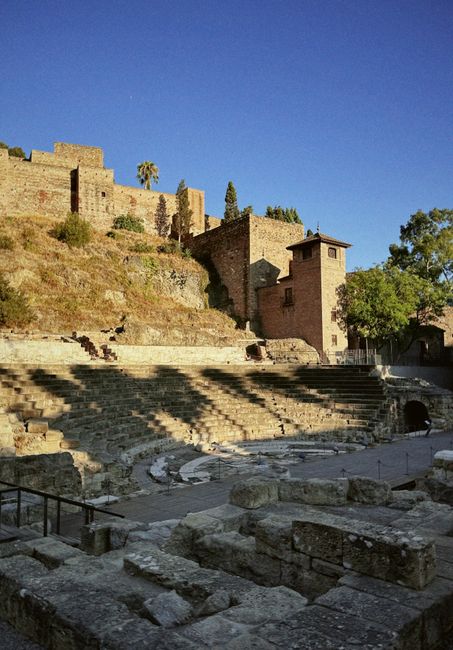
The Alcazaba of Málaga is the Moorish palace-fortress that climbs the hillside above the port, with layered walls, zigzag gateways and small palace courtyards of arches, pools and fountains. Gibralfaro Castle crowns the hill above it. The Alcazaba costs €7 and a combined ticket with Gibralfaro €10, and both are free for everyone on Sundays from 14:00 (as of October 2026). It opens daily, 9:00–20:00 until 31 October. Allow 1–1.5 hours, or half a day with the castle.
Right now in Alcazaba of Málaga
- Thu16–26°C61–78°FMostly clear
- Fri17–24°C62–75°F1 mm rain
- Sat19–23°C65–73°F3 mm rain
- Mon 12 Oct National Day of Spain (Fiesta Nacional de España)
Tickets and tours for Alcazaba of Málaga
See all tours for Alcazaba of Málaga →
From local operators, with prices and reviews; you check availability and book on Viator, our partner. We may earn a commission at no extra cost to you. How we earn money
Why the Alcazaba matters
The hill has been occupied for a very long time: Phoenician settlers lived on its slopes by about 600 BC, and the Romans built the theatre at its foot in the 1st century. A fortress already stood here under the first Umayyad emir in the 8th century, but the Alcazaba you see is mostly the work of the 11th century. From 1014 the Hammudid rulers of Málaga began the walls and the first palace; after Badis, the Zirid king of Granada, took the city in 1056, he gave it a double wall and most of the entrance fortifications, including the bent gate of the Puerta de la Bóveda. The Nasrids strengthened it again in the 14th century, when the Torre del Homenaje took its present form.
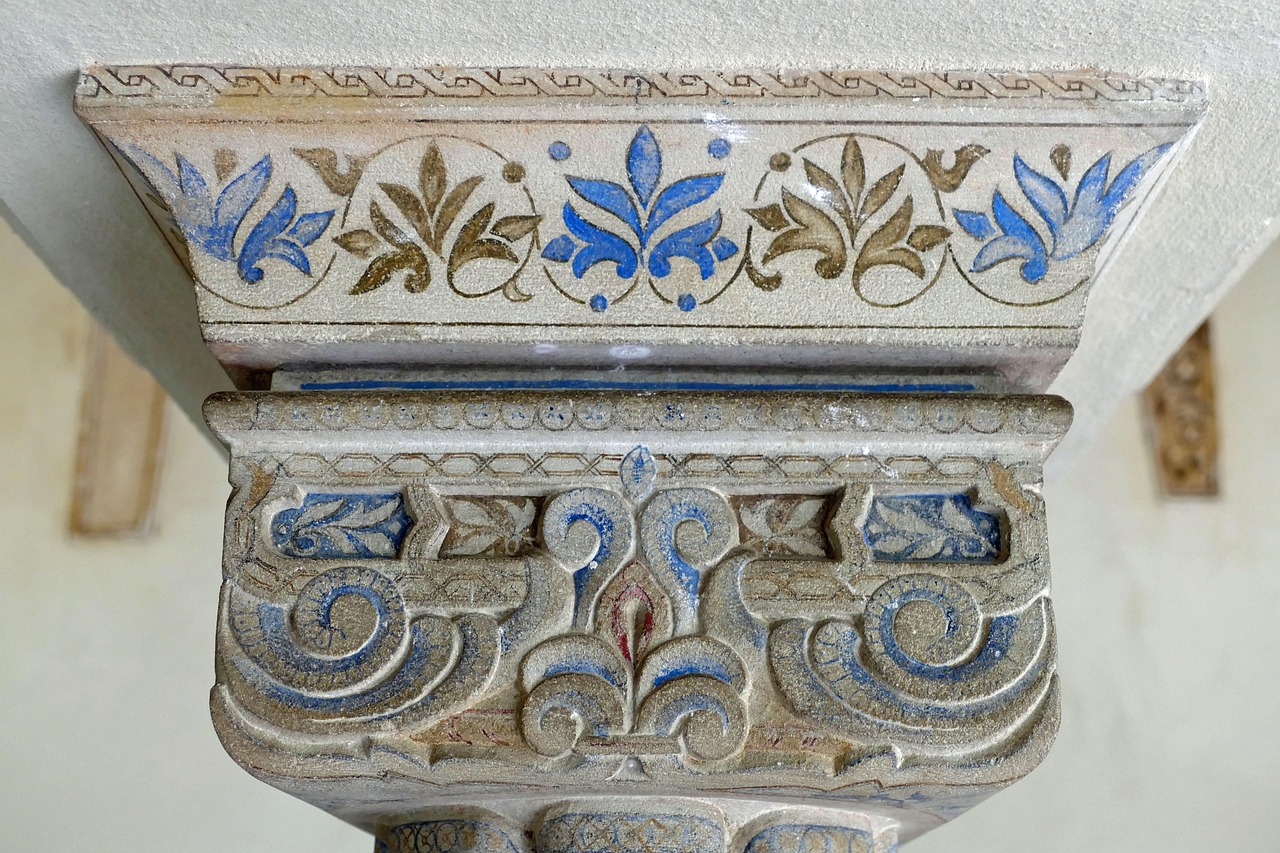
The palace was the seat of the city’s rulers until the Christian conquest of 1487. Centuries later, by the early 1900s, the upper fortress had become a poor neighbourhood with no running water. It was declared a national monument on 3 June 1931, and restoration began in 1934 under Leopoldo Torres Balbás, the architect then in charge of the Alhambra, driven locally by the historian Juan Temboury. As they removed later walls, they found carved arches, painted plaster and the remains of the 11th-century Taifa palace.
What you’ll see
- The entrance fortifications: a steep path squeezed between walls, towers and a series of defensive gates that turn at right angles, designed to slow attackers. At the bottom, the Torre Albarrana juts towards the city, its corners built with large blocks taken from the Roman theatre.
- The Plaza de Armas: a terrace with gardens and views over the port.
- The Nasrid palace and the Cuartos de Granada: courtyards with pools and fountains, a triple arch with a decorative frame from the 11th-century palace and carved plaster uncovered during the restoration.
- The residential quarter: the excavated remains of courtiers’ houses, with a bath and a cistern, for about 50 people.
- Gibralfaro Castle: above the Alcazaba, linked to it by a walled corridor (the coracha). Walk the ramparts for the widest view over the bay, the bullring and the city, and see the small interpretation centre.
Tickets and how to visit
From the official Alcazaba and Gibralfaro website (Ayuntamiento de Málaga), as of October 2026:
- Hours: daily 9:00–20:00 from 1 April to 31 October (last entry 19:00); 9:00–18:00 from 1 November to 31 March (last entry 17:00).
- Prices: Alcazaba €7; combined Alcazaba and Gibralfaro €10; groups of 10 or more €5 each. Reduced €3 (combined €5) for EU over-65s, students, European Youth Card holders, unemployed EU citizens, people with a disability of 33% or more and large families.
- Free: everyone on Sundays from 14:00; children under 6.
- Where to buy: online through the official ticket site, or on site at the entrance. Many guides still quote the older €3.50/€5.50 prices.
- Entrances: the main entrance is on Calle Alcazabilla, beside the Roman Theatre. Gibralfaro has its own entrance at the top of the hill; the combined ticket lets you visit both.
How long to allow and when to go
Plan 1–1.5 hours for the Alcazaba and another hour for Gibralfaro. Go at 9:00 opening, before the heat and the cruise-ship groups, or come on Sunday afternoon for free entry, when it is busier. The walk up from the Alcazaba to Gibralfaro is steep and has little shade: do it in the morning, or take the bus up and walk down.
Accessibility
The Alcazaba is built on a steep hillside, with slopes, steps and uneven cobbles throughout. Since May 2025 a new lift, inside a tunnel of more than 50 metres from Calle Guillén Sotelo (behind the city hall), rises 40 metres to the palace area at the top. It suits wheelchair users and pushchairs, and you buy your ticket from machines at the tunnel entrance. The entrance fortifications and Gibralfaro’s ramparts remain difficult. Visitors with a disability of 33% or more pay the reduced price.
Getting there
The Alcazaba is in the centre, a few minutes’ walk from the cathedral, Plaza de la Merced and La Malagueta beach. From the María Zambrano station, the C1 train to Centro-Alameda and a 15-minute walk is the easiest way in. For Gibralfaro, EMT city bus 35 climbs to the castle; a single fare is €1.40 (as of October 2026).
Combine it with
The Roman Theatre is directly below the entrance, and the Picasso Museum Málaga is about 200 metres away. A good morning: the Alcazaba at opening, the theatre, then the museum. Finish the day with a swim at La Malagueta, a few minutes east; see our beaches guide and our Málaga travel guide. For the bigger Nasrid palace that this one resembles, see the Alhambra.
Alcazaba of Málaga FAQ
How much does the Alcazaba cost?
€7 for the Alcazaba, or €10 for a combined ticket with Gibralfaro Castle, as of October 2026. Reduced tickets are €3 and €5, and children under 6 go free.
When is the Alcazaba free?
Every Sunday from 14:00 until closing, for everyone. Expect more people then.
Is the Alcazaba the same as Gibralfaro Castle?
No. The Alcazaba is the palace-fortress lower on the hill; Gibralfaro is the castle at the top. They are linked by a walled corridor and share a combined ticket.
Is there a lift to the Alcazaba?
Yes. A lift from Calle Guillén Sotelo, behind the city hall, opened in May 2025 and rises 40 metres to the palace area. Buy your ticket from the machines at the tunnel entrance.
How do I get up to Gibralfaro?
Walk up the path from the Alcazaba area (steep and sunny, about 20–30 minutes), or take EMT bus 35 to the top and walk down.
How long does it take to visit the Alcazaba?
About 1–1.5 hours on its own, or half a day with Gibralfaro and the Roman Theatre.