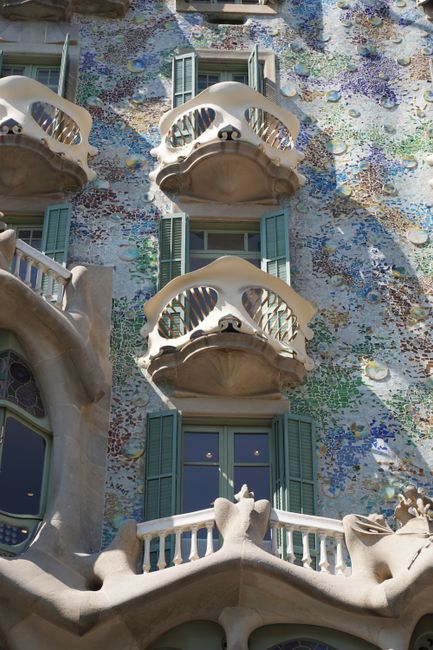
Casa Batlló is the apartment building at Passeig de Gràcia 43 that Antoni Gaudí transformed between 1904 and 1906 for the Batlló family, with a façade of bone-like columns and a roof like a dragon’s back. The general visit costs from €29 online (as of October 2026), with prices that rise closer to the date, and children up to 12 go free. It is open every day, with daytime entries from 9:00 to 19:45. The visit takes about 1 hour 15 minutes. Note that the cheapest ticket does not include the rooftop.
Right now in Casa Batlló
- Wed17–23°C63–74°F3 mm rain
- Thu17–21°C62–69°F5 mm rain
- Fri11–17°C52–63°FClear
- Mon 12 Oct National Day of Spain (Fiesta Nacional de España)
Tickets and tours for Casa Batlló
See all tours for Casa Batlló →
From local operators, with prices and reviews; you check availability and book on Viator, our partner. We may earn a commission at no extra cost to you. How we earn money
Why Casa Batlló matters
The building went up in 1877, designed by Emili Sala Cortés, one of Gaudí’s architecture teachers. In 1903 it was bought by Josep Batlló i Casanovas, a textile industrialist, who first planned to knock it down. Gaudí persuaded him to renovate instead, and with a free hand he rebuilt the façade, rearranged the floors, widened the central light well and turned every room into a piece of design.
The result is one of the most imaginative buildings of Barcelona’s modernisme. Locals nicknamed it the “House of Bones” for its skeletal columns, and the balconies look like masks. The whole house can be read as the legend of Sant Jordi (Saint George), Catalonia’s patron saint: the roof is the dragon’s scaly back, and the tower with its cross is the saint’s lance. The Bernat family took over the house in 1993 and began restoring it, and it has been on the UNESCO World Heritage list since 2005 as one of the Works of Antoni Gaudí.
What you’ll see
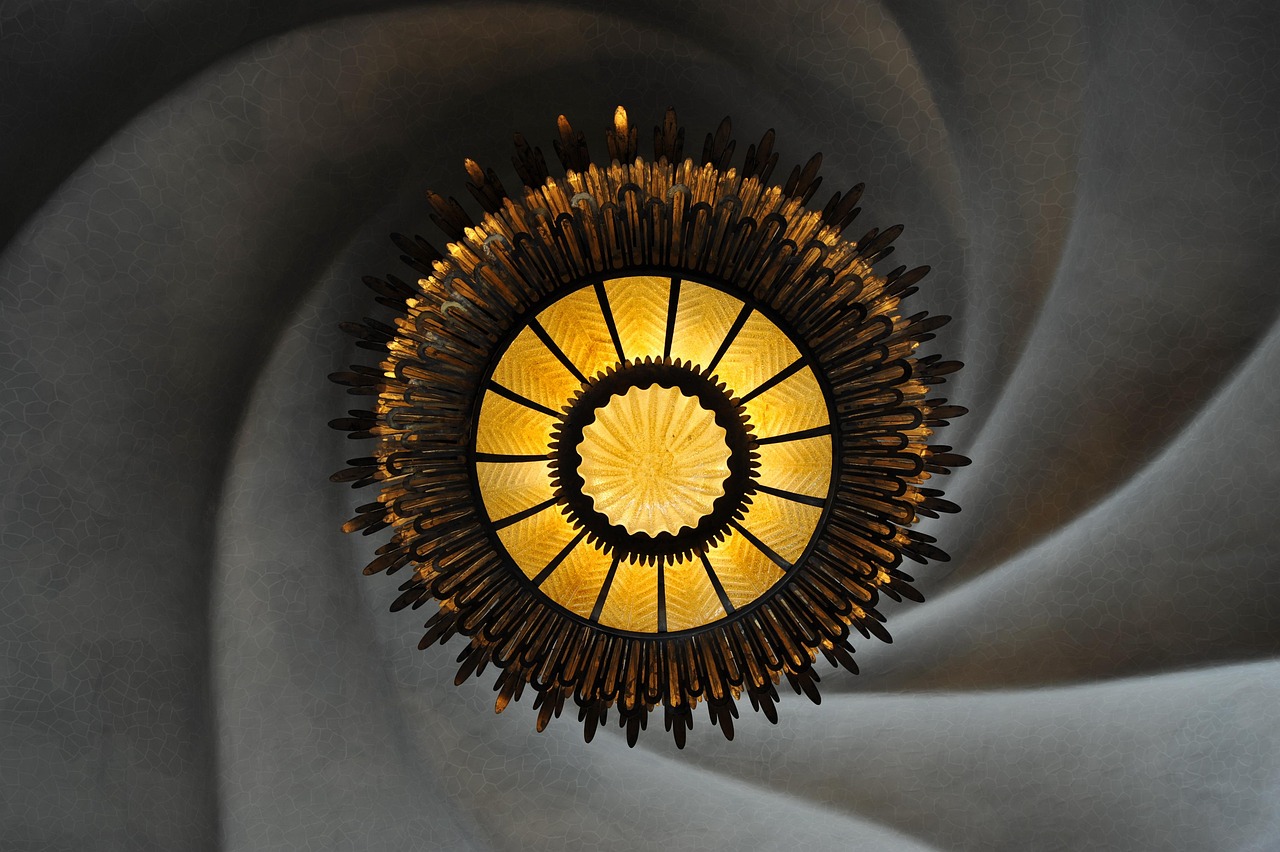
The route starts on the main floor (the Batllós’ former home), where the curving ceilings, doors and windows have hardly a straight line. You see the light well tiled in shades of blue, the restored rear façade and courtyard, returned to how they looked in 1906, and the white attic with its catenary arches, described as the inside of the dragon’s belly. The Gaudí Cube is a 360-degree immersive room with digital art by Refik Anadol, and the new staircase and atrium were designed by the Japanese architect Kengo Kuma.
The rooftop, with the scaly dragon roof and mosaic chimneys, is included only from the Silver ticket up. Gold and Platinum tickets add an augmented-reality tablet, the restored concierge room and the furnished private residence of the Batlló family on the first floor.
Tickets and how to visit
From the official Casa Batlló website, as of October 2026:
- General visit: from €29 online. Prices are dynamic, and booking ahead saves up to €15 per person. Free for children 0–12; €6 off for ages 13–17 and for documented disability; €3–6 off for students and over-65s.
- Night visit: from €25, entries 20:30–21:30, with a drink but without the rooftop.
- Be the First: €45, entry 8:30–8:45, before the crowds; good for photos.
- Box office: sells only general-visit tickets, at €4–15 more than online.
- Timed entry: you have 15 minutes from your chosen time to enter. Only Platinum tickets can be changed freely; other changes need proof, such as a medical certificate or a transport delay.
- Rules: photos for personal use are fine, but no tripods. There are no lockers, so leave luggage at your hotel. Pushchairs can’t go round (they are stored, and baby carriers are lent).
How long to allow and when to go
Plan about 1 hour 15 minutes, or longer on the higher tiers. Mornings and the middle of the day are busiest; the house itself recommends 16:00–19:00 for a more comfortable visit. The Be the First slot and the night visit are the quietest options.
Accessibility
Casa Batlló is fully accessible to wheelchair users, including the new rooms and the roof terrace, thanks to two lifts with priority for visitors with disabilities, reduced mobility or pregnancy. Visitors with hearing loss can use tablets with subtitles in 15 languages or the written text of the audio guide.
Getting there
Passeig de Gràcia station, on metro lines L3 and L4 and on the Rodalies R2 Nord and R2 Sud lines, is a few steps away. Plaça de Catalunya (L1) and Diagonal (L5) are about 10 minutes’ walk. Buses 7, 22, 24, V15 and H10 run along or across the avenue. The house stands next to Casa Amatller and close to Casa Lleó Morera, so look up as you walk.
Combine it with
Casa Milà (La Pedrera) is only 500 metres up Passeig de Gràcia, and the Sagrada Família is about 1.5 km away. Doing all three in one day is possible but tiring; many people pick one house. See our Barcelona travel guide and our city sightseeing guide to plan the rest of the day.
Casa Batlló FAQ
How much are Casa Batlló tickets?
As of October 2026, the general visit is from €29 online, with prices that rise closer to the date. Children up to 12 go free. Night visits start at €25, and tickets at the box office cost €4–15 more.
Is the rooftop included in the ticket?
Not on the cheapest tier. According to the official site, the rooftop is included from the Silver ticket upwards; the basic general visit and the night visit leave it out.
Can I buy tickets at the door?
Yes, but only for the general visit, and it costs more than online. Booking ahead also guarantees your time.
Casa Batlló or La Pedrera?
Choose Casa Batlló for the interiors and the immersive rooms, and La Pedrera for its famous rooftop of chimneys. Both are on Passeig de Gràcia, 500 metres apart.
Is Casa Batlló wheelchair accessible?
Yes. Two lifts serve the whole house, including the roof terrace. Pushchairs can’t go round, but they can be left at the entrance.
How long does the visit take?
About 1 hour 15 minutes for the general visit.