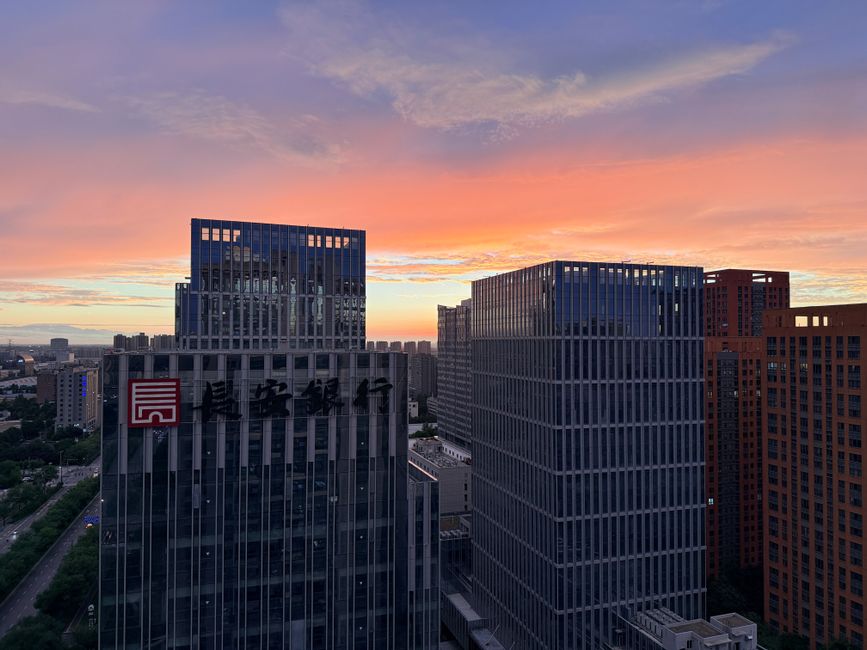
Xi’an, the capital of Shaanxi province on the plain of the Wei River, was for more than a thousand years the capital of China, under 13 dynasties, and the eastern starting point of the Silk Road. As Chang’an under the Tang dynasty (618–907), it was one of the largest and most cosmopolitan cities on Earth, trading with Persia, India and Central Asia. Its most famous treasure lies 40 km (25 miles) to the east: the Terracotta Army, thousands of life-size clay soldiers buried around 210 BC to guard the tomb of Qin Shi Huang, China’s first emperor, discovered by farmers digging a well in 1974. In the city itself, you can cycle around the top of the complete Ming city wall, climb the Big Wild Goose Pagoda, explore the treasures of the Shaanxi History Museum, and eat your way through the lanes of the Muslim Quarter, home to the Hui community, famous for noodles, flatbreads and lamb. High-speed trains reach Beijing in about 4.5–6 hours and Chengdu in about 3–4, and the granite peaks of Mount Hua are an easy day trip. The Terracotta Army museum sells tickets only by real-name online booking. The best months are April, May, September and October.
Right now in Xi'an
- Thu12–24°C54–74°FClear
- Fri14–24°C57–75°FMostly clear
- Sat17–25°C62–76°FPartly cloudy
Top tours in Xi'an
See all tours for Xi'an →
From local operators, with prices and reviews; you check availability and book on Viator, our partner. We may earn a commission at no extra cost to you. How we earn money
Xi’an at a glance
- Best for: the Terracotta Army, imperial history, the city wall, Buddhist pagodas, museums, Muslim Quarter food and Mount Hua.
- How long: 2–3 days, or 4 with Mount Hua.
- Best time: April to May and September to October; July and August are hot, and December to February cold and sometimes smoggy.
- Getting there: by high-speed train to Xi’an North from Beijing, Shanghai, Chengdu and Luoyang, or by air to Xi’an Xianyang (XIY).
- Getting around: by metro and taxi in the city; by tourist bus, metro and bus, or taxi to the Terracotta Army.
- Good to know: book the Terracotta Army and the Shaanxi History Museum in advance with your passport.
- Before you go: visa-free entry, the 240-hour transit, the arrival card, payments and general safety are in our China travel guide.
Xi’an’s areas and where to stay
The heart of Xi’an is the rectangle enclosed by the city wall, about 14 km (8.5 miles) around, with the Bell Tower at its center, where the four main streets meet. Most sights are inside or just south of the wall.
Inside the city wall
The most convenient base: hotels around the Bell and Drum Towers are a few minutes’ walk from the Muslim Quarter, the wall and two metro lines, with everything from hostels in old courtyards to international hotels. The area around the South Gate (Yongning Gate) and the Forest of Stone Steles is quieter, with traditional streets of calligraphy shops.
Qujiang and the Big Wild Goose Pagoda
South of the wall, the Qujiang district around the Big Wild Goose Pagoda has modern hotels, the Datang Everbright City pedestrian avenue, Tang Paradise and the Shaanxi History Museum nearby; it is liveliest in the evening.
Near Xi’an North station
Business hotels around the high-speed station, in the north of the city, are convenient for early trains but far from the sights.
Lintong
Near the Terracotta Army and the Huaqing Palace, about 40 km (25 miles) east, a few hotels serve visitors who want to be at the museum at opening time.
Where to stay in Xi’an
- Bell and Drum Towers: the most central, close to the Muslim Quarter and the metro.
- South Gate: quieter, near the wall and the Forest of Stone Steles.
- Qujiang: modern hotels near the pagoda and evening shows.
- Lintong: near the Terracotta Army and Huaqing Palace.
Rooms fill during the May Day and National Day holidays and in summer.
Top things to see in Xi’an
The Terracotta Army
The Emperor Qinshihuang’s Mausoleum Site Museum consists of two parts, linked by a free shuttle bus: the Museum of the Terracotta Warriors and Horses and the Lishan Garden, the archaeological park around the emperor’s tomb mound. Pit 1, a vast hangar of about 14,260 m² (153,500 sq ft), holds the famous rows of infantry: about 6,000 figures and horses are thought to lie in this pit alone, of which more than 500 warriors, 24 horses and wooden chariots have been excavated. Each soldier has a different face, hairstyle and armor. Pit 2 holds cavalry, archers and chariots, with a display of a kneeling archer and other figures in glass cases; Pit 3 is the command post. The exhibition hall displays the two magnificent bronze chariots found near the tomb. According to the museum, the ticket costs 120 yuan, valid for one day for both sites, and all visitors, including foreigners, must book online in advance with real names, through the museum’s official website or WeChat accounts, using passport details; entry is by timed slot, and you show the same passport at the gate. Daily visitors are capped at 65,000. Entry runs from 8:30 to 17:00 from mid-March to mid-November and to 16:30 in winter. Allow about 1.5 hours for each site, or half a day in total. Official guides are available at the museum; ignore touts selling tickets or tours outside.
The city wall
Xi’an’s city wall, built in the 14th century on Tang foundations, is the most complete surviving city wall in China: 12 m (39 ft) high, 12–14 m (39–46 ft) wide on top, and about 13.7 km (8.5 miles) long, with gates, watchtowers and a moat. Climb up at the South Gate and walk or rent a bicycle to ride the full circuit, about 2 hours by bike; the wall is beautifully lit at night.
The Bell and Drum Towers
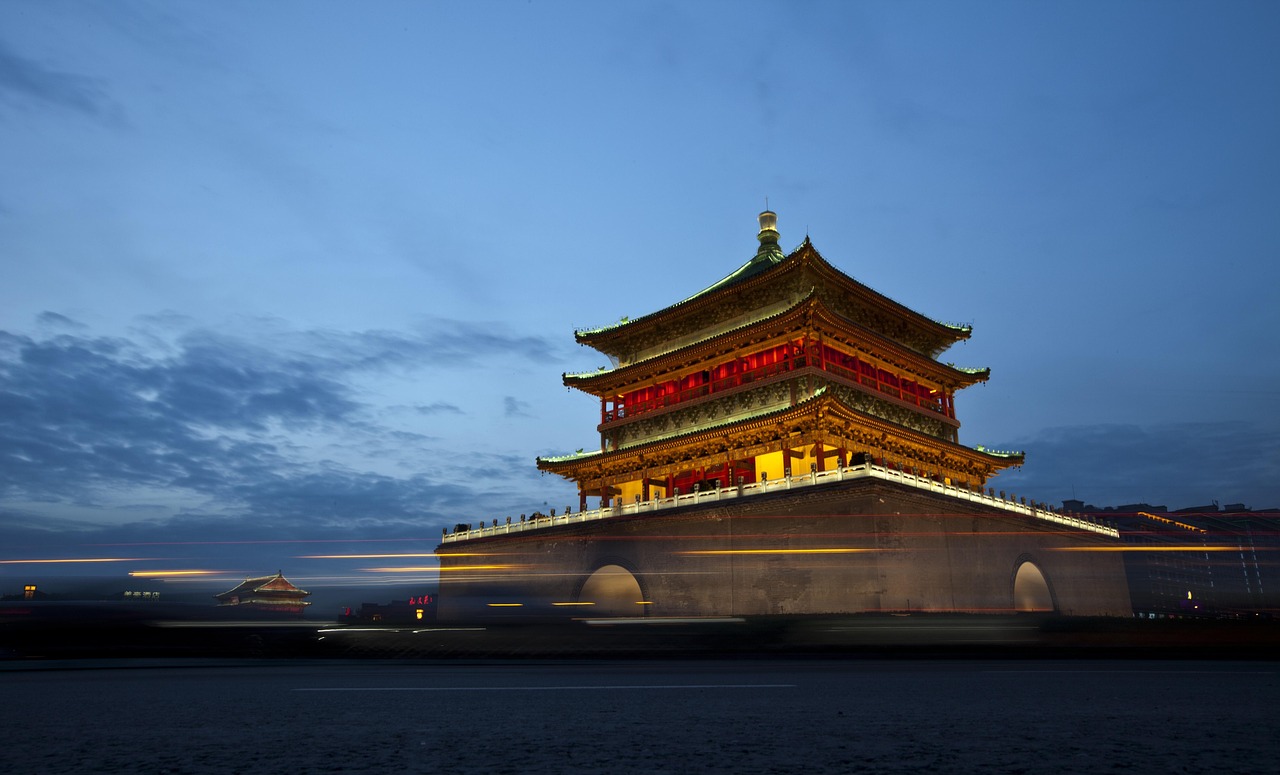
At the center of the city, the Bell Tower of 1384 stands on a traffic island reached through an underpass, with bell performances; the Drum Tower nearby has a collection of drums and drum performances. Both are lit up at night.
The Muslim Quarter and the Great Mosque
Behind the Drum Tower, the lanes of the Muslim Quarter (Huimin Jie), home to the Hui community for centuries, are packed with food stalls, butchers and bakers; the main street of Beiyuanmen is touristy, but the side lanes such as Dapiyuan and Sajinqiao are more local. Hidden in the lanes, the Great Mosque, founded in the Tang dynasty and rebuilt in the Ming, is a unique blend of Chinese temple architecture and Islamic decoration, with gardens and a pagoda-like minaret; non-Muslims can visit outside prayer times, dressed modestly.
The Big Wild Goose Pagoda and the Shaanxi History Museum
South of the wall, the seven-story Big Wild Goose Pagoda, first built in 652 to hold the scriptures brought back from India by the monk Xuanzang, stands in the Da Ci’en Temple; there is a fee to climb it. The squares around it have a large musical fountain show in the evening. Nearby, the Shaanxi History Museum is one of China’s finest museums, with Zhou bronzes, Qin and Han figures, Tang gold, silver and glazed ceramics; general entry is free with an advance booking, it closes on Mondays, and tickets sell out, so book as soon as you can.
More classic sights
- Forest of Stone Steles (Beilin Museum): more than 3,000 carved stone tablets, from Confucian classics to calligraphy masterpieces, near the South Gate.
- Small Wild Goose Pagoda and the Xi’an Museum: a Tang pagoda in a quiet park with a free city museum.
- Datang Everbright City: a long pedestrian avenue of Tang-style buildings, lights and street performances in the evening.
- Huaqing Palace: hot springs and a Tang imperial retreat at the foot of Mount Li, near the Terracotta Army, with an evening dance show.
- Hanyangling Museum: the tomb of a Han emperor, with an underground gallery of thousands of small clay figures, near the airport.
Other things to do in Xi’an
Food and drink
Xi’an is a noodle city. Try biangbiang mian, extra-wide hand-pulled noodles named after one of the most complicated Chinese characters; roujiamo, the “Chinese hamburger” of braised pork (or beef and lamb in the Muslim Quarter) in a crisp flatbread; yangrou paomo, lamb soup in which you crumble your own bread; liangpi, cold, chewy noodles with chili oil and vinegar; Qishan saozi mian, sour, spicy noodles; and Muslim Quarter snacks such as lamb skewers, persimmon cakes and sticky rice cakes. Dumpling banquets, with dozens of shaped dumplings, are a Xi’an specialty. Wash it down with sour plum juice or a cold Hans beer.
Shows
The Tang Dynasty Show and other dinner theaters recreate Tang music and dance; in summer, the Song of Everlasting Sorrow is staged outdoors at the Huaqing Palace, telling the love story of Emperor Xuanzong and Yang Guifei with the mountain as a backdrop.
Cycling and walking
Cycling the city wall is a highlight; you can also walk the moat park around it or explore the lanes south of the wall. See our cycling and city sightseeing guides.
Day trips from Xi’an
- The Terracotta Army and Huaqing Palace: combine both in Lintong, about 40 km (25 miles) east.
- Mount Hua (Huashan): one of China’s five sacred Taoist mountains, with granite peaks, cable cars and cliff paths, including the famous plank walk; about 30–40 minutes by high-speed train to Huashan North, then a shuttle bus. Start early; it is a full, strenuous day.
- Famen Temple: a vast Buddhist complex about 120 km (75 miles) west, built over a crypt that held relics of the Buddha.
- The Qianling Mausoleum: the tomb of Tang Emperor Gaozong and Empress Wu Zetian, with a sacred way of stone statues, about 80 km (50 miles) northwest.
- Luoyang: the Longmen Grottoes and the White Horse Temple, about 1.5 hours by high-speed train; best overnight.
Getting there and getting around
By train
Xi’an North is the high-speed station, about 15 km (9 miles) north of the Bell Tower on metro Lines 2 and 4, with trains to Beijing (about 4.5–6 hours), Shanghai (about 6–7 hours), Chengdu (about 3–4 hours), Chongqing, Luoyang, Zhengzhou and Huashan North. Xi’an Station, just outside the north wall, has conventional and overnight trains and the tourist buses to the Terracotta Army. Book on the 12306 website or app with your passport.
By air
Xi’an Xianyang International Airport (XIY), about 40 km (25 miles) northwest, has domestic flights across China and international routes to Asia and Europe, and is a designated port for the 240-hour visa-free transit; you can travel throughout Shaanxi province during your stay. Metro Line 14 links the airport with Xi’an North station, and airport buses and taxis reach the center in about an hour.
To the Terracotta Army
From Xi’an Station’s east square, public tourist buses run to the museum in about an hour; alternatively, take metro Line 9 to Huaqingchi and a short bus or taxi ride, or a taxi or DiDi from the center (about 1 hour). Many visitors combine the trip with Huaqing Palace.
Around town
The metro is cheap and covers the Bell Tower, the city gates, the Big Wild Goose Pagoda and the train stations; pay with Alipay or WeChat Pay QR codes. Taxis and DiDi are inexpensive. Inside the wall, walking and shared bikes are the best way to get around.
When to go and how long to stay
Xi’an has a semi-humid continental climate, with four distinct seasons. Spring (April–May) is warm and sunny, with blossoms, though spring dust storms can blow in. Summer (June–August) is hot, with highs around 31–33 °C (88–91 °F) and thundery rain. Autumn (September–October) is pleasant and golden, though September is surprisingly wet, with long spells of drizzle. Winter (December–February) is cold and dry, with lows below freezing, and smog from heating can be heavy on some days. The table uses the 1991–2020 climate normals for the Jinghe station of the China Meteorological Administration (CMA), Xi’an’s reference station north of the city, as submitted to the World Meteorological Organization (WMO): average daily highs and lows, total precipitation, and days with at least 1 mm of rain or snow.
| Month | Average high / low | Rain (days with 1 mm or more) | What to expect |
|---|---|---|---|
| January | 5 °C (41 °F) / −3 °C (26 °F) | 6 mm (0.2 in), 2 days | Cold and dry; smog on some days |
| February | 9 °C (49 °F) / 0 °C (33 °F) | 9 mm (0.4 in), 2 days | Cold; Chinese New Year lanterns |
| March | 17 °C (62 °F) / 6 °C (43 °F) | 18 mm (0.7 in), 3 days | Mild; blossom; occasional dust |
| April | 23 °C (73 °F) / 12 °C (53 °F) | 35 mm (1.4 in), 4 days | Warm and pleasant; very good |
| May | 28 °C (82 °F) / 16 °C (62 °F) | 59 mm (2.3 in), 6 days | Warm and sunny; excellent |
| June | 32 °C (90 °F) / 21 °C (70 °F) | 65 mm (2.5 in), 6 days | Hot; summer crowds begin |
| July | 33 °C (91 °F) / 23 °C (74 °F) | 85 mm (3.3 in), 7 days | The hottest month; thunderstorms |
| August | 31 °C (88 °F) / 22 °C (72 °F) | 91 mm (3.6 in), 7 days | Hot; rainy spells |
| September | 25 °C (78 °F) / 17 °C (63 °F) | 97 mm (3.8 in), 9 days | Mild; the wettest month; drizzle |
| October | 20 °C (67 °F) / 12 °C (53 °F) | 52 mm (2.1 in), 7 days | Pleasant; Golden Week crowds |
| November | 13 °C (55 °F) / 5 °C (41 °F) | 22 mm (0.9 in), 4 days | Cool and damp |
| December | 7 °C (44 °F) / −2 °C (29 °F) | 3 mm (0.1 in), 1 day | Cold and dry; quiet |
Xi’an receives about 540 mm (21 in) of precipitation a year, most of it from May to October.
Two days in Xi’an
Day one, the Terracotta Army at opening time and the Huaqing Palace in the afternoon, then the Muslim Quarter for dinner. Day two, cycling the city wall in the morning, the Shaanxi History Museum and the Big Wild Goose Pagoda, and the fountains and lights of Datang Everbright City at night.
Three to four days
Add the Forest of Stone Steles, the Great Mosque and the Small Wild Goose Pagoda, a dumpling banquet and a Tang show, and a day on Mount Hua; then continue to Chengdu by high-speed train.
What a trip to Xi’an costs
Prices are approximate, for October 2026, converted at about 6.74 yuan to the US dollar.
| Item | Typical cost |
|---|---|
| Terracotta Army ticket | 120 CNY (about US$18) |
| City wall ticket | about 50–55 CNY (about US$7.40–8.20) |
| Bicycle rental on the wall | about 45–60 CNY (about US$6.70–8.90) for 2–3 hours |
| Tourist bus to the Terracotta Army | about 5–10 CNY (about US$0.74–1.50) |
| Bowl of biangbiang noodles | 15–30 CNY (about US$2.20–4.50) |
| Tang Dynasty dinner show | about 200–500 CNY (about US$30–74) |
| High-speed train to Beijing, second class | about 500–600 CNY (about US$74–89) |
| Mid-range hotel double, per night | 350–700 CNY (about US$52–104) |
Practical tips for Xi’an
- Book ahead: the Terracotta Army and the Shaanxi History Museum need real-name online bookings, and the museum’s free slots go fast.
- Go early: at the Terracotta Army, the first slots are the calmest; tour groups arrive mid-morning.
- Ignore touts: buy tickets only through official channels, and use official buses or registered taxis.
- Rent a bike on the wall: it is the best way to see the full circuit.
- Respect the mosque: dress modestly and avoid prayer times.
- Check the air quality: on smoggy winter days, plan museums rather than the wall.
Safety
Xi’an is safe, and violent crime against visitors is rare. The main nuisance is touts: around Xi’an Station and the Terracotta Army, people sell fake tickets, unofficial tours and rides to “the museum” that stop at shops; buy tickets online, use the official tourist buses or registered taxis, and hire guides inside the museum. Watch for pickpockets in the crowded Muslim Quarter, at the Bell Tower and on buses. Traffic is heavy, with fast electric scooters, so take care when crossing. In summer, heat can be intense on the wall and at the open sites: carry water and a hat. In winter, check the air quality index, which can be poor on some days. On Mount Hua, stay on marked paths, wear good shoes and avoid the plank walk in bad weather. Carry your passport for tickets and police checks. In an emergency, call 110 for police, 120 for an ambulance and 119 for fire.
What to pack for Xi’an
Comfortable walking shoes for the wall and the museum sites, a hat and sunscreen in summer, layers in spring and autumn, a warm coat in winter, an umbrella in September, a mask if you are sensitive to dust or smog, modest clothes for the mosque and temples, and gloves and good shoes for Mount Hua. China uses 220 V, with flat two-pin, round two-pin and angled three-pin sockets. See our hiking shoes and travel adapters guides.
Xi’an travel FAQ
How much is the Terracotta Army ticket?
120 yuan, valid for one day for the Terracotta Warriors museum and the Lishan Garden around the emperor’s tomb, with a free shuttle bus between them.
Do I need to book the Terracotta Army in advance?
Yes. All visitors, including foreigners, must book online with real names on the museum’s official website or WeChat accounts, using passport details, and show the same passport at the gate.
How do I get from Xi’an to the Terracotta Army?
By public tourist bus from Xi’an Station’s east square in about an hour, by metro Line 9 to Huaqingchi and then a short bus or taxi, or by taxi or DiDi.
How long do I need at the Terracotta Army?
About three hours for the three pits and the bronze chariots, or half a day with the Lishan Garden.
How many days do I need in Xi’an?
Two days for the Terracotta Army and the city; three or four to add Mount Hua, museums and food.
What is the best time to visit Xi’an?
April to May and September to October. Summers are hot, and winters cold, with smog on some days.
Can I cycle on the Xi’an city wall?
Yes. Bicycles are rented on top of the wall, and a full circuit of about 14 km takes about 2 hours.
How do I get from Xi’an to Beijing?
By high-speed train from Xi’an North to Beijing West in about 4.5–6 hours, or by a two-hour flight.
Can I use the 240-hour visa-free transit in Xi’an?
Yes. Xi’an Xianyang airport is a designated port, and you can travel throughout Shaanxi province, and on to other permitted areas, during your stay.
Is the Shaanxi History Museum free?
General entry is free with an advance booking, and it is closed on Mondays; some special galleries charge a fee.
Plan your trip
Partner links: TravelerCenter may earn a commission if you book, at no extra cost to you.
🇨🇳 Useful Mandarin Chinese phrases for Xi'an
All 38 Mandarin Chinese phrases: restaurant, hotel, emergencies, romance (printable) →
Sources · last reviewed 4 October 2026
Researched and last reviewed on 4 October 2026. The Terracotta Army ticket price, one-day validity for both sites, the free shuttle, real-name online booking for all visitors including foreigners, timed entry, the 65,000 daily cap, hours and Pit 1 figures: the Emperor Qinshihuang’s Mausoleum Site Museum’s official pages; visa-free transit ports and the Shaanxi permitted area: the National Immigration Administration; train booking with a passport: China Railway’s official 12306 site; climate normals: the China Meteorological Administration via the World Meteorological Organization’s 1991–2020 normals (Jinghe station); the exchange rate: the CFETS central parity rate. City wall, Shaanxi History Museum and other site details, transport times, Mount Hua access, history and typical prices are general references or estimates, flagged for checking. Prices and rules change, so check locally before you go. For entry rules, money and general safety, see our China travel guide.
Data: Weather: MET Norway (CC BY 4.0) · Rates: ECB · Costs: World Bank ICP and price levels · Wikidata (CC0)