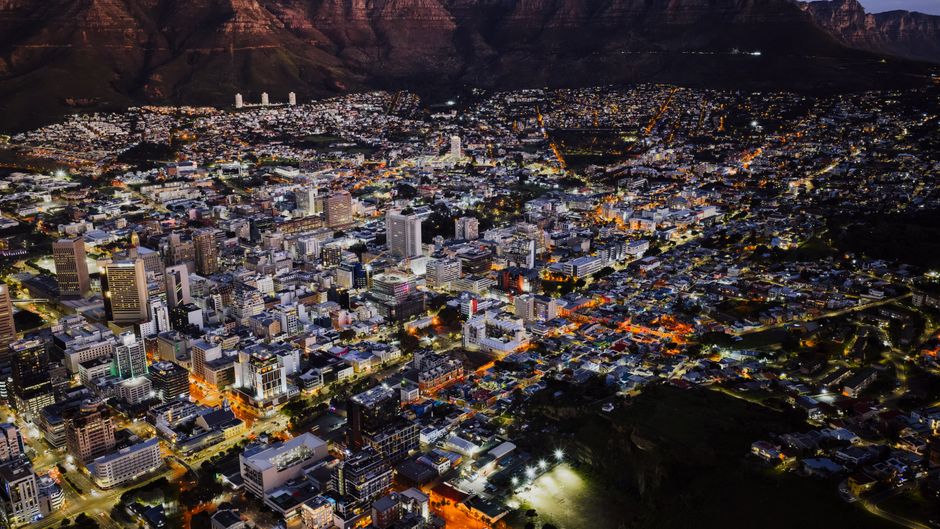
Cape Town is one of the most beautiful cities in the world, a place where a flat-topped mountain rises straight out of the city center, two oceans meet on the Cape Peninsula, and vineyards, penguin colonies and white beaches are all within an hour’s drive. Founded in 1652 as a supply station for Dutch ships, it is South Africa’s oldest city and its legislative capital, home to around four million people in the metro area. Visitors come for Table Mountain and its cableway, the V&A Waterfront, the ferry to Robben Island, where Nelson Mandela was imprisoned, the colorful houses of the Bo-Kaap, the botanical garden at Kirstenbosch, the drive to Cape Point and the African penguins of Boulders Beach. It is also the gateway to the Winelands, the whale coast at Hermanus and the Garden Route. Cape Town has a Mediterranean climate, and because it is in the southern hemisphere, its summer runs from December to February, warm, dry and often windy, while winter (June to August) is mild, green and rainy.
Right now in Cape Town
- Wed10–18°C49–64°FMostly clear
- Thu11–16°C52–61°FPartly cloudy
- Fri12–17°C53–63°FCloudy
Top tours in Cape Town
See all tours for Cape Town →
From local operators, with prices and reviews; you check availability and book on Viator, our partner. We may earn a commission at no extra cost to you. How we earn money
Cape Town at a glance
- Best months: February to April (warm, calmer, sea at its warmest) and October to November (spring, green slopes, fewer crowds). December and January are hot, dry, windy and busy; June to August is cool and wet, with low prices and whales offshore.
- Time needed: four days for the city, Table Mountain, Robben Island and the Cape Peninsula; a week with the Winelands and Hermanus.
- Getting there: Cape Town International Airport (CPT) is about 20 km (12 miles) east of the city center, with direct flights from Europe, the Middle East, North America and across Africa, and frequent flights from Johannesburg and Durban.
- Costs (as of October 2026): a return ticket on the Table Mountain Cableway is R475 (about US$29) online; Robben Island is R600 (about US$36) for international adults.
- Before you go: visas, the new Electronic Travel Authorisation, money and national park fees are covered in our South Africa travel guide.
Cape Town areas and who each one suits
City Bowl and the CBD
The city center sits in the “bowl” between Table Mountain, Devil’s Peak, Lion’s Head and the harbor. Here are the Company’s Garden, the Parliament buildings, Greenmarket Square, the District Six Museum and the restaurants and bars of Bree and Long streets. Suburbs such as Gardens, Tamboerskloof and Oranjezicht on the slopes have guesthouses with mountain views. It suits travelers who want restaurants and sights on the doorstep; the CBD gets quiet after office hours, so use ride-hailing at night.
V&A Waterfront
The Victoria & Alfred Waterfront is a working harbor turned into a shopping and dining district, with the Two Oceans Aquarium, the Zeitz Museum of Contemporary Art Africa (Zeitz MOCAA) in a converted grain silo, the Nelson Mandela Gateway for Robben Island ferries, and harbor cruises. It has its own security, many hotels and easy MyCiTi connections. Good for families and first-time visitors who want a safe, walkable base, at higher prices.
Bo-Kaap and De Waterkant
On the slopes of Signal Hill, the Bo-Kaap is the historic heart of the Cape Malay community, with brightly painted houses, cobbled streets, mosques and the Bo-Kaap Museum. It is a residential neighborhood, so be respectful with cameras. Next door, De Waterkant has boutique hotels, cafés and nightlife.
Atlantic Seaboard: Green Point, Sea Point, Clifton and Camps Bay
West of the city, the Atlantic coast has a long seafront promenade at Sea Point, popular for walking and running; the sheltered sandy coves of Clifton; and the palm-lined beach and restaurants of Camps Bay below the Twelve Apostles mountains. The water is cold, around 12–16 °C (54–61 °F), but the sunsets are spectacular. This area suits beach lovers and couples.
Southern Suburbs and Constantia
Leafy suburbs such as Newlands, Claremont and Constantia, behind the mountain, are home to Kirstenbosch, rugby and cricket grounds, and the Constantia wine route, the oldest in the country. Quieter and greener, they suit travelers with a car.
False Bay: Muizenberg, Kalk Bay and Simon’s Town
On the warmer Indian Ocean side of the peninsula, Muizenberg has colorful beach huts and gentle waves for learning to surf; Kalk Bay is a fishing harbor with antique shops and seafood restaurants; and naval Simon’s Town is next to the Boulders penguin colony. A suburban train line runs along this coast.
Top things to see in Cape Town
Table Mountain and the cableway
The 1,085 m (3,560 ft) flat-topped mountain is part of Table Mountain National Park. The Table Mountain Aerial Cableway carries visitors to the top in about five minutes in rotating cars. As of October 2026, an adult return ticket costs R475 online or R530 at the ticket office, a one-way ticket R300 online, and a child (4–17) return R230 online; children under 4 ride free, and tickets are valid for seven days, which helps when wind closes the cableway. Opening hours change with the season; on the day we checked, the first car went up at 08:30 and the last at 18:00. The cableway closes in high winds, cloud or rain, so check its status on the morning you go and keep a flexible day. Fit walkers can hike up Platteklip Gorge, a steep, direct route of about two to three hours; carry water and a warm layer, start early, walk with others and never climb in mist. Lion’s Head, a shorter, popular climb with chains and ladders near the top, is famous at sunrise and full moon.
Robben Island
The island prison where Nelson Mandela spent 18 of his 27 years in jail is a UNESCO World Heritage Site and museum. Ferries leave from the Nelson Mandela Gateway at the V&A Waterfront, usually at 09:00, 11:00, 13:00 and 15:00, and the standard tour takes about 3.5 hours including the crossing, with a bus tour of the island and a visit to the maximum-security prison guided by a former political prisoner or museum guide. As of October 2026, the Robben Island Museum lists standard tickets at R600 for international adults and R310 for children under 18 (R400 and R210 for South Africans). Book online well in advance, especially in summer; tours are canceled when the sea is rough.
Cape Point and the Cape of Good Hope
The rugged southern tip of the peninsula, in the Cape of Good Hope section of Table Mountain National Park, has dramatic cliffs, a funicular and walk up to the old lighthouse, empty beaches, fynbos (the Cape’s unique shrubland), ostriches, bontebok and baboons. The conservation fee for international visitors is R515 per adult and R250 per child for 1 November 2025 to 31 October 2026; new fees apply from 1 November 2026, so check the new rates on sanparks.org. Contrary to popular belief, the oceans’ official meeting point is at Cape Agulhas, farther east, but the views are unforgettable. Drive one way via Chapman’s Peak Drive, a toll road carved into the cliffs above Hout Bay, and the other via False Bay.
Boulders Beach penguins
A colony of endangered African penguins nests among granite boulders near Simon’s Town. Boardwalks at Foxy Beach give close views of the birds, and at Boulders Beach itself you can swim in sheltered water among them. The Boulders section of Table Mountain National Park charges international visitors R245 per adult and R120 per child (1 November 2025 to 31 October 2026); new fees apply from 1 November 2026, so check sanparks.org. Don’t touch or feed the penguins; they bite.
Kirstenbosch National Botanical Garden
On the eastern slopes of Table Mountain, Kirstenbosch displays the Cape’s extraordinary plant life, including proteas, the national flower, in a garden run by the South African National Biodiversity Institute. The Tree Canopy Walkway, nicknamed the “Boomslang,” winds through the treetops, and summer sunset concerts are a local tradition. Hiking trails lead up to the mountain via Skeleton Gorge.
Bo-Kaap, the Company’s Garden and District Six
Walk from the Bo-Kaap’s painted houses to the Company’s Garden, first planted in the 1650s, the South African Museum and the National Gallery. The District Six Museum tells the story of a mixed inner-city community whose residents were forcibly removed under apartheid. Guided walking tours and Cape Malay cooking classes are a good way to understand the city’s history.
Zeitz MOCAA and the Waterfront
The Zeitz Museum of Contemporary Art Africa, in a striking converted grain silo, has the largest collection of contemporary art from Africa and its diaspora. The Waterfront also has the Two Oceans Aquarium, the Watershed craft market, harbor cruises and the Cape Wheel.
Other things to do in Cape Town
- Beaches: Clifton and Camps Bay for sunbathing, Muizenberg and St James for families and surf lessons, and Llandudno for sunsets.
- Hout Bay: a fishing harbor with boat trips to Duiker Island’s Cape fur seals and a weekend market.
- Constantia wine route: historic estates such as Groot Constantia, 25 minutes from the city.
- Signal Hill: drive up for the sunset and city lights; go with others and don’t linger after dark.
- Paragliding: tandem flights from Lion’s Head or Signal Hill land on the Sea Point promenade.
- Sport: rugby, cricket and soccer at Newlands and the Cape Town Stadium in Green Point.
Food and drink
Cape Town has one of Africa’s best food scenes: Cape Malay curries, bobotie and koesisters in the Bo-Kaap, fish and chips at Kalk Bay or Hout Bay, braais and markets on weekends, the Neighbourgoods Market at the Old Biscuit Mill in Woodstock, and fine dining in the city and Constantia at prices that feel modest by international standards. Order local wine by the glass, try a craft beer, and finish with malva pudding. Tip 10–15% in restaurants.
Day trips from Cape Town
Stellenbosch, Franschhoek and the Winelands
About 45 minutes to an hour east, Stellenbosch, Franschhoek and Paarl are surrounded by mountains and hundreds of wine estates with tastings, restaurants and Cape Dutch architecture. Take a tour or a hop-on, hop-off wine tram so no one has to drive.
Hermanus and the Whale Coast
Hermanus, about 120 km (75 miles) or 1.5 hours away via the scenic Clarence Drive, is the place for land-based whale watching from about June to November. Stop at Betty’s Bay to see another African penguin colony at Stony Point.
West Coast National Park
About 1.5 hours north, the Langebaan lagoon and the Postberg section of West Coast National Park burst into color with wildflowers around August and September.
The Garden Route
The Garden Route starts at Mossel Bay, about four hours east, and deserves at least three or four nights rather than a day.
Nearby destinations
- Stellenbosch40 km
- Hermanus97 km
Getting there and getting around
Cape Town International Airport (CPT)
The airport is about 20 minutes from the city center by car outside rush hour. The MyCiTi airport bus (route A01) runs to the Civic Centre in the city center, taking around 30 minutes; you need a myconnect card, which costs R40, loaded with enough value for the airport fare, which is higher than a normal city trip. Registered airport taxis and ride-hailing apps such as Uber and Bolt use designated pick-up zones. Most visitors rent a car at the airport.
MyCiTi buses
Cape Town’s MyCiTi bus network links the city center with the Waterfront, Sea Point, Camps Bay, Hout Bay, Table View and the airport. Every passenger needs a myconnect card (R40, from station kiosks and some shops; children under 4 travel free), loaded with “Mover” points for distance-based fares, or a pass for unlimited travel.
| MyCiTi fare (as of October 2026) | Rand | About US dollars |
|---|---|---|
| — | — | — |
| myconnect card (once) | R40 | US$2.40 |
| 1 Day Pass (unlimited travel) | R130 | US$7.80 |
| 3 Day Pass | R290 | US$17 |
| 7 Day Pass | R420 | US$25 |
| Single trips with Mover points | distance-based | — |
Peak fares apply to journeys that start on weekdays from 06:45 to 08:00 and 16:15 to 17:30; cheaper “Saver” fares apply at other times and all weekend. Hop-on, hop-off sightseeing buses also cover the main sights and the Cape Peninsula.
Driving, ride-hailing and trains
A car is the best way to explore the peninsula and the Winelands; drive on the left, park in attended areas, and keep nothing visible in the car. Ride-hailing apps are cheap and reliable for evenings and trips across the city. The Metrorail suburban train along False Bay to Muizenberg, Kalk Bay and Simon’s Town is scenic, but services can be irregular; travel by day.
When to go and how long to stay
Cape Town’s summer (December to February) is warm and dry, with average highs around 26–27 °C (79–81 °F) and the strong southeasterly “Cape Doctor” wind. Autumn (March to May) is often the most pleasant season, with calmer days. Winter (June to August) brings cool temperatures, around 18 °C (64 °F) by day, and most of the year’s rain in fronts from the Atlantic, but also green mountains, lower prices and whales in False Bay. Spring (September to November) brings flowers and warming days.
| Month | Average high | Average low | Rain | Rain days (≥1 mm) |
|---|---|---|---|---|
| Jan | 27 °C (81 °F) | 17 °C (62 °F) | 9 mm (0.4 in) | 2 |
| Feb | 27 °C (81 °F) | 16 °C (62 °F) | 10 mm (0.4 in) | 2 |
| Mar | 26 °C (79 °F) | 15 °C (59 °F) | 12 mm (0.5 in) | 2 |
| Apr | 24 °C (74 °F) | 12 °C (54 °F) | 40 mm (1.6 in) | 5 |
| May | 21 °C (69 °F) | 10 °C (50 °F) | 61 mm (2.4 in) | 7 |
| Jun | 18 °C (65 °F) | 8 °C (47 °F) | 92 mm (3.6 in) | 10 |
| Jul | 18 °C (64 °F) | 7 °C (45 °F) | 85 mm (3.3 in) | 9 |
| Aug | 18 °C (64 °F) | 8 °C (46 °F) | 72 mm (2.9 in) | 9 |
| Sep | 20 °C (67 °F) | 9 °C (49 °F) | 44 mm (1.7 in) | 7 |
| Oct | 22 °C (72 °F) | 12 °C (53 °F) | 28 mm (1.1 in) | 4 |
| Nov | 24 °C (75 °F) | 13 °C (56 °F) | 25 mm (1.0 in) | 4 |
| Dec | 26 °C (78 °F) | 16 °C (60 °F) | 13 mm (0.5 in) | 3 |
| Year | 22 °C (72 °F) | 12 °C (54 °F) | 493 mm (19 in) | 65 |
Figures are the South African Weather Service’s 1991–2020 normals for Cape Town International Airport, as published by the World Meteorological Organization. The Atlantic Seaboard is often a little cooler in summer, and the mountain slopes and southern suburbs are much wetter in winter.
Events worth planning around
- Cape Town Cycle Tour (March): one of the world’s largest timed cycle races around the peninsula; roads close.
- Two Oceans Marathon (Easter weekend): ultra and half marathons with roads closed.
- Cape Town International Jazz Festival: usually in spring or autumn; check the organizers’ dates.
- Kirstenbosch Summer Sunset Concerts (November to April).
- Festive lights at the Waterfront and New Year’s Eve fireworks.
Dates change each year; check with the organizers.
How long to stay: 3, 5 and 7 days
- Three days: Table Mountain and the City Bowl; Robben Island and the Waterfront; the Cape Peninsula with Boulders and Cape Point.
- Five days: add Kirstenbosch and Constantia, and a day in Stellenbosch or Franschhoek.
- Seven days: add a night in Hermanus or the Winelands, or the West Coast in flower season.
Where to stay in Cape Town
- V&A Waterfront: secure, walkable, family-friendly hotels close to the Robben Island ferry.
- City Bowl and Gardens: boutique hotels and guesthouses near restaurants and the cableway.
- Green Point and Sea Point: apartments and hotels near the promenade and MyCiTi routes.
- Camps Bay and Clifton: beachfront villas and hotels with sunset views.
- Constantia and the Southern Suburbs: quiet guesthouses and wine estate hotels for drivers.
- Simon’s Town and Kalk Bay: charming seaside guesthouses near the penguins.
Book early for December and January, when prices peak.
Typical costs in Cape Town
| Item (as of October 2026) | Rand | About US dollars |
|---|---|---|
| — | — | — |
| Table Mountain Cableway return, adult, online / ticket office | R475 / R530 | $29 / $32 |
| Robben Island tour, international adult | R600 | $36 |
| Boulders penguins, international adult | R245 | $15 |
| Cape Point, international adult | R515 | $31 |
| MyCiTi 1 Day Pass | R130 | $7.80 |
| Ride-hailing, city center to Camps Bay | about R80–150 | about $5–9 |
| Main course in a mid-range restaurant | about R150–280 | about $9–17 |
| Mid-range hotel room, per night | about R1,800–3,500 | about $110–210 |
Cableway, Robben Island, park and MyCiTi prices are official; ride-hailing, meals and hotels are typical ranges. Conversions use about R16.60 to US$1.
Safety in Cape Town
Cape Town is one of Africa’s most-visited cities, and the main tourist areas are busy and well patrolled, but the city has high crime levels, and a few practical habits keep visits trouble-free.
- Getting around: use ride-hailing apps or registered taxis at night rather than walking, especially in the CBD after office hours and on quiet streets. Keep phones out of sight on the street and nothing visible in parked cars.
- Hiking: walk on popular routes in daylight and in a group, tell someone your plans, and carry a phone; the mountain weather changes fast, and the emergency number for mountain rescue is 021 937 0300.
- Sea and sharks: the Atlantic is cold, with strong currents; swim at lifeguarded beaches between the flags. The Shark Spotters program watches popular False Bay beaches such as Muizenberg and Fish Hoek, flying colored flags for spotting conditions and sightings.
- Baboons: on the peninsula, keep car windows closed and food out of sight; never feed them.
- Water and power: Cape Town’s dams were about 75% full on 5 October 2026, and South Africa’s national load-shedding has been suspended; most hotels have backup power.
- Emergencies: call 10111 for the police and 10177 for an ambulance, or 112 from a mobile phone.
Practical tips for Cape Town
- Wind: the southeasterly can blow hard in summer; plan cableway and boat trips for still mornings.
- Car guards: tip informal parking attendants a few rand when you leave.
- Plugs and money: type M and N sockets at 230 V; cards accepted almost everywhere.
- Time zone: South African Standard Time (UTC+2), no daylight saving.
What to pack for Cape Town
Bring layers for changeable weather: a windproof jacket and fleece even in summer, a rain jacket from May to September, comfortable hiking shoes for Table Mountain and Lion’s Head, a sun hat, sunglasses and SPF 50 sunscreen, swimwear, and a reusable water bottle. See our hiking shoes and rain jackets guides.
Cape Town travel FAQ
How much is the Table Mountain Cableway?
An adult return ticket costs R475 online or R530 at the ticket office (as of October 2026); children aged 4 to 17 pay R230 online. Tickets are valid for seven days.
Is the Table Mountain Cableway open every day?
It runs daily but closes in strong wind, rain or low cloud. Check its status the morning you plan to go and keep a backup day.
How do I book Robben Island?
Book online on the Robben Island Museum’s official booking site. Ferries leave the Nelson Mandela Gateway at the V&A Waterfront, usually at 09:00, 11:00, 13:00 and 15:00, and tours take about 3.5 hours.
How much does it cost to see the penguins at Boulders Beach?
International visitors pay R245 per adult and R120 per child until 31 October 2026; South Africans pay R55. New SANParks fees apply from 1 November 2026; check the new rates on sanparks.org.
How do I get from Cape Town airport to the city?
Take the MyCiTi airport bus to the Civic Centre (about 30 minutes; you need a R40 myconnect card), a registered taxi or a ride-hailing app.
When is the best time to visit Cape Town?
February to April and October to November, for warm weather with less wind and fewer crowds. Summer is hot and busy; winter is mild and rainy.
Can you swim in the sea in Cape Town?
Yes, but the Atlantic beaches are cold. False Bay beaches such as Muizenberg and St James are warmer; swim at lifeguarded beaches and check the Shark Spotters flags.
Is Cape Town safe for tourists?
Most visits are trouble-free. Use ride-hailing apps at night, keep valuables out of sight, hike in groups on popular trails, and avoid isolated areas after dark.
How far is Cape Point from Cape Town?
About 70 km (43 miles), or 1.5 hours’ drive, with Boulders Beach and Chapman’s Peak Drive on the way. Allow a full day.
Is Cape Town malaria-free?
Yes. Cape Town and the Western Cape have no malaria; the nearest malaria areas are in the far northeast of the country, around Kruger.
Plan your trip
Partner links: TravelerCenter may earn a commission if you book, at no extra cost to you.
Sources · last reviewed 6 October 2026
Researched and last reviewed on 6 October 2026. Cableway prices, ticket validity and hours: the Table Mountain Aerial Cableway Company; Robben Island ticket prices, departure times and tour length: the Robben Island Museum; conservation fees for Boulders and Cape Point: South African National Parks (SANParks); MyCiTi cards, passes and peak times: the City of Cape Town; dam levels: the City of Cape Town; load-shedding status: Eskom; exchange rate: the European Central Bank; climate: the South African Weather Service’s 1991–2020 normals for Cape Town International Airport via the World Meteorological Organization. The MyCiTi airport fare, Kirstenbosch details, mountain rescue number, events, distances, travel times and typical prices are general references and flagged for checking. For entry rules, money and park passes, see our South Africa travel guide.
Data: Weather: MET Norway (CC BY 4.0) · Sea temperature: NOAA CoastWatch · Rates: ECB · Costs: World Bank ICP and price levels · Wikidata (CC0)