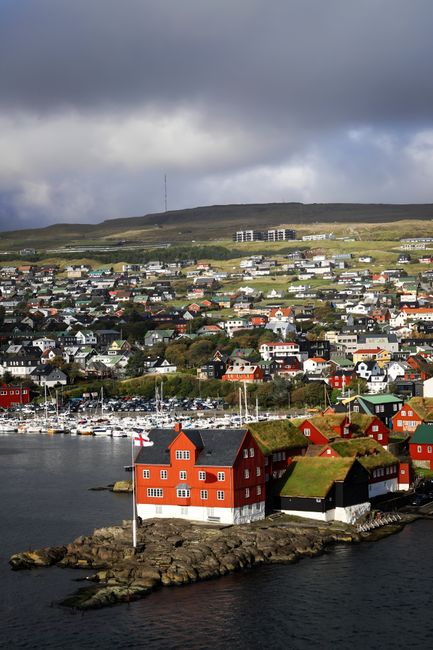
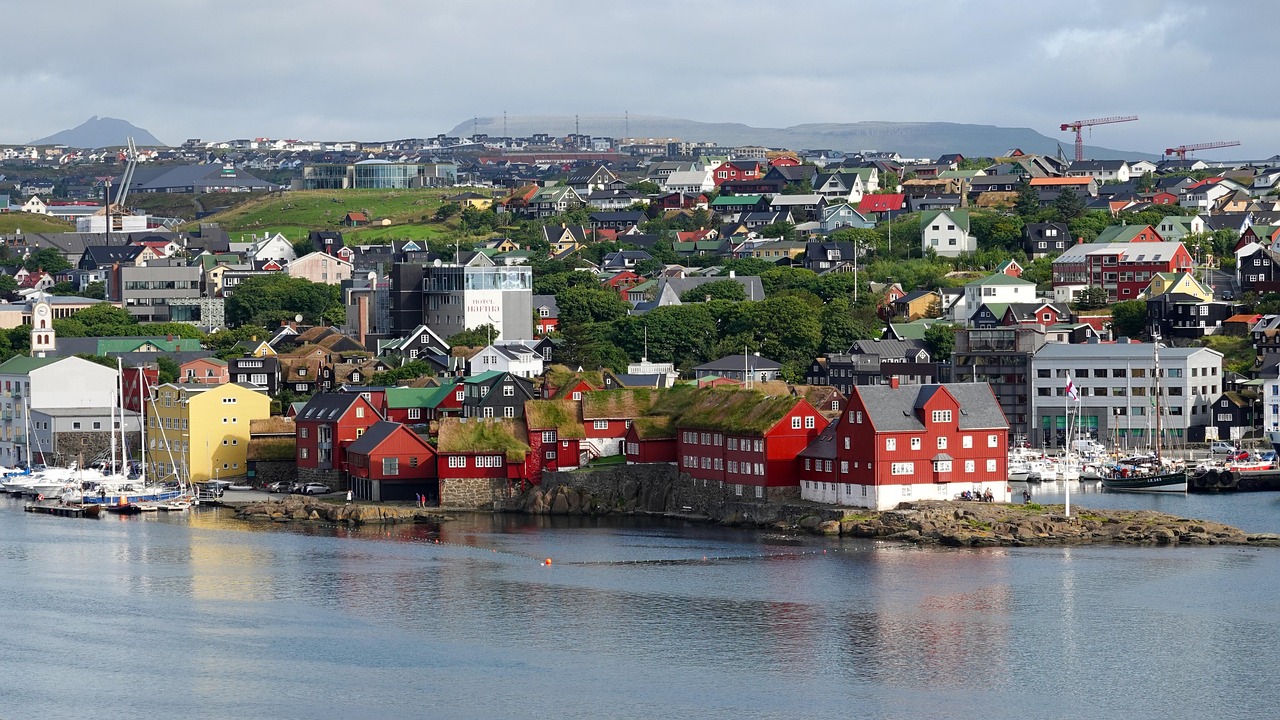
Tórshavn is the capital of the Faroe Islands and one of the smallest capitals in the world: a friendly harbor town of about 14,400 people (some 22,700 in the wider municipality) on the east coast of Streymoy, the largest island. Its old heart, Tinganes, is a rocky point of red-painted, turf-roofed wooden buildings where the Faroese assembly met in Viking times and where the government still works today. Around it you will find the black-tarred houses of the old town, Reyn, a busy harbor full of fishing boats and ferries, the grassy fort of Skansin, the National Museum, the National Gallery and the Nordic House, along with the islands’ best restaurants and most of their hotels. Tórshavn is also the hub for buses and ferries, so it makes the easiest base for exploring the islands. Come from May to August for long days and the Ólavsøka festival on 28–29 July, give the town a full day or two, and use it as a base for a week in the Faroes.
Right now in Tórshavn
- Wed6–9°C43–49°F1 mm rain
- Thu6–9°C44–48°F13 mm rain
- Fri9–11°C47–51°F6 mm rain
Top tours in Tórshavn
See all tours for Tórshavn →
From local operators, with prices and reviews; you check availability and book on Viator, our partner. We may earn a commission at no extra cost to you. How we earn money
Tórshavn at a glance
- Best for: turf-roofed old streets, Faroese history and art, seafood and New Nordic restaurants, and an easy base for the whole archipelago.
- How long: one full day for the town, two with the museums and a trip to Kirkjubøur or Nólsoy; most visitors stay four to seven nights and explore the islands from here.
- Best time: May to August; the National Museum opens daily from May to September and on fewer days in winter.
- Getting there: fly to Vágar Airport, about 50 minutes away on bus 300, or arrive on the Norröna ferry from Denmark, which docks in the town’s harbor.
- Getting around: on foot in the center; the red city buses cover the suburbs.
- Before you go: entry rules, money, hiking fees and transport are in our Faroe Islands travel guide.
Tórshavn’s areas and who each one suits
- Tinganes and Reyn: the historic core on the point between the two harbors, with narrow lanes, tarred wooden houses and grass roofs. For photographers and anyone who likes old towns; a few guesthouses and apartments.
- The harbor (Vestaravág and Eystaravág): the ferry terminal, fishing boats, restaurants and bars on the waterfront. Handy for the Nólsoy and Suðuroy ferries and the Norröna.
- The center (Niels Finsens gøta and Vaglið): the main pedestrian shopping street, the square where Ólavsøka is celebrated, cafés, the bus terminal area and most hotels. Best for first-timers without a car.
- Viðarlundin and the Nordic House area: the park and the slopes north of the center, with the National Gallery and the Nordic House. Quieter, with a few hotels and great views over the town.
- Hoyvík and the suburbs: residential areas with the National Museum and the SMS shopping center, and apartments that suit families with a car.
Top things to see in Tórshavn
Tinganes
The low rocky peninsula between the town’s two harbors is where the Faroese thing, or assembly, met from the Viking Age, and Visit Faroe Islands calls it one of the world’s oldest parliamentary sites. Today its cluster of red wooden buildings with white windows and grass roofs houses government offices. You can walk freely through the lanes and around the point, which is the classic photo of Tórshavn; remember that people work here, so keep your voice down and stay out of private doorways.
Reyn, the old town
Just above Tinganes, the old quarter of Reyn is a maze of steep alleys and black-tarred wooden houses with white-framed windows and turf roofs, many still family homes. It is a short, atmospheric walk, best in the soft evening light of summer.
Tórshavn Cathedral (Havnar Kirkja)
The white church with a slim tower above the west harbor is the Lutheran cathedral of the Faroe Islands and one of the town’s landmarks. Visit Faroe Islands describes it as the islands’ second-oldest church, with a vaulted ceiling inside. Check opening times locally, as it is a working church.
Skansin
On the headland at the east side of the harbor, Skansin is an old fortification built to protect the town, with grassy ramparts, a lighthouse and old cannons. During World War II, British forces used it as a base. It is free to visit and gives one of the best views over the harbor and across to the island of Nólsoy.
The National Museum (Tjóðsavnið)
The National Museum tells the story of the islands from geology and Viking-age finds to fishing, farming and daily life. Its permanent exhibition is at Brekkutún 6, and the ticket also covers the open-air museum at Hoyvíksgarður, an old farm on the edge of town, and a former whaling station at Áir, north of Tórshavn. According to the museum, the permanent exhibition opens daily from 10:00 to 17:00 from 1 May to 30 September and from Thursday to Sunday, 13:00 to 17:00, from October to April; the open-air museum opens daily in summer only, and the whaling station on weekends from mid-June to mid-August. A ticket, valid for a week for all three sites, costs 90 DKK for adults and 60 DKK for students and seniors, and under-18s go free.
Listasavn Føroya, the National Gallery
Set at the edge of the Viðarlundin park, the National Gallery shows Faroese art from the 19th century to today, from landscapes painted in the islands’ changing light to contemporary work. It is a calm stop on a rainy day.
The Nordic House (Norðurlandahúsið)
Tórshavn’s main cultural center, with a grass roof that blends into the hillside, hosts concerts, theater, exhibitions and conferences. Visit Faroe Islands notes that it was built from Swedish wood, Danish glass and Norwegian stone, with Finnish furniture. Check its program for concerts during your stay; the café is open to all.
Viðarlundin park
In a country with almost no trees, this small wooded park with a pond, swans, sculptures and a natural playground is a surprise. It runs uphill from the center toward the National Gallery and is a pleasant shortcut on foot.
The harbor, the sea and the hills
Tórshavn’s harbor is its living room: fishing boats, ferries, yachts and in summer the long Faroese rowing boats training for the Ólavsøka races. Boat trips leave from here in summer for the bird cliffs and sea caves around Nólsoy and Hestur. See our boat trips guide.
For a short hike, walk out of town to the hills behind it for views over the town and the sound, or take the ferry to Nólsoy, the island that shelters the harbor. SSL’s route 90 crosses from Tórshavn in a short ride; the adult return fare was 131 DKK (105 DKK online) when we checked. On Nólsoy, a small village and walks along the island’s spine await. See our hiking guide.
Food, shopping and nightlife
Tórshavn has by far the most restaurants in the islands, from fish-and-chip stands at the harbor to New Nordic tasting menus built on local lamb, fish, shellfish and fermented (ræst) specialties. The best-known restaurants book up weeks ahead in summer, so reserve early. Cafés line the pedestrian streets, and the harbor has a few pubs and bars that get lively at weekends. Service is included in prices, and tipping is not expected.
For shopping, look for Faroese knitwear made from local wool, design shops and Faroese music. Spirits, wine and imported beer are sold only in the state shops of Rúsdrekkasøla Landsins, to people aged 18 and over. Visitors can claim back part of the 25% VAT on purchases of at least 300 DKK in shops with a “Tax-Free” sign.
Day trips from Tórshavn
With a car or the bus network, most of the islands are a day trip from the capital:
- Kirkjubøur: about 15 km south, the medieval bishop’s seat with the walls of St. Magnus Cathedral, Saint Olav’s Church (in use since about 1250) and the old Roykstovan farmhouse.
- Nólsoy: the island across the sound, by SSL ferry route 90.
- Vágar: Gásadalur and the Múlafossur waterfall, Trælanípa above Lake Sørvágsvatn, and the Mykines ferry; see our Vágar travel guide.
- Saksun and Vestmanna: the lagoon village and turf church in the north of Streymoy, and boat trips under the bird cliffs from Vestmanna.
- Eysturoy: through the subsea tunnel (175 DKK each way by car) to Gjógv and the foot of Slættaratindur.
- Klaksvík and Kalsoy: the northern town and the walk to the Kallur lighthouse (200 DKK fee).
Getting there and getting around
From the airport
Vágar Airport is on the island of Vágar, about 45 minutes from Tórshavn by car through the Vágar subsea tunnel. SSL’s bus 300 links the airport with the Tórshavn bus and ferry terminal in about 50 minutes, several times a day, and taxis meet flights. The SSL tourist travel card, 500 DKK for 4 days or 700 DKK for 7 days, is sold on bus 300 and at the airport information desk. Atlantic Airways flies daily from Copenhagen and year-round from Billund and Reykjavík; our Faroe Islands guide lists the other routes.
By sea
Smyril Line’s Norröna docks in Tórshavn on its route from Hirtshals in Denmark to Seyðisfjörður in Iceland, with a crossing of about 30 hours from Denmark in summer. SSL ferries leave from the same harbor for Nólsoy (route 90) and Suðuroy (route 7), and buses connect at the terminal.
Getting around town
The center is compact but hilly, so walking is the easiest way to see Tinganes, Reyn, the harbor and Skansin. The red city buses (Bussleiðin) run by the municipality are free and reach the suburbs, the National Museum and the shopping center; the blue SSL buses go to other towns and villages. If you rent a car, note that headlights must be on at all times and the town speed limit is 50 km/h.
When to go and how long to stay
Tórshavn is mild but damp all year. According to the Danish Meteorological Institute’s 1991–2020 normals for Tórshavn, afternoon highs average 11.3–13.3 °C (52–56 °F) from June to August and 6.0–6.5 °C (43–44 °F) from December to February, and the town gets about 1,400 mm (55 in) of rain and drizzle a year, most of it from October to February. May is the sunniest month, and the long June and July days are the best for exploring. Winter is dark and stormy but cozy, with concerts at the Nordic House and few visitors.
The biggest event is Ólavsøka on 28–29 July, the national celebration, when the whole country seems to come to town for rowing races, concerts and chain dancing; book accommodation months ahead. Allow one day for the town itself, two with the museums and a day trip, and four to seven nights if you are using Tórshavn as your base.
Where to stay in Tórshavn
- The center and harbor: hotels and guesthouses within walking distance of restaurants, Tinganes and the ferry terminal. Best for visitors without a car.
- The hills above town: larger hotels with views over the harbor and Nólsoy, a short walk or bus ride from the center.
- Apartments and guesthouses in the suburbs: more space and kitchens, good value for families and groups with a rental car.
- Hostel and campsite: the budget options, which fill quickly in July.
The Faroes have a limited number of beds, and Visit Faroe Islands strongly recommends booking ahead from May to August. Around Ólavsøka, book months in advance.
What a trip to Tórshavn costs
Tórshavn is expensive, with prices similar to Copenhagen or Oslo. Walking the old town, Skansin and the harbor is free, the city buses are free, and the National Museum costs 90 DKK. Our estimates for one person per day, sharing a double room, as of October 2026:
| Style | Estimated cost per day | What that looks like |
|---|---|---|
| Budget | about 700–1,100 DKK (US$110–170) | A hostel or guesthouse, free city buses, supermarket and harbor-stand meals, one museum |
| Mid-range | about 1,500–2,500 DKK (US$230–390) | A central hotel, a day trip by bus or rental car, café lunches and restaurant dinners |
| High-end | about 3,500 DKK+ (US$540+) | A top hotel, a tasting-menu dinner, private tours and boat trips |
Practical tips for Tórshavn
- Book restaurants early: the best-known tables fill weeks ahead in summer.
- Cards: Visa is accepted almost everywhere; American Express generally is not.
- Sunday and holidays: many shops close on Sundays and public holidays, and buses run reduced timetables.
- Insurance: the European Health Insurance Card is not valid in the Faroes; bring travel insurance unless you are from a Nordic country or the UK.
- Emergencies: dial 112. The National Hospital (Landssjúkrahúsið) is in Tórshavn, and the after-hours medical line is 1870.
What to pack for Tórshavn
Bring a fully waterproof jacket and trousers, warm layers and a hat even in July, waterproof walking shoes with good grip for wet grass and steep lanes, and a two-pin European plug adapter if you are coming from North America or the UK. An eye mask helps with the bright June nights.
Tórshavn travel FAQ
Is Tórshavn worth visiting?
Yes. Tinganes and the old town of Reyn are among the most charming historic quarters in the Nordic countries, and the town has the islands’ best restaurants, museums and transport links.
How do you get from Vágar Airport to Tórshavn?
Take SSL bus 300, which takes about 50 minutes to the Tórshavn terminal, a taxi, or a rental car (about 45 minutes, with a 50 DKK tunnel toll charged when you leave Vágar).
How many days do you need in Tórshavn?
One day covers Tinganes, Reyn, the harbor and Skansin; two days let you add the National Museum and Kirkjubøur. Most visitors stay longer and use the town as a base.
Are the buses in Tórshavn free?
Yes, the red city buses run by the municipality are free. The blue SSL buses to other towns charge a fare or take the tourist travel card.
How much does the National Museum cost?
90 DKK for adults and 60 DKK for students and seniors; under-18s are free. The ticket lasts a week and covers the main exhibition, the open-air museum and the whaling station.
When is Ólavsøka?
Every year on 28–29 July in Tórshavn. It is the national celebration, with rowing races, concerts and chain dancing, and 29 July is a public holiday.
Where should I stay in Tórshavn?
In the center or by the harbor if you are traveling by bus, or in the hills above town for views and parking. Book early from May to August.
Can you visit Tinganes?
Yes, you can walk freely through its lanes and around the point at any time. The buildings themselves are government offices and not open to visitors.
Plan your trip
Partner links: TravelerCenter may earn a commission if you book, at no extra cost to you.
Sources · last reviewed 6 October 2026
Researched and last reviewed on 6 October 2026. Population figures come from Statistics Faroe Islands (Hagstova) and Visit Faroe Islands; National Museum hours and prices from Tjóðsavnið; sights, Ólavsøka, tax-free shopping, alcohol rules, tipping and accommodation advice from Visit Faroe Islands; bus 300, the Nólsoy ferry and the tourist travel card from Strandfaraskip Landsins (SSL); tunnel tolls from tunnil.fo; flights from Atlantic Airways; the Norröna from Smyril Line; climate normals from the Danish Meteorological Institute (DMI, 1991–2020); and emergency numbers from Visit Faroe Islands. Free city buses come from general sources and are flagged for checking; daily costs are our estimates. Prices, timetables and rules change, so check the official sites before you travel.
Data: Weather: MET Norway (CC BY 4.0) · Sea temperature: NOAA CoastWatch · Rates: ECB · Wikidata (CC0)