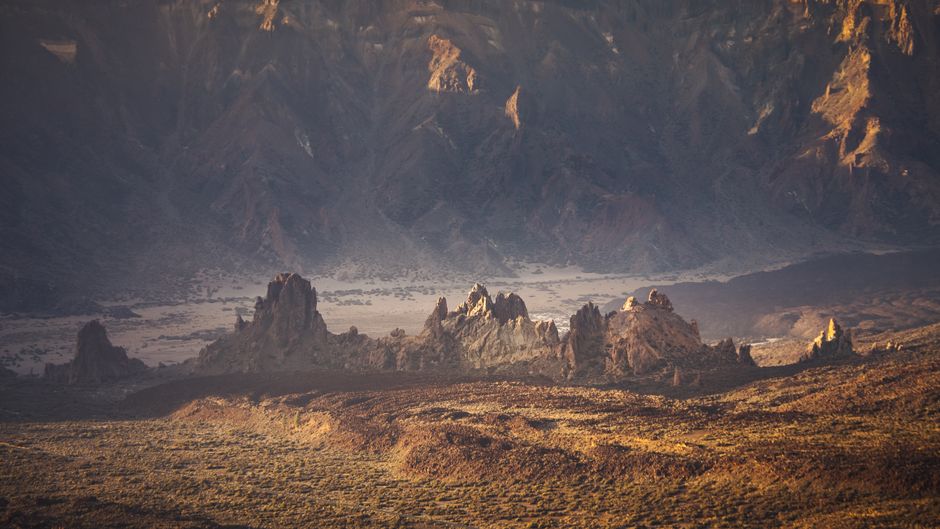
Teide National Park is the volcanic heart of Tenerife: a vast crater floor about 2,000 metres up, ringed by cliffs and crowned by Teide, Spain’s highest peak at about 3,715 metres. Driving in, the viewpoints, the visitor centres and most trails are free. You pay only for the cable car and for the two busiest high trails: the final path to the summit crater costs €15 for visitors from outside the Canaries, booked on the Cabildo’s Tenerife ON site (as of October 2026).
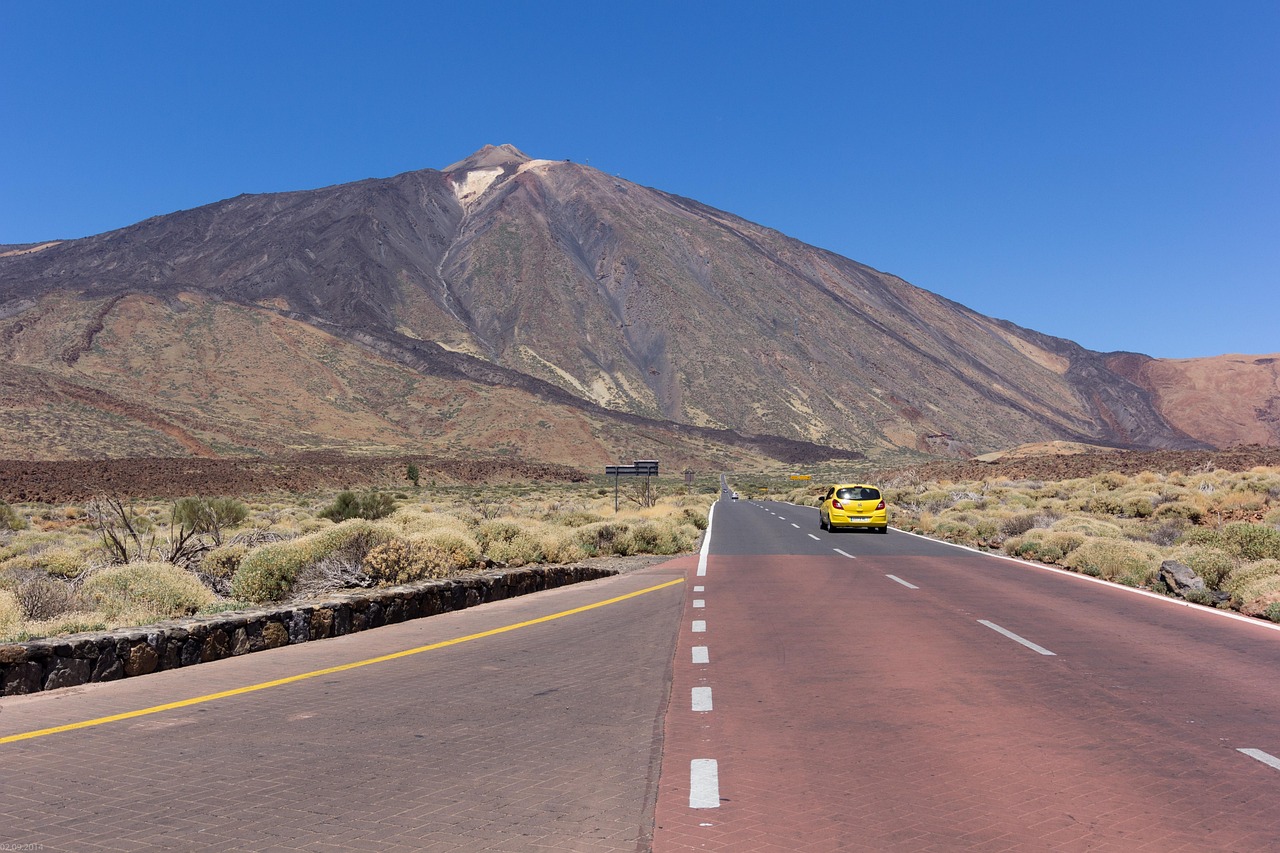
Right now in Teide National Park
- Wed7–12°C45–53°F3 mm rain
- Thu6–10°C42–51°F1 mm rain
- Fri5–10°C41–50°F2 mm rain
- Mon 12 Oct National Day of Spain (Fiesta Nacional de España)
Tickets and tours for Teide National Park
See all tours for Teide National Park →
From local operators, with prices and reviews; you check availability and book on Viator, our partner. We may earn a commission at no extra cost to you. How we earn money
What it is and why it matters
The park, created in 1954, covers about 19,000 hectares of lava flows, craters and pumice fields, and became a UNESCO World Heritage Site in 2007. Turismo de Tenerife calls it Europe’s most visited national park, with around 3 million visitors a year. Teide rises out of Las Cañadas, a huge caldera whose cliffs still wall in the park’s southern side, with its wide neighbour Pico Viejo beside it.
Tenerife is a certified Starlight destination, so the night sky here is superb, and in late spring the red tajinaste spikes, up to 3 metres tall, stand out against the black lava. For the island as a whole, see our Tenerife travel guide.
What you’ll see
Roques de García and the crater floor
The twisted lava towers of the Roques de García, with Teide behind them, make the island’s best-known photo. Trail PNT 03 loops around them: 3.6 km, about two hours, with some 200 metres of up and down, and no permit needed. Opposite, the pale plain of Llano de Ucanca shows the scale of the old caldera.
The cable car and La Rambleta
The Teleférico del Teide climbs from 2,356 metres beside the TF-21 to 3,555 metres at La Rambleta in under eight minutes. From the top station two free short paths lead to viewpoints: Pico Viejo, about 30 minutes, looking down into its crater, and La Fortaleza, looking north over the island.
The summit crater
Trail PNT 10 Telesforo Bravo climbs from La Rambleta to the crater rim: only about 0.69 km and 45 minutes, but steep, up to 60%, and breathless at that altitude. At the top you smell sulphur from the fumaroles.
Permits, fees and hours (as of October 2026)
The Cabildo de Tenerife (the island government) runs bookings on tenerifeon.es.
- PNT 10, to the summit: €15 for visitors from outside the Canaries, €6 for residents of the other islands, free for Tenerife residents and under-14s, since 19 January 2026. Slots run within cable car hours (09:00–17:00), capped at 50 people per slot and 300 a day.
- PNT 07, Montaña Blanca to La Rambleta: the long hike up, 8.2 km one way and about 5 hours 30 minutes. Non-Canary visitors pay €6 on weekdays and €10 at weekends and on holidays.
- Free permit, still bookable only online: PNT 09 to Pico Viejo and the Narices del Teide viewpoint, PNT 23 Los Regatones Negros and PNT 28 Chafarí.
- Booking: a new week opens every Monday at 07:00 Canary time, up to 56 days ahead, for up to 15 people. Carry the permit and the passport or ID it names. If you can’t go, cancel: no-shows can be barred from booking for three months.
- Refunds: if the trail closes for weather or the cable car stops, or if you cancel at least three days ahead.
- Cable car: €42 return for non-resident adults, €21 for children aged 3 to 13, €23.50 one way. In 2026 it runs 09:00–18:00 from 1 to 13 October, 09:00–17:30 from 14 to 24 October, and 09:00–17:00 from 25 October to year end (last ride up 16:00). It closes in strong wind, announced around 08:30, and only on 25 December otherwise. The summit permit is not a cable car ticket: buy both.
- Visitor centres: El Portillo daily 09:00–16:15 and Cañada Blanca daily 09:00–16:00; both close on 25 December and 1 and 6 January.
Local press reported in May 2026 that the Cabildo plans pre-booked, paid parking for visitors from late 2026 and shuttle buses from the coast in 2027. Neither had started when we checked, so look at Tenerife ON before you go.
Getting there
A car is easiest. Roads climb in from La Orotava and Vilaflor (TF-21), La Laguna (TF-24) and Chío (TF-38); the cable car is about an hour from Puerto de la Cruz. TITSA buses 348 (from Puerto de la Cruz) and 342 (from Costa Adeje) reach the cable car with only a few departures a day, so check times first. Car parks at the cable car and the Roques de García are busiest from 10:00 to 15:00.
When to go and how long to allow
Give the park at least half a day; a full day lets you add a walk and sunset. Arrive before 10:00 or after 15:00 to miss the coach crowds. Spring brings flowers and settled weather; in winter, snow and ice can close the summit trail and the cable car. Check the cable car status the same morning.
Safety
- Altitude: above 3,000 metres the air has much less oxygen. Walk slowly and turn back if you feel dizzy, sick or short of breath. The cable car advises against the ride for people with heart or breathing problems, in pregnancy and for children under 3.
- Cold and sun: Izaña, at 2,369 metres, averages highs of 7.5 °C in January. Bring a warm layer and windproof jacket in any season, plus sunscreen and sunglasses.
- Park rules: stay on marked paths; don’t take rocks or plants; no camping, sleeping in vehicles or fires; drones are banned for visitors.
- In an emergency call 112.
Combine it with
Stay for sunset and a stargazing tour, or sleep at the Altavista refuge (3,260 m), whose guests can reach the crater between 06:00 and 09:00 without the daytime slot. On the way down, stop in La Orotava’s old town. If you love volcano hikes, Mount Pico in the Azores is Portugal’s answer to Teide. More routes are in our hiking guide.
Teide National Park FAQ
Is Teide National Park free to visit?
Yes. Entering the park, the viewpoints, parking and most trails are free. You pay only for the cable car and for permits on PNT 10 (€15 for non-Canary visitors) and PNT 07 (€6–€10), as of October 2026.
Do I need a permit to climb to the top of Teide?
Yes, for the final path to the crater, PNT 10, booked on Tenerife ON up to 56 days ahead. Without it you can still ride the cable car and walk to the free Pico Viejo and La Fortaleza viewpoints.
How do I get a Teide permit when they are sold out?
Watch for new dates every Monday at 07:00 Canary time, or book a night at the Altavista refuge, which includes the summit permit for an early-morning climb.
Can you visit Teide National Park without a car?
Yes, but plan around the few TITSA buses: line 348 from Puerto de la Cruz and line 342 from Costa Adeje. Many visitors join a tour with hotel pickup instead.
Is it cold at the top of Teide?
Often. Even in summer it can be near freezing at dawn, and in winter snow and ice sometimes close the cable car and trails. Bring a warm, windproof layer.
Sources
Researched and last reviewed by TravelerCenter on 4 October 2026. Permits and fees come from the Cabildo de Tenerife and Tenerife ON, the national park’s booking and visitor-centre pages (Gobierno de Canarias), and the Ministry for the Ecological Transition’s visitor rules; cable car prices and hours from the operator; trail lengths and park facts from Turismo de Tenerife; climate from AEMET. Parking and shuttle plans come from regional press. Fees and timetables change, so check the official links before you go.
Data: Weather: MET Norway (CC BY 4.0) · Rates: ECB · Holidays: Nager.Date · Costs: World Bank ICP and price levels · © OpenStreetMap contributors (ODBL) · Wikidata (CC0)