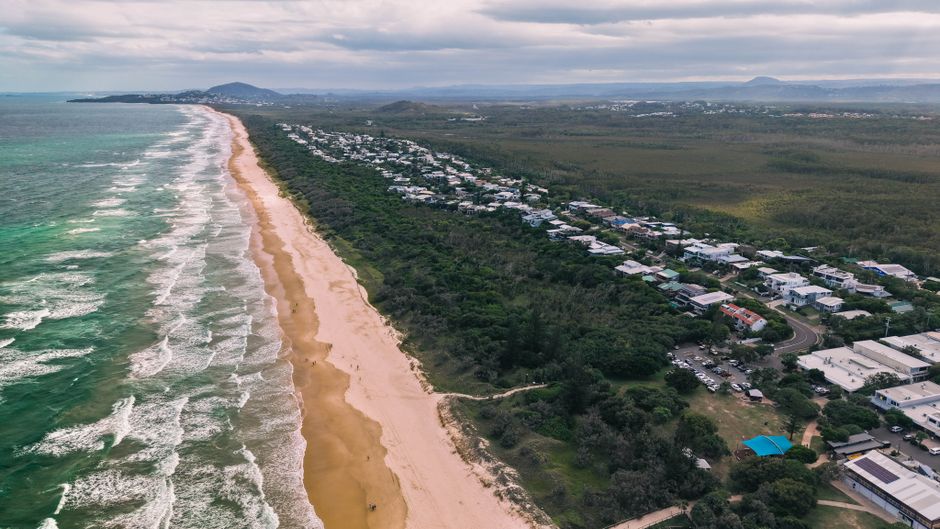
The Sunshine Coast is a 60-kilometer (40-mile) stretch of surf beaches, river towns and green hinterland hills north of Brisbane, Queensland, running from Caloundra in the south to Noosa in the north. It’s the country of the Kabi Kabi and Jinibara peoples. Home to about 350,000 people, it is more relaxed and less built up than the Gold Coast, with a string of distinct towns rather than one strip: chic Noosa with its national park headland and Hastings Street, family-friendly Mooloolaba with its esplanade and whale-watching boats, surfy Coolum and Caloundra, and, inland, the art and craft villages of Montville and Maleny on the Blackall Range and the volcanic peaks of the Glass House Mountains. Add Australia Zoo, founded by the Irwin family, the famous Eumundi Markets and easy access to the Noosa Everglades and K’gari, and the Sunshine Coast makes a classic Queensland holiday. It is only about 1 to 1.5 hours from Brisbane, and like the rest of southeast Queensland it has 50-cent public transport fares. The subtropical climate brings warm, humid summers and mild, sunny winters, with beach weather most of the year.
Right now in Sunshine Coast (Maroochydore)
- Thu19–21°C66–69°F2 mm rain
- Fri17–22°C63–72°FClear
- Sat19–24°C66–75°F1 mm rain
Top tours in Sunshine Coast
See all tours for Sunshine Coast →
From local operators, with prices and reviews; you check availability and book on Viator, our partner. We may earn a commission at no extra cost to you. How we earn money
Sunshine Coast at a glance
- Best months: April to November for warm, sunny and drier weather; July to October for humpback whales off Mooloolaba and Noosa. December to February is hot, humid and busy during school holidays.
- Time needed: three days for Noosa, Mooloolaba and Australia Zoo; five to seven days to add the hinterland, the Glass House Mountains and the Everglades.
- Getting there: fly to Sunshine Coast Airport (MCY) near Marcoola, or drive about 1 to 1.5 hours north from Brisbane.
- Costs (as of October 2026): Translink buses and trains cost a flat 50 cents per trip; Australia Zoo adult entry is $77.45.
- Before you go: entry rules (ETA, eVisitor or visa), biosecurity and money are covered in our Australia travel guide.
Sunshine Coast towns and who each one suits
Noosa Heads
The most upmarket and popular town, with Hastings Street’s boutiques and restaurants, sheltered Main Beach facing north, the Noosa River and Noosa National Park on the headland. It suits couples, families and anyone wanting walkable beach life.
Mooloolaba and Maroochydore
The coast’s busiest hub. Mooloolaba has a patrolled beach on a calm bay, a palm-lined esplanade of cafes, the SEA LIFE aquarium and the wharf where whale-watching boats depart. Maroochydore, next door, has the main shopping center and river.
Coolum and Peregian
Between Mooloolaba and Noosa, these smaller beach towns are quieter, with long surf beaches, cafes and the climb up Mount Coolum.
Caloundra
At the southern end, Caloundra has calm family beaches such as Kings Beach with its free saltwater pool, coastal walks and views over Pumicestone Passage to Bribie Island.
The hinterland: Montville, Maleny and Eumundi
Inland, the Blackall Range villages have craft shops, cafes, B&Bs and sweeping views over the coast and the Glass House Mountains. Eumundi is home to the famous markets.
Top things to see on the Sunshine Coast
Noosa National Park
On the headland beside Noosa Heads, this small, popular national park has a coastal track past Tea Tree Bay, Granite Bay and Hell’s Gates, with views of surfers at the points and a good chance of seeing koalas, dolphins, turtles and, in season, whales. Entry is free. Start early to beat the crowds and the heat, and avoid parking hassles by walking from Hastings Street.
Australia Zoo
At Beerwah, Australia Zoo was made famous by Steve Irwin, “the Crocodile Hunter,” and is still run by the Irwin family. It is open daily from 9 a.m. to 5 p.m., with crocodile shows, koalas, kangaroos, tigers and a wildlife hospital. Adult entry costs $77.45, and children under 3 get in free. Allow a full day.
Eumundi Markets
About 20 minutes from Noosa, the Eumundi Markets are open every Wednesday and Saturday, 7:30 a.m. to 2 p.m., all year, with hundreds of stalls of crafts, art, clothing, produce and food. Arrive early for parking and cooler temperatures.
Glass House Mountains
These dramatic volcanic plugs rise from the plains behind Beerwah. The Glass House Mountains Lookout gives the best roadside view, and the short, steep climb up Mount Ngungun rewards walkers with a summit panorama. Some peaks are culturally significant to the Jinibara and Kabi Kabi peoples, and climbing on some is restricted.
Mooloolaba and whale watching
Mooloolaba’s sheltered beach is one of the safest on the coast. From the wharf, cruises head out to see humpback whales on their migration from about July to October, and some operators offer swims with whales under strict rules.
Noosa Everglades
Upstream from Noosa, the Noosa River widens into a quiet wetland of mirror-like water, known as the Everglades, best explored on a guided boat cruise or by kayak, with camping along the upper river.
The hinterland drive
A classic half-day loop climbs from the coast to the Blackall Range. Start at Landsborough or Nambour, drive up to Maleny, a dairy town turned arts village, then walk the rainforest boardwalk of Mary Cairncross Scenic Reserve, where a lookout frames the Glass House Mountains. Continue along the ridge road to Montville, with its galleries, fudge shops and cafes, and the short walk to Kondalilla Falls, where a rock pool sits at the top of the falls (check signs before swimming). Finish at Mapleton for views down to the coast, then descend via Nambour. The road is narrow and winding, and the hinterland is often several degrees cooler than the beaches, with mist in the mornings.
The Coastal Pathway and headlands
A shared walking and cycling path follows much of the coast from Caloundra to Coolum, linking beaches, surf clubs and lookouts. Good sections include Kings Beach to Moffat Beach in Caloundra, Mooloolaba’s esplanade to Point Cartwright, where the lighthouse looks over the Mooloolah River mouth and is a good whale-watching spot, and the boardwalks between Coolum and Point Arkwright. Early morning is cooler, and you may see dolphins in the surf.
Kabi Kabi and Jinibara culture
The Sunshine Coast and its hinterland hold many sites of cultural significance, from the Glass House Mountains, whose peaks feature in Dreaming stories, to bunya pine gatherings once held in the Blackall Range. Look for Aboriginal-led walks, cultural tours and art centers, and respect signs asking visitors not to climb or enter certain places.
Rainy-day options
When summer storms roll in, try the SEA LIFE aquarium in Mooloolaba, the Ginger Factory’s rides and food stalls at Yandina, art galleries in Noosa and Montville, or a long lunch at a hinterland brewery or distillery. Australia Zoo is mostly outdoors, but it has covered areas and stays open in light rain.
Noosa National Park walks
The park has several connected tracks. The Coastal Track, the most popular, follows the headland from the park entrance past Tea Tree Bay and Granite Bay to Hell’s Gates, with the option of continuing to Alexandria Bay; the first section is paved. The Tanglewood Track loops inland through eucalypt forest and rainforest, and the Palm Grove Circuit is a short rainforest walk near the entrance. Look up for koalas in the eucalyptus trees along the Coastal Track, and carry water: there’s little shade and no drinking water beyond the entrance.
Other things to do on the Sunshine Coast
- Hinterland waterfalls: Kondalilla Falls near Montville and the rainforest of Mary Cairncross Scenic Reserve near Maleny.
- Surfing: Noosa’s points are famous for longboarding; surf schools teach at Noosa Main Beach, Mooloolaba and Coolum.
- Mount Coolum: a steep hour-long climb for panoramic views along the coast.
- SEA LIFE Sunshine Coast: an aquarium at Mooloolaba with seals, sharks and turtles.
- Big Pineapple and the Ginger Factory: classic Queensland roadside attractions near Nambour and Yandina.
Food and drink
Expect fresh prawns and seafood from Mooloolaba’s trawlers, macadamias, ginger and tropical fruit from the hinterland, cafes on every beachfront and fine dining in Noosa. Craft breweries, distilleries and farm gates dot the hinterland. Tipping is optional.
Day trips from the Sunshine Coast
K’gari and Rainbow Beach
From Noosa, 4WD tours drive the beach north through Great Sandy National Park to Rainbow Beach and cross by barge to K’gari, the world’s largest sand island. A vehicle access permit is needed for self-drivers.
Brisbane
Brisbane is 1 to 1.5 hours south by car, or by train from Nambour and other stations on the Sunshine Coast line.
Bribie Island and Pumicestone Passage
South of Caloundra, Bribie Island is reached by bridge and offers calm beaches, birdwatching and 4WD beaches on its ocean side.
Hervey Bay
About 2.5 to 3 hours north, Hervey Bay is a calm-water town and the main base for whale watching from July to October and for barges to K’gari.
Nearby destinations
- Brisbane91 km
- Gold Coast155 km
- K'gari (Fraser Island)157 km
- Byron Bay228 km
Getting there and getting around
Sunshine Coast Airport (MCY)
The airport, between Maroochydore and Coolum, has direct flights from Sydney, Melbourne and other Australian cities and seasonal international flights. Buses and shuttles connect to all towns; Noosa is about 30 minutes north, Mooloolaba about 20 minutes south.
From Brisbane
Brisbane Airport is about 1.5 hours away by road, and many visitors fly there and drive north on the Bruce Highway. Shuttle buses run from Brisbane Airport to Sunshine Coast towns. Trains on the Sunshine Coast line run to Nambour, with bus connections to the coast.
Getting around
Translink buses link the coastal towns, and fares are a flat 50 cents per trip across all Translink services, no matter the distance or how you pay; tap on with a go card or a contactless bank card. A car is the easiest way to reach the hinterland, Australia Zoo and the Glass House Mountains. Parking in Noosa can be difficult in peak season; use buses or walk.
When to go and how long to stay
The Sunshine Coast has a warm subtropical climate. Summer (December to February) is hot and humid, with highs around 28–29 °C (83–84 °F), afternoon storms and the most rain. Autumn (March to May) is warm and gradually drier. Winter (June to August) is mild and sunny, with highs around 21–22 °C (70–72 °F) and cool nights, ideal for walking. Spring (September to November) is warm and dry, with whales still passing until about October.
| Month | Average high | Average low | Rain | Rain days (≥1 mm) |
|---|---|---|---|---|
| Jan | 29 °C (84 °F) | 21 °C (70 °F) | 145 mm (5.7 in) | 10 |
| Feb | 29 °C (84 °F) | 21 °C (70 °F) | 208 mm (8.2 in) | 11 |
| Mar | 28 °C (82 °F) | 20 °C (68 °F) | 177 mm (7.0 in) | 12 |
| Apr | 26 °C (79 °F) | 17 °C (63 °F) | 149 mm (5.9 in) | 11 |
| May | 24 °C (74 °F) | 14 °C (56 °F) | 152 mm (6.0 in) | 10 |
| Jun | 21 °C (71 °F) | 12 °C (53 °F) | 119 mm (4.7 in) | 9 |
| Jul | 21 °C (70 °F) | 10 °C (49 °F) | 66 mm (2.6 in) | 7 |
| Aug | 22 °C (72 °F) | 10 °C (50 °F) | 71 mm (2.8 in) | 5 |
| Sep | 24 °C (76 °F) | 13 °C (55 °F) | 53 mm (2.1 in) | 5 |
| Oct | 26 °C (78 °F) | 16 °C (60 °F) | 92 mm (3.6 in) | 7 |
| Nov | 27 °C (81 °F) | 18 °C (64 °F) | 80 mm (3.1 in) | 7 |
| Dec | 28 °C (83 °F) | 20 °C (68 °F) | 150 mm (5.9 in) | 10 |
| Year | 26 °C (78 °F) | 16 °C (61 °F) | 1,456 mm (57 in) | 104 |
Figures are the Bureau of Meteorology’s 1991–2020 statistics for Sunshine Coast Airport, near Marcoola (about 27 years of records, 1994–2020).
Events worth planning around
- Noosa Eat and Drink Festival (around May).
- Noosa Triathlon Multi Sport Festival (around late October or early November).
- Whale season (about July to October).
- Woodford Folk Festival (late December to 1 January): a large music and arts festival in the hinterland.
Dates vary; check the organizers’ websites.
How long to stay: 3, 5 and 7 days
- Three days: Noosa National Park and Hastings Street, Eumundi Markets on a Wednesday or Saturday, and Australia Zoo.
- Five days: add Mooloolaba and a whale cruise in season, and the hinterland villages and Glass House Mountains.
- Seven days: add the Noosa Everglades and a 4WD trip to Rainbow Beach or K’gari.
Where to stay on the Sunshine Coast
- Noosa Heads and Noosaville: resorts, apartments and boutique hotels near the beach or river.
- Mooloolaba and Maroochydore: beachfront apartment towers and family resorts.
- Coolum and Peregian: quieter apartments and beach houses.
- Hinterland: B&Bs, cottages and rainforest retreats with views.
Apartments often require minimum stays in peak periods. Book ahead for Christmas, January and Easter.
Typical costs on the Sunshine Coast
| Item (as of October 2026) | Australian dollars | About US dollars |
|---|---|---|
| — | — | — |
| Translink bus or train trip | $0.50 | $0.35 |
| Australia Zoo, adult | $77.45 | $53 |
| Noosa National Park entry | Free | Free |
| Whale-watching cruise, adult | about $70–120 | about $50–85 |
| Noosa Everglades cruise | about $100–150 | about $70–105 |
| Surf lesson (2 hours) | about $70–90 | about $50–60 |
| Mid-range apartment or hotel, per night | about $220–400 | about $150–275 |
Translink fares and Australia Zoo’s adult price are official; other prices are typical ranges, not official prices. Conversions use about US$0.69 to A$1.
Safety on the Sunshine Coast
- Rips and surf: many beaches have strong rips. Swim at patrolled beaches between the red and yellow flags; Mooloolaba, Noosa Main Beach and Kings Beach are the calmest.
- Bluebottles and stingers: bluebottles (Pacific man o’ war) wash in with onshore winds, mainly in summer; rinse stings with seawater and soak in hot water for pain. Dangerous tropical box jellyfish are rare this far south.
- Sharks: Queensland’s Shark Control Program uses nets and drumlines at some beaches; avoid swimming at dawn, dusk and near river mouths.
- Crocodiles: the Sunshine Coast is south of Queensland’s crocodile habitat, which begins around Gladstone.
- Bushfire season: roughly August to December in southeast Queensland. Check fire danger ratings before hinterland walks and obey fire bans.
- Sun and heat: UV is extreme in summer; use sunscreen and a hat and drink plenty of water.
- Emergencies: call 000 (112 also works from mobile phones).
Practical tips for the Sunshine Coast
- Time zone: Australian Eastern Standard Time (UTC+10), with no daylight saving in Queensland.
- Paying fares: tap on and tap off with a contactless card or go card to get the 50-cent fare.
- Markets: Eumundi on Wednesdays and Saturdays; many towns have weekend markets too.
- Plugs and money: type I plugs at 230 V; cards accepted almost everywhere.
- Parking in Noosa: Hastings Street and the national park car park fill by mid-morning in holidays; park further out and walk the boardwalk, or use the bus.
- Australia Zoo timing: check the daily show schedule when you arrive, and allow at least five hours; the main crocodile show is the highlight.
- School holidays: Queensland and New South Wales school holidays, especially late December to January, Easter and late September, bring crowds and higher prices.
What to pack for the Sunshine Coast
Pack swimwear, a rash vest, a broad-brimmed hat, high-factor sunscreen, sunglasses, sandals and comfortable walking shoes for the national parks and hinterland. Add a light sweater for winter evenings and the cooler hinterland.
Sunshine Coast travel FAQ
Is Noosa or Mooloolaba better to stay?
Noosa for its national park, river and stylish dining; Mooloolaba for a central location, calm beach and family-friendly esplanade.
How much is Australia Zoo?
Adult entry is $77.45, and children under 3 are free. It’s open daily from 9 a.m. to 5 p.m.
When are the Eumundi Markets on?
Every Wednesday and Saturday, from 7:30 a.m. to 2 p.m., all year round.
How much is the bus on the Sunshine Coast?
A flat 50 cents per trip on all Translink services.
How far is the Sunshine Coast from Brisbane?
About 1 to 1.5 hours by car, or longer by train and bus.
Is Noosa National Park free?
Yes. Entry is free; the coastal walk starts near Hastings Street.
When can you see whales on the Sunshine Coast?
From about July to October, from boats out of Mooloolaba and Noosa, or from headlands.
Are there crocodiles on the Sunshine Coast?
No. Queensland’s crocodile habitat begins further north, around Gladstone.
What is the best time to visit the Sunshine Coast?
April to November for warm, sunny and drier weather.
Can you visit K’gari from Noosa?
Yes, on a 4WD tour via Rainbow Beach; self-drivers need a 4WD and a vehicle access permit.
Plan your trip
Partner links: TravelerCenter may earn a commission if you book, at no extra cost to you.
Sources · last reviewed 5 October 2026
Researched and last reviewed on 5 October 2026. The 50-cent Translink fare comes from Translink; Australia Zoo’s hours and adult price from Australia Zoo; Eumundi Markets’ days and hours from Eumundi Markets; crocodile habitat from the Queensland Government; climate from the Bureau of Meteorology’s 1991–2020 statistics for Sunshine Coast Airport; population and coordinates from Wikidata. Queensland Parks and Wildlife Service pages could not be read from this environment, so Noosa National Park details, flight routes, drive times, whale season, events, bluebottle and shark guidance, bushfire season and typical prices are general references and flagged for checking. For entry rules, biosecurity and money, see our Australia travel guide.
Data: Weather: MET Norway (CC BY 4.0) · Sea temperature: NOAA CoastWatch · Air quality: OpenAQ · Rates: ECB · Costs: World Bank ICP and price levels · Wikidata (CC0)