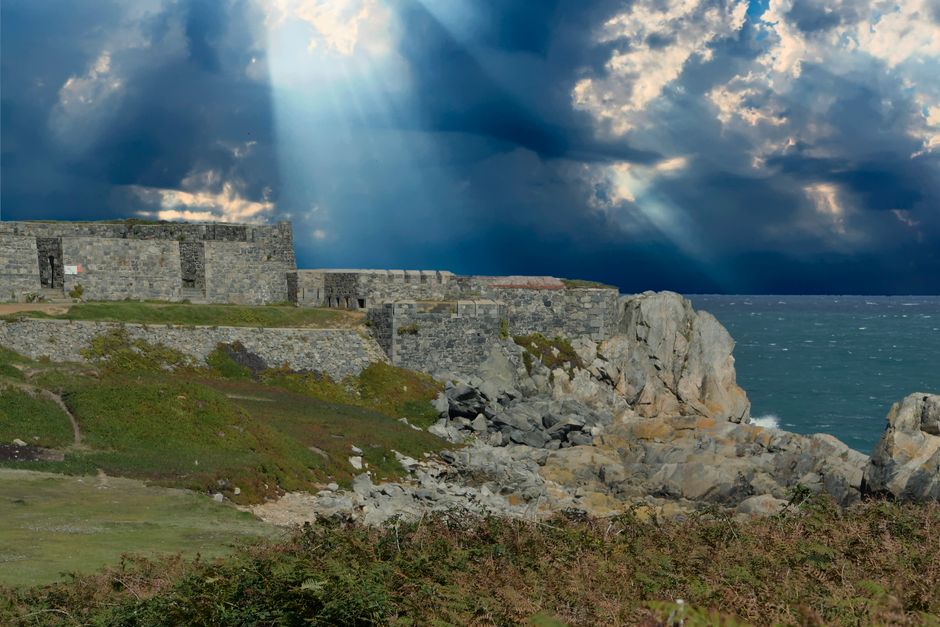
Guernsey is the second-largest of the Channel Islands: a green, self-governing island of about 63 km² (24 square miles) in the Gulf of St Malo, with the smaller islands of Herm, Sark and Alderney close by. It has a harbor capital that ranks among the prettiest in the British Isles, a castle guarding the harbor mouth, the house where Victor Hugo wrote Les Misérables in exile, a tiny chapel covered in broken china, Occupation-era bunkers and museums, cliff paths along the south coast and wide sandy bays in the west. A 20-minute boat ride takes you to car-free Herm and its Shell Beach, and a 45-minute crossing to Sark, where there are no cars at all. Guernsey feels British, with English spoken and sterling in use, but its Norman past shows in its place names, its laws and the old island language, Guernésiais. Come from May to September for beaches and island-hopping, in spring for wildflowers on the cliffs, and allow four days to a week; since April 2026 most non-British, non-Irish visitors arriving from outside the UK and Ireland need an ETA before they travel.
Right now in Guernsey
- Wed15–18°C59–64°F15 mm rain
- Thu14–16°C58–60°F1 mm rain
- Fri15–17°C60–63°F3 mm rain
Multi-day tours of Guernsey
Multi-day tours from local operators. You check dates and book on Viator, our partner; we may earn a commission at no extra cost to you. How we earn money
Guernsey at a glance: overview and geography
Guernsey is a British Crown Dependency. It is not part of the United Kingdom and not part of the European Union: it has its own parliament, the States of Deliberation, its own laws, taxes and courts, and its own banknotes and coins, while the UK is responsible for its defense and international relations. The Bailiwick of Guernsey is made up of three jurisdictions, Guernsey (with Herm, Jethou and Lihou), Alderney and Sark, each with its own character. The Government of Guernsey’s electronic census counted 64,781 people on Guernsey on 31 December 2023.
The island is shaped roughly like a right-angled triangle. The south is high: a plateau of farmland that ends in granite cliffs above small bays such as Fermain, Moulin Huet, Saints and Petit Bot. The land slopes gently down to the north and west, where the coast is low, with long sandy beaches such as Vazon, Cobo and L’Ancresse, rocky headlands and old fortifications. St Peter Port, the capital, climbs the hillside on the east coast, facing Herm, Jethou and Sark across a narrow channel; St Sampson’s, to the north, is the island’s second harbor.
The tides are huge: Visit Guernsey gives a range of up to about 33 feet (10 m), so the coastline changes completely every six hours. At low water, reefs, sandbanks and rock pools appear, causeways open to tidal islets such as Lihou, and some beaches double in size; at high water, they can vanish. Always check the tide tables before crossing to an islet or walking around a headland.
Guernsey was part of the Duchy of Normandy, and when King John lost mainland Normandy to France in 1204, the Channel Islands stayed with the English Crown. That history explains the island’s castles and its Norman-French heritage: many roads, houses and fields still have French or Guernésiais names, although English is the everyday language. From 1940 to 1945, the island was occupied by German forces, who left a dense network of bunkers, towers and tunnels, and Liberation Day, 9 May, is the island’s national holiday.
Time zone: Guernsey uses the same time as the UK, Greenwich Mean Time (UTC+0) in winter and British Summer Time (UTC+1) from late March to late October.
Guernsey’s coasts and neighboring islands
- St Peter Port and the east coast: the capital, its harbor and marinas, Castle Cornet, Hauteville House, Candie Gardens and the start of the south coast cliff path.
- The south coast (St Martin, Forest, Torteval): high cliffs, wooded valleys and small bays reached by steep paths, from Fermain Bay to Moulin Huet, Petit Bot and Pleinmont; Sausmarez Manor and the Little Chapel are inland.
- The west coast (St Peter’s, St Saviour’s, Castel): long, sunset-facing beaches at Rocquaine, Vazon and Cobo, Fort Grey and its shipwreck museum, and Lihou Island, reached by a tidal causeway.
- The north (Vale, St Sampson’s): flat land, sandy bays such as L’Ancresse and Pembroke, old forts and a neolithic tomb, and St Sampson’s harbor.
- Herm, Sark and Alderney: car-free Herm a short hop from St Peter Port, wild and dark-skied Sark further out, and Alderney to the north, reached by plane or seasonal ferry.
Where to go in Guernsey: town, cliffs, bays and islands
Guernsey is small enough to see from one base: the airport is about 15 minutes by car from St Peter Port, according to Guernsey Airport, and buses run from the capital to every coast. Most visitors stay in or near St Peter Port, which is also where the boats to Herm and Sark leave from, or in a hotel on the south or west coast.
St Peter Port
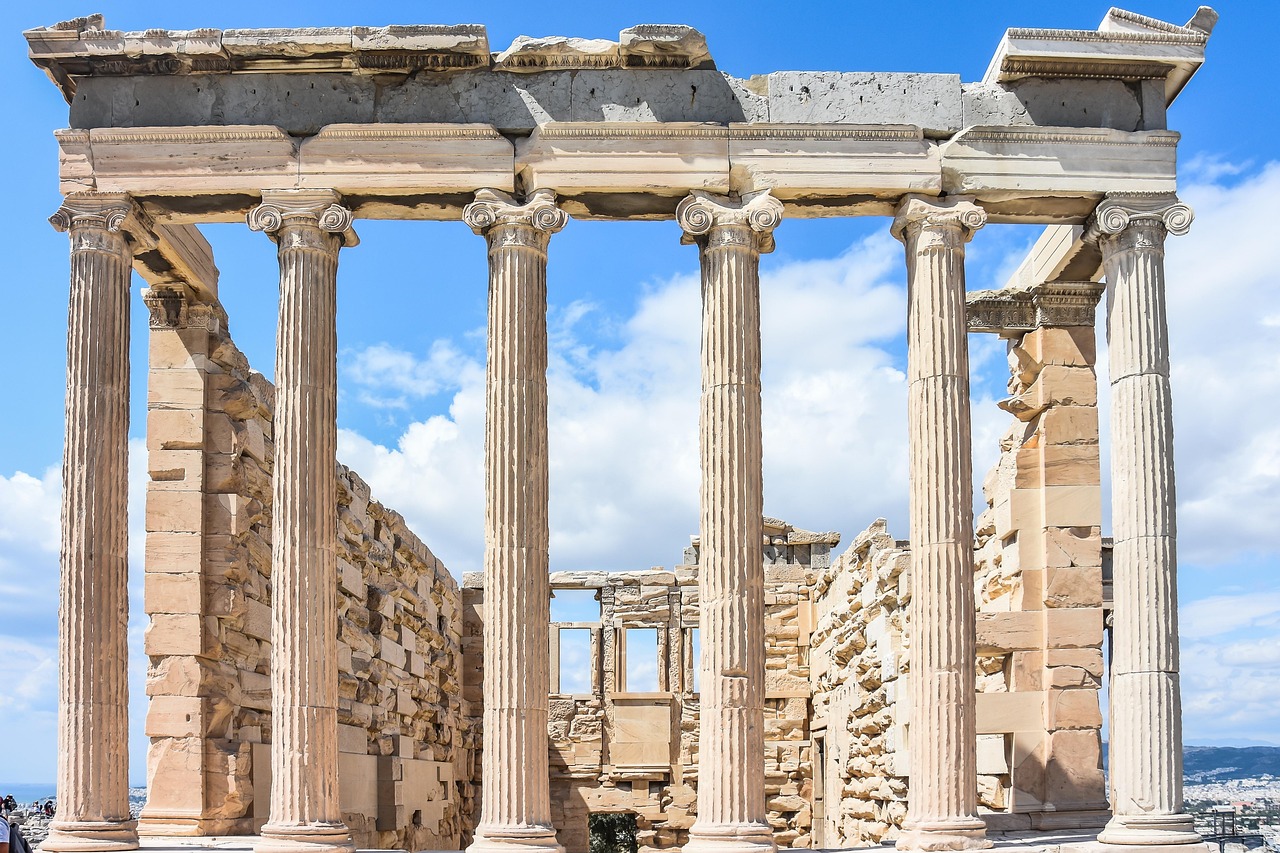
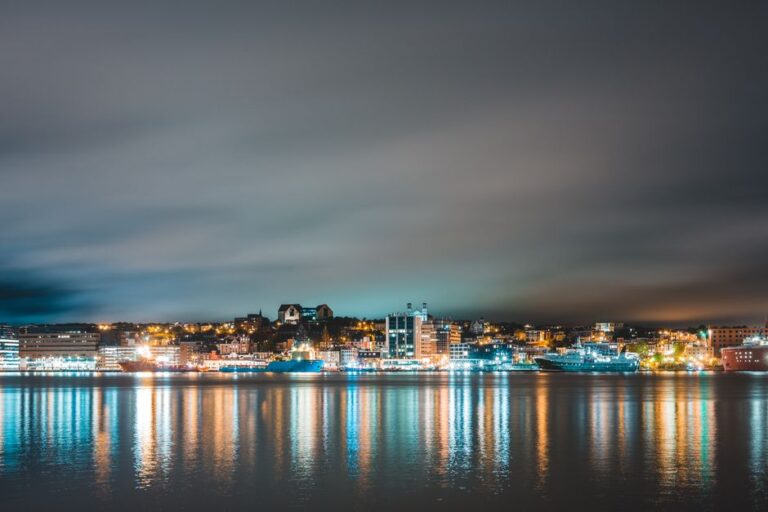
The capital is a steep, granite town of narrow lanes, stepped alleys and Regency and Georgian houses climbing up from the harbor, with the island’s best choice of restaurants, shops (with no VAT) and hotels. Its sights include Castle Cornet on the harbor breakwater, Victor Hugo’s Hauteville House, the Guernsey Museum in Candie Gardens and the Victoria Tower. See our St Peter Port travel guide for sights, areas and where to stay.
Castle Cornet
The castle that guards St Peter Port’s harbor, begun in the Middle Ages on a tidal islet, now holds four museums, period gardens and a café; in season, the noonday gun is fired by keepers in scarlet uniforms. Plan ahead for 2026–27: according to Guernsey Museums, Castle Cornet closed on 7 September 2026 for the replacement of the bridge that links it to the breakwater and is scheduled to reopen at the beginning of June 2027. Adult tickets cost £12 in 2026.
Hauteville House: Victor Hugo’s home in exile
The French writer Victor Hugo lived in Guernsey for 15 years in exile from Napoleon III’s France and decorated his house in St Peter Port himself, room by room. It now belongs to the City of Paris and opens from April to September, closed on Wednesdays, from 10:00 to 16:00, for guided visits in small groups, so book ahead; adult tickets cost £12, concessions £10, and under-18s go free, according to Maisons de Victor Hugo.
The south coast cliffs and bays
A cliff path runs almost the whole length of the south coast, from Havelet Bay on the edge of St Peter Port past Clarence Battery, Fort George and the bluebell woods to Fermain Bay, a sheltered cove with a beach café that Visit Guernsey calls one of the most-loved views on the island, and on west to Jerbourg Point, Moulin Huet, Saints Bay, Petit Bot and Pleinmont. Renoir painted around Moulin Huet in 1883, and a self-guided Renoir Walk marks his viewpoints with five picture frames.
The west coast: Rocquaine, Vazon and Cobo
The west coast faces the Atlantic, with the best sunsets and long sandy bays at Cobo and Vazon. At Rocquaine Bay stands Fort Grey, a small Martello tower on a rock nicknamed the “Cup and Saucer,” which houses a shipwreck museum with views of the Hanois lighthouse. In 2026, Fort Grey opens daily from 25 March to 1 November, 10:00–16:30, and costs £5 for adults and £1.50 for children and students, according to Guernsey Museums. Nearby, Lihou Island is reached by a causeway at low tide only.
Inland: the Little Chapel, Sausmarez Manor and the Occupation
The Little Chapel at Les Vauxbelets, in St Andrew, is a tiny chapel that Brother Déodat began building in March 1914 as a miniature of the grotto and basilica at Lourdes and covered it inside and out with pebbles, shells and fragments of broken china. It is free to visit (donations keep it going) and opens from 9:00 to 18:00 in summer and 9:00 to 16:00 in winter. Sausmarez Manor, in St Martin, has a subtropical garden, a sculpture park and a Saturday market from Easter to October. The German Occupation Museum, near the airport, tells the story of 1940 to 1945 with a re-created Occupation-era street (cash only, according to Visit Guernsey).
Herm
About 3 miles (5 km) off St Peter Port, Herm is a tiny, car-free island of footpaths, farmland and beaches, with a hotel, cottages and a campsite. The boat takes about 20 minutes. Shell Beach and Belvoir Bay are its best-known beaches. Travel Trident sails to Herm every day of the year except Christmas Day from the Inter Island Quay by the Weighbridge Clock Tower in St Peter Port; standard 2026 return fares are £19 for adults and £9 for children, with cheaper early-morning sailings.
Sark
Sark is a world apart: an island of high cliffs and green fields with about 500 residents, no cars and famously starry skies (it is a Dark Sky island). You walk, rent a bike or take a horse-drawn carriage. Don’t miss La Coupée, the narrow ridge high above the sea that joins Little Sark to the main island. Isle of Sark Shipping sails from the Inter Island Quay in St Peter Port in about 45 minutes, several times a day from April to October and Monday to Saturday (with some Sundays) in winter; it is a foot-passenger service, and photo ID is required for inter-island travel.
Alderney, Jersey and France
Alderney, the most northerly Channel Island, is a short flight with Aurigny all year, or a ferry crossing with Alderney Ferry Services from March to October. Jersey is linked by Aurigny flights and, from March to October, by the Islands Unlimited passenger ferry, so you can combine both islands; see our Jersey travel guide and St Helier guide. France is close too: Brittany Ferries sails to Saint-Malo in about two hours, and Manche Îles Express links Guernsey with Granville, Carteret and Diélette in Normandy, opening up Mont-Saint-Michel and Brittany.
St Peter Port Travel Guide
Plan a visit to St Peter Port, Guernsey's capital: Castle Cornet and the noonday gun (closed from 7 September 2026 to June 2027), Victor…
Best time to visit Guernsey
Guernsey has a mild maritime climate, with no great extremes: winters are mild, damp and windy rather than cold, and summers are warm, bright and fairly dry rather than hot. The table below uses the Guernsey Met Office’s 1991–2020 seasonal averages for Guernsey Airport, the island’s official climate station, published in its 2025 annual weather report.
| Season (Guernsey Airport, 1991–2020) | Average high / low | Sunshine a day | Rainfall in the season | What it’s like |
|---|---|---|---|---|
| Spring (Mar–May) | 12.6 °C / 7.4 °C (55 °F / 45 °F) | about 6 hours | about 166 mm | Bright and breezy, the cliff paths full of flowers; the driest season, but the sea is still cold. |
| Summer (Jun–Aug) | 19.1 °C / 13.3 °C (66 °F / 56 °F) | about 8 hours | about 148 mm | The warmest and sunniest season; beach weather, long evenings, island-hopping and the busiest time. |
| Autumn (Sep–Nov) | 15.2 °C / 10.9 °C (59 °F / 52 °F) | about 4 hours | about 260 mm | September is often lovely, with the sea at its warmest; October and November turn wetter and windier. |
| Winter (Dec–Feb) | 9.2 °C / 5.5 °C (49 °F / 42 °F) | about 2 hours | about 283 mm | Mild, gray and wet, with gales and rare frost; quiet, with some sights closed. |
Over the year, the long-term mean temperature at the airport is about 11.7 °C (53 °F), and the Guernsey Met Office puts average annual rainfall at around 860 mm. The best months for beaches and boat trips to Herm and Sark are June to September; May and September are ideal for walking, with fewer people and lower prices than July and August.
Guernsey’s events calendar
- Liberation Day: 9 May, a public holiday marking the end of the German Occupation in 1945, with celebrations along the St Peter Port seafront.
- The North Show and Battle of Flowers: Guernsey’s largest summer event, held over two days at Saumarez Park in Castel in late August, with live music, food and craft stalls, livestock and garden competitions, the Battle of Flowers parade of floral floats and an illuminated evening cavalcade. The 2026 show was on 26–27 August, according to the organizers; the 2027 dates had not been published when we checked.
How long to stay: sample itineraries
A long weekend (three days)
Day one: St Peter Port, with the old town, Candie Gardens and Hauteville House (April to September). Day two: walk the cliff path from St Peter Port to Fermain Bay, then take the bus around the south and west coasts for the Little Chapel, Fort Grey and sunset at Cobo or Vazon. Day three: a day trip to Herm for Shell Beach and a walk around the island.
Five days
Add a day on Sark, with La Coupée and a carriage ride or bike tour, and a day for Sausmarez Manor, the German Occupation Museum and a beach afternoon in the north at L’Ancresse or Pembroke. When Castle Cornet is open (until 7 September 2026, then again from June 2027), give it half a day.
A week or more
Spend a night on Sark or Herm, fly to Alderney, or take the ferry to Jersey or Saint-Malo. Walk the whole south coast cliff path in sections and cross to Lihou at low tide.
Entry rules, money and costs
Entry and the ETA
Guernsey is part of the Common Travel Area with the United Kingdom, Ireland, Jersey and the Isle of Man. It is not part of the Schengen area. According to the Government of Guernsey and Visit Guernsey:
- Arriving from the UK or Ireland: you do not need a passport, but every visitor needs some form of photo ID, and airlines and ferry companies ask for it.
- Arriving from anywhere else, including France, you need a valid passport, whatever your nationality, apart from the exceptions below.
- ETA: since 23 April 2026, non-visa nationals, such as citizens of EU countries and the USA, who travel to the Bailiwick of Guernsey directly from outside the Common Travel Area, for example by ferry from France or on a flight from Paris, need an Electronic Travel Authorisation (ETA). It applies to all arrivals by air and sea, including private planes and yachts. You apply on GOV.UK or with the official UK ETA app. When the Government of Guernsey announced it in March 2026, an ETA cost £16, with a rise to £20 announced; it is valid for two years or until your passport expires, whichever comes first, for any number of visits of up to six months. If you fly in via the UK, you are traveling within the Common Travel Area, and the UK’s own ETA rules apply to your arrival in Britain.
- No ETA needed: British and Irish citizens, people who already hold a visa or immigration permission, people with EU Settlement Scheme status, children on organized French school trips, and French citizens on a day trip with a French national identity card.
- French day-trippers: French nationals may visit Guernsey for the day with a national ID card on the direct ferries (Brittany Ferries or Manche Îles Express) through the 2026 season, as long as they return to France the same day and do not travel on to Jersey.
- Visa nationals need a visa before they travel.
If you take the ferry to or from Saint-Malo or Normandy, remember that France is in the Schengen area, so non-EU travelers go through Schengen border checks there, including registration in the EU’s Entry/Exit System (EES).
Money
Guernsey uses the pound sterling and issues its own notes and coins, worth exactly the same as British pounds. UK and Jersey money can be used on the island, but Guernsey notes are not accepted in the UK, so spend them or change them before you leave. Major credit cards are widely accepted, and there are cash machines at banks, the airport, supermarkets and garages. There is no VAT in Guernsey, which makes shopping and fuel relatively good value.
Healthcare
Guernsey’s health service is not part of the NHS, and doctors and the Emergency Department charge for their services, so travel insurance matters. The main hospital is the Princess Elizabeth Hospital. Under a reciprocal health arrangement in force since 1 January 2023, UK residents receive medically necessary care free of charge when it cannot wait until they get home, and visitors from the UK and Jersey are exempt from Emergency Department charges. Other visitors pay: since 1 October 2024, an adult Emergency Department visit costs £100 for assessment, advice or minor treatment and £250 for assessment and treatment, according to the Government of Guernsey, and ambulances, doctors’ visits and repatriation are also charged. Even UK visitors should bring insurance, as the arrangement does not cover repatriation.
How expensive is Guernsey?
Guernsey costs about the same as a holiday in the south of England, with hotels pricier in July and August, but there is no VAT, buses are cheap, and public parking is free. The beaches, cliff paths and the Little Chapel cost nothing. The figures below are our estimates for one person per day, sharing a double room, as of October 2026.
| Style | Estimated cost per day | What that looks like |
|---|---|---|
| Budget | about £70–110 | A campsite or simple guesthouse, buses, picnic lunches, one museum |
| Mid-range | about £150–250 | A three- or four-star hotel, buses or a rental car, a boat to Herm, restaurant dinners |
| High-end | about £350+ | A boutique or luxury hotel, fine dining, private boat trips and tours |
A Guernsey Museums Discovery Pass costs £24 per named adult and gives 12 months of unlimited entry, during normal opening hours, to Castle Cornet, the Guernsey Museum at Candie, Fort Grey and the German Naval Signals Headquarters, with free entry for all accompanying children under 18. It pays for itself after two or three visits.
Getting there and getting around
By air
Guernsey Airport is in the Forest parish, in the southwest of the island, about 15 minutes by car from St Peter Port. Flights from the UK take as little as 40 minutes. According to Visit Guernsey, Aurigny, the island’s own airline, flies from London Gatwick, London City, Birmingham, Manchester, Bristol, East Midlands, Edinburgh, Southampton, Exeter, Dublin and Paris, and British Airways flies daily from London Heathrow. Summer charters come from Teesside, Switzerland, the Netherlands and Germany. Aurigny also flies to Alderney and Jersey all year. Buses 71, 93, 94 and 95 link the airport with St Peter Port, and the round-island routes 91 and 92 also stop there; there are taxis and car rental desks at the terminal.
By sea
Brittany Ferries runs Guernsey’s ferries to the UK and France, from the harbor in St Peter Port. According to Brittany Ferries, the high-speed ferry from Poole takes about 3 hours, with four sailings a week (Friday to Monday) for most of the year, two in winter and six in the summer school holidays, and the conventional ferry from Portsmouth sails overnight in about 10 hours up to six times a week, taking cars on both routes. A fast ferry also links Guernsey with Saint-Malo in about two hours, leaving Saint-Malo at 08:15 in 2026. Manche Îles Express sails from Granville, Carteret and Diélette in Normandy, and Islands Unlimited runs a passenger ferry to Jersey from March to October, five days a week.
Getting around
- Bus: the island’s buses, run by Stagecoach for the Government of Guernsey, leave from the Town Terminus on the South Esplanade in St Peter Port. Since 30 March 2026, a daytime journey of any length costs a flat £1.70 by contactless card (less with a pay-as-you-go puffinpass), and late-night “N” services after 21:45 cost £5; children under 5 travel free. Buses take contactless payment only, no cash. Routes 91 and 92 circle the whole island, clockwise and counter-clockwise, and are a cheap sightseeing tour in themselves.
- Car: rental cars are available at the airport and the harbor. Drive on the left. The maximum speed limit is 35 mph, with 25 mph in towns, local centers and around schools, and 15 mph on the ruettes tranquilles, quiet lanes where walkers, cyclists and riders have priority. At “filter in turn” junctions, all traffic has equal priority and takes turns. Public parking is free, but most spaces are in disc zones, so set a parking clock to your arrival time. Visitors may drive on a valid foreign license for up to 12 months.
- Bike and on foot: bikes can be rented on Guernsey, Sark and Alderney, and the island’s lanes and coastal paths are ideal for walking. There are no cars at all on Herm or Sark.
- Taxis: ranks at the airport, in St Peter Port and at the Bridge in St Sampson’s; book ahead at busy times.
Outdoors: beaches, cliff walks and the sea
Guernsey has beaches for every taste. On the west coast, Cobo, Vazon and Rocquaine are long, sandy and open to the Atlantic, with sunset views and surf at Vazon; in the north, L’Ancresse and Pembroke are wide, sheltered bays good for families; and on the south coast, small coves such as Fermain, Moulin Huet, Saints and Petit Bot lie at the foot of steep paths under the cliffs. Over on Herm, Shell Beach and Belvoir Bay are among the loveliest beaches in the Channel Islands. See our beaches guide.
The south coast cliff path is Guernsey’s great walk, with steep climbs, wooded valleys, wildflowers in spring and views across to Herm, Sark and Jersey; you can walk a section and catch a bus back. See our hiking guide and our cycling guide.
In summer there are boat trips around Herm, Jethou and Sark, kayaking, paddleboarding and coasteering. See our boat trips guide.
Safety, health and staying connected
Guernsey is a calm, quiet island; the main risks are natural ones, such as fast tides that cut off causeways and beaches, and steep cliff paths. Check the tide tables and swim at lifeguarded beaches in summer. The emergency number is 999 or 112. The Guernsey Police non-emergency number is 01481 222222 (+44 1481 222222 from outside the UK), and there is an emergency text service on 07781 105538 for people who are deaf, hard of hearing or speech-impaired. The Emergency Department is at the Princess Elizabeth Hospital.
Plugs are the UK three-pin type (G), and the supply is 240 V, 50 Hz, according to Visit Guernsey, so visitors from Europe and North America need an adapter. Guernsey phone numbers start with +44 1481 (01481 from the UK), but the island has its own mobile networks, and roaming charges apply to UK phones, so check your plan before you go.
Food and culture
Guernsey’s food is about the sea and its famous cows. Look for local crab, lobster, scallops and ormers (a prized shellfish gathered only on certain winter tides), and Guernsey milk, butter, cream and ice cream from the golden island breed. Traditional dishes include Guernsey gâche (a fruit loaf) and bean jar, a slow-cooked stew of beans and pork. Beach kiosks, harbor pubs, seafood restaurants and the cafés in St Peter Port make eating out a highlight.
Island culture blends British and Norman. Each of the ten parishes has its own ancient church and its own elected officials; many roads and houses have French or Guernésiais names; and the island’s history from its neolithic tombs to the Occupation is told in its museums and fortifications. The Occupation is still within living memory for some families, so be respectful at memorials and bunkers.
Things to do in Guernsey
- Wander the steep lanes and harbor front of St Peter Port.
- Take a guided tour of Victor Hugo’s Hauteville House (April to September).
- Climb the 99 steps of the Victoria Tower and visit the Guernsey Museum in Candie Gardens.
- See the noonday gun at Castle Cornet (closed from 7 September 2026 until June 2027).
- Walk the cliff path from St Peter Port to Fermain Bay.
- Visit the Little Chapel, covered in broken china.
- Explore the shipwreck museum in Fort Grey, the “Cup and Saucer.”
- Watch the sunset over Cobo or Vazon Bay.
- Spend a day on Herm and swim at Shell Beach.
- Cross La Coupée on car-free Sark and stay for the dark skies.
- Follow the Renoir Walk at Moulin Huet.
- Learn about the Occupation at the German Occupation Museum.
- Stroll the gardens of Sausmarez Manor.
- Watch the Battle of Flowers at the North Show in late August.
Guernsey travel FAQ
Is Guernsey part of the UK?
No. Guernsey is a self-governing British Crown Dependency with its own parliament, laws and taxes. The UK is responsible for its defense and international relations, and Guernsey is part of the Common Travel Area, but it is not part of the United Kingdom or the European Union.
Do I need a passport to go to Guernsey?
Not if you arrive directly from the UK or Ireland: then any photo ID will do. If you arrive from anywhere else, including France, you need a valid passport, except French citizens on a day trip by direct ferry with a national ID card.
Do Americans need an ETA for Guernsey?
Since 23 April 2026, US citizens and other non-visa nationals need an ETA when they travel to Guernsey directly from outside the Common Travel Area, for example from France. It is applied for on GOV.UK or the UK ETA app and lasts two years or until the passport expires. Americans flying in via the UK will already need a UK ETA for that trip.
How do I get to Guernsey?
By air, with flights from many UK airports (from about 40 minutes), Dublin and Paris; or by Brittany Ferries from Poole (about 3 hours), Portsmouth (overnight) or Saint-Malo (about 2 hours). Manche Îles Express sails from Normandy, and there are ferries and flights from Jersey.
What currency is used in Guernsey?
The pound sterling. Guernsey issues its own notes and coins, worth the same as British pounds, and UK money is accepted everywhere. Guernsey notes are not accepted in the UK, so spend or change them before you leave.
What is the best time to visit Guernsey?
June to September for beaches, boat trips and the warmest weather; May and September for walking, lower prices and fewer crowds. Winter is mild but wet and windy, and some sights close.
How many days do you need in Guernsey?
Three days covers St Peter Port, a cliff walk, the main sights and a day on Herm. Five days adds Sark and a beach day, and a week lets you add Alderney, Jersey or Saint-Malo.
Is Castle Cornet open?
Not until next summer. Castle Cornet closed on 7 September 2026 for the replacement of its bridge and is scheduled to reopen at the beginning of June 2027, according to Guernsey Museums. The noonday gun is not fired while it is closed.
Can you visit Herm and Sark from Guernsey?
Yes, both make easy day trips from St Peter Port’s Inter Island Quay: Herm is about 20 minutes away with Travel Trident, daily except Christmas Day, and Sark about 45 minutes with Isle of Sark Shipping. Bring photo ID for inter-island travel.
Do I need a car in Guernsey?
No. Buses cover the whole island for a flat £1.70 a journey, and many visitors manage with buses and walking. A car is handy for the south coast bays and quiet lanes; remember the 35 mph limit and the parking clock.
Is healthcare free for visitors to Guernsey?
Only for some. UK residents get medically necessary care free under a reciprocal arrangement, and UK and Jersey visitors don’t pay Emergency Department charges. Other visitors pay, for example £100–£250 for an adult Emergency Department visit, so bring travel insurance.
What language is spoken in Guernsey?
English. French was long the official language, and Guernésiais, the island’s Norman language, survives in place names and among some older islanders.
Plugs and power in Guernsey
Guernsey uses 230 V, 50 Hz and these plugs (left) and wall sockets (right):
UK-style three-pin sockets; Visit Guernsey quotes 240 V, 50 Hz, within the UK 230 V tolerance.
All plug types and voltages by country → · Check what you need to pack →
Plan your trip
Partner links: TravelerCenter may earn a commission if you book, at no extra cost to you.
Sources · last reviewed 6 October 2026
Researched and last reviewed on 6 October 2026. Entry, ETA, healthcare, bus fares and population figures come from the Government of Guernsey; climate averages from the Guernsey Met Office (Guernsey Airport, 1991–2020); museum hours and prices from Guernsey Museums; Hauteville House from Maisons de Victor Hugo; flights, inter-island travel, money, plugs, phones and driving from Visit Guernsey; ferries from Brittany Ferries, Travel Trident and Visit Sark; airport buses from Guernsey Airport; emergency numbers from Guernsey Police; and North Show dates from its organizers. Daily costs are our estimates. Prices, timetables and rules change, so check the official sites before you travel.
Data: Weather: MET Norway (CC BY 4.0) · Rates: ECB · Wikidata (CC0)