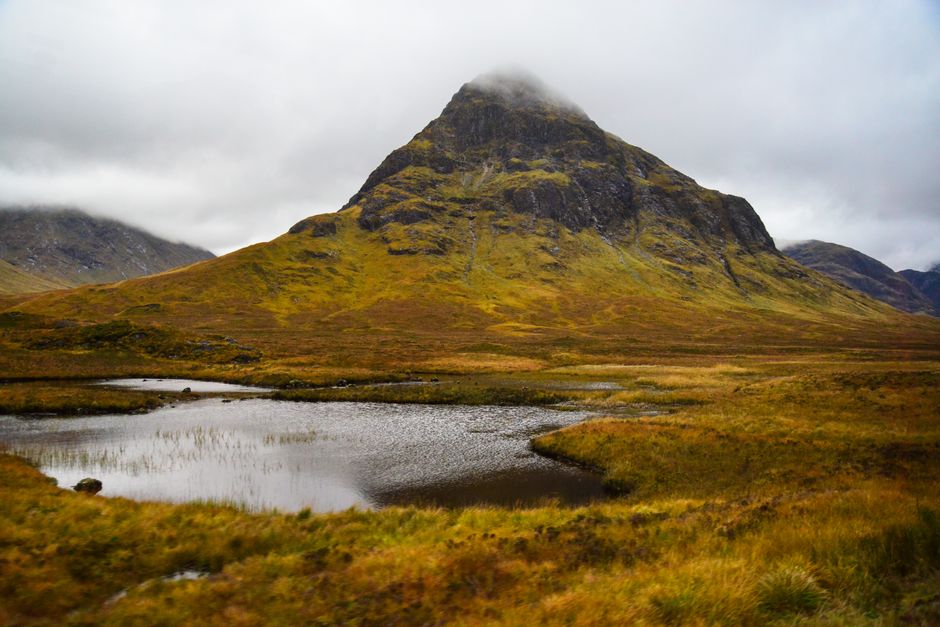
The Scottish Highlands are the wild north and west of Scotland: deep glens and long lochs, the highest mountains in Britain, castles on islands, and empty single-track roads that end at white-sand beaches. You come to look for the Loch Ness monster from the ruins of Urquhart Castle, drive through the dramatic valley of Glencoe, climb Ben Nevis, ride the Jacobite steam train over the Glenfinnan Viaduct, road-trip the North Coast 500 and hike in the Cairngorms. Distances are big and roads slow, so give it at least five days, and a week or two to do it justice.
Right now in Scottish Highlands (Inverness)
- Wed6–11°C42–53°F1 mm rain
- Thu5–12°C41–53°F6 mm rain
- Fri9–12°C47–54°F5 mm rain
Top tours in Scottish Highlands
See all tours for Scottish Highlands →
From local operators, with prices and reviews; you check availability and book on Viator, our partner. We may earn a commission at no extra cost to you. How we earn money
The Scottish Highlands at a glance
- Best for: mountain and loch scenery, road trips, hiking, castles, wildlife (red deer, golden eagles, dolphins), whisky distilleries and remote beaches.
- How long: 5 days for Inverness, Loch Ness, Glencoe and Fort William; 7–10 days to add Skye or the North Coast 500.
- Best time: May to September for long days and open attractions; May and September have fewer midges and smaller crowds.
- Getting in: fly to Inverness, or take the train from Edinburgh or Glasgow (about 3–4 hours), or the Caledonian Sleeper overnight from London.
- Driving: much of the region is reached by single-track roads with passing places; learn the etiquette before you go (see below).
- Before you go: entry rules (including the UK ETA), money and general safety are in our United Kingdom travel guide.
The Highlands, area by area
The Highlands cover most of Scotland north and west of the Highland Boundary Fault, a line running roughly from Helensburgh near Glasgow to Stonehaven near Aberdeen. The Great Glen, with Loch Ness at its heart, cuts diagonally across the region from Inverness to Fort William.
Inverness and Loch Ness
Inverness, the “capital of the Highlands”, is a compact city on the River Ness with a castle, riverside walks and the region’s main airport and rail hub. Loch Ness starts just south-west of the city and runs for about 37 km (23 miles) along the Great Glen. Best for: a first base, travellers without a car, and Loch Ness boat trips.
Glencoe and Fort William
Glencoe is the most dramatic glen in Scotland, with towering peaks on both sides and a dark history: the massacre of 1692. Fort William, at the foot of Ben Nevis, calls itself the “Outdoor Capital of the UK” and is the start of the Jacobite steam train and the end of the West Highland Way. Best for: hikers, climbers, mountain bikers and photographers.
The Cairngorms
The Cairngorms National Park is Britain’s largest national park, a high plateau of arctic-like mountains, pine forests, lochs and rivers, with Aviemore as its main village. It has the UK’s only free-ranging reindeer herd, ospreys in summer and ski slopes in winter. Best for: families, cyclists, wildlife watchers and gentle forest walks.
The north and west coast
Beyond Ullapool, the far north-west is one of Europe’s emptiest corners: huge bare mountains, sea lochs and beaches of white sand and turquoise water. This is the territory of the North Coast 500. Best for: road trips, beaches and solitude.
Top things to see in the Highlands
Prices and hours below were checked on the official sites in October 2026. They change, so check before you go.
Loch Ness and Urquhart Castle
Loch Ness is long, narrow and very deep, holding more fresh water than all the lakes of England and Wales combined. The best place to see it is Urquhart Castle, a ruined fortress on a headland near Drumnadrochit, run by Historic Environment Scotland. As of October 2026, tickets cost £14 for adults online (£16 on site), £11 for over-65s and £7 for children aged 7–15. The castle is open daily from 9:30 am, until 8:15 pm from April to August, 6 pm in September, 5 pm in October and 4:30 pm from November to March, with last entry an hour before closing. Tickets often sell out in summer, and parking is free but only guaranteed if you book a parking slot online in advance. Boat cruises on the loch leave from Inverness, Drumnadrochit and Fort Augustus, at the southern end, where you can watch boats climb the Caledonian Canal’s staircase of locks. See our boat trips guide.
Glencoe
The A82 runs through the glen past the Three Sisters, three huge ridges that are the classic photo stop, with Buachaille Etive Mòr guarding the eastern entrance at Rannoch Moor. The National Trust for Scotland’s Glencoe Visitor Centre near Glencoe village explains the landscape and the 1692 massacre. Walks range from the easy Glencoe Lochan loop to the Lost Valley (Coire Gabhail), a rough climb of about three hours return, and serious ridge scrambles that are for experienced mountaineers only.
Fort William and Ben Nevis
Ben Nevis, at 1,345 metres, is the highest mountain in the UK. The main Mountain Track (also called the Pony Track or Tourist Path) starts in Glen Nevis and is about 17 km return; most walkers take 7–9 hours. It is a real mountain: the summit is often in cloud, much colder and windier than the glen, and can hold snow well into June. Go only in a settled forecast, with proper boots, warm and waterproof layers, food, water and a map, and turn back if the weather turns. Near Fort William, the Nevis Range gondola carries visitors up Aonach Mòr for views and mountain biking, and the Steall Falls walk at the end of Glen Nevis is an easy, spectacular half day. See our hiking guide.
The Jacobite steam train
The Jacobite runs from Fort William to Mallaig, an 84-mile round trip on the West Highland Line that crosses the 21-arched Glenfinnan Viaduct, famous from the Harry Potter films. In 2026 the morning train ran daily from 1 June to 23 October and the afternoon train from 10 June to 25 September; an adult standard-class return costs £76. As of October 2026 the operator, West Coast Railways, had not published 2027 dates. Summer seats sell out months ahead. If the steam train is full, ScotRail’s regular trains run the same line year-round for a fraction of the price, and you can watch the Jacobite cross the viaduct from the viewpoint above the Glenfinnan Monument.
Eilean Donan Castle
Probably the most photographed castle in Scotland, on a tiny island joined to the shore by a stone bridge, where three sea lochs meet near Dornie, on the road to Skye. The castle was rebuilt in the early 20th century on medieval ruins. As of October 2026, adult admission is £13, £12 for over-60s and £6.50 for children aged 5–15; tickets can only be bought on site on the day. In 2026 it is open from 10 am to 6 pm until 24 October, then 10 am to 4 pm until 22 December (last entry an hour before closing), and it closes in January.
Inverness, Culloden and Cawdor
Just east of Inverness, the Culloden battlefield and visitor centre (National Trust for Scotland) tell the story of the last pitched battle on British soil in 1746, which ended the Jacobite rising. Nearby are the Clava Cairns, Bronze Age burial cairns, and Cawdor Castle. On the Moray Firth, Chanonry Point near Fortrose is one of the best places in Britain to watch bottlenose dolphins from the shore, especially around the rising tide.
Nature
- Glen Coe
- Loch Ness
Castles and forts
- Eilean Donan Castle
- Urquhart Castle
Peaks and mountains
- Ben Nevis
Other sights
- Fort George
- Glenfinnan Viaduct
The North Coast 500
The North Coast 500 (NC500) is a 516-mile (830 km) touring route that starts and ends at Inverness, looping up the west coast through Applecross and Ullapool, across the far north coast via Durness and John o’ Groats, and back down the east coast. It links some of the best scenery in Scotland, including the Bealach na Bà, a steep mountain pass with hairpin bends to Applecross, the beaches of Achmelvich and Durness, Smoo Cave and Dunnet Head, the most northerly point of mainland Britain.
- Allow 5–7 days at least; many sections are single-track and slow.
- Book ahead: accommodation is limited and fills up from May to September.
- Campervans: use campsites, empty waste only at proper disposal points, and don’t park overnight in passing places or laybys where signs prohibit it.
- Fuel: petrol stations are far apart in the north-west; fill up when you can.
- Bealach na Bà: not advised for learner drivers, large motorhomes or caravans, and best avoided in snow or ice.
Single-track roads: how to drive them
Much of the Highlands, Skye and the NC500 is reached by single-track roads, a single lane with passing places marked by diamond or square signs. The rules are simple, and locals rely on them:
- Pull into a passing place on your left, or wait opposite one on your right, to let oncoming traffic pass.
- Let faster vehicles overtake: if a car builds up behind you, pull into a passing place and let it by.
- Never park in a passing place, even for a quick photo: they are needed for passing and for emergency vehicles.
- Thank other drivers with a wave or a lift of a finger from the steering wheel.
- Watch for sheep, deer and cyclists, especially at dawn and dusk, and keep your speed down on blind bends and crests.
Midges, weather and safety
The Highland midge is a tiny biting insect that comes out in clouds on still, damp days, especially at dawn and dusk, from about late May to September. It is worst in the west, near water and in sheltered glens; a breeze or bright sun keeps it away. Bring a repellent (locals swear by Smidge and similar products), a head net for camping and walking, and long sleeves. Ticks live in long grass and bracken: check yourself after walks and remove them carefully.
Weather in the Highlands changes fast, and conditions on the mountains can be wintry in any month. Check the Mountain Weather Information Service forecast before a hill walk, and in an emergency call 999 or 112 and ask for police, then Mountain Rescue.
Activities and best months
- Boat tripsCruise Loch Ness sails from the Caledonian Canal at Fort Augustus, with a 50-minute Daily Discovery cruise all year; its speedboat trips run from April to October, and the 90-minute version goes as far as Urquhart Castle. At the Inverness end, Jacobite runs Loch Ness cruises past Urquhart Castle from Dochgarroch Lock and Clansman Harbour.
- CyclingNational Cycle Network Route 78, the Caledonia Way (about 233 miles from Campbeltown to Inverness), runs through the Great Glen from Fort William: the Caledonian Canal towpath and forest roads to Fort Augustus, then quiet roads along the east side of Loch Ness to Inverness. A signed diversion at Loch Lochy is expected to stay in place until June 2029.
- HikingBen Nevis is 1,345 m high, and VisitScotland calls the climb long and arduous. The Mountain Track starts at the Ben Nevis Visitor Centre in Glen Nevis, about 2 km from Fort William, and the round trip usually takes 7-9 hours. Summer is the best time to climb it; winter ascents are only for experienced mountaineers. The West Highland Way (154 km, Milngavie to Fort William, 5-8 days) and the Great Glen Way (127 km, Fort William to Inverness, 5-7 days) are the long-distance routes.
Getting to the Highlands
By train
ScotRail runs trains from Edinburgh and Glasgow to Inverness through the Cairngorms, in roughly three and a half hours, and on the West Highland Line from Glasgow to Fort William and Mallaig, one of the most scenic railway journeys in the world. From Inverness, the Kyle line runs west to Kyle of Lochalsh, by the Skye Bridge, and the Far North line to Thurso and Wick. The Caledonian Sleeper runs overnight from London Euston to Inverness, Aviemore and Fort William six nights a week (no Saturday departures).
By air
Inverness Airport has flights from London, other UK cities and some European hubs. Many international visitors fly into Edinburgh or Glasgow and drive or take the train north.
By road and bus
The A9 links Perth and Inverness through the Cairngorms, and the A82 runs from Glasgow along Loch Lomond, through Glencoe to Fort William and up the Great Glen to Inverness. Scottish Citylink coaches connect the main towns. A car gives you the most freedom; outside the main towns, public transport is limited, especially on Sundays and in winter. Pick up a hire car in Inverness or at the airport.
When to go and how long to stay
The Highlands have a cool, wet and windy climate that varies hugely from east to west. The table uses the Met Office’s 1991–2020 averages for Inverness, in the drier east: average daily highs and lows, and days with at least 1 mm of rain. The west coast is far wetter: the Met Office station at Lusa on Skye averages over 2,000 mm of rain a year, almost three times as much as Inverness.
| Season | Average high / low | Rainy days per month | What it’s like | Good for |
|---|---|---|---|---|
| Spring (Mar–May) | 10–15 °C / 2–6 °C | 10–12 | Fresh and often bright; snow on the high tops into May; few midges | Hiking, wildlife, quiet roads |
| Summer (Jun–Aug) | 17–19 °C / 9–11 °C | 11–12 | Mild, very long days (light until about 11 pm in June); midges in the west | Road trips, the Jacobite, hill walking, beaches |
| Autumn (Sep–Nov) | 17 °C falling to 9 °C / 9 °C falling to 3 °C | 12–14 | September is lovely; red deer rut and autumn colours in October; then wet and windy | Photography, wildlife, whisky |
| Winter (Dec–Feb) | 7–8 °C / about 1 °C | 12–14 | Short days (about 7 hours of light in December), snow on the hills, many attractions closed | Skiing in the Cairngorms, cosy pubs, northern lights on clear nights |
Inverness gets about 755 mm of rain a year on about 148 days, and May is the sunniest month. On the hills and in the west, expect much more rain and wind. Midges are fewest in May and from late September.
The Highlands in 5 days
Day 1: Inverness, Culloden and the Clava Cairns. Day 2: Loch Ness: Urquhart Castle and a boat trip, then Fort Augustus. Day 3: down the Great Glen to Fort William and Glen Nevis. Day 4: the Jacobite to Mallaig (in season) or Glenfinnan by car. Day 5: Glencoe, then south towards Glasgow or Edinburgh.
The Highlands in 10 days or more
Add Eilean Donan and three nights on the Isle of Skye, or drive the North Coast 500 over a week. Nature lovers should add two days in the Cairngorms around Aviemore.
Weather month by month
Where to stay in the Highlands
- Inverness: the most hotels and restaurants, with trains and the airport; a good base for Loch Ness and Culloden.
- Fort William and Glen Nevis: for Ben Nevis, Glencoe and the Jacobite; hostels, B&Bs and campsites.
- Glencoe village and Ballachulish: small and scenic, for walkers.
- Aviemore: for the Cairngorms, with family-friendly lodges.
- Along the NC500: small B&Bs, inns and campsites in Ullapool, Durness, Lochinver and Applecross; book months ahead for summer.
Accommodation in the Highlands is limited and many places close in winter. Book early for June to August.
Practical tips for the Highlands
- Drive slowly: journeys take longer than the map suggests; plan around 40 miles an hour on main roads and less on single-track roads.
- Book key sights: Urquhart Castle tickets and parking, and the Jacobite, sell out in summer.
- Leave no trace: the Scottish Outdoor Access Code gives you a right to roam and wild camp responsibly; take all litter home and never light fires in dry weather.
- Mobile signal: patchy in the glens and the north-west; download offline maps.
- Cash and cards: cards are widely accepted, but carry some cash for small shops and honesty boxes.
- Visitor levy: as of October 2026, the Highland Council was only consulting on a possible levy (proposed £5 per room per night in hotels and B&Bs, £2 at hostels and campsites); no decision had been taken.
What to pack for the Highlands
A fully waterproof jacket and trousers, sturdy walking boots, warm layers (a fleece or down jacket, even in summer), a hat and gloves for the hills, insect repellent and a midge head net from June to September, sunglasses and sunscreen for the long summer days, a day pack and a refillable bottle. For Ben Nevis or other high walks, add a map and compass, a head torch, a first-aid kit and spare food.
What to pack
- Day packs and anti-theft bagsA 20–30 litre pack carries layers, water, a head torch and snacks on full-day levada walks.
- Dry bags and phone pouchesSpray soaks phones and cameras on open boats to the Algarve caves and on whale-watching trips.
- Fleeces and warm layersIt is cooler at sea than on land, especially on morning whale-watching trips.
- HeadlampsLevada routes such as PR1 and PR9 pass through long, dark, wet tunnels.
- Hiking shoes and bootsMadeira's levadas and the Azores' crater rims are wet, rocky and slippery, so grippy shoes matter more than anywhere else in Portugal.
- Rain jacketsA windproof, waterproof shell keeps you warm on open boats, where wind and spray cool you quickly.
- Reef-friendly sunscreenSun reflects off the water on cruises and cave tours.
- Trekking polesLong stone staircases and steep descents on Madeira's peaks and the Azores' crater rims are easier on the knees with poles.
- Water bottles and hydration packsRiding in the Algarve and Alentejo heat needs more water than you expect.
- Water shoesKayak and small-boat trips to the Algarve grottoes land on rock and wet sand.
Scottish Highlands travel FAQ
When is the best time to visit the Scottish Highlands?
May to September, when days are long and attractions are open. May and September are often the best months: drier on average, quieter and with fewer midges.
How much are Urquhart Castle tickets?
As of October 2026, £14 for adults online or £16 on the day, £11 for over-65s and £7 for children aged 7–15. Book online in summer, and book a parking slot too.
When does the Jacobite steam train run?
In 2026 the morning service ran from 1 June to 23 October and the afternoon service from 10 June to 25 September. The 2027 dates had not been announced as of October 2026; seats sell out months ahead.
How long does it take to climb Ben Nevis?
Most walkers take 7–9 hours for the 17 km return on the Mountain Track from Glen Nevis. The summit is often cold and in cloud, so go only in good weather with proper gear.
How long is the North Coast 500?
It is 516 miles (830 km), starting and ending in Inverness. Allow at least five to seven days.
How do single-track roads work?
Use the passing places on your left to let oncoming cars pass, or wait opposite one on your right; pull in to let faster cars overtake; and never park in a passing place.
When are midges worst in Scotland?
From about late May to September, on still, damp days, especially at dawn and dusk in the west. Wind and sun keep them away; bring repellent and a head net.
Do I need a car in the Highlands?
It helps a lot. Trains and coaches link Inverness, Fort William, Aviemore and Kyle of Lochalsh, but to reach glens, beaches and most of the NC500 you need a car or a tour.
Can I buy Eilean Donan Castle tickets online?
No. As of October 2026 tickets are sold only on site, on the day; the adult price is £13.
How do I get to the Highlands from Edinburgh?
By train to Inverness in about three and a half hours, by car on the A9 in a similar time, or on a coach tour. From Glasgow, the West Highland Line runs to Fort William and Mallaig.
Is there a tourist tax in the Highlands?
Not as of October 2026. The Highland Council was consulting on a possible visitor levy, but no decision had been made, and any levy would need a long lead-in period.
How many days do you need in the Scottish Highlands?
Five days for Inverness, Loch Ness, Fort William and Glencoe; ten days or more to add Skye or the North Coast 500.
Nearby destinations
- Isle of Skye99 km
- Glasgow143 km
- Edinburgh160 km
- Causeway Coast240 km
- Belfast291 km
Plan your trip
Partner links: TravelerCenter may earn a commission if you book, at no extra cost to you.
Sources · last reviewed 4 October 2026
Researched and last reviewed on 4 October 2026. Urquhart Castle: Historic Environment Scotland; Eilean Donan: the castle’s official site; the Jacobite: West Coast Railways; the North Coast 500: the official route organisation; visitor levy proposal: the Highland Council; climate: Met Office 1991–2020 averages for Inverness and Skye (Lusa). Prices, opening dates and timetables change, and mountain conditions change daily, so check the official links before you go. For entry rules, money and general safety, see our United Kingdom travel guide.
Also: cruiselochness.com · walkwheelcycletrust.org.uk · visitscotland.com · Met Office normals 1991–2020, Aviemore (climate)
Data: Weather: MET Norway (CC BY 4.0) · Sea temperature: NOAA CoastWatch · Rates: ECB · Costs: World Bank ICP and price levels · © OpenStreetMap contributors (ODBL) · Wikidata (CC0)