Short answer: For a first trip, the top places to visit in Guatemala are the “big three”: the colonial city of Antigua, volcano-ringed Lake Atitlán and the Maya city of Tikal in the Petén rainforest. Round out the list with the Thursday and Sunday market at Chichicastenango, the turquoise pools of Semuc Champey, the island town of Flores, the lakeside ruins of Yaxhá, a volcano hike near Antigua, the Río Dulce and Livingston on the Caribbean, and the highland city of Quetzaltenango.
The list is ordered the way we would recommend places to a first-time visitor, classics first. Temperatures depend on altitude more than the month, so the season to plan around is rain: the dry season runs from about November to April, and the rainy season from about May to October, when mornings are often clear and afternoons stormy.
1. Antigua Guatemala
Why it made the list: the former colonial capital, founded in 1543 and left in ruins by earthquakes in 1773, is a grid of pastel houses, baroque churches and convent ruins at about 1,500 m (4,900 ft), ringed by the volcanoes Agua, Fuego and Acatenango. It was declared a UNESCO World Heritage Site in 1979 and is the country’s travel hub.
Best time to go: November to April, which the tourism institute (INGUAT) recommends for sunny days and volcano views. Holy Week is the most spectacular time of year; in 2027, Palm Sunday is March 21 and Easter Sunday March 28.
Don’t miss: the Santa Catalina Arch with Agua volcano behind it, the ruins of the Cathedral of San José and the Santa Clara convent, and the short walk up to the Cerro de la Cruz viewpoint over the city.
Getting there and how long: about 45 minutes to 1 hour 30 minutes by road from La Aurora International Airport in Guatemala City. Stay three or four nights.
Practical note: during Holy Week, processions walk over carpets of colored sawdust and flowers; book months ahead and expect higher prices. See our Antigua Guatemala travel guide.
2. Lake Atitlán
Why it made the list: a volcanic lake more than 300 m (980 ft) deep in places, formed by the collapse of a caldera about 84,000 years ago, according to INGUAT, and overlooked by the San Pedro, Tolimán and Atitlán volcanoes. Boats link Maya villages around the shore, each with its own character.
Best time to go: November to April. From May to October the hills are greener and prices lower.
Don’t miss: a morning boat ride across the lake between Panajachel, San Juan La Laguna, San Pedro and Santiago Atitlán, and the weaving and painting cooperatives of San Juan.
Getting there and how long: about two and a half to four hours by road from Guatemala City, or about three hours by shuttle from Antigua, usually to Panajachel. INGUAT suggests two to four days.
Practical note: cross the lake in the morning, as afternoon winds can make the water choppy. See our Lake Atitlán travel guide.
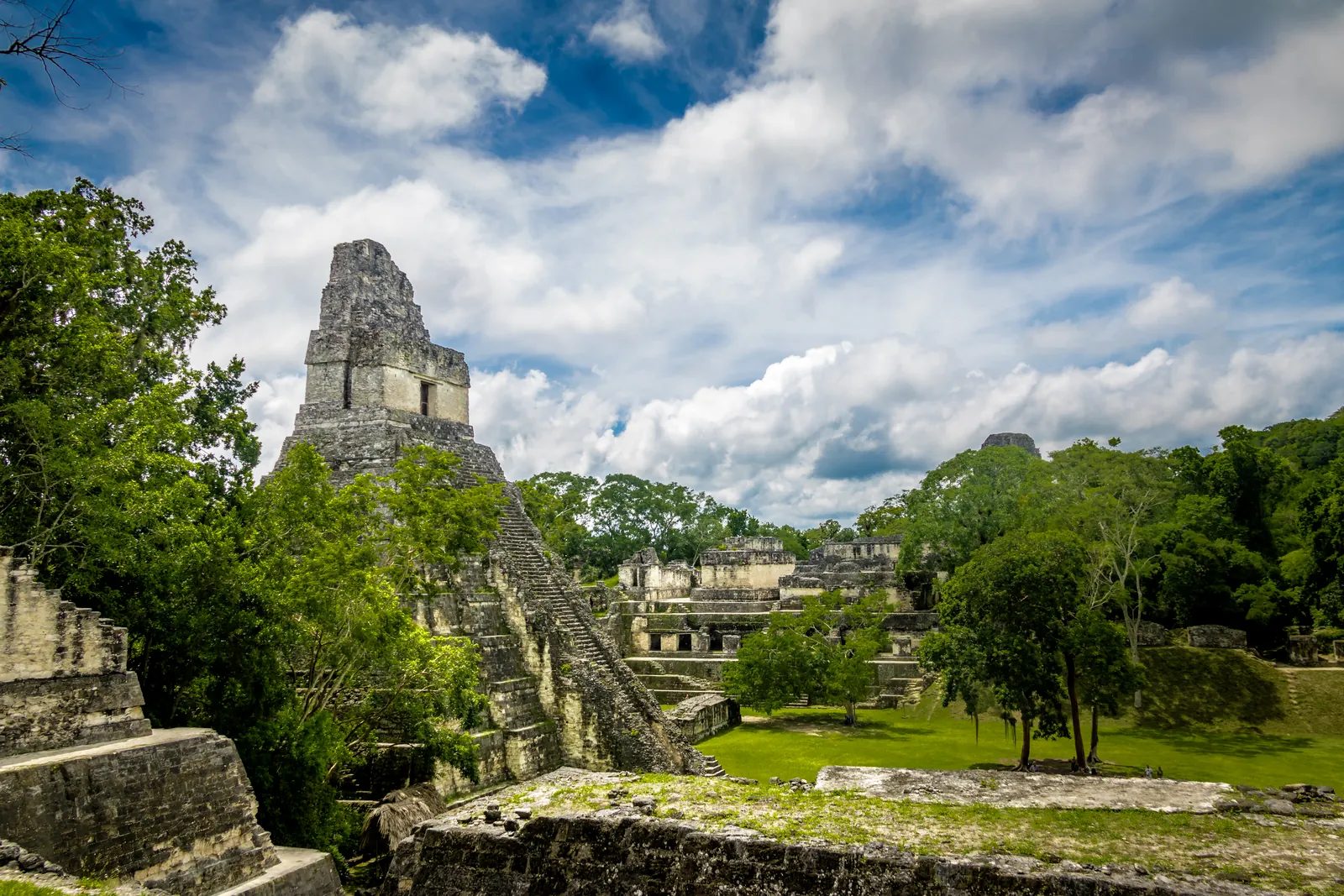
3. Tikal National Park
Why it made the list: the greatest of the ancient Maya cities stands in the rainforest of Petén, inside a park of more than 570 km² (220 sq miles). Temples rise above the canopy, Temple IV is more than 60 m (200 ft) high, and howler and spider monkeys, toucans and ocellated turkeys live among the ruins. It has been a UNESCO World Heritage Site since 1979.
Best time to go: November to April for drier trails, with February to April the driest months in Petén. April and May are the hottest.
Don’t miss: the Great Plaza between Temples I and II, and the view over the forest canopy from Temple IV, best at sunrise or sunset.
Getting there and how long: about 63 km (39 miles) and an hour by road from Flores, which has the nearest airport, or about nine hours by road from Guatemala City. Allow a full day, or stay a night nearby.
Practical note: foreign visitors pay Q150 (about US$20) for park entry, plus Q100 each for the sunrise or sunset visits, which need a licensed guide. Buy tickets on the Ministry of Culture’s official site. See our Tikal National Park travel guide.
4. Chichicastenango
Why it made the list: on market days, this highland town in El Quiché fills with stalls of textiles, masks, pottery, flowers and food around the church of Santo Tomás, which INGUAT says was built on an ancient Maya ceremonial platform. It is one of the most colorful markets in the Americas.
Best time to go: the dry season, November to April, on a Thursday or Sunday, the main market days.
Don’t miss: the steps of Santo Tomás, where Maya ceremonies with incense, flowers and candles often take place, and the hilltop shrine of Pascual Abaj outside town.
Getting there and how long: about two and a half to three and a half hours from Antigua, or one and a half to two hours from Panajachel. Most people visit on a day trip or a stop between Antigua and the lake.
Practical note: ask before photographing people, especially at ceremonies, and bring small notes in quetzales for the stalls. See the day trips in our Lake Atitlán travel guide.
5. Semuc Champey
Why it made the list: a natural limestone bridge about 300 m (980 ft) long in the hills of Alta Verapaz, with a chain of stepped turquoise pools on top and the Cahabón River rushing underneath. Its Q’eqchi’ name is usually translated as “where the river hides under the earth”.
Best time to go: November to April, when trails are better and the water is more often clear. From May to October the river runs higher and the pools can turn cloudy after rain.
Don’t miss: the climb to the viewpoint for the classic view over the pools, a swim, and the K’an Ba caves, explored by candlelight with water and small jumps.
Getting there and how long: most travelers base themselves in Lanquín, about 11 km away; the drive from Guatemala City takes seven to nine hours, with a rough final stretch. INGUAT suggests at least two or three days.
Practical note: the last roads are steep and unpaved, so many visitors use shuttles and 4×4 pickups from Lanquín rather than driving. We do not have a Semuc Champey page yet; see the regions section of our Guatemala travel guide.
6. Flores and Lake Petén Itzá
Why it made the list: a small island town of colorful houses on Lake Petén Itzá, joined to the mainland by a causeway. It is the gateway to Tikal and a pleasant place to unwind between ruins.
Best time to go: February to May, Petén’s driest months.
Don’t miss: a sunset walk around the island’s lakeside promenade, and a boat trip on the lake to swim or visit nearby viewpoints.
Getting there and how long: a flight of about an hour from Guatemala City to Mundo Maya International Airport, just outside town. Two or three nights here cover Tikal and Yaxhá.
Practical note: El Remate, on the eastern shore, is a quieter base that is closer to Tikal. See our Tikal National Park travel guide, which compares the bases.
7. Yaxhá
Why it made the list: built between two lagoons, Yaxhá and Sacnab, in the Yaxhá-Nakum-Naranjo National Park, this Maya city has more than 500 recorded structures and far fewer visitors than Tikal. INGUAT says it is one of the few archaeological sites in Guatemala where you can watch the sunset from the temples.
Best time to go: November to April, when the trails are most comfortable; daytime temperatures run about 24–34°C (75–93°F).
Don’t miss: sunset from Temple 216, one of the highest points of the site, with views over the lagoon and the forest.
Getting there and how long: about one and a half to two hours by road from Flores or El Remate. A full visit takes three to five hours.
Practical note: combine it with Tikal on a two-day stay in Petén, and bring insect repellent for the late afternoon. See the Petén section of our Tikal National Park travel guide.
8. Volcano hikes: Pacaya and Acatenango
Why it made the list: Guatemala has a chain of volcanoes, and a hike is one of the great experiences of a trip. Pacaya is the easy half-day climb from Antigua, while the overnight trek up Acatenango, at about 3,976 m (13,045 ft), looks straight across at Fuego, which erupts almost every day.
Best time to go: November to April, for clear views and drier trails.
Don’t miss: the view of Fuego’s glowing eruptions after dark from the Acatenango camps, or the black lava fields on Pacaya.
Getting there and how long: both trailheads are within about one and a half hours of Antigua by road. Pacaya is a half day; Acatenango is an overnight trip with a camp below the summit.
Practical note: go with a licensed guide and pack warm layers, as nights near the summit are near freezing. Access depends on Fuego’s activity: Acatenango’s trails were closed for a few days in August 2026 during an eruptive phase, so ask your operator about the current status. See the volcano hikes in our Antigua Guatemala travel guide.
9. Río Dulce and Livingston
Why it made the list: the Caribbean side of Guatemala feels like another country. Boats run down the Río Dulce through a jungle gorge from Lake Izabal, Guatemala’s largest lake, to Livingston, a Garifuna town at the river’s mouth that has no road connection to the rest of the country.
Best time to go: INGUAT suggests February to August, when rains are usually less intense. The Caribbean coast has no true dry season.
Don’t miss: the boat trip through the gorge, passing the Castillo de San Felipe, and the natural pools of Siete Altares, reached from Livingston by boat or along the coast.
Getting there and how long: the boat from the town of Río Dulce to Livingston takes about 60 to 90 minutes. INGUAT suggests two to three days in Livingston.
Practical note: try tapado, the Garifuna seafood soup with coconut and plantain. We do not have a Río Dulce page yet; see the regions section of our Guatemala travel guide.
10. Quetzaltenango (Xela)
Why it made the list: Guatemala’s second city, in the western highlands, is less touristy than Antigua, popular with Spanish students and a base for hot springs, volcano hikes and highland villages. INGUAT presents it as the best place for authentic local culture.
Best time to go: November to April, but nights are cold at this altitude, so bring a warm jacket.
Don’t miss: the neoclassical buildings around the Parque Centroamérica, and a soak at the Fuentes Georginas hot springs in the hills nearby.
Getting there and how long: about four to five hours by road from Antigua, or about two hours from Lake Atitlán. INGUAT suggests about two days.
Practical note: Xela is one of the country’s main centers for Spanish schools with homestays, if you want to stay longer. See the regions section of our Guatemala travel guide.
How to fit them into one trip
Guatemala’s highlands are close together, but roads are winding, so give each base at least two nights.
One week: three nights in Antigua (with a volcano hike), two nights at Lake Atitlán with a Thursday or Sunday stop in Chichicastenango, then fly from Guatemala City to Flores for one night and a day at Tikal.
Ten days: add a second night in Petén for Yaxhá, and a third night on the lake.
Two weeks: after Antigua and Atitlán, add Quetzaltenango, then cross east to Semuc Champey before flying or traveling north to Flores, Tikal and Yaxhá; finish on the Caribbean with the Río Dulce and Livingston.
Timing matters: the dry season from November to April suits the whole route, and Holy Week in Antigua is unforgettable but busy. Our best time to visit Guatemala guide goes month by month, and our AI trip planner builds the day-by-day plan for your dates.
Plan your trip
Start with our Guatemala travel guide for entry rules, money and getting around. Use the AI trip planner to turn this list into a route, check what to expect on your dates with the Destination weather tool, and learn a few Spanish phrases with our phrase cards.
Frequently asked questions
What is the most beautiful place in Guatemala?
Lake Atitlán, with three volcanoes rising above the water, tops most lists. Close behind are the temples of Tikal above the rainforest and the turquoise pools of Semuc Champey.
How many days do you need in Guatemala?
A week covers the big three: Antigua, Lake Atitlán and Tikal. Ten days to two weeks lets you add Chichicastenango, Yaxhá, Semuc Champey, Quetzaltenango and the Caribbean coast.
What is the best place in Guatemala for first-time visitors?
Antigua. It is close to the international airport, easy to walk, full of places to stay and eat, and the best base for volcano hikes, coffee farms and the shuttle to Lake Atitlán.
How do you get from Antigua to Tikal?
The quickest way is to fly from Guatemala City to Flores, about an hour, then drive about an hour to Tikal. By road, it is a long day of about nine hours or an overnight bus.
Which is better, Antigua or Lake Atitlán?
You don’t have to choose, as they are about three hours apart. Antigua is the place for colonial history, food and volcano hikes; Atitlán is for lake views, boat rides and Maya village life. Most first trips spend about three nights in each.