Short answer: The top places to visit in Saudi Arabia are AlUla and the Nabataean tombs of Hegra, Riyadh, the mud-brick capital of At-Turaif in Diriyah, Historic Jeddah, the green highlands of Abha and Asir, the Edge of the World cliffs, the Al-Ahsa Oasis, the rose city of Taif, Medina, and Khobar on the Arabian Gulf. For a first trip, plan about ten days and combine Riyadh, AlUla and Jeddah, flying between them.
Saudi Arabia opened to leisure travelers with tourist visas in 2019, and it rewards curious visitors with ancient tombs carved into sandstone, mud-brick palaces, coral-stone old towns, cool green mountains and vast deserts. This list is ordered the way we would recommend the places for a first visit. For each one you get why it made the list, when to go, what not to miss, how to get there and how long to stay, and a practical note.
Two things shape a Saudi itinerary: distance and heat. Riyadh is about 950 km (590 miles) from Jeddah, so most travelers fly between regions. And November to March is the main season, with sunny days of about 20–30 °C (68–86 °F) in Riyadh and AlUla; from May to September the lowlands average highs of 40–44 °C (104–111 °F), and visitors head for the mountains of Abha and Taif. Our best time to visit Saudi Arabia guide covers every region month by month.
1. AlUla and Hegra
Why it made the list: a desert valley of sandstone canyons and palm groves in the northwest, home to Hegra, the Nabataean city that became Saudi Arabia’s first UNESCO World Heritage Site in 2008. More than 100 monumental tombs are carved into its rock outcrops, and nearby are the ancient city of Dadan, the inscriptions of Jabal Ikmah and the mirrored Maraya concert hall.
Best time to go: November to March, the main tour season, with sunny days of about 20–29 °C (68–83 °F) and cold, clear nights for stargazing.
Don’t miss: a guided tour of Hegra and its great tombs, Dadan and the inscriptions of Jabal Ikmah, and sunset at Elephant Rock.
Getting there and how long: fly to AlUla’s airport, or fly to Tabuk or Medina and drive, within about four hours. Stay three nights.
Practical note: Hegra is visited on guided tours; the standard Hegra Day Tour starts at SAR 95 and lasts about two hours, according to the Royal Commission for AlUla. Book tours and hotels early for the winter season, and stay on the paths: you cannot enter the tombs. See our AlUla travel guide.
2. Riyadh
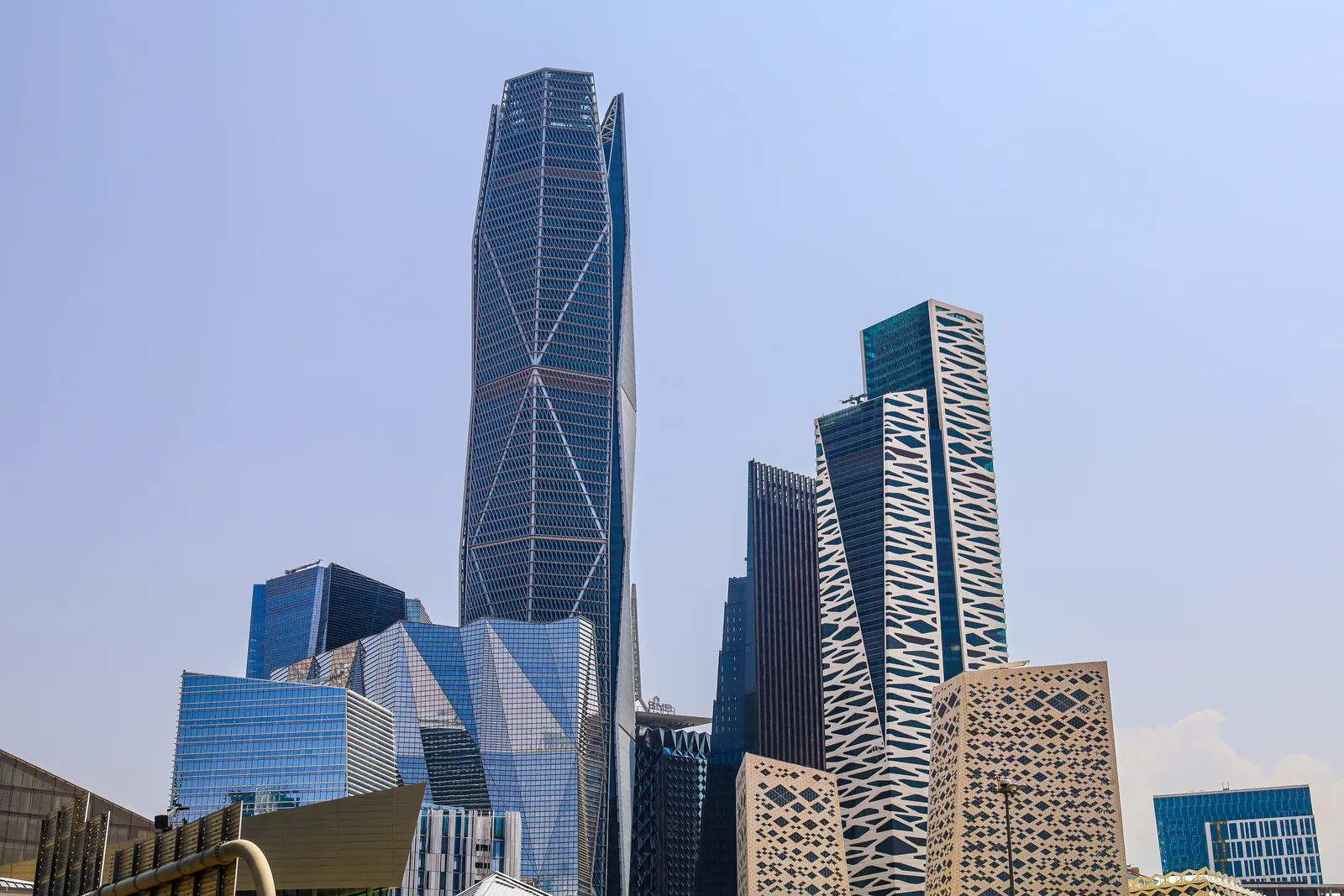
Why it made the list: the capital is the best introduction to modern Saudi Arabia, with the National Museum, the Masmak Fortress, gleaming towers, a new six-line metro and a huge calendar of events. It is also the base for Diriyah and the Edge of the World.
Best time to go: November to March, with highs of about 21 °C (69 °F) in January rising to 28 °C (82 °F) in March. The Riyadh Season festival opens on October 21, 2026, and runs for about ten weeks.
Don’t miss: the National Museum, the old Masmak Fortress, the view from the Kingdom Centre’s sky bridge, and an evening at one of the Riyadh Season zones.
Getting there and how long: King Khalid International Airport has flights from around the world. Spend two or three days, including half a day in Diriyah.
Practical note: the Riyadh Metro runs from 6 a.m. to midnight; a two-hour ticket costs SAR 4, and you can pay with the Darb app or at machines. July averages 44 °C (111 °F), so avoid summer. See our Riyadh travel guide.
3. Diriyah (At-Turaif)
Why it made the list: on the edge of Riyadh, the mud-brick palaces of At-Turaif were the first capital of the Saudi dynasty, and the district has been a UNESCO World Heritage Site since 2010. It has been restored and opened to visitors, with museums inside the old citadel and a row of restaurants and cafés overlooking it at Bujairi Terrace.
Best time to go: November to March; visit in the late afternoon and stay for the evening, when the walls are lit.
Don’t miss: a walk through At-Turaif’s lanes and palaces, then dinner at Bujairi Terrace with a view across Wadi Hanifah.
Getting there and how long: it is a short taxi ride from central Riyadh. Allow half a day to a full evening.
Practical note: At-Turaif is entered with an access pass sold on Diriyah’s official website; opening hours vary by season, so check them before you go. See our Riyadh travel guide.
4. Jeddah
Why it made the list: the Red Sea port is Saudi Arabia’s most relaxed big city, and its old quarter, Historic Jeddah (Al-Balad), with coral-stone houses and carved wooden balconies, has been a UNESCO World Heritage Site since 2014. The Red Sea Museum opened in December 2025 in the restored Bab Al-Bunt building, with more than 1,000 objects in 23 galleries.
Best time to go: November to March, when Jeddah is warm rather than hot, about 29–33 °C (84–91 °F). Summer is very hot and humid.
Don’t miss: an evening walk through Al-Balad’s lanes and souqs, the Red Sea Museum, and sunset on the corniche.
Getting there and how long: King Abdulaziz International Airport has flights from around the world, and the Haramain high-speed railway links Jeddah with Mecca and Medina. Stay two or three days.
Practical note: in the weeks around the Hajj, visitors who are not performing the Hajj may be stopped from flying to Jeddah, Medina and Taif, so avoid those dates. See our Jeddah travel guide.
5. Abha and the Asir highlands
Why it made the list: the cool, green mountains of the southwest are a surprise in a desert country, with fog, green slopes and summer rain above 2,000 m (6,600 ft). Below them, the heritage village of Rijal Almaa is a cluster of stone houses up to eight stories high, painted inside with the colorful Al-Qatt Al-Asiri patterns.
Best time to go: October to February for dry, sunny hiking days of about 20–26 °C (68–80 °F); June to September as a summer escape, with highs near 31 °C (88 °F) and afternoon storms.
Don’t miss: the views from the Al-Soudah highlands, and the drive down the mountain to Rijal Almaa and its museum.
Getting there and how long: fly to Abha from Riyadh or Jeddah. Rijal Almaa is about 45 km (28 miles) west of Abha. Stay two or three nights.
Practical note: summer is Abha’s busiest season, with the Aseer Summer program of events across the region, so book hotels early. See our Abha travel guide.
6. The Edge of the World
Why it made the list: northwest of Riyadh, the Tuwaiq escarpment ends in sheer cliffs that drop to an ancient plain, and the view from the top, known as the Edge of the World (Jebel Fihrayn), is one of the most dramatic in Arabia.
Best time to go: November to March, ideally for sunset. Summer is far too hot for walking.
Don’t miss: the walk along the cliff tops at sunset.
Getting there and how long: it is a full-day or afternoon trip from Riyadh, with the last stretch on desert tracks that need a 4×4. Most visitors go with a tour.
Practical note: there are no facilities at the cliffs, so bring water and food, wear sturdy shoes, and keep well back from the edge. Desert driving is best done in a convoy with an experienced driver. Plan it from our Riyadh travel guide.
7. The Al-Ahsa Oasis
Why it made the list: in the Eastern Province, Al-Ahsa is the largest oasis in the world, with more than 2.5 million date palms according to UNESCO, which inscribed it as a World Heritage Site in 2018. Its gardens, canals, historic buildings and markets make it a world apart from the big cities.
Best time to go: November to March, when days are warm and dry.
Don’t miss: the rock pillars and cool caves of Jabal Al-Qarah, and a walk through the palm gardens and the old market in Hofuf.
Getting there and how long: trains run from Riyadh to Hofuf, and it is a short drive from Khobar and Dammam. Spend one or two days.
Practical note: combine Al-Ahsa with Khobar for a few days in the Eastern Province. There is no Al-Ahsa page on our site yet; plan it from our Khobar travel guide.
8. Taif
Why it made the list: the mountain city above Mecca is cooler than the coast and famous for its roses: the Taif region harvests about 550 million roses a year, according to the Saudi Press Agency, and distills them into rose oil and water. Its Al-Hada mountain road and cable car offer huge views over the escarpment.
Best time to go: March and April for the Damask rose harvest and distilling season; summer as an escape from the heat of the lowlands.
Don’t miss: a rose farm and distillery in season, and the Al-Hada cable car, which runs 4.2 km (2.6 miles) down the mountain in about 17 minutes.
Getting there and how long: Taif has a domestic airport, and it is a drive of a couple of hours from Jeddah. Spend one or two days.
Practical note: the main road from Jeddah passes through Mecca, which only Muslims may enter; non-Muslim visitors use a separate route, so check with your driver or rental company. See our Taif travel guide.
9. Medina
Why it made the list: the city of the Prophet’s Mosque is the second holiest city in Islam, and for Muslim travelers a visit here, often combined with Umrah in Mecca, is the heart of the trip. Other visitors can see the city and its historic sites, though not the central sacred area around the Prophet’s Mosque.
Best time to go: November to March, when days are mild, about 24 °C (76 °F) in January. The city is busiest in Ramadan and around the Hajj.
Don’t miss: for Muslim visitors, prayers at the Prophet’s Mosque; for all visitors, Mount Uhud on the city’s edge and the city’s historic sites outside the central sacred area.
Getting there and how long: the Haramain high-speed railway links Medina with Jeddah and Mecca, about 2 hours 20 minutes from Mecca, and the city has its own international airport. Spend two or three days.
Practical note: Mecca’s sacred area is open only to Muslims, and Medina’s central sacred area around the Prophet’s Mosque is closed to non-Muslims. Check the rules for Umrah and the dates of the Hajj before you plan. See our Medina travel guide and Mecca travel guide.
10. Khobar and the Eastern Province
Why it made the list: on the Arabian Gulf, Khobar has a long seafront corniche and the Bayfront, which became Saudi Arabia’s first Blue Flag beach in June 2025. Next door in Dhahran, the King Abdulaziz Center for World Culture (Ithra) is one of the country’s great cultural centers.
Best time to go: November to March; summer here is hot and humid.
Don’t miss: an exhibition or performance at Ithra, an evening on the corniche, and a day trip to the Al-Ahsa Oasis.
Getting there and how long: fly to Dammam’s King Fahd International Airport or take the train from Riyadh. The King Fahd Causeway, about 25 km (16 miles), links the area with Bahrain. Spend two days.
Practical note: if you plan to cross to Bahrain, check that your visa allows land entry and exit. See our Khobar travel guide.
How to fit them into one trip
With ten days, fly into Riyadh for two or three days, including Diriyah and the Edge of the World, then fly to AlUla for three nights, and finish with two or three days in Jeddah. Muslim travelers often add Mecca and Medina by the Haramain train from Jeddah.
With two weeks, add Abha and the Asir highlands (a short flight from Riyadh or Jeddah), Taif in rose season, or a loop through the Eastern Province with Khobar and Al-Ahsa. In summer, swap AlUla and Riyadh for the cooler mountains of Abha and Taif.
Our AI trip planner builds the day-by-day plan for your dates, travelers and budget from our Saudi Arabia guides. Check the seasons for each region in our best time to visit Saudi Arabia guide, look up typical conditions with the Destination weather tool, and convert riyal prices with the Money exchange tool.
Frequently asked questions
What is the most beautiful place in Saudi Arabia?
Many visitors would say AlUla, where Hegra’s carved tombs and the sandstone canyons glow at sunset. The green Asir mountains around Abha and the Edge of the World cliffs are close behind.
How many days do you need in Saudi Arabia?
About ten days for a first trip that covers Riyadh, AlUla and Jeddah, flying between them. With two weeks you can add Abha, Taif or the Eastern Province.
What is the best place in Saudi Arabia for first-time visitors?
AlUla, for Hegra and its desert scenery, paired with Riyadh for modern Saudi Arabia and Diriyah. Jeddah is the best city for a relaxed walk through history by the sea.
What is the best month to visit Saudi Arabia?
December to February is the most comfortable time in Riyadh and AlUla, with sunny days and cool nights. For Taif’s roses, go in March or April; for the mountains of Abha, October to February or summer. See our best time to visit Saudi Arabia guide for every month.
Can non-Muslims visit Mecca and Medina?
Only Muslims may enter Mecca’s sacred area. Non-Muslim visitors can visit Medina, but not the central sacred area around the Prophet’s Mosque.
Do you need a visa to visit Saudi Arabia?
Citizens of the United States and many other countries can apply for a tourist e-visa online; it is valid for a year with multiple entries and stays of up to 90 days in total, and it includes health insurance. Since July 2026, UK citizens apply for an electronic travel authorization (ETA) instead. Check the current rules for your nationality on our Saudi Arabia travel guide.