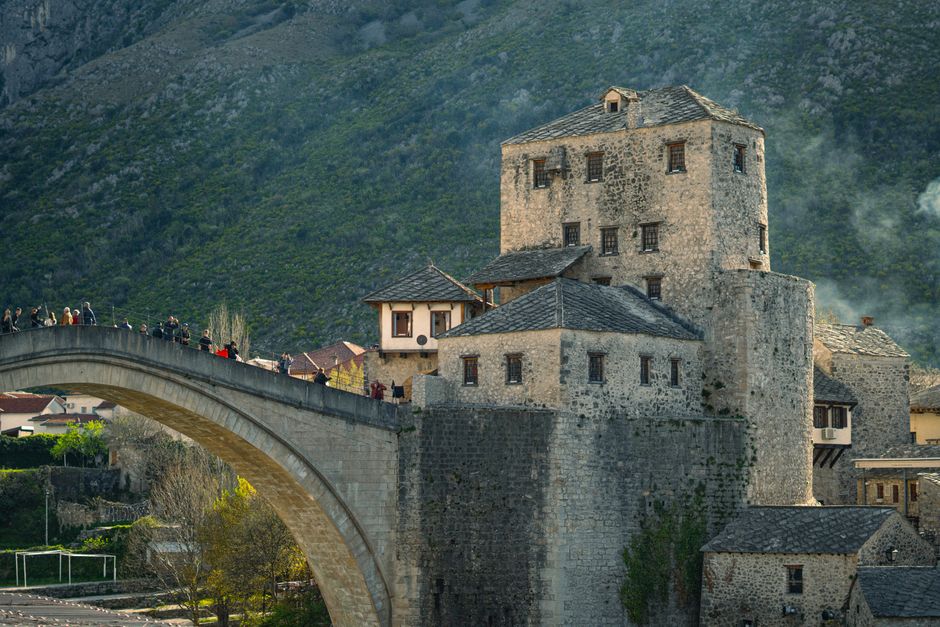
Short answer: May, June and September are the best months to visit Bosnia and Herzegovina: warm, green and less crowded, with pleasant weather in both Sarajevo and Mostar and full rivers for rafting. April and October are good too. July and August are the busiest months and very hot in Mostar, where average highs reach 33 °C (92 °F), while December to March is cold and snowy, the season for skiing above Sarajevo.
This page explains the country’s two climates, what each month is like in Sarajevo, Mostar and Međugorje, and when the festivals, religious holidays and ski season fall, as of October 2026. For entry rules, money and the Sarajevo–Mostar train, see our Bosnia and Herzegovina travel guide, and plan your days with our AI trip planner.
Best time to visit Bosnia and Herzegovina at a glance
| Goal | Best months | Why |
|---|---|---|
| Best overall weather | May, June, September | Warm days in Sarajevo, not yet (or no longer) too hot in Mostar |
| Mostar and Herzegovina | April to June, September to October | Highs of 20–30 °C (68–86 °F); July and August average 33 °C (92 °F) |
| Sarajevo | May, June, September | Warm days and cool nights; August for the film festival |
| Fewest crowds | April, May, October | Before and after the summer day-trippers from Croatia’s coast |
| Lowest prices | November to March (outside ski weeks) | Low season in Mostar and Međugorje; cheap city hotels |
| Rafting | April to June | Rivers are fullest after the snowmelt |
| Swimming at Kravica and in rivers | June to September | Hot, dry weather in Herzegovina |
| Skiing | December to March | Jahorina and Bjelašnica, the 1984 Olympic mountains |
| Festivals | February to March, July, August | Sarajevo Winter, the Međugorje Youth Festival, the Old Bridge jumps and the Sarajevo Film Festival |
Bosnia and Herzegovina weather month by month
Weather month by month
The climate table shows average daily highs and lows and rain for each month from the official 1991–2020 climate normals that the country’s weather services submitted to the World Meteorological Organization (WMO). The country has two climates. Bosnia, in the north and the mountains, is continental: Sarajevo, at 630 m (2,070 ft), averages 4 °C (39 °F) by day and −3 °C (27 °F) at night in January and 28 °C (83 °F) in August, with about 950 mm (37 in) of rain spread through the year and snow common from December to March. Herzegovina, in the south, has a Mediterranean-influenced climate: Mostar averages 33–34 °C (91–92 °F) in July and August and 9 °C (49 °F) in January, with very little rain in summer but about 1,445 mm (57 in) a year, most of it from October to April. November is Mostar’s wettest month, with about 189 mm (7.4 in).
Bosnia and Herzegovina month by month
January
The coldest month: about 4 °C (39 °F) by day in Sarajevo, with frost, snow and, on still days, fog and smog in the valley. Ski season is in full swing on Jahorina and Bjelašnica. Mostar is mild, at about 9 °C (49 °F), but wet. Orthodox Christmas, on January 7, is a holiday in Republika Srpska and in Serb communities.
February
Still winter, with good skiing. The Sarajevo Winter festival of theatre, music and art runs from February 7 to March 21, 2027, and Ramadan is expected to begin around February 8, 2027; at sunset, Sarajevo’s old town fills with families breaking the fast. Hotels are cheap outside ski weekends.
March
Spring begins in Herzegovina, with highs of about 16 °C (60 °F) in Mostar, while Sarajevo reaches about 12 °C (53 °F) and the ski season winds down. Independence Day (March 1) is a holiday in the Federation, Ramazanski Bajram (Eid al-Fitr) is expected around March 9, 2027, and Catholic Easter is on March 28, 2027.
April
Green hills and full rivers: about 20 °C (68 °F) in Mostar and 17 °C (62 °F) in Sarajevo, with showers. Rafting season starts on the Neretva, Una and Tara. Orthodox Easter falls on May 2, 2027, so the Orthodox holiday weekend runs from April 30 to May 3.
May
One of the best months: about 25 °C (77 °F) in Mostar and 21 °C (71 °F) in Sarajevo, with long, bright days for the Old Bridge, Blagaj and the Kravica waterfalls before the summer crowds. Labour Day (May 1–2) is a holiday everywhere, and Kurban Bajram (Eid al-Adha) is expected around May 16, 2027.
June
Early summer: about 25 °C (78 °F) in Sarajevo and 30 °C (86 °F) in Mostar, warm enough to swim at Kravica, which stays open until 22:00 from June to September. On June 25, Međugorje marks the anniversary of the first reported apparitions, with a peace march from Humac the day before, and the village is very busy.
July
Hot and busy: Mostar averages 33 °C (91 °F) and often tops 38 °C (100 °F) at midday, and day-trippers from Croatia’s coast fill the Old Bridge area by late morning. The traditional Old Bridge diving competition is held in late July, and the Međugorje Youth Festival runs from July 27 to 31, 2027, earlier than usual. Sarajevo is pleasant, at about 28 °C (82 °F).
August
The hottest month in Mostar (about 34 °C / 92 °F) and the driest in Sarajevo. The Sarajevo Film Festival, the biggest in the Balkans, fills the city in mid-August (the 2026 edition ran August 14–21; 2027 dates were not yet announced), so book rooms early.
September
Excellent: about 27 °C (81 °F) in Mostar and 23 °C (73 °F) in Sarajevo, with fewer crowds and the grape harvest in Herzegovina’s wine country. Rain returns to the south late in the month.
October
Golden autumn colors in the hills and quiet streets, with highs of about 22 °C (71 °F) in Mostar and 17 °C (63 °F) in Sarajevo. It is one of Mostar’s wettest months, with about 151 mm (5.9 in) of rain, usually in heavy bursts between sunny days. Prices fall.
November
Cool and damp: the wettest month in Mostar and the start of foggy mornings in Sarajevo, where highs drop to about 11 °C (51 °F). Statehood Day, November 25, is a holiday in the Federation. It is low season, with the lowest prices of the year. Winter tyres are compulsory from November to April.
December
Winter returns, with snow in the mountains and the start of the ski season. Herzegovina’s Catholic towns celebrate Advent and Christmas (December 25), and Sarajevo’s markets and old town are festive around New Year.
Best time to visit by destination
Sarajevo
May, June and September for warm days and cool nights; August for the film festival; December to March for skiing at Jahorina and Bjelašnica, under an hour away. Winter can bring fog and air pollution on still days. See our Sarajevo guide.
Mostar
April to June and September to October. In July and August it is very hot and crowded, so see the Old Bridge early in the morning or in the evening, when the day-trippers have gone. Winters are mild but very wet. See our Mostar guide.
Međugorje
May, June, September and October for pleasant weather for the climbs up Apparition Hill and Cross Mountain. The village is busiest around the June 25 anniversary and the Youth Festival in late July. See our Međugorje guide.
North and central Bosnia
Jajce, Travnik and the Una valley around Bihać follow the continental pattern: May to September is warmest (Banja Luka averages about 30 °C / 86 °F in August), and winters are cold. Spring brings the fullest waterfalls and rivers.
Best time for hiking, rafting, swimming and skiing
Hiking
Late May to early October in the mountains, such as Sutjeska National Park and the highland village of Lukomir, when trails are free of snow. Stay on marked paths. See our hiking guide.
Rafting
April to June for the biggest water on the Neretva, Una and Tara; summer trips are gentler and warmer.
Swimming
June to September at the Kravica waterfalls and in Herzegovina’s rivers. The country’s short coast at Neum is warmest in July and August. See our beaches guide.
Skiing
December to March on Jahorina and Bjelašnica. For 2026–27, a peak-season adult day pass costs 98 KM on Jahorina and 69 KM on Bjelašnica, according to local press reports.
Seasons to plan around
Summer heat in Herzegovina (July and August): Mostar is one of the hottest cities in the Balkans. Sightsee early and late, carry water and rest at midday.
Winter in Bosnia (December to March): snow on mountain roads, with winter tyres compulsory from mid-November to mid-April, and fog and smog in Sarajevo’s valley on still days; people with breathing conditions should check air-quality readings.
Holidays in two entities: the Federation and Republika Srpska set their own public holidays, and Catholic, Orthodox and Muslim holidays fall on different dates, so check locally; museums, banks and some buses change their hours. In 2027, Ramazanski Bajram is expected around March 9 and Kurban Bajram around May 16, depending on the moon.
Border queues in summer: since April 2026, non-EU travelers are registered in the EU’s Entry/Exit System when they re-enter Croatia, and summer waits at the border can be long. The train from Sarajevo via Mostar continued to Ploče on the Croatian coast on Fridays to Sundays from June 26 to September 27, 2026.
How long to stay
Four days covers Sarajevo and Mostar; a week adds Jajce, Travnik and Herzegovina’s waterfalls and wineries; ten days to two weeks leaves time for rafting, the national parks or a loop with Croatia’s coast. Our Bosnia and Herzegovina travel guide has sample 4-, 7-, 10- and 14-day itineraries.
Best time to visit Bosnia and Herzegovina: FAQ
What is the best month to visit Bosnia and Herzegovina?
May or September: warm and sunny in both Sarajevo and Mostar, green countryside and fewer visitors than in July and August.
How hot is Mostar in summer?
Very hot: average highs are 33 °C (91 °F) in July and 34 °C (92 °F) in August, and midday temperatures often pass 38 °C (100 °F).
Does it snow in Sarajevo?
Yes, snow is common from December to March, when nights are often below freezing. The mountains above the city keep snow for skiing until about March.
What is the rainiest month in Bosnia and Herzegovina?
November in Mostar and Herzegovina, with about 189 mm (7.4 in). In Sarajevo, rain is spread through the year, with September and October slightly wettest at about 90 mm (3.5 in).
What is the cheapest time to visit Bosnia and Herzegovina?
November to March, outside ski weekends and New Year. Mostar and Međugorje are quiet and cheap, though the weather is wet in the south and cold in the north.
Is October a good time to visit Bosnia and Herzegovina?
Yes, for autumn colors, mild days and few crowds; just expect some heavy rain days in Herzegovina.
Sources · last reviewed 9 Oct 2026
Researched and last reviewed by TravelerCenter on 8 October 2026. Monthly temperatures and rain come from the official 1991–2020 station normals for Sarajevo, Mostar and Banja Luka submitted to the WMO (archived by NOAA NCEI); Sarajevo Winter dates from the festival; the Međugorje anniversary and Youth Festival dates from the Međugorje parish; Kravica hours from the park; train dates from the Federation’s railways (ŽFBH); winter tyre rules from GOV.UK. The Sarajevo Film Festival dates, Bajram dates, Old Bridge jumps, ski pass prices and price patterns come from secondary sources and are flagged for checking. Check event dates with the organizers before you travel.
Also: FHMZ normals 1991–2020, Sarajevo (climate)
Data: Wikidata (CC0)