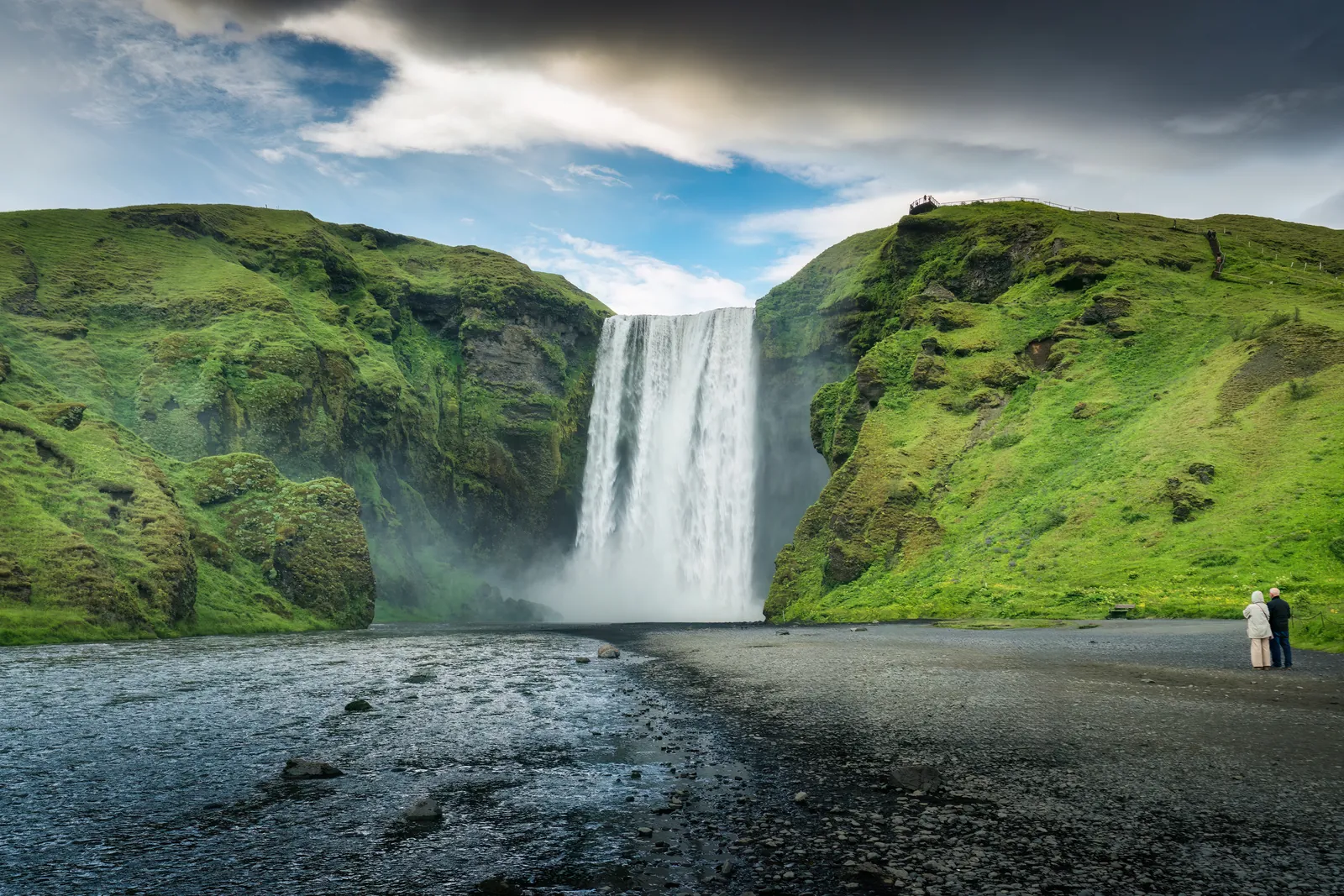
Short answer: the best time to visit Iceland is June to August for road trips, hiking, puffins and almost endless daylight, and September to March for the Northern Lights, ice caves and snowy landscapes. Summer is the busiest and most expensive season; May and September are the sweet spots for fewer people and lower prices with most roads and services open.
Iceland changes completely through the year, from 21 hours of daylight in June to about four in December, so the right month depends on what you want to see. This page covers the weather, daylight, crowds, prices and events month by month, as of October 2026, plus the best regions and activities for each season. For driving, money and safety, see our Iceland travel guide, and plan your days with our AI trip planner.
Best time to visit Iceland at a glance
| Goal | Best months | Why |
|---|---|---|
| Ring Road trip | June–August | Long days, open roads, all services running |
| Northern Lights | September–April (darkest November–March) | Dark skies; activity often peaks around the equinoxes |
| Ice caves | About November–March | Only safe and guided in the cold season |
| Fewer crowds, lower prices | May, September, October–April (outside holidays) | Shoulder and low season |
| Highlands and hiking | Late June–early September | F-roads and the Laugavegur trek open |
| Puffins | May–mid-August | Nesting season |
| Whale watching | April–November in the north | Humpbacks on most summer trips from Húsavík |
| Midnight light | Mid-May–late July | Nights are bright twilight |
| Festivals | February, June, August, November | Winter Lights, National Day, Culture Night, Airwaves |
Iceland weather month by month
Weather month by month
The table shows average daily highs and lows and monthly rain or snow for Iceland, based on the official 1991–2020 climate normals of the Icelandic Met Office (Veðurstofa Íslands). Iceland is cool and changeable rather than extremely cold: Reykjavík’s winter highs average about 3 °C (37 °F) and its summer highs 13–15 °C (55–59 °F). The north around Akureyri is drier and a little warmer on summer afternoons, the south coast near Vík is the wettest, and wind is often the biggest factor in how it feels. Weather can change several times a day, so check vedur.is every morning.
Iceland month by month
January
Deep winter: average lows of about −2 °C (28 °F) in Reykjavík and colder inland, with roughly four to five hours of daylight early in the month. It is a prime time for the Northern Lights and ice caves in Vatnajökull National Park. Bonfires mark the end of Christmas on 6 January, and Þorrablót midwinter feasts begin late in the month. Storms can close roads for a day or two.
February
Still snowy and dark, but the days lengthen quickly. Reykjavík’s Winter Lights Festival runs from 4 to 7 February 2027, with free light art, Museum Night and Pool Night. February is a popular month for aurora and ice cave trips, so book tours ahead.
March
By early March the days are about as long as in the UK, the landscape is still white, and aurora activity is often high around the spring equinox. It is one of the best months for a winter trip with more daylight. Easter falls early in 2027, with the holidays running from Maundy Thursday, 25 March, to Easter Monday, 29 March.
April
A quiet, changeable month between seasons; Reykjavík’s spring highs climb from about 4 °C (39 °F) in March to 10 °C (50 °F) in May. The aurora season ends as the nights get light, whale watching resumes in the north, and Icelanders celebrate the First Day of Summer, a public holiday, on 22 April 2027. Mountain roads remain closed.
May
A great shoulder month: long days, puffins back on the cliffs, fewer people and lower prices than summer. Highs reach about 10 °C (50 °F) in Reykjavík. Snow still lies on the mountains, and the F-roads and highland trails are shut. Ascension Day (6 May 2027) and Whit Monday (17 May 2027) are public holidays.
June
The start of high season and the lightest month: around 21 June the sun sets just after midnight in Reykjavík and rises before 03:00, and it never gets dark. National Day on 17 June brings parades to every town. Some highland roads begin to open late in the month, depending on snow.
July
The warmest and busiest month, with highs of 13–15 °C (55–59 °F) in Reykjavík and up to about 17 °C (63 °F) in the southern lowlands. The F-roads, Landmannalaugar and the Laugavegur trek are usually open. The Golden Circle, the south coast and Jökulsárlón are crowded, and hire cars and rooms sell out, so book months ahead.
August
Still summer, with highland roads open and prices high. Commerce Day weekend at the start of the month (2 August 2027) is Iceland’s biggest holiday weekend, with the Westman Islands festival. Reykjavík Pride and Culture Night, with the Reykjavík Marathon, follow later in August. Puffins leave by mid to late August, and the nights begin to darken.
September
A favorite month for many: crowds and prices drop, the tundra turns red and gold, and the first Northern Lights appear on dark, clear nights. Highs fall from about 11 °C (52 °F). The highland roads start to close from mid-month, and autumn storms become more likely.
October
Darker and wetter, with the first snow in the north and the hills, but good aurora chances and low prices. Days are still long enough for a south coast or Snæfellsnes trip. Boats on Jökulsárlón usually stop around the end of the month. Hire cars switch to winter tires.
November
The start of ice cave season, with long nights for the aurora. Iceland Airwaves fills Reykjavík’s music venues from 4 to 8 November 2026. Winter driving conditions, short days and storms make it a month for staying in the south and west.
December
The darkest month: around the winter solstice Reykjavík gets only about four hours of daylight, with sunrise after 11:00 and sunset around 15:30. In return, the city is festive, the 13 Yule Lads arrive one by one from 12 December, and New Year’s Eve brings bonfires and huge firework displays. Christmas and New Year are popular, so book early.
Best time to visit by region
Reykjavík
Reykjavík works all year. Summer brings puffin boats and long evenings; winter brings festivals, cozy cafés, aurora tours and steaming outdoor pools. It is the best base for a short winter trip.
The Golden Circle
The Golden Circle roads are kept open in winter, so Þingvellir, Geysir and Gullfoss can be visited in any month; Gullfoss is especially striking framed in ice. In summer, go early or late in the day to beat the tour buses.
The south coast and Vatnajökull
The south coast and Vatnajökull National Park have two seasons: summer for Skaftafell’s trails and boat trips among the icebergs (roughly May to October), and November to March for guided ice caves and Diamond Beach in winter light. The coast near Vík is the wettest part of the country.
Snæfellsnes
Snæfellsnes is good in summer as a quieter alternative to the south coast, and in winter as a day or overnight trip from Reykjavík, with Kirkjufell under snow and aurora over the sea.
North Iceland, the Westfjords and the Highlands
Akureyri and Mývatn are drier and sunnier than the south and best from June to September, though Akureyri has a winter ski area. The Westfjords are best from June to August, as some passes close in winter, and the Highlands are open only from late June or July to early September.
Best time for the Northern Lights, ice caves, hiking and puffins
The Northern Lights
Visit Iceland gives the season as September to April. November to March has the longest nights, and activity is often highest around the equinoxes in September and March. Displays are most common between about 22:00 and 02:00. You need clear skies, so stay several nights and check the Met Office’s aurora and cloud forecast.
Ice caves and glacier hikes
Blue ice caves in Vatnajökull are visited only with licensed guides, from about November to March. Guided glacier walks run all year at Skaftafell and Sólheimajökull.
Hiking and the Highlands
Late June to early September for the Laugavegur trek, Landmannalaugar and Þórsmörk. Opening dates for F-roads change every year with the snow; the Road and Coastal Administration publishes which are open.
Puffins and whales
Puffins nest from May to August; boats from Reykjavík’s harbor run from about May to mid-August. Whale-watching boats leave from Reykjavík, Akureyri and Húsavík; from Húsavík they run from about April to November, where humpbacks are seen on most summer trips.
Hot springs and lagoons
Any time, but best on a winter evening, when you sit in hot water with snow around you and perhaps the aurora overhead.
Seasons to plan around
- Winter driving (about October to April): snow, ice, darkness and strong winds. Storms can close parts of the Ring Road in the north and east for a day or two. Check vedur.is and umferdin.is every morning, and leave spare days.
- Short days: about four hours of daylight around the winter solstice, so plan around 300 km a day at most in summer and much less in winter.
- Highland roads: F-roads are usually closed from mid-September to late June or July.
- High season bookings: June to August, plus Christmas, New Year and February, sell out early, especially hire cars and campervans.
- Public holidays: Easter (25–29 March 2027), the First Day of Summer (22 April 2027), 17 June and the Commerce Day weekend (2 August 2027) bring local travelers onto the roads and campsites.
- Volcanic activity: it is not seasonal. If an eruption starts on the Reykjanes Peninsula, the Blue Lagoon and nearby roads close; follow vedur.is and safetravel.is in any month.
How long to stay
Four days covers Reykjavík, the Golden Circle and the south coast to Vík. A week adds Jökulsárlón and Snæfellsnes, and is the best length for a winter trip. Allow ten days to two weeks for the full Ring Road, and drive it only in summer if you want to be sure of the north and east. Our Iceland travel guide has sample 4-, 7- and 10–14-day itineraries.
Best time to visit Iceland: FAQ
What is the best month to visit Iceland?
July for the fullest range of roads, hikes and services; September for a balance of open roads, fewer people, autumn colors and the first Northern Lights.
What is the best month to see the Northern Lights in Iceland?
Any month from September to April can work. For long dark nights with a bit more daylight for sightseeing, try late September, October, February or March.
What is the cheapest time to visit Iceland?
Usually October to April outside Christmas, New Year and February, plus the shoulder months of May and September. Summer is the most expensive time for hire cars and rooms.
Is it worth visiting Iceland in winter?
Yes, for the Northern Lights, ice caves, snowy waterfalls and lagoons. Stay in the south and west, keep drives short, and allow for storm days.
Can you see the midnight sun in Iceland?
From mid-May to late July the nights are bright twilight. On the mainland the sun dips just below the horizon around midsummer; only Grímsey island, on the Arctic Circle, has a true midnight sun.
When do the highland roads open?
Usually from late June or July to early September, depending on snow and ground conditions. They are legal only in four-wheel-drive vehicles.
Sources · last reviewed 4 Oct 2026
Researched and last reviewed by TravelerCenter on 8 October 2026. Temperatures and rainfall come from the Icelandic Met Office’s 1991–2020 climate normals, as submitted to the World Meteorological Organization; the aurora season from Visit Iceland and the Met Office’s aurora forecast; F-road information from the Road and Coastal Administration (Vegagerðin); Iceland Airwaves dates from the festival and Winter Lights dates from the City of Reykjavík. Public holidays are calculated from Iceland’s holiday rules, and daylight times, wildlife seasons and boat seasons are general references or come from operators. Check vedur.is, umferdin.is and safetravel.is before and during your trip.
Also: IMO normals 1991–2020, Reykjavík (climate)
Data: Natural Earth (PUBLIC DOMAIN) · © OpenStreetMap contributors (ODBL) · Wikidata (CC0)