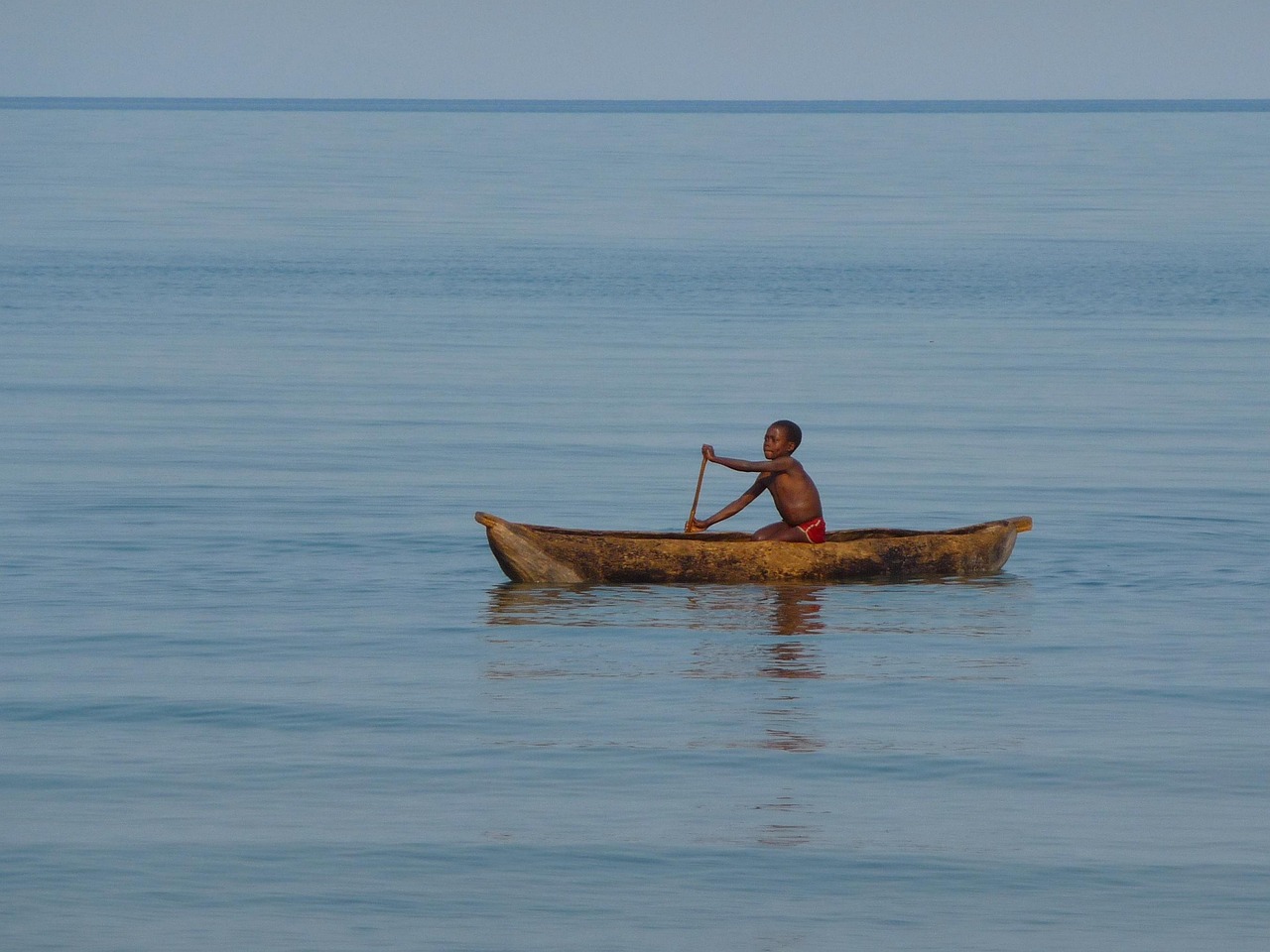
Lake Malawi National Park, at the southern end of Lake Malawi, is one of the few national parks in the world created mainly to protect freshwater fish, and it’s Malawi’s only UNESCO World Heritage Site. Established in 1980 and inscribed by UNESCO in 1984, it covers the rocky, wooded Nankumba Peninsula around Cape Maclear, a string of small islands and the clear water around them. Its fame comes from the cichlids: Malawi’s Department of Tourism, citing UNESCO, says the lake is home to more than 350 species of endemic cichlid fish, and the brightly colored rock-dwelling mbuna crowd the boulders just below the surface, making this one of the best places in the world for freshwater snorkeling and diving. Above the water, granite hills and baobabs frame golden beaches, fish eagles call from the trees, and wooden fishing canoes slide out at dusk. The fishing village of Chembe, inside the park, is the base for most visitors, with lodges for every budget, while a few island camps offer a quieter escape. Getting here takes a few hours by road from Lilongwe or Blantyre, so plan at least three nights, and come prepared for malaria, the sun and the facts about bilharzia.
Right now in Lake Malawi National Park (Cape Maclear)
- Thu22–30°C72–86°FMostly clear
- Fri22–30°C71–86°FClear
- Sat22–29°C72–85°FClear
Top tours in Lake Malawi National Park
See all tours for Lake Malawi National Park →
From local operators, with prices and reviews; you check availability and book on Viator, our partner. We may earn a commission at no extra cost to you. How we earn money
Lake Malawi National Park at a glance
- Best for: snorkeling and diving with cichlids, kayaking to islands, beaches, sunsets and a relaxed village atmosphere.
- How long: 3–4 nights; a week if you’re learning to dive.
- Best time: May to October, the dry season; the water is clearest from about August to November.
- Getting there: by road from Lilongwe (about 4–5 hours) or Blantyre (about 4 hours) via Monkey Bay.
- Park fees: the Department of National Parks and Wildlife (DNPW) charges entry fees, often collected at the gate or through your lodge.
- Good to know: bilharzia is present in freshwater; take antimalarials; carry kwacha, as there’s no ATM in Chembe.
- Before you go: the visa, money and general safety are in our Malawi travel guide.
The park, fees and rules
A UNESCO World Heritage Site
The Department of Tourism says Lake Malawi National Park was created to protect the lake’s endemic fish species, and DNPW says it was designated a World Heritage Site in 1984 in recognition of the high diversity and biological importance of its cichlids. Lake Malawi is one of the deepest and largest lakes in Africa, about 29,600 km² (11,400 square miles), and its cichlids are a textbook example of evolution, with hundreds of species descended from a few ancestors, many of them found only around a single island or stretch of rocky shore. The park is relatively small, roughly 94 km² (36 square miles) of land and water, including the peninsula, the islands and the water up to 100 m (330 ft) offshore.
Park fees
DNPW charges park entry fees for visitors and vehicles, and visitors to the islands may pay a separate fee, often collected by the boat operator or lodge. Fees for foreign visitors are usually quoted in US dollars and can be paid in kwacha. The Department of Tourism says that under DNPW’s revenue-sharing scheme, local communities receive 25% of the revenue generated at park level, and the scheme has been rolled out at Lake Malawi National Park. Ask your lodge whether park fees are included, and keep your receipt.
Park rules
The fish are the park’s reason for being, so don’t catch, collect or feed them, and don’t touch or stand on rocks where they nest. Visitors’ fishing is restricted inside the park; Chembe’s fishermen have traditional rights in the community waters. Don’t feed the baboons and vervet monkeys, which can become aggressive, and keep food out of sight. Use licensed guides and boat operators, and take your litter with you, especially from the islands.
Areas and where to stay
Cape Maclear and Chembe village
Cape Maclear is the name visitors use for the beach and the fishing village of Chembe, a lively community of several thousand people that lies inside the park but is not part of its protected land. Its long sandy beach faces west toward the islands, with spectacular sunsets, and it’s lined with lodges, from backpacker hostels and campsites to boutique guesthouses, plus dive shops, bars, kayak rentals and small shops. Life on the beach is part of the experience: fishermen mend nets, women wash clothes and children play in the shallows.
Otter Point and the park headquarters
At the western end of the bay, past the park headquarters, Otter Point is a small rocky headland with clear water, granite boulders and some of the easiest snorkeling from the shore. A short trail loops around the point, and you may see rock hyraxes, monitor lizards and, as the name suggests, the occasional otter.
The islands
Thumbi West Island, just off Chembe, is the most visited, with sheltered coves for snorkeling and kayaking. Farther out, Mumbo Island and Domwe Island have simple, eco-friendly island camps reached by kayak or boat, where you can sleep under the stars with no roads, cars or crowds. The Department of Tourism lists Mumbo, Domwe and Maleri among Malawi’s islands.
Monkey Bay and Mangochi
Monkey Bay, the nearest town, about 30 minutes from Chembe, has a market, fuel, banks and a few lodges. To the south, the lakeshore around Mangochi has larger beach resorts with pools, convenient for families and for travelers combining the lake with Liwonde.
Where to stay
- Budget: backpacker lodges and campsites on Chembe beach, many with dive centers and kayaks.
- Mid-range: boutique beach lodges and guesthouses in Chembe, with en-suite rooms and restaurants.
- Island camps: eco-camps on Mumbo and Domwe, usually with full board and kayak transfers.
- Resorts: larger hotels near Mangochi and Monkey Bay.
Top things to see and do in Lake Malawi National Park
Snorkeling with cichlids
Snorkeling here is like swimming in an aquarium. In the warm, clear water around the rocks of Otter Point and the islands, hundreds of small fish in electric blues, yellows and oranges dart around the boulders, many of them mbuna, rock-dwelling cichlids that guard their patch and their young. Some species carry their eggs and fry in their mouths, and you may see males defending nests in the sand. Boat trips from Chembe to Thumbi West and Otter Point include snorkeling gear, and many lodges rent masks. See our snorkeling guide.
Scuba diving
Cape Maclear is one of the cheapest and easiest places in Africa to learn to dive, in warm freshwater with no currents or tides and good visibility in the dry season. Dive centers in Chembe run courses and fun dives around the islands, where you’ll find cichlids, catfish and rock formations at depths suited to beginners. Remember that the lake is about 474 m (1,555 ft) above sea level, so dive tables and flying times are slightly different. See our diving guide.
Kayaking to the islands
Paddling across to Thumbi West Island takes about 30 minutes in calm water, and longer trips run to Mumbo and Domwe, with overnight stays at the island camps. Go early in the day, when the lake is usually calmest, and turn back if the wind picks up. See our boat trips guide.
Fish eagles and sunset cruises
African fish eagles, with their white heads and ringing calls, are a symbol of the lake. Boat trips often visit their perches on the islands, and sunset cruises on wooden boats or dhows are a highlight, as the sky turns orange behind the islands and the lamps of fishing canoes appear on the water. The Department of Tourism notes that the lights of fishermen’s lanterns are why Lake Malawi is called the “lake of stars”.
The missionary graves and hikes
Behind Chembe, a small cemetery holds the graves of Scottish missionaries who founded the first Livingstonia mission here in 1875, before it moved north because of malaria. Guided hikes climb the hills behind the village to viewpoints over the bay and the islands, passing baobabs and granite outcrops; go early to avoid the heat. See our hiking guide.
Other things to do at Cape Maclear
Village walks and community projects
Local guides lead walks through Chembe to see fish drying racks, boatbuilders, the market and schools, and many lodges support community projects such as schools, clinics and conservation education. Book through your lodge or an established community guide.
Food and drink
Fresh fish from the lake is the specialty. Try chambo, a tilapia grilled or fried whole, usipa, small fried fish, and kampango, a meaty catfish, served with nsima (maize porridge), rice or chips. Lodges and beach restaurants also serve curries, pizzas and pancakes, and some local women run home-cooked dinners. Wash it down with a cold Carlsberg or Kuche Kuche, or Malawian tea. Bring snacks and supplies from Monkey Bay if you’re staying on an island.
Day trips and nearby
- Monkey Bay: about 30 minutes away, for the market, ATMs and fuel.
- Mangochi: about 1–1½ hours south, with a lakeside clock tower, a museum about the lake, and beach resorts.
- Liwonde National Park: about 2–3 hours away; boat safaris on the Shire River among hippos and elephants. See our Malawi travel guide.
- Zomba Plateau: about 3 hours; cool pine forests, waterfalls and viewpoints.
- The Mozambican shore: Lake Niassa’s quiet eastern side, reached via the border. See our Mozambique travel guide.
Getting there and getting around
By air
The Department of Tourism says international flights land at Lilongwe International Airport or Chileka International Airport in Blantyre. From either, it’s a road transfer of about four to five hours to Cape Maclear; lodges can arrange a car and driver, and charter flights sometimes serve lakeshore airstrips.
By road
From Lilongwe, the main route heads southeast via Salima or via Dedza and the lakeshore road to Monkey Bay, then follows a smaller road over the hills to Chembe; allow four to five hours. From Blantyre, drive north via Zomba and Mangochi in about four hours. Malawi drives on the left. The Department of Tourism notes that dirt roads can become impassable for small cars in heavy rain, and that police roadblocks are common. Minibuses run from Lilongwe and Blantyre to Monkey Bay, where pickups and motorbike taxis wait to take passengers on to Chembe; leave early to arrive before dark.
Getting around
Chembe is small and walkable along the beach. To reach Otter Point, walk or cycle along the track past the park headquarters, and use boats or kayaks for the islands. There are no taxis in the village, but your lodge can arrange transport to Monkey Bay.
When to go and how long to stay
The Department of Tourism says Malawi’s dry season runs from May to October and the wet season from November to April. On the lakeshore, May to August is warm by day and pleasantly cool at night, though strong southerly winds can make the water choppy at times; September to November is hot, calm and often has the clearest water for snorkeling and diving. December to March brings heavy storms, humidity and higher water levels, but also lush green hills and fewer visitors. DCCMS doesn’t publish World Meteorological Organization averages for a station at Cape Maclear, so the table uses the Department of Climate Change and Meteorological Services’ “Our cities climate” figures for Nkhotakota, a lakeshore town at a similar altitude about 160 km (100 miles) to the northwest; the averaging period isn’t stated. It shows average daily highs and lows and monthly rainfall.
| Month | Average high / low | Rain | What to expect |
|---|---|---|---|
| January | 29 °C (84 °F) / 22 °C (72 °F) | 270 mm (10.6 in) | Hot, humid and stormy; quiet |
| February | 29 °C (84 °F) / 22 °C (72 °F) | 279 mm (11.0 in) | Wet; lush hills |
| March | 29 °C (84 °F) / 22 °C (72 °F) | 291 mm (11.4 in) | Wettest month; high water |
| April | 28 °C (82 °F) / 21 °C (70 °F) | 119 mm (4.7 in) | Rains ending; Easter visitors |
| May | 28 °C (82 °F) / 19 °C (66 °F) | 25 mm (1.0 in) | Dry season begins; pleasant |
| June | 26 °C (79 °F) / 17 °C (63 °F) | 6 mm (0.2 in) | Cool nights; windy spells |
| July | 26 °C (79 °F) / 16 °C (61 °F) | 16 mm (0.6 in) | Coolest month; busy holidays |
| August | 27 °C (81 °F) / 17 °C (63 °F) | 2 mm (0.1 in) | Dry; water clearing |
| September | 30 °C (86 °F) / 19 °C (66 °F) | 4 mm (0.1 in) | Hot and calm; great snorkeling |
| October | 32 °C (90 °F) / 22 °C (72 °F) | 14 mm (0.5 in) | Hottest; clearest water |
| November | 33 °C (91 °F) / 23 °C (73 °F) | 50 mm (2.0 in) | Very hot; first storms |
| December | 30 °C (86 °F) / 22 °C (72 °F) | 236 mm (9.3 in) | Rainy; Christmas visitors |
How long to stay: 3, 4 and 7 nights
- 3 nights: a snorkeling boat trip, a kayak to Thumbi West and a sunset cruise.
- 4 nights: add a night at an island camp or a hike to the viewpoints.
- 7 nights: learn to dive, explore the islands and simply slow down.
Typical costs
Prices are approximate, for October 2026, converted at about MWK 1,734 to the US dollar (Reserve Bank of Malawi). Dive centers and lodges often quote in US dollars.
| Item | Typical cost |
|---|---|
| Kayak rental, per day | about US$10–20 (about MWK 17,300–34,700) |
| Snorkeling boat trip with lunch, per person | about US$15–30 (about MWK 26,000–52,000) |
| Fun dive, with equipment | about US$50–80 (about MWK 86,700–138,700) |
| Open Water diving course | about US$350–450 (about MWK 607,000–780,000) |
| Grilled chambo with nsima or chips | MWK 8,000–20,000 (about US$4.60–11.50) |
| Minibus Lilongwe–Monkey Bay, one way | MWK 15,000–25,000 (about US$8.65–14.40) |
| Backpacker dorm bed or campsite, per night | about US$10–20 |
| Mid-range beach lodge double, per night | about US$70–180 |
| Island camp, per person per night, full board | about US$150–300 |
Safety at Lake Malawi National Park
Bilharzia: the US CDC warns that schistosomiasis (bilharzia), a parasitic infection, can be caught by swimming, wading or bathing in freshwater in Malawi. Malawi’s Department of Tourism says cases are not common where the lake water is always moving. The risk is higher near reeds, slow water and village shores; many visitors swim and snorkel, and a blood test or treatment a few weeks after your trip is a sensible precaution. Malaria: the CDC says malaria occurs in all areas of Malawi and recommends antimalarial medicine; use repellent and sleep under a net. Lake conditions: winds can rise quickly and make the water rough; kayak close to shore, wear a life jacket, check the forecast with your lodge, and travel only in boats with life jackets. Crocodiles and hippos are rare around Cape Maclear but live in other parts of the lake and its rivers, so avoid swimming near river mouths and reedbeds. Sun: the sun is fierce on the water; wear a rash vest and a hat. Theft: don’t leave belongings unattended on the beach, and use your lodge’s safe. Diving: dive only with established centers, and remember the lake’s altitude when planning flights afterward. Medical care: there’s a small clinic in Chembe; serious cases go to Mangochi, Lilongwe or Blantyre, so carry insurance that covers evacuation.
Practical tips for Lake Malawi National Park
- Bring cash: withdraw kwacha in Lilongwe, Blantyre or Monkey Bay; card machines in Chembe are unreliable.
- Arrive in daylight: the last stretch from Monkey Bay is slow and unlit.
- Book activities at your lodge: or with licensed guides; politely decline beach touts.
- Go early: the lake is usually calmest in the morning for kayaking and snorkeling.
- Respect the village: dress modestly away from the beach, and ask before taking photos of people.
What to pack for Lake Malawi National Park
Swimwear and a cover-up for the village, a rash vest, your own mask and snorkel if you prefer, water shoes for the rocks, reef-safe sunscreen, a wide-brimmed hat and sunglasses, a light sweater for cool evenings from June to August, insect repellent and any antimalarials, a headlamp for power cuts, a dry bag for boat trips, a refillable water bottle and purification tablets or filter, a first-aid kit, cash in kwacha and small US dollar notes, and an adapter for British-style type G sockets. See our water shoes, wetsuits and travel adapters guides.
Lake Malawi National Park travel FAQ
Why is Lake Malawi National Park a UNESCO site?
For its cichlid fish. DNPW says it was designated in 1984 for the high species diversity and biological importance of its cichlids, and the Department of Tourism says the lake has more than 350 endemic cichlid species.
Where do you stay in Lake Malawi National Park?
Most visitors stay in Chembe village at Cape Maclear, which has lodges for every budget; island camps on Mumbo and Domwe offer a quieter alternative.
Is there bilharzia at Cape Maclear?
The CDC warns that bilharzia can be caught in freshwater in Malawi; Malawi’s Department of Tourism says cases are not common where the water moves. Many visitors swim; consider a test after your trip.
How do I get to Cape Maclear from Lilongwe?
By car in about four to five hours via Monkey Bay, or by minibus to Monkey Bay and then a pickup or motorbike taxi to Chembe.
Can you scuba dive in Lake Malawi?
Yes. Dive centers at Cape Maclear offer courses and fun dives in warm freshwater with no tides; remember the lake is about 474 m above sea level.
What is the best time to visit Lake Malawi National Park?
The dry season, May to October; September to November usually has the clearest water, while December to March is wet and stormy.
Is there an ATM at Cape Maclear?
No reliable one; withdraw kwacha in Lilongwe, Blantyre, Mangochi or Monkey Bay before you arrive.
Can I kayak to the islands?
Yes. Thumbi West is about 30 minutes’ paddle from Chembe in calm water, and guided trips go to Mumbo and Domwe.
Is there malaria at Lake Malawi?
Yes. Malaria occurs in all areas of Malawi, according to the US CDC, and the lakeshore is a higher-risk area.
How many days do I need at Cape Maclear?
Three or four nights for snorkeling, kayaking and a sunset cruise; a week to learn to dive.
Plan your trip
Partner links: TravelerCenter may earn a commission if you book, at no extra cost to you.
Sources · last reviewed 5 October 2026
Researched and last reviewed on 5 October 2026. The park’s purpose, UNESCO status, cichlid numbers, the lake’s area, islands, the “lake of stars” name, activities, bilharzia, seasons, airports and road conditions: Malawi’s Department of Tourism (Visit Malawi); the 1984 World Heritage designation, protected areas and revenue sharing: the Department of National Parks and Wildlife via the Department of Tourism; the park’s 1980 establishment and area: Wikidata; malaria and schistosomiasis: the US CDC; climate figures: the Department of Climate Change and Meteorological Services (Nkhotakota city data); the exchange rate: the Reserve Bank of Malawi. Park fee amounts, the park’s rarity as a fish park, Chembe’s population, park boundaries offshore, Otter Point, Thumbi West, Mumbo and Domwe camps, the missionary graves, the lake’s altitude, travel times, crocodiles and hippos, the clinic, ATMs and typical prices are general references or estimates, flagged for checking. Fees and rules change, so check with your lodge before you go. For the visa, money and general safety, see our Malawi travel guide.
Data: Weather: MET Norway (CC BY 4.0) · Rates: ECB · Costs: World Bank ICP and price levels · Wikidata (CC0)