Short answer: Catalonia (Catalunya) packs a lot into one corner of Spain: Gaudí’s Barcelona, the rocky coves of the Costa Brava, Roman Tarragona, the saw-toothed mountain of Montserrat, Salvador Dalí’s surreal museum in Figueres, the Pyrenees and some of Spain’s best food and wine. Start with Barcelona, then add Girona and the Costa Brava to the north, Sitges and the Costa Daurada to the south. One week covers the highlights; ten days to two weeks gives you time for the mountains and the wine country.
Catalonia is one of Spain’s 17 autonomous communities, in the north-east of the country between the Pyrenees, which mark the border with France and Andorra, and the Mediterranean. It has four provinces, Barcelona, Girona, Tarragona and Lleida, and about 8.1 million inhabitants, according to the Catalan statistics institute (Idescat). Catalan and Spanish are both official languages, and in the Val d’Aran in the Pyrenees, Aranese (a form of Occitan) is official too. You will see Catalan first on most signs and menus, but everyone in the tourist areas speaks Spanish and many people speak English. For entry rules, money, tipping and national transport, see our Spain travel guide.
Where to go in Catalonia
Most first trips use Barcelona as a base and add one or two stays on the coast or inland. Fast trains run north to Girona and Figueres and south-west to Tarragona and Lleida, and regional trains reach most coastal towns, so you can see a lot without a car. For the Pyrenees, the hill villages and the wine country, a car makes life much easier.
Barcelona
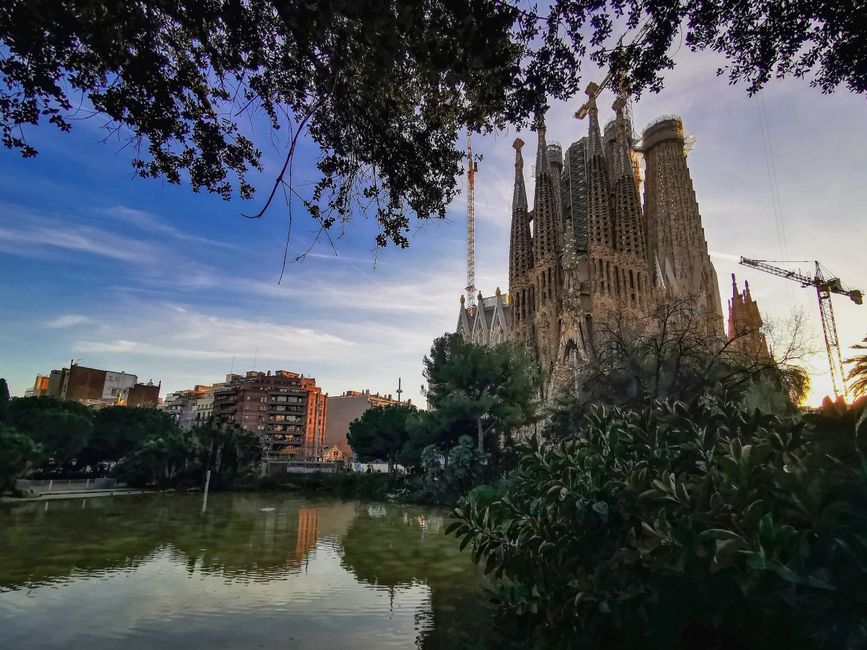
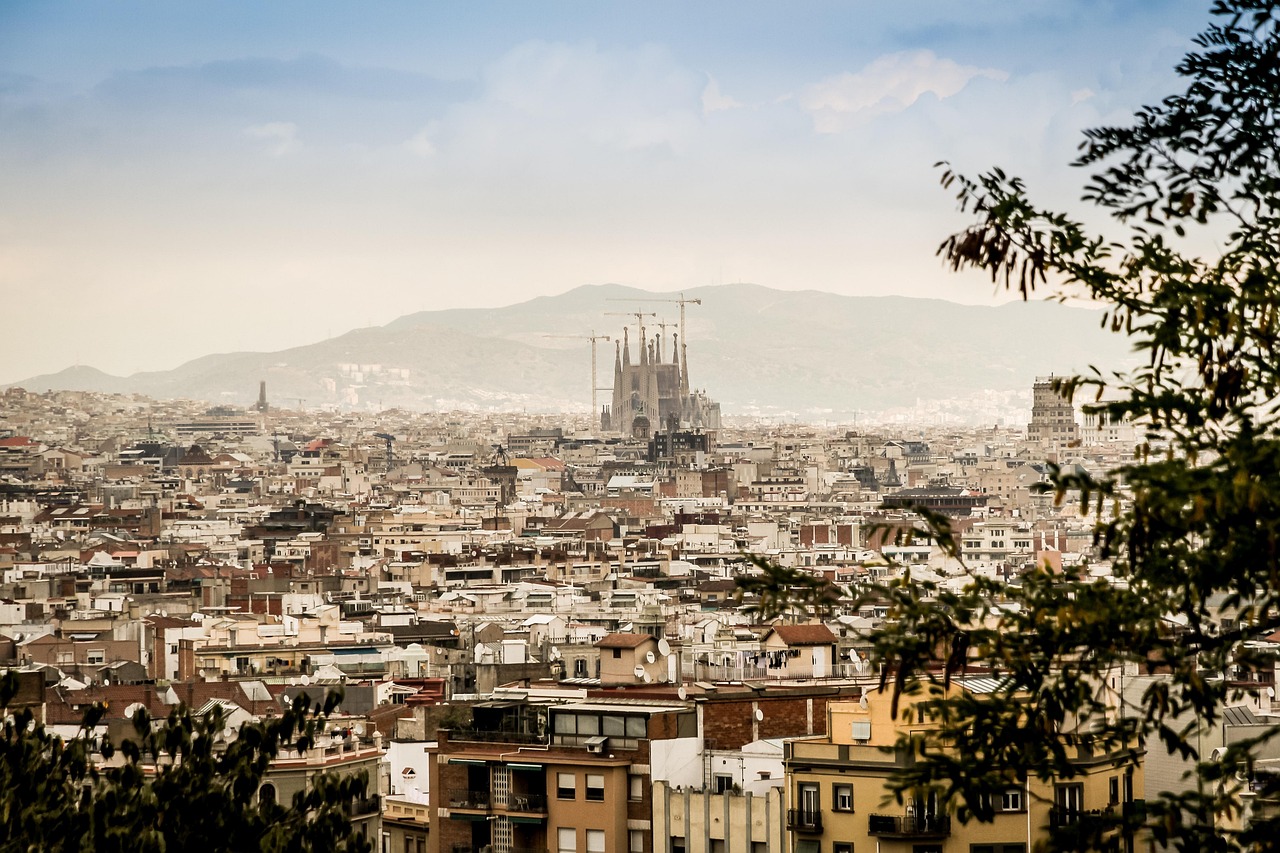
Catalonia’s capital is one of Europe’s great city breaks: the medieval lanes of the Gothic Quarter and El Born, the grid of the Eixample with its Modernista buildings, the hill of Montjuïc with its museums and gardens, and a long city beach at Barceloneta. Antoni Gaudí’s works are the big draw: the Sagrada Família, Park Güell, Casa Batlló and Casa Milà (La Pedrera). Add the Picasso Museum, the Palau de la Música Catalana, the food market of La Boqueria and an evening in Gràcia’s small squares. Our Barcelona travel guide has neighborhoods, ticket prices and airport transport.
Girona and the Costa Brava
North of Barcelona, the Costa Brava (“wild coast”) is a ragged shoreline of pine-backed coves, fishing villages and cliff paths that runs up to the French border. Tossa de Mar has a walled old town above the beach; Calella de Palafrugell, Llafranc and Tamariu are small, pretty bays; Begur, Pals and Peratallada are stone villages just inland; and white-walled Cadaqués sits on the far side of the Cap de Creus headland. The Greek and Roman ruins of Empúries stand right by the sea near L’Escala. Inland, Girona has colorful houses along the river Onyar, a Gothic cathedral with a grand staircase, one of Europe’s best-preserved Jewish quarters and walls you can walk along. Figueres, a short hop further north, is home to the Dalí Theatre-Museum. See our Costa Brava travel guide for beaches, coastal paths and the Dalí sites.
Sitges and the coast south of Barcelona
Just south-west of Barcelona, Sitges is a whitewashed seaside town with a church on a rocky point, more than a dozen beaches, art museums in the old houses of the painter Santiago Rusiñol and the collector Charles Deering, and a busy calendar of festivals, from Carnival to an international fantasy film festival in October. It is an easy day trip by train, but it is also a relaxed place to stay a few nights. Behind it rise the limestone hills of the Garraf natural park, and inland lies the Penedès, Catalonia’s main wine region and the home of cava.
Tarragona and the Costa Daurada
The “golden coast” south of Barcelona has long sandy beaches, family resorts such as Salou and Cambrils, and the PortAventura World theme parks. Its main city, Tarragona, was the Roman city of Tarraco, once the capital of a province that covered almost half of the Iberian Peninsula, and its remains, including an amphitheater by the sea, the circus vaults and a long stretch of Roman wall, are a UNESCO World Heritage Site. Inland are the Cistercian monastery of Poblet, the medieval walled town of Montblanc, the Modernista town of Reus, where Gaudí was born, and the steep vineyards of the Priorat. Our Costa Daurada travel guide covers the beaches, the parks and the Roman sites.
Montserrat and central Catalonia
About an hour north-west of Barcelona, the jagged mountain of Montserrat rises straight out of the plain, with a Benedictine monastery tucked into its cliffs. Pilgrims come to see the Black Madonna (La Moreneta), the boys’ choir (the Escolania) sings in the basilica, and walking trails lead to hermitages and viewpoints high above. You reach it by train from Barcelona’s Plaça d’Espanya, then by cable car or rack railway. Further inland, central Catalonia is a land of Romanesque monasteries, medieval villages and quiet country roads, such as Cardona with its hilltop castle and salt mountain.
The Catalan Pyrenees
The Pyrenees run along Catalonia’s whole northern edge. In the Vall de Boí in the Alta Ribagorça, a group of small stone churches with slender bell towers makes up one of Europe’s finest ensembles of Romanesque art, listed by UNESCO in 2000; Sant Climent de Taüll is the best known. Next door, the Aigüestortes i Estany de Sant Maurici National Park is a landscape of granite peaks, meadows and hundreds of glacial lakes, superb for summer hiking. The Val d’Aran, on the north side of the main ridge, has its own language and the Baqueira-Beret ski area, and the Cerdanya valley and the Vall de Núria are other favorites for walking in summer and skiing in winter.
Lleida and the Ebro Delta
Western Catalonia sees far fewer visitors. The city of Lleida is crowned by its old cathedral, La Seu Vella, on a hill above the town, and the surrounding plain is fruit-growing country. In the far south, where the Ebro meets the sea, the Ebro Delta (Delta de l’Ebre) is a flat world of rice fields, lagoons and sandbars, one of the best places in the western Mediterranean for birdwatching, with flamingos for much of the year. It is also where much of the rice for Catalan paella and black rice is grown.
Top things to do in Catalonia
See Gaudí’s Barcelona
Antoni Gaudí died in Barcelona on 10 June 1926, so 2026 marks a century since his death, and his buildings are still the city’s main sights. The Sagrada Família basilica, still being finished, is sold online only: as of October 2026, a basic ticket with the app costs €26 and a ticket with tower access €36 (under-11s free). At Park Güell, the monumental area with the mosaic dragon and the serpentine bench costs €18 for adults, with timed entry. On Passeig de Gràcia, Casa Batlló and La Pedrera each start at about €29 online for an adult day visit; both have evening experiences too. Book all of them ahead, especially from spring to autumn, and plan one or two a day rather than all four.
Follow the Dalí triangle
Salvador Dalí was born in Figueres and lived most of his life on the Costa Brava, and three places run by his foundation form the “Dalí triangle”. The Dalí Theatre-Museum in Figueres, which Dalí designed himself and where he is buried, has tickets from €18.50 for adults as of October 2026. His house in Portlligat, next to Cadaqués, is a maze of small rooms by the sea and can only be visited with a booking. The castle in Púbol that Dalí gave to his wife, Gala, is the quietest of the three. Note that the Portlligat house and the Púbol castle close for part of the winter, so check the foundation’s website before you go.
Walk the Costa Brava’s coastal paths
The old coast-guard paths (camins de ronda) link coves and villages along much of the Costa Brava, and many sections are part of the long-distance GR 92 trail. The stretch from Calella de Palafrugell to Llafranc and Tamariu is an easy classic, and the paths around Begur lead to tiny beaches with clear water for snorkeling. At the Cap de Creus, a wild, wind-carved headland and natural park, the road to the lighthouse is closed to cars on some busy days, with a shuttle bus instead. Spring and September are the best months: warm enough to swim, but quieter than July and August.
Explore Roman Tarragona and the Cistercian monasteries
In Tarragona, a combined ticket for the five sites run by the city’s history museum, including the amphitheater, the Roman circus and praetorium and the archaeological walk along the walls, costs €15 as of October 2026, or €5 for a single site, and under-12s go free. Inland, the Royal Monastery of Santa Maria de Poblet, founded in the 12th century and still home to a community of monks, is a UNESCO World Heritage Site; a general ticket costs €10.50. Poblet, Santes Creus and Vallbona de les Monges together make up the Cistercian Route (Ruta del Cister), a good one-day drive through vineyards and olive groves.
Visit Montserrat
Montserrat is the most popular day trip from Barcelona, and it is worth arriving early, before the tour groups. Take the FGC train from Plaça d’Espanya, then the cable car (Aeri de Montserrat, round trip from €12.50 as of October 2026) or the rack railway up to the monastery. Once there, see the basilica and the Black Madonna, try to hear the Escolania choir, and take the funiculars higher up the mountain for walks with views as far as the Pyrenees on a clear day. Combined tickets that include the train, the climb and the museum are sold by the operators.
Taste cava and Priorat wine
Catalonia makes most of Spain’s cava, the sparkling wine made by the traditional method, and the cellars around Sant Sadurní d’Anoia in the Penedès are a short train ride from Barcelona; several big houses and many small family producers offer tours and tastings. In the south, the Priorat makes powerful red wines from old Garnacha and Carignan vines on steep slate terraces, and it is one of only two Spanish regions with the top “DOQ/DOCa” quality rank. Montsant, the Empordà on the Costa Brava and Costers del Segre near Lleida are other wine regions to explore. Book winery visits ahead, and if you are driving, choose a designated driver or join a tour.
Hike, ski and see Romanesque churches in the Pyrenees
From June to early October, the Catalan Pyrenees are made for hiking, from easy lake walks in Aigüestortes to multi-day hut-to-hut routes. Combine a hike with the Romanesque churches of the Vall de Boí, whose famous 12th-century wall paintings from Sant Climent de Taüll are now in the National Art Museum of Catalonia (MNAC) in Barcelona, with a projection recreating them in the church itself. In winter, Baqueira-Beret in the Val d’Aran is Catalonia’s biggest ski area, and smaller resorts such as La Molina and Vall de Núria are within reach of Barcelona.
Join a Catalan festival
Catalan festivals have their own traditions: human towers (castells), recognized by UNESCO as intangible cultural heritage, giant figures (gegants) and fire runs (correfocs) with dragons and devils. On Sant Jordi (23 April), streets fill with stalls selling roses and books; the night of Sant Joan (23 June) is celebrated with bonfires and fireworks on the beaches; and in late September, Barcelona’s La Mercè (23 to 27 September in 2026) and Tarragona’s Santa Tecla are the high points of the castells season. In Sitges, the 59th Sitges Film Festival runs from 8 to 18 October 2026, and Girona’s flower festival, Temps de Flors, fills the old town every May.
When to go to Catalonia
The coast has a Mediterranean climate, with mild winters and hot, humid summers; September and October bring most of the year’s rain, often in short, heavy storms. Inland, the Lleida plain is drier and has bigger swings, with hot summers and cold, often foggy winters, and the Pyrenees have snowy winters and fresh summers. The figures below are 1991–2020 averages published by the World Meteorological Organization from Spain’s weather service (AEMET) for Barcelona Airport, on the coast, and Lleida, inland: Barcelona gets about 570 mm of rain a year, Lleida about 350 mm.
| Season | Barcelona: average high / low | Lleida: average high / low | What it’s like | Good for |
|---|---|---|---|---|
| Winter (Dec–Feb) | 14–15 °C / 6–7 °C | 10–14 °C / 1–2 °C | Mild and often sunny on the coast; cold and foggy inland; snow in the Pyrenees | City breaks, museums, skiing, calçot season from late winter |
| Spring (Mar–May) | 17–22 °C / 9–15 °C | 18–26 °C / 5–12 °C | Pleasant and green, with some showers; sea still cool | Sightseeing, Sant Jordi, coastal walks, Girona’s flower festival |
| Summer (Jun–Aug) | 26–30 °C / 19–22 °C | 30–33 °C / 16–18 °C | Hot and humid on the coast, hotter inland; busiest season | Beaches, Pyrenees hiking, open-air festivals |
| Autumn (Sep–Nov) | 27 °C falling to 18 °C / 19 °C falling to 10 °C | 28 °C falling to 15 °C / 15 °C falling to 5 °C | Warm sea in September; the wettest months, with heavy storms possible | Swimming in September, grape harvest, La Mercè, Sitges Film Festival |
Best overall: May, June and September, when the sea is warm enough (or nearly) for swimming, the days are long and the crowds are thinner than in July and August. For city breaks: any time of year, though winter can be cool and damp. For hiking in the Pyrenees: late June to early October. For skiing: December to March. In autumn, heavy rain can briefly disrupt trains and close some sites, so keep an eye on the forecast.
Getting there and getting around
Airports
Barcelona-El Prat (BCN) is Catalonia’s main gateway, with flights from all over Europe and nonstop routes to North America, Latin America and Asia. The Aerobús runs from both terminals to Plaça de Catalunya, the metro (L9 Sud) reaches the city with a special airport ticket (€5.90 as of October 2026), and the R2 Nord train runs from Terminal 2. Girona-Costa Brava (GRO), about 12 km south of Girona, and Reus (REU), near Tarragona and Salou, have mainly European and seasonal flights, with buses to their cities and the nearby coast. See our Barcelona guide for airport transport details.
Trains
High-speed trains link Barcelona-Sants with Madrid and the rest of Spain, and run north through Girona and Figueres-Vilafant into France; Renfe’s international services reach Lyon and Marseille. Within Catalonia, high-speed trains reach Girona from Barcelona-Sants in about 40 minutes, and also serve Camp de Tarragona and Lleida. Book long-distance and high-speed tickets on renfe.com or with other operators on the same lines, and check current journey times before you travel.
For shorter trips, the regional network Rodalies de Catalunya is cheap and frequent: the R2 Sud runs along the coast to Sitges, the R11 serves Girona, Figueres and Portbou, and other lines go to Tarragona, the Penedès and the coast north of Barcelona. Rodalies had serious disruption during 2026, so check service notices on rodalies.gencat.cat on the day you travel. FGC trains (Ferrocarrils de la Generalitat) run from Plaça d’Espanya to Montserrat and from Plaça de Catalunya to towns north of Barcelona. For the Costa Brava villages, the Pyrenees and the Priorat, regional buses help, but a car is far more practical.
Driving
A car is the easiest way to explore the Costa Brava coves, the Pyrenees valleys and the wine country, but you do not need one in Barcelona, where parking is expensive and traffic heavy. Several Catalan cities have low-emission zones (zones de baixes emissions, ZBE). Girona’s, for example, has been in force since 15 September 2025 on working days from 7:00 to 20:00, and vehicles without an authorized environmental label may enter only on a limited number of days a year; rental cars are usually compliant, but check with your rental company. In summer, parking near the most popular Costa Brava coves fills early, and some access roads, like the one to the Cap de Creus lighthouse, are closed to cars on busy days.
Tourist tax
Catalonia charges a tourist tax on stays in hotels, tourist apartments, campsites and other accommodation, set by the Catalan Tax Agency (ATC). From 1 April 2026, the rates for most of Catalonia are, per person per night: €4.50 in five-star hotels, €1.80 in four-star hotels, €1.75 in tourist apartments, €0.90 in other hotels and campsites, and €0.80 in youth hostels. Barcelona city has its own higher rates (€7 for five-star, €3.40 for four-star, €4.50 for tourist apartments and €2 for most other accommodation), plus a municipal surcharge of €5 per person per night from 1 April 2026. Under-17s are exempt, and the tax is charged for a maximum of seven nights per stay. The ATC has also published higher rates that take effect on 1 April 2027.
Food and drink in Catalonia
Catalan cooking combines “sea and mountain” (mar i muntanya), and it starts with pa amb tomàquet, bread rubbed with ripe tomato, olive oil and salt, served with almost everything. Look for escalivada (roasted peppers, eggplant and onion), esqueixada (salt-cod salad), the cured sausage fuet, botifarra sausage with white beans, and suquet, a fisherman’s stew. Rice dishes are a coastal staple: seafood paella, black rice (arròs negre) colored with squid ink, and fideuà, made with short noodles instead of rice. In late winter and early spring, the calçotada is a feast of grilled green onions (calçots) dipped in romesco sauce, followed by grilled meat.
For dessert, try crema catalana, a custard with a burnt-sugar crust, or mel i mató, fresh cheese with honey. In Barcelona, an early-evening vermut with olives and chips is a local ritual, and tapas bars serve bombas (potato and meat croquettes) and patatas bravas. To drink, there is cava from the Penedès, red wines from the Priorat and Montsant, and the local craft beer scene is lively. Meal times are late: lunch is usually from 13:30 to 15:30, and dinner rarely starts before 20:30 or 21:00. Many restaurants offer a good-value fixed-price lunch menu (menú del dia) on weekdays.
Plan your trip
Tell our AI trip planner how many days you have and what you enjoy, and it will build a Catalonia itinerary from our guides, for example Barcelona and the Costa Brava, or Barcelona, Sitges and Tarragona. Check the forecast and monthly averages for each stop with our Destination weather tool, and use the packing list to pack for the city, the beach and the mountains. Going on elsewhere in Spain? Our Valencia, Zaragoza and Mallorca guides cover easy next stops by train or ferry.
Frequently asked questions
What is the best time to visit Catalonia?
May, June and September are the best all-round months, with warm weather, swimmable or nearly swimmable sea and fewer crowds than July and August. Late June to early October is best for the Pyrenees, and December to March for skiing.
How many days do you need in Catalonia?
One week is enough for three or four days in Barcelona, a day trip to Montserrat or Sitges, and two days in Girona and the Costa Brava. With ten days to two weeks, you can add Tarragona and the Priorat, the Dalí sites and a few days in the Pyrenees.
Can I visit Girona and the Costa Brava without a car?
Yes, partly. High-speed and regional trains reach Girona and Figueres easily from Barcelona, and buses run from Girona and Barcelona to the main coastal towns such as Tossa de Mar, Palafrugell and Cadaqués. The smallest coves and inland villages like Pals and Peratallada are much easier with a car.
How much is the tourist tax in Catalonia?
From 1 April 2026, outside Barcelona city it is €0.80 to €4.50 per person per night depending on the type of accommodation (for example, €1.80 in a four-star hotel). In Barcelona city, the regional rate is higher and a €5 municipal surcharge is added. Under-17s are exempt, and you pay for a maximum of seven nights.
Do I need to speak Catalan?
No. Catalan and Spanish are both official, and everyone speaks Spanish; English is widely spoken in hotels, restaurants and sights in the tourist areas. Learning a few words such as bon dia (good morning) and gràcies (thank you) is always appreciated.