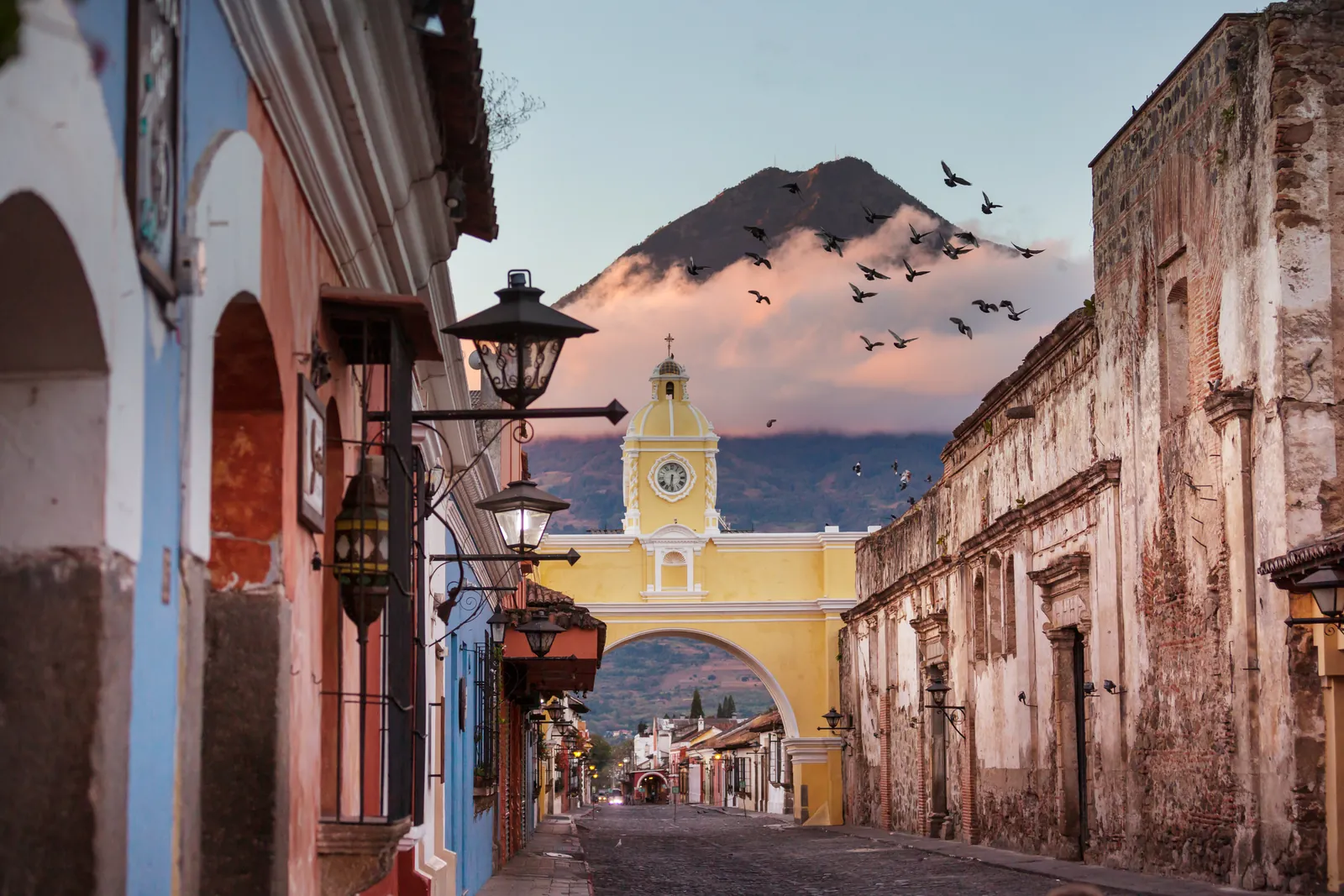
Short answer: Don’t leave Guatemala without eating pepián, the rich spiced stew many call the national dish, a bowl of kak’ik turkey soup, chuchitos or tamales from a market stall, a full Guatemalan breakfast with black beans and fried plantains, and rellenitos for dessert. Wash it down with a cup of highland coffee in Antigua, and you have tasted the country.
Guatemalan food is Maya at its roots: corn, beans, squash, chiles, tomatoes and cacao, cooked into thick sauces called recados that are thickened with toasted seeds, bread or corn dough. Spanish colonial cooking added meats, spices and sweets, and the Caribbean coast around Livingston brings Garifuna dishes made with coconut and seafood. Corn tortillas, patted by hand and cooked on a griddle (comal), come with almost every meal, and black beans, whole or refried, are never far away. For the bigger picture, see our Guatemala travel guide.
Stews and soups
1. Pepián
A thick, reddish-brown stew of chicken or beef with vegetables such as chayote, potato and green beans, in a recado of toasted tomatoes, tomatillos, dried chiles, pumpkin seeds (pepitoria) and sesame seeds. It is served with rice and tortillas or small tamalitos. Pepián is often called Guatemala’s national dish, and it is among the dishes the Ministry of Culture declared part of the nation’s intangible cultural heritage in 2007. It is smoky and rich rather than very spicy, and you will find it at comedores and restaurants across the highlands, especially in Antigua.
2. Jocón
A green chicken stew colored by tomatillos, cilantro, green onion and green chiles, thickened with ground pumpkin and sesame seeds or tortilla. Its name comes from the K’iche’ Maya language, and it is another of the dishes on the 2007 heritage list. It is fresh, herby and mild, and comes with rice and tortillas.
3. Kak’ik
A bright red turkey soup from the Q’eqchi’ Maya of Alta Verapaz, flavored with achiote, tomatoes, dried chiles and herbs such as cilantro and mint. A whole turkey leg in the bowl is the classic serving, with rice and tamalitos wrapped in leaves. It is a dish for special occasions and Sundays, and it carries some heat. Look for it on menus labeled comida típica, and ask how spicy it is before you order.
4. Hilachas
Shredded beef (hilachas means “threads”) simmered in a tomato and tomatillo sauce with potatoes and carrots, mildly spiced with guajillo chile. It is everyday home cooking and a common plate of the day at comedores. It is one of the easiest Guatemalan stews for visitors who prefer mild food.
5. Pulique
A highland stew of chicken or beef in a sauce thickened with corn dough and colored with achiote, with vegetables such as potatoes and chayote. The Guatemala Tourism Institute (INGUAT) recommends pulique and traditional tamales as dishes to try around the market town of Chichicastenango. Eat it with rice and tortillas, like most Guatemalan stews.
6. Fiambre
A huge cold salad of pickled vegetables, cold meats, sausages, cheeses, eggs and olives, made once a year for All Saints’ Day, when families gather and visit cemeteries. Each family has its own recipe, which can run to dozens of ingredients, and it takes days to prepare. If you are in Guatemala at the start of November, you will see it in homes, markets and some restaurants; the rest of the year, it is hard to find.
Corn, street food and breakfast
7. Tamales and chuchitos
Guatemala has many tamales. Tamales colorados are wrapped in banana leaves with a red tomato sauce, meat, olives and a strip of sweet pepper, and they are a Christmas Eve and Saturday tradition. Chuchitos are smaller, firmer tamales wrapped in corn husk, with a little meat and sauce, sold at markets and street stalls and topped with tomato sauce and crumbled cheese. Tamalitos of plain corn dough, some mixed with chipilín leaves, come on the side of stews.
8. Tostadas, enchiladas and garnachas
Fried corn tortillas piled with toppings are the classic evening street food. Tostadas come with guacamole, black beans or tomato sauce with cheese; Guatemalan enchiladas are not rolled but stacked on a tostada with lettuce, a meat and vegetable salad, beets, egg and cheese; and garnachas are small fried tortillas with minced meat and pickled cabbage. Look for them at stalls around central plazas and in front of churches on Sunday evenings. Tostadas with beans or guacamole are an easy vegetarian choice.
9. Shucos
Guatemala City’s street hot dog: a toasted bun filled with sausage, chorizo or other meats, spread with guacamole and topped with cabbage, mustard, ketchup and mayonnaise. Carts sell them at lunchtime and in the evening. It is a filling snack between sights; ask for sin cebolla or other changes as you like.
10. Desayuno chapín (Guatemalan breakfast)
The typical breakfast is eggs (scrambled with tomato or fried), black beans (refried or whole), fried sweet plantains, fresh cheese, cream, tortillas or bread, and coffee. Hotels, cafés and comedores everywhere serve it, often under the name desayuno típico. It is an easy vegetarian meal and filling enough to carry you through a morning of hiking.
11. Tapado (Caribbean seafood soup)
On the Caribbean coast, Garifuna cooks make tapado, a coconut milk soup with fish, shrimp, crab or other seafood, green plantains and herbs. It is the dish to try in Livingston, the Garifuna town at the mouth of the Río Dulce, reached by boat. Expect a generous bowl to share, eaten slowly by the water.
Sweets and drinks
12. Rellenitos de plátano
Mashed ripe plantain shaped around a filling of sweetened black beans, often with chocolate and cinnamon, then fried and dusted with sugar. Bean dessert surprises many visitors, but it works: think of a rich, chocolatey filling. Find them at bakeries, markets and comedores, and in Antigua look for the colonial sweet shops selling dulces típicos such as coconut candies and marzipan.
13. Atol de elote and other atoles
Hot, thick drinks made from corn or other grains: atol de elote is sweet fresh corn blended with milk or water and cinnamon, and atol blanco is plainer corn. Women sell atoles from big pots at markets and on street corners in the morning and evening, especially in the cool highlands. They are comforting on a chilly morning at Lake Atitlán.
14. Guatemalan coffee
Coffee grows on the volcanic slopes of the highlands, and the valley around Antigua is one of the most famous growing areas, protected by a designation of origin for “Antigua” coffee. Many farms around Antigua and the villages of Lake Atitlán offer tours of the harvest, drying and roasting. Antigua also has chocolate shops and workshops where you can make chocolate from cacao beans, a Maya tradition.
Where to eat: Antigua and beyond
Antigua. Antigua Guatemala has the widest choice, from comedores serving pepián and plates of the day to cafés, coffee farm tours and restaurants in colonial courtyards. The town market near the bus terminal is where locals shop for fruit, vegetables and simple meals, and on Sunday evenings food stalls set up near churches and plazas.
Chichicastenango. INGUAT says the busiest market days in Chichicastenango are Thursday and Sunday, when stalls fill the streets around the Santo Tomás church. Besides crafts, the market has food stalls where you can try pulique, tamales and atoles alongside local families.
Lake Atitlán. Around Lake Atitlán, the villages have small markets, comedores and coffee cooperatives. Panajachel is the easiest place to eat, while San Juan and San Pedro have small coffee and chocolate producers that welcome visitors.
Petén and Tikal. In Flores and Santa Elena, the gateway towns for Tikal, look for pescado blanco (white fish from Lake Petén Itzá) and simple comedores near the park entrance.
The Caribbean coast. Livingston and the Río Dulce area are the place for tapado, coconut bread and fried fish, cooked by Garifuna families.
Food etiquette and tipping
Comedores are simple: a menu board or a few pots on the stove, a plate of the day with a drink, and you pay at the end. Menu prices usually include the 12% IVA (value added tax). In restaurants, a 10% tip is customary and is often already added to the bill as propina sugerida (suggested tip), so check before leaving more. Tip guides, drivers and boat captains for good service, and use our tip calculator for the sums.
Saying buen provecho (enjoy your meal) to people at nearby tables when you sit down or leave is a friendly local habit. Useful phrases: ¿pica? (is it spicy?), sin carne (without meat) and la cuenta, por favor (the bill, please); our phrase cards have more. Drink bottled or filtered water, which many hotels and hostels refill for free or for a few quetzales.
Eating on a budget
Guatemala is one of the best-value countries in the region for food. A plate of the day at a local comedor costs a few dollars, and our cost guide puts a meal at an inexpensive restaurant in Antigua at about Q52 ($7). Street tostadas, chuchitos and atoles cost even less. Eat your main meal at lunch, buy fruit at markets, and keep Antigua’s courtyard restaurants for a special night. For daily budgets, see how much a trip to Guatemala costs. Coffee farm, chocolate and market food tours are easy to book through our tour finder.
Plan your trip
Fit your meals into the bigger plan: our top places to visit in Guatemala shows where each food stop lives, the Guatemala itinerary links Antigua, Lake Atitlán, Chichicastenango and Tikal into a route, and the best time to visit Guatemala covers the dry and green seasons, Holy Week and All Saints’ Day. Or let our AI trip planner build a day-by-day plan with food stops included, and check the Destination weather tool before you pack.
Frequently asked questions
What is the national dish of Guatemala?
Pepián, a thick stew of meat and vegetables in a sauce of toasted chiles, tomatoes and pumpkin and sesame seeds, is the dish most often called Guatemala’s national dish. It is among the dishes Guatemala’s Ministry of Culture declared national intangible cultural heritage in 2007, together with jocón and kak’ik.
Is Guatemalan food spicy?
Mostly no. Dishes are seasoned with dried chiles for flavor and color rather than heat, and spicy salsa (chirmol or pickled chiles) is served on the side. Kak’ik and some Caribbean dishes can be hotter. Ask ¿pica? if you are unsure.
What do people eat for breakfast in Guatemala?
The desayuno chapín: eggs, black beans, fried sweet plantains, fresh cheese and cream, tortillas or bread, and coffee. On the street, atoles and sweet breads are popular early in the morning.
Is Guatemala good for vegetarians?
Yes, fairly easy. Black beans, eggs, plantains, tortillas, tostadas, rellenitos and fresh fruit are everywhere, and Antigua and the Lake Atitlán villages have many vegetarian cafés. Stews such as pepián are usually made with meat, but some restaurants offer vegetable versions. Say sin carne and ask whether beans are cooked with lard.
What is fiambre and when is it eaten?
Fiambre is a cold salad of pickled vegetables, meats, sausages, cheeses and eggs that Guatemalan families make once a year for All Saints’ Day, at the start of November. Every family has its own recipe, and it is shared with relatives and friends.
Where is the best coffee in Guatemala?
The volcanic highlands grow excellent coffee, and the valley around Antigua is the most famous area, with a designation of origin for Antigua coffee. Coffee farm tours around Antigua and Lake Atitlán show the whole process from cherry to cup.