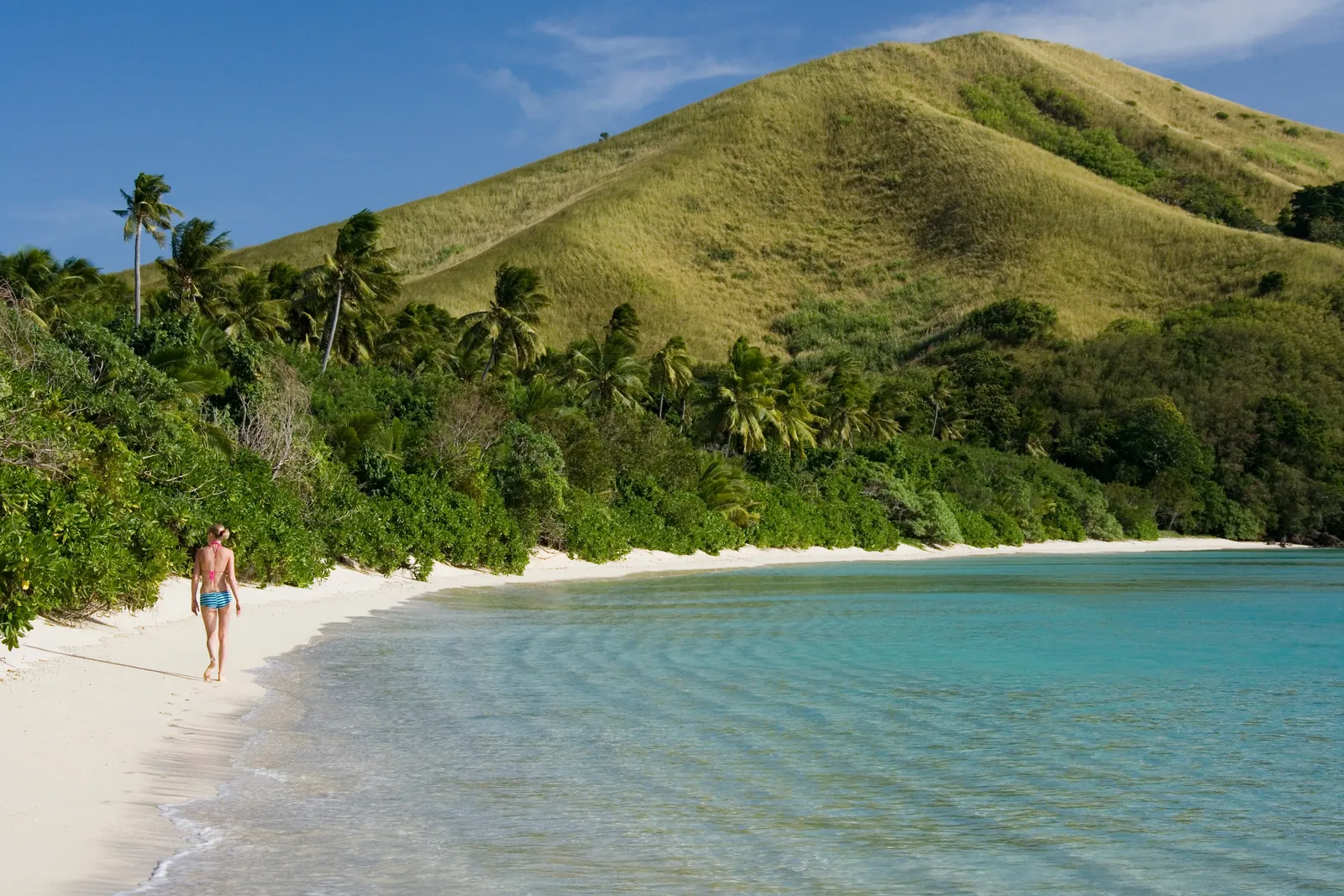
Short answer: The best time to visit Fiji is the dry season from May to October, with sunny days, lower humidity, cooler nights and the calmest conditions for island-hopping; it is also the season for swimming with manta rays in the Yasawas. The trade-off is that July to September, with the Australian and New Zealand school holidays, is the busiest and most expensive time. November to April is hotter, wetter and the cyclone season, but quieter and cheaper, and many days still have long sunny spells.
Fiji’s weather changes less with the month than with the side of the island: Nadi and the Mamanuca and Yasawa islands, in the rain shadow of Viti Levu’s mountains, are much drier than Suva on the windward east coast. This page explains the seasons month by month and island group by island group, with cyclone season, school holidays and festivals, as of October 2026. For entry rules, island boats, taxes and costs, see our Fiji travel guide, and plan your days with our AI trip planner.
Best time to visit Fiji at a glance
| Goal | Best months | Why |
|---|---|---|
| Best weather | May to October | The dry season: sunny, less humid, with cooler nights |
| Island-hopping (Mamanucas, Yasawas) | May to October | Calmer seas and the least rain on the western islands |
| Manta rays | May to October | Mantas feed in the channel off Drawaqa in the Yasawas |
| Diving and snorkeling | All year; May to October for visibility | Warm water all year; clearer in the cooler dry season |
| Surfing | April to October | The biggest swells on the Mamanuca reef breaks, such as Cloudbreak |
| Fewest crowds | February, March and November | Between the school holiday peaks, in the wet season |
| Lowest prices | November, February and March | Wet-season and cyclone-season rates |
| Festivals | October and November | Fiji Day on 10 October; Diwali, a public holiday, usually in October or November |
Fiji weather month by month
Weather month by month
The climate table shows average highs, lows and rain by month at Nadi Airport, on the dry western side of Viti Levu, from the 1991–2020 climate normals that the Fiji Meteorological Service submitted to the World Meteorological Organization (WMO). Temperatures barely change through the year, with highs of about 29–32 °C (83–89 °F), but rain does: Nadi gets about 365 mm (14.4 in) in January and only about 51 mm (2.0 in) in July, about 2,000 mm (79 in) a year on 103 days with at least 1 mm. Suva, on the wet east coast, gets nearly 3,000 mm (118 in) a year on 188 days, with more than 130 mm (5 in) even in the driest months.
Fiji month by month
January
The heart of the wet season: hot and humid, about 31 °C (89 °F) by day and 23 °C (74 °F) at night, and Nadi’s wettest month, with about 365 mm (14.4 in) of rain, usually in heavy downpours between sunny spells. Cyclones are possible. Resorts are busy in the first half of the month with Christmas and New Year holidaymakers from Australia and New Zealand, then quieten.
February
Hot, wet and one of the cheapest months, with about 336 mm (13.2 in) of rain in Nadi and the highest cyclone risk of the year. Good-value resort deals, quiet beaches and warm water; keep plans flexible in case boats are canceled.
March
Still wet, about 351 mm (13.8 in) in Nadi, and still cyclone season, but prices stay low and crowds thin. In 2027, Easter falls in late March, with public holidays from Good Friday (26 March) to Easter Monday (29 March) and a short burst of local travel.
April
The rains ease on the western side (about 188 mm/7.4 in in Nadi) and the cyclone season ends on 30 April. Surf season begins on the Mamanuca reef breaks. Australian and New Zealand school holidays in April make a few weeks busier. A good shoulder month.
May
The dry season begins: Nadi’s rain drops to about 92 mm (3.6 in), humidity falls and nights cool to about 21 °C (70 °F). Manta season starts in the Yasawas, and it is an excellent time for Yasawa island-hopping before the winter holidays.
June
Dry and sunny in the west, with about 57 mm (2.2 in) of rain in Nadi, highs of about 29 °C (84 °F) and nights of about 20 °C (68 °F). Visibility for diving is often at its best in the cooler months. From late June, Australian and New Zealand school holidays fill the family resorts in the Mamanucas and on Denarau.
July
The driest month in Nadi, with about 51 mm (2.0 in) of rain, and the coolest nights, about 19 °C (67 °F). It is peak season: book resorts, boats and Fiji Link flights well ahead. Suva and the east are wetter but still past their rainiest months. Big swells hit Cloudbreak and the other Mamanuca breaks.
August
Dry, sunny and pleasant, about 29 °C (83 °F) by day, with about 65 mm (2.5 in) of rain in Nadi. Still high season, with mantas in the Yasawas and good diving. The sea is at its coolest of the year, so a thin wetsuit helps on long dives.
September
Warm and dry, with about 72 mm (2.8 in) of rain in Nadi. School holidays from late September into early October make resorts busy again. One of the best months for the Coral Coast and a road trip along Viti Levu.
October
The end of the dry season: warming up, about 30 °C (86 °F), with about 87 mm (3.4 in) of rain in Nadi. Fiji Day on 10 October celebrates independence with parades and events. Crowds drop after the school holidays, and manta and surf seasons wind down.
November
The wet season and the cyclone season begin (1 November), but rain is still moderate in the west, about 127 mm (5.0 in) in Nadi. Diwali, the Hindu festival of lights, is a public holiday (9 November in 2026), when homes in Nadi, Lautoka and Suva are lit with lamps. One of the cheapest and quietest months.
December
Hot and getting wetter, about 210 mm (8.3 in) in Nadi, with cyclones possible. Christmas and New Year are busy with family holidaymakers from Australia and New Zealand, and resort prices rise again from mid-December; book early for the holidays.
Best time to visit by destination
Nadi and Denarau
May to October, the dry season. November to April is hotter and wetter and the cyclone season, but there is still plenty of sunshine between showers. Nadi is the base for day trips and the boats to the islands. See our Nadi guide.
The Mamanuca Islands
May to October for sunny days and calmer conditions; this is also the main surf season on the outer reefs. As one of the driest and sunniest parts of Fiji, the Mamanucas are also a good choice in the wet season, when they are quieter and cheaper. See our Mamanuca Islands guide.
The Yasawa Islands
May to October, when the Yasawa Flyer runs on calmer seas and manta rays feed in the channel between Drawaqa and Nanuya Balavu almost daily. Wet-season trips are cheaper, but rough weather can disrupt boats. See our Yasawa Islands guide.
The Coral Coast
May to October, the dry season, for beaches, the Sigatoka Sand Dunes and shark dives in Beqa Lagoon from Pacific Harbour. November to April is hotter and wetter and the cyclone season, but quieter and cheaper. See our Coral Coast guide.
Suva and the east
June to October, the least rainy months, though Suva gets rain all year. Bring a rain jacket in any season.
Best time for diving, snorkeling, surfing and festivals
Diving and snorkeling
All year: the water is warm and the reefs are healthy in every month. The dry season from May to October usually has the best visibility, and it is manta season in the Yasawas; Taveuni’s soft corals and the Beqa Lagoon shark dive run all year. See our diving and snorkeling guides.
Surfing
April to October, when Southern Ocean swells hit the Mamanuca reef breaks, such as Cloudbreak and Restaurants; the wet season brings smaller, cleaner days. See our surfing guide.
Beaches and island-hopping
May to October for the calmest seas and the most sunshine. See our beaches and boat trips guides.
Festivals
Fiji Day (10 October) and Diwali (usually October or November) are the main national celebrations. The Bula Festival in Nadi and the Hibiscus Festival in Suva are popular local carnivals, with dates that vary from year to year.
Seasons to plan around
- Cyclone season: 1 November to 30 April. When a tropical cyclone approaches, boats to the islands and domestic flights stop and resorts follow official instructions. Follow the Fiji Meteorological Service’s forecasts and keep a spare day before your international flight.
- The wet season: November to April brings heavy downpours, especially on the windward east around Suva; the western side has long sunny spells between showers.
- School holidays: Australian and New Zealand school holidays, especially late June to July, late September to early October and Christmas, are the busiest and most expensive weeks at the resorts.
- Public holidays: Easter (26–29 March 2027), Fiji Day (10 October), Diwali (9 November 2026) and Christmas fill local hotels and close some government offices and shops.
How long to stay
Five days suits one island resort in the Mamanucas; a week to ten days allows island-hopping up the Yasawas; two weeks adds the Coral Coast and Suva, or Taveuni’s diving. Inter-island boats leave in the morning, so plan a night in Nadi at each end. See the sample itineraries in our Fiji travel guide.
Best time to visit Fiji: FAQ
What is the best month to visit Fiji?
July is the driest month in Nadi, but also the busiest. For dry weather with fewer crowds, choose May, early June, late August, September after the school holidays, or October.
What is the rainiest month in Fiji?
January, with about 365 mm (14.4 in) of rain in Nadi; February and March are almost as wet. Suva is wet all year.
When is cyclone season in Fiji?
From 1 November to 30 April. Cyclones are most likely from January to March, and boats and flights can stop for a day or two when one approaches.
What is the cheapest time to visit Fiji?
November, February and March usually have the lowest resort prices, outside the Christmas and Easter holidays.
Is the rainy season a bad time to visit Fiji?
Not necessarily. It is hotter and wetter, with a risk of cyclones, but rain usually comes in heavy bursts, the western islands get plenty of sunshine, and prices are lower. Choose flexible bookings and travel insurance.
When can you swim with manta rays in Fiji?
From about May to October, in the channel between Drawaqa and Nanuya Balavu islands in the Yasawas, usually on the change of tide.
Sources · last reviewed 9 Oct 2026
Researched and last reviewed by TravelerCenter on 8 October 2026. Monthly temperatures, rainfall and rain days are the 1991–2020 climate normals that the Fiji Meteorological Service submitted to the World Meteorological Organization; manta season from the Yasawa Flyer’s operator; the 2026 Diwali holiday from Cabinet’s endorsed holiday list as reported by the Fiji Times; seasons for each destination from our destination guides. The cyclone season months, school holiday patterns, surf season, sea temperatures and festival timings are general references, flagged for checking. Check forecasts and boat schedules before you travel.
Also: Fiji Meteorological Service normals 1991–2020, Nadi Airport (climate)
Data: Wikidata (CC0)