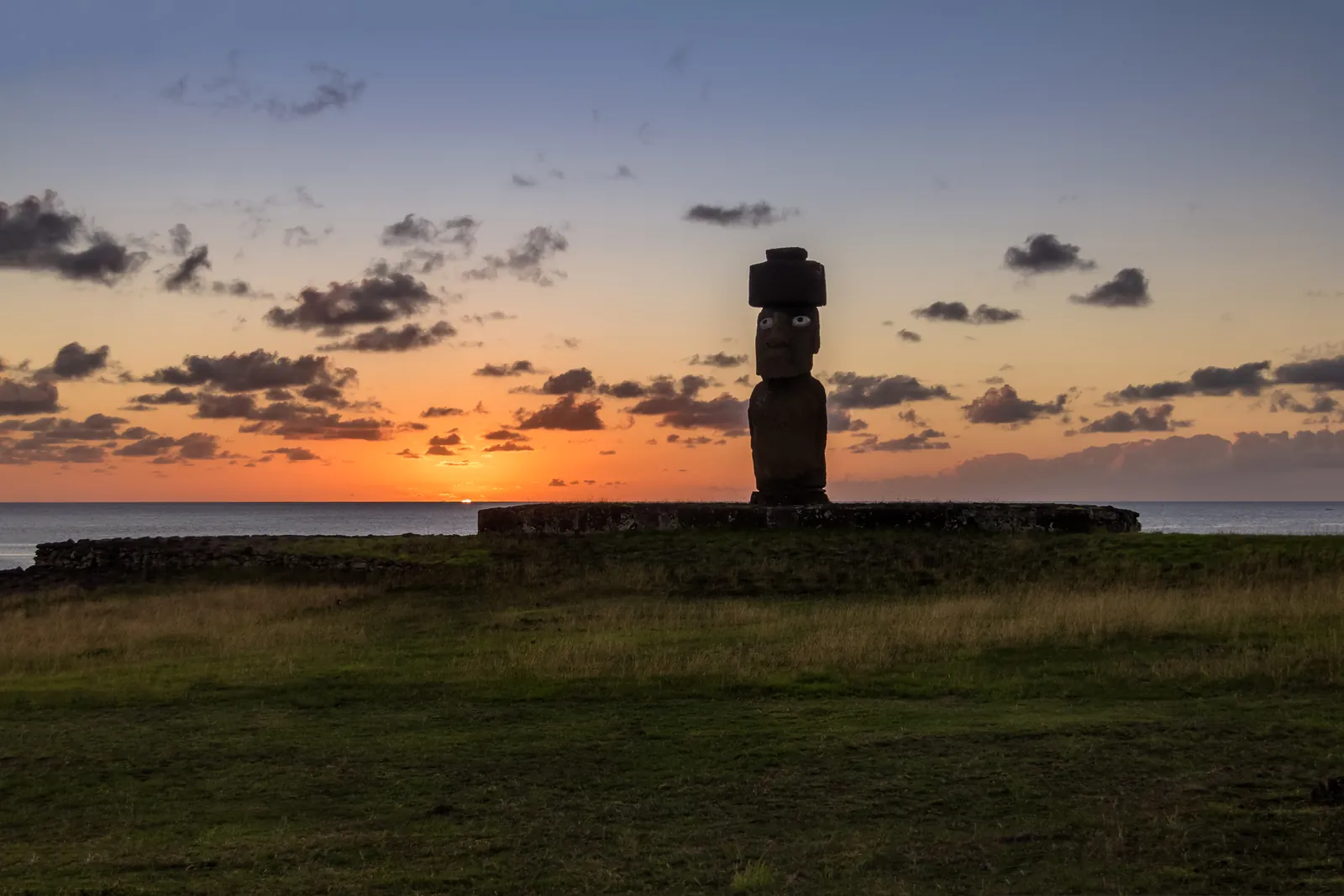
Short answer: For most trips, the best time to visit Chile is November to March, when Patagonia’s parks, boats and refuges are fully open, the Lake District is at its driest, and days are long; spring (September to November) and fall (March to May) are best for Santiago and the wine valleys. The main trade-off is January and February: Chile’s summer holidays make them the busiest and most expensive months in Patagonia, the lakes and on the beaches, and refuges in Torres del Paine sell out months ahead. The Atacama Desert and Easter Island can be visited all year.
Chile stretches about 4,300 km (2,670 miles) from the driest desert on Earth to the glaciers of Patagonia, and it lies in the Southern Hemisphere, so summer runs from December to February and winter from June to August. This page explains the seasons month by month and region by region, with holidays, festivals and park seasons, as of October 2026. For entry rules, Easter Island’s entry form, money and park fees, see our Chile travel guide, and plan your days with our AI trip planner.
Best time to visit Chile at a glance
| Goal | Best months | Why |
|---|---|---|
| A trip to several regions | November and March | Patagonia open, the lakes fairly dry, Santiago warm, fewer crowds than in high summer |
| Patagonia and Torres del Paine | November to March | Long days and all refuges, boats and buses running; October and April are quieter |
| The Lake District | December to March | The driest, warmest months around Puerto Varas |
| Santiago and Valparaíso | September to November; March to May | Mild, sunny spring and fall; summer is hot and dry |
| The Atacama Desert | All year; spring and fall most comfortable | Almost no rain; summer storms in the high Andes, freezing winter nights |
| Easter Island | All year; January to March warmest | Mild all year; the Tapati festival in early February |
| Skiing | Late June to September | Resorts above Santiago open with the snow |
| Wine harvest | Late February to April | Grapes are picked and valleys hold harvest festivals, usually in March |
| Fewest crowds | October, April and May | Outside the summer and winter school holidays |
| Festivals | September | Fiestas Patrias on 18 and 19 September |
Chile weather month by month
Weather month by month
The climate table shows average highs, lows and rain by month for Santiago, from the 1991–2020 climate normals that Chile’s Meteorological Directorate (Dirección Meteorológica de Chile, DMC) submitted to the World Meteorological Organization, for its Quinta Normal station. Santiago has a Mediterranean climate: dry, hot summers, with highs of about 30 °C (87 °F) in January, and cool, damp winters, with highs of about 16 °C (60 °F) and nights of about 4 °C (39 °F) in July; almost all of its 286 mm (11.3 in) of yearly rain falls from May to August. Other regions are very different: Calama, near San Pedro de Atacama, gets about 7 mm (0.3 in) a year; Puerto Montt, in the Lake District, about 1,566 mm (62 in) spread through the year; and Punta Arenas, in Patagonia, averages only about 15 °C (59 °F) by day in January.
Chile month by month
January
High summer and the start of Chile’s school holidays. Santiago is hot and dry, about 30 °C (87 °F) by day and 14 °C (56 °F) at night, and many residents head for the coast and the south. Torres del Paine has its longest days and full services, but also strong winds and its busiest refuges. The Lake District is warm and fairly dry, and summer storms of the altiplanic winter can close roads to the high lagoons and geysers near San Pedro de Atacama for a day or two.
February
Still peak summer and very busy in Patagonia, the lakes and the beach towns, with high prices. Puerto Montt has its driest month, about 69 mm (2.7 in). On Easter Island, the Tapati Rapa Nui festival, held each year in early February, brings sports, music and dance, and is the busiest time on the island; book flights and lodging early. The grape harvest begins in the warmest valleys late in the month.
March
One of the best months: summer crowds leave after the school year begins, Patagonia is still open with fewer visitors and the first fall colors, and Santiago cools to about 28 °C (82 °F). Wine valleys such as Colchagua and Casablanca usually hold their harvest festivals (vendimias) in March. Easter falls in late March in 2027, with Good Friday and Holy Saturday (26 and 27 March) as holidays and a busy travel weekend.
April
Fall in the center and south: Santiago is mild and clear, about 23 °C (74 °F), and the wine harvest continues. Patagonia’s forests turn red and gold, days shorten and services start to wind down at the end of the month. Easter Island has its wettest month, about 123 mm (4.8 in), though rain comes in showers. A good month for San Pedro, with comfortable days.
May
Cooler and quieter. Rain returns to Santiago (about 43 mm/1.7 in) and becomes heavy in the Lake District (about 181 mm/7.1 in at Puerto Montt). Many Patagonian lodges, refuges and boats close for the winter; Torres del Paine stays open with shorter hours, and from May to September the park is open from 8 a.m. to 6:30 p.m. Navy Day (21 May) makes a long weekend in 2027. A good-value month for Santiago, the Atacama and Easter Island.
June
Winter begins. Santiago is cool, about 16 °C (61 °F) by day and 5 °C (40 °F) at night, with its wettest month (about 80 mm/3.2 in) and some smoggy days. The Lake District is at its wettest, about 213 mm (8.4 in). Ski resorts above Santiago, such as Valle Nevado, La Parva, El Colorado and Portillo, usually open from late June, depending on the snow.
July
The coldest month: Santiago’s nights average about 4 °C (39 °F), Punta Arenas averages about 4 °C (39 °F) by day and just below freezing at night, and nights in the Atacama drop below freezing, though desert days stay sunny at about 21 °C (70 °F). Chile’s two-week winter school holidays make ski resorts busy. Patagonia is quiet, with snow, short days and limited services; parts of the W trek may be walked only with a guide in winter, according to CONAF.
August
Still winter, with good snow for skiing and clear, cold days in the Andes. Santiago starts to warm, about 18 °C (64 °F). A quiet, good-value time for the Atacama and Easter Island.
September
Spring arrives in the center, about 20 °C (68 °F) in Santiago. Fiestas Patrias, Chile’s independence celebrations on 18 and 19 September, fill the country with fondas, empanadas and cueca dancing; it is the biggest holiday of the year, and buses, flights and hotels fill up. Ski season ends with the month.
October
Spring, and one of the best months for Santiago, Valparaíso and the wine valleys, about 23 °C (74 °F) and mostly dry. Patagonia reopens: from October to April, Torres del Paine is open from 7 a.m. to 9 p.m., and in 2026, CONAF closed the long “O” circuit for the winter until 31 October. The Meeting of Two Worlds holiday (12 October 2026) makes a long weekend.
November
Late spring and one of the best all-round months: long days in Patagonia with fewer visitors than in summer, warm days in Santiago (about 27 °C/80 °F), and the Lake District drying out. All Saints’ Day (1 November) is a holiday. A good-value month before the summer rush.
December
Summer begins, with the longest days of the year in Patagonia and the Lake District, and Santiago at about 29 °C (84 °F). Christmas (25 December) marks the start of the summer holiday season, and Valparaíso’s New Year’s Eve fireworks over the bay draw huge crowds; book well ahead. Torres del Paine refuges and campsites are busy from mid-December.
Best time to visit by region
Santiago
Spring (September to November) and fall (March to May) for mild, clear weather. Summer is hot and dry, and the city empties out in January and February; winter is cool and occasionally smoggy, but it is ski season. See our Santiago guide.
Valparaíso and the coast
October to April for warm, dry weather, and New Year’s Eve for the famous fireworks if you book well ahead. Winter is cooler and wetter, with about 162 mm (6.4 in) of rain in June near Viña del Mar, but quiet. See our Valparaíso guide.
San Pedro de Atacama
Any time of year. Spring and fall have the most comfortable temperatures; January and February can bring storms in the high Andes that close roads to the geysers and lagoons, and winter nights are below freezing. See our San Pedro de Atacama guide.
Puerto Varas and the Lake District
December to March, the driest and warmest months, with highs of about 18–20 °C (65–68 °F). It rains in every month, so bring waterproof clothes in any season. See our Puerto Varas guide.
Torres del Paine and Patagonia
November to March for long days and all services. December to February is the busiest and windiest time; October, November, March and April are quieter. In winter, the park stays open with shorter hours and limited services. See our Torres del Paine guide.
Easter Island
Any time of year. January to March is warmest, about 27 °C (81 °F) by day; the Tapati festival in early February is the most colorful but busiest time; and winter, with highs of about 21 °C (70 °F), is mild and quiet. See our Easter Island guide.
Best time for hiking, wine, skiing and stargazing
Hiking and trekking
November to March in Torres del Paine and Patagonia, and December to March around Puerto Varas and the volcanoes. Spring and fall are best for desert walks around San Pedro. See our hiking guide.
Wine tasting
All year, but the harvest from late February to April, with vendimia festivals usually in March, is the liveliest time. Spring brings green vines and mild weather. See our wine tasting guide.
Skiing
Late June to September at the resorts above Santiago, with the most snow usually in July and August; July’s school holidays are the busiest weeks.
Stargazing
All year in the Atacama and the Elqui Valley, which have some of the darkest, clearest skies on Earth. Winter nights are longest but very cold; avoid the days around the full moon.
Beaches
December to March on the central coast at Viña del Mar, where the Pacific stays cold, and all year at Anakena on Easter Island. See our beaches guide.
Seasons to plan around
- Summer holidays: January and February are Chile’s school and family vacation months. Patagonia, the Lake District and the beaches are busiest and most expensive; book Torres del Paine refuges and campsites months ahead.
- Patagonian winter: from about May to September, many lodges, refuges, boats and buses in Patagonia close or reduce service, days are short, and some trails need a guide.
- The altiplanic winter: summer storms over the Andes, roughly January to March, can bring snow or rain to the high Atacama and close roads to the geysers and lagoons for a day or two.
- Rain in the south: the Lake District gets rain in every month, heaviest from May to August.
- Long weekends: Easter (26–27 March 2027), Navy Day (21 May 2027), Fiestas Patrias (18–19 September) and other holidays that move to make long weekends fill buses, flights and hotels.
- Wind in Patagonia: strong westerlies blow for much of the year, especially in spring and summer, and can stop boats and close trails.
How long to stay
A week covers Santiago, Valparaíso and the Atacama; 10 to 12 days adds the Lake District and Torres del Paine; two weeks is the classic north-to-south trip; and three weeks adds Easter Island. Every flight between regions takes most of a day, so plan at least three nights per stop. See the sample itineraries in our Chile travel guide.
Best time to visit Chile: FAQ
What is the best month to visit Chile?
November or March for a trip that covers several regions: Patagonia is open with fewer crowds than in January and February, Santiago is warm and the lakes are fairly dry.
When is the best time to visit Patagonia in Chile?
November to March, when days are long and all services run. December to February is busiest and windiest; October, November, March and April are quieter.
What is the rainiest month in Chile?
It depends on the region. In Santiago, June is wettest (about 80 mm/3.2 in); in Puerto Montt and the Lake District, also June (about 213 mm/8.4 in); and on Easter Island, April (about 123 mm/4.8 in). The Atacama gets almost no rain.
Is Chile cold in July?
In the center and south, yes: Santiago’s nights average about 4 °C (39 °F), and Patagonia is near freezing. The north is sunny and mild by day, about 21 °C (70 °F) at Calama, but cold at night, and Easter Island stays mild.
What is the cheapest time to visit Chile?
April to May and September to November, outside long weekends, usually have lower prices and more availability than the January and February summer peak.
When is ski season in Chile?
Usually from late June to September at resorts such as Valle Nevado, La Parva, El Colorado and Portillo, depending on the snow.
Sources · last reviewed 9 Oct 2026
Researched and last reviewed by TravelerCenter on 8 October 2026. Monthly temperatures and rainfall are the 1991–2020 climate normals that Chile’s Meteorological Directorate (DMC) submitted to the World Meteorological Organization; Torres del Paine opening hours, the “O” circuit’s winter closure and winter guide rules come from CONAF and its Pases Parques portal; seasons for each destination from our destination guides. Holiday dates, the Tapati festival, the wine harvest, the ski season and the altiplanic winter are general references, flagged for checking. Check forecasts, park notices and transport before you travel.
Also: DMC normals 1991–2020, Santiago (Quinta Normal) (climate)
Data: Wikidata (CC0)