Short answer: For a first trip, the top places to visit in the Netherlands are Amsterdam and its canals, the tulips of Keukenhof and the bulb fields, the modern architecture of Rotterdam, the windmills of Kinderdijk and the medieval canals of Utrecht. Round out the list with The Hague and its beach at Scheveningen, the water village of Giethoorn, Maastricht in the far south, the windmills of Zaanse Schans and the beaches and dams of Zeeland.
The list is ordered the way we would recommend places to a first-time visitor: Amsterdam and the spring flowers first, then the cities and villages an easy train ride away. The Netherlands is small, fast trains link the cities in an hour or two, and you can pay for every train, tram and bus by tapping a contactless bank card. Prices are the official 2026 figures, in euros.
1. Amsterdam
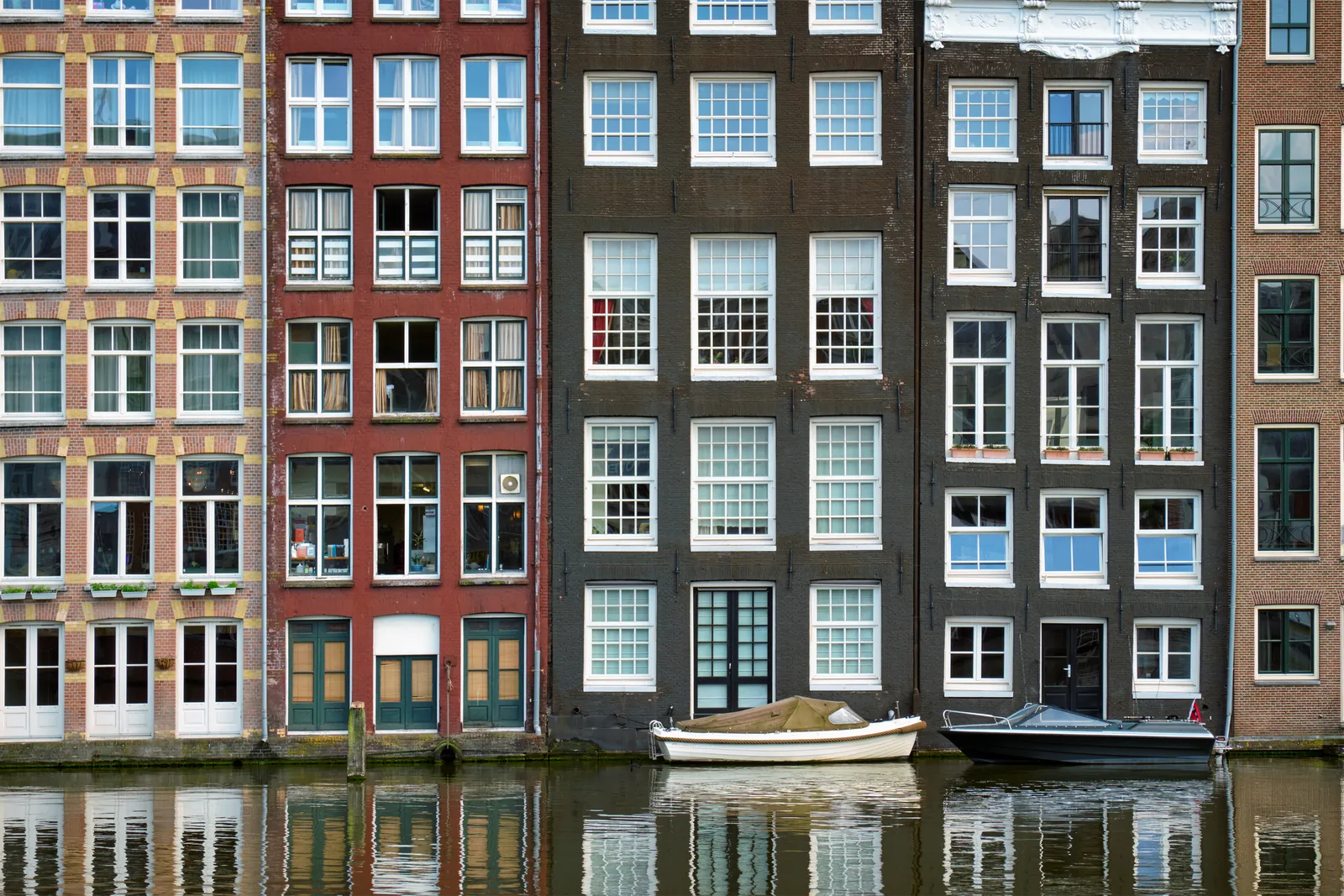
Why it made the list: the capital is a city built on water: a ring of 17th-century canals lined with tall merchants’ houses, a UNESCO World Heritage Site since 2010, plus the Rijksmuseum, the Van Gogh Museum and the hiding place of Anne Frank. Almost everything is within a 30-minute walk or a short tram ride.
Best time to go: April to June and September. April and early May bring tulips and King’s Day; June has the longest evenings; September is mild and a little calmer.
Don’t miss: the Rijksmuseum for Rembrandt’s The Night Watch and Vermeer’s The Milkmaid, and a canal cruise; since January 1, 2025, passenger boats on the city’s inner waters must be emission-free, so tour boats are now electric and almost silent.
Getting there and how long: trains from Schiphol airport reach Amsterdam Centraal in about 15 minutes. Give it three days for the highlights, four or five with day trips.
Practical note: book ahead. The Rijksmuseum (€25 for adults, under-18s free) needs a timed ticket, the Van Gogh Museum (€25) sells online only, and Anne Frank House tickets (€16.50 for adults) are sold only on its own website, released every Tuesday at 10:00 for visits six weeks later. See our Amsterdam travel guide.
2. Keukenhof and the bulb fields
Why it made the list: every spring, the strip of land between Haarlem and Leiden turns into stripes of red, yellow, pink and purple. At its heart, in Lisse, Keukenhof is the world’s most famous spring garden, with about 7 million bulbs planted by hand.
Best time to go: Keukenhof is open from March 18 to May 9, 2027, daily from 8:00 to 19:00 (last entry 18:15). Tulips usually peak from mid-April to early May, depending on the weather.
Don’t miss: the flower shows and flowerbeds inside the garden, then a bike ride through the surrounding fields at their peak.
Getting there and how long: about 30 to 45 minutes from Amsterdam, Schiphol, Haarlem and Leiden, by seasonal bus, bike or car. Allow half a day for the garden and a few hours for the fields.
Practical note: tickets go on sale from mid-October for a fixed date and arrival time, from €21 online for adults (€27 at the gate). Only buy on Keukenhof’s own website. In the fields, photograph from the edges: they are farmers’ crops, and walking into them damages the bulbs. See our Keukenhof travel guide.
3. Rotterdam
Why it made the list: Rotterdam’s old center was destroyed in May 1940, and the city rebuilt itself as an open-air gallery of daring architecture on the banks of the wide River Maas. It feels completely different from Amsterdam, with excellent food and fewer crowds.
Best time to go: April to September for terraces and boat trips; with most sights indoors or covered, it is a good all-weather choice.
Don’t miss: the Markthal, a giant horseshoe of apartments arching over a food hall (free entry), with Piet Blom’s tilted Cube Houses next door, and Depot Boijmans, a mirrored bowl where you walk among the museum’s stored collection.
Getting there and how long: about 40 minutes from Amsterdam on the fastest trains, and on the Eurostar route from Brussels and Paris. Stay two days, three with Kinderdijk.
Practical note: Depot Boijmans costs €20 for adults (under-18s free) and needs a time slot; it is closed on Mondays outside holidays. See our Rotterdam travel guide.
4. Kinderdijk
Why it made the list: Kinderdijk is the most famous windmill landscape in the Netherlands: 19 windmills built around 1740 to pump water out of the low-lying polders, lined up along canals and reed beds. It is a UNESCO World Heritage Site and still a working water-management system.
Best time to go: between March and October, first thing in the morning or late in the day, before and after the coach groups.
Don’t miss: the two museum mills you can climb inside and the boat tour along the mills, both included in the ticket.
Getting there and how long: from Rotterdam, take Waterbus line 20 and change at Ridderkerk De Schans to the small Driehoeksveer ferry, which needs its own ticket; on Fridays to Sundays the WaterShuttle sails direct in under half an hour. Bus 489 runs from Kralingse Zoom metro station. Allow half a day.
Practical note: admission costs €21 for adults and €9 for children aged 4 to 12, with 10% off online. In 2026 the site opened from 9:00 to 17:30 between March 6 and November 1. See our Rotterdam travel guide.
5. Utrecht
Why it made the list: this lively university city has a medieval center that many visitors find more relaxed than Amsterdam’s. Its canals are unique: the Oudegracht has two-level banks, with old wharves and cellars at water level that now hold café terraces right beside the boats.
Best time to go: May to September for wharf terraces and canal boats; any time for museums.
Don’t miss: the Dom Tower, the tallest church tower in the Netherlands, whose exterior restoration finished in November 2024, and the Rietveld Schröder House, a UNESCO-listed modernist home.
Getting there and how long: under 30 minutes by train from Amsterdam, with direct trains from Schiphol. One day covers the highlights; two lets you add the museums.
Practical note: the Dom Tower can only be climbed on a guided tour, booked for a fixed time (from €13.50 for adults), and only by stairs; bags must go in the free lockers. See our Utrecht travel guide.
6. The Hague and Scheveningen
Why it made the list: The Hague is the Netherlands’ royal and governmental city and the only Dutch city with its own beach. It pairs world-class art with a long sandy shore at Scheveningen, with the grand Kurhaus hotel and fish restaurants on the harbor.
Best time to go: June to September for the beach; spring and autumn for museums and walks.
Don’t miss: Vermeer’s Girl with a Pearl Earring at the Mauritshuis, and the Peace Palace, whose Visitors Centre is free; guided tours of the grounds run at weekends from May to October. Delft, the town of Vermeer and Delft Blue pottery, is a short train ride away.
Getting there and how long: about 50 minutes by train from Amsterdam and 25 from Rotterdam. Trams 1 and 9 run to Scheveningen. Give it one or two days.
Practical note: Peace Palace tour tickets are released about two weeks ahead online, and you need your original passport or ID card. See our The Hague travel guide.
7. Giethoorn
Why it made the list: Giethoorn is the country’s famous water village: thatched farmhouses on their own little islands, linked by narrow canals and wooden footbridges, with no roads through the old center. Around it lies the Weerribben-Wieden National Park, a landscape of reed beds and lakes.
Best time to go: May, June and September. Avoid summer weekends and public holidays if you can.
Don’t miss: a quiet electric boat or canoe along the village canals, then a paddle out into the national park.
Getting there and how long: about two hours from Amsterdam: take the train to Steenwijk, then bus 70, about 15 minutes. A day is enough; stay a night to enjoy it after the day trippers leave.
Practical note: rental boats are electric, and in July, August and on public holidays, wide private boats are banned from the main village canal from 11:00 to 17:00. Keep noise down: people live here. See our Giethoorn travel guide.
8. Maastricht
Why it made the list: at the far southern tip, squeezed between Belgium and Germany, Maastricht feels like a different country, with hills, vineyards, Roman roots, Romanesque churches and a love of good food and wine.
Best time to go: May to September for terraces and vineyards; February for carnival (February 7–9, 2027); late November to December for the Christmas market on the Vrijthof.
Don’t miss: café terraces on the Vrijthof, the bookshop inside a Gothic church, and a lantern-lit guided tour of the man-made caves under the Sint Pietersberg hill.
Getting there and how long: about 2 hours 30 minutes by direct train from Amsterdam. Stay two days, three with the Limburg hills or a trip over the border.
Practical note: the North Caves tour lasts about 1 hour 10 minutes and costs from €9.95 for adults; it is cold underground, so bring a sweater. See our Maastricht travel guide.
9. Zaanse Schans and Haarlem
Why it made the list: for the classic picture of old Holland close to Amsterdam, Zaanse Schans has working windmills and green wooden houses along the river Zaan. Haarlem, a handsome old town with a grand market square and the Frans Hals Museum, makes a perfect second stop.
Best time to go: April to September; go early in the morning at Zaanse Schans, before the tour groups.
Don’t miss: the working windmills along the river at Zaanse Schans, and Haarlem’s market square and the Frans Hals Museum.
Getting there and how long: Zaanse Schans is about 20 minutes by train from Amsterdam (to Zaandijk Zaanse Schans), and Haarlem 15 minutes. Each is a half-day trip.
Practical note: Haarlem is also a good-value place to stay instead of Amsterdam; trains run late. See our Amsterdam travel guide.
10. Zeeland
Why it made the list: Zeeland, in the south-west, has the country’s best beaches, backed by dunes and colorful beach huts, quiet historic towns such as Middelburg, Veere and Zierikzee, fresh mussels and oysters, and the Delta Works, the giant dams and storm barriers built after the flood of 1953.
Best time to go: June to early September for the beach; May and September for cycling and quieter sands.
Don’t miss: a beach day on the Walcheren coast, a walk through Middelburg, and the Watersnoodmuseum, the flood museum housed in four huge concrete caissons used to close the last dike breach.
Getting there and how long: Middelburg is about 2 hours 30 minutes by direct train from Amsterdam and 1 hour 30 minutes from Rotterdam. Give it two or three days; a bike or a car helps.
Practical note: the Watersnoodmuseum is open daily from 10:00 to 17:00. Swim only where lifeguards are on duty in summer, and stay well away from the groynes that run out into the sea, where strong currents form. See our Zeeland travel guide.
How to fit them into one trip
Distances are short and trains are frequent, so you can see a lot from two or three bases without a car.
Four or five days: three days in Amsterdam, plus a day trip to Zaanse Schans and Haarlem, or to Keukenhof in spring, and a day in Utrecht or The Hague.
One week: three nights in Amsterdam, two in The Hague or Delft, and two in Rotterdam with a morning at Kinderdijk; stop in Utrecht on the way back to Schiphol.
Ten days to two weeks: add two or three days in Zeeland or Maastricht in the south, and a night in Giethoorn on the way north or east.
Timing changes the trip: mid-April to early May is tulip season, June to September is best for the beaches, and April is usually the driest month. Our best time to visit the Netherlands guide goes month by month, and our AI trip planner builds the day-by-day plan for your dates.
Plan your trip
Start with our Netherlands travel guide for trains, cycling, money and entry rules. Use the AI trip planner to turn this list into a route, check the weather for your dates with the Destination weather tool, and pack for changeable skies with our packing list.
Frequently asked questions
What is the most beautiful place in the Netherlands?
Many travelers name Amsterdam’s Canal Ring, the windmills of Kinderdijk at sunrise, the tulip fields around Keukenhof in late April, and the canals and thatched farmhouses of Giethoorn.
How many days do you need in the Netherlands?
Four or five days covers Amsterdam and a couple of day trips. A week lets you add The Hague, Rotterdam and Utrecht, and ten days to two weeks adds Zeeland, Maastricht or Giethoorn.
What is the best place in the Netherlands for first-time visitors?
Amsterdam, for its canals and museums, and as a base for day trips by train to Zaanse Schans, Haarlem, Utrecht and, in spring, Keukenhof.
When is the best time to see the tulips?
Usually from mid-April to early May. Keukenhof is open from March 18 to May 9, 2027, and the fields around it bloom in stages, with tulips last.
Is Rotterdam worth visiting?
Yes, especially if you like architecture and food. It feels completely different from Amsterdam, and it is the best base for Kinderdijk and Delft.
Do I need a car in the Netherlands?
No. Trains, trams and buses cover the cities and most sights, and you pay by tapping your bank card. A car helps only for rural Zeeland, the islands or exploring the countryside freely.