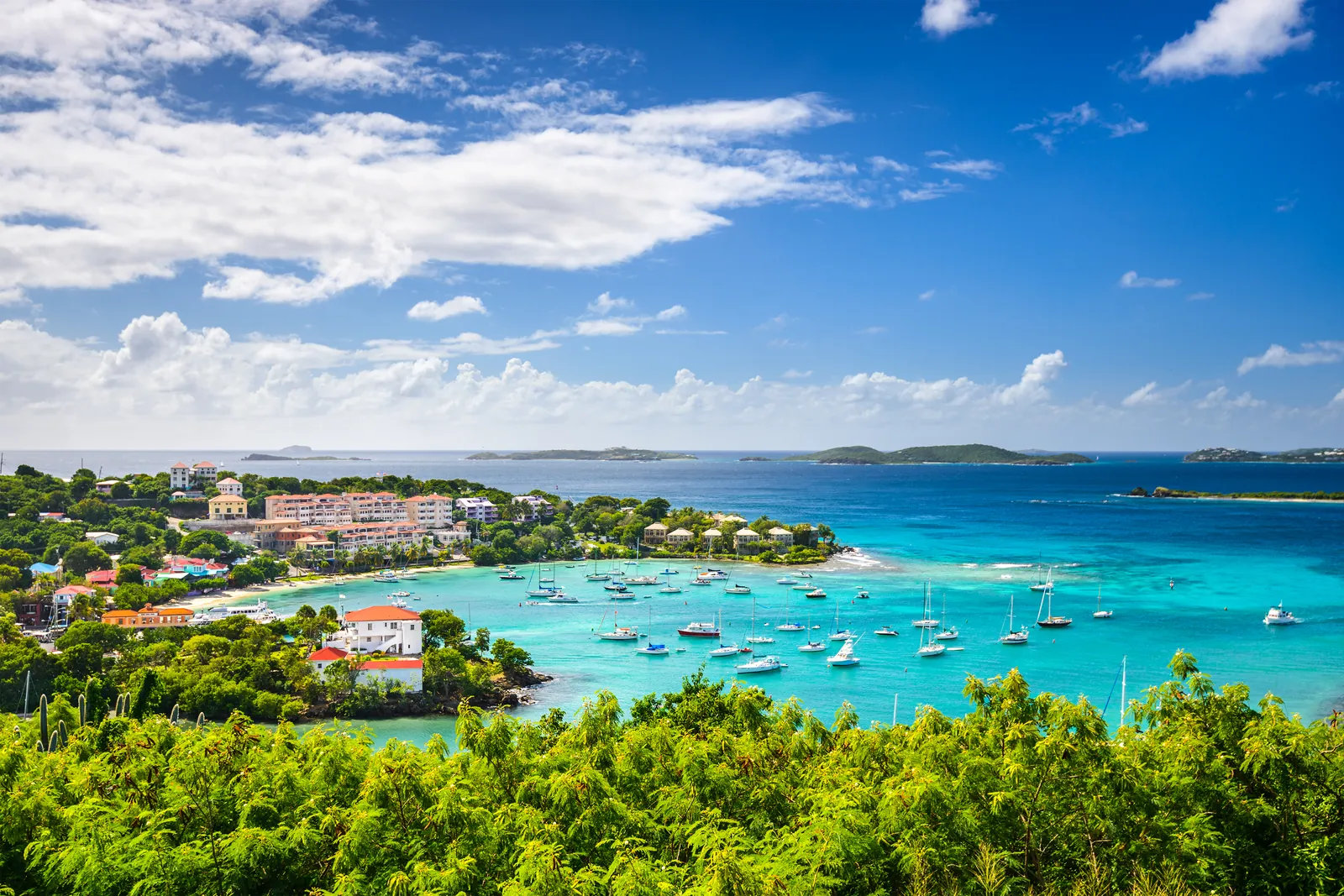
Short answer: On the ground in the US Virgin Islands, plan on roughly $110–200 per person per day on a guesthouse-and-food-truck budget, $280–500 in a beach hotel or small villa shared by two with a jeep or a boat trip most days, and from about $750 for luxury resorts, fine dining and private charters. A week therefore costs about $770–1,400, $1,960–3,500 or from about $5,250 per person, before flights. St. John in high season is the priciest corner; St. Croix and Charlotte Amalie have more budget rooms.
For American travelers, the US Virgin Islands are about as easy as the Caribbean gets: the currency is the US dollar, English is the language, and US citizens don’t need a passport for a direct trip from the mainland. That simplicity doesn’t make them cheap. Most food and goods arrive by ship, St. John is mostly national park with few hotels, and villas and rental jeeps book up months ahead in winter. The big costs are where you sleep, whether you rent a jeep, and how many boat trips you take. This guide breaks it all down so you can build a realistic budget for your own trip to the US Virgin Islands. If you earn in another currency, our Money exchange tool has today’s rate.
US Virgin Islands daily costs at a glance
These example days are built from the prices further down this page: one person sharing a room, one day on St. Thomas, St. John or St. Croix. They leave out flights to the islands and duty-free shopping.
| Per person, per day | Budget | Mid-range | Comfort |
|---|---|---|---|
| Bed | Half of a guesthouse room or simple condo at $150–250: $75–125 | Half of a beach hotel room or small villa at $300–500: $150–250 | Half of a luxury resort room or villa with a pool: from about $400 |
| Food | Food trucks, a local lunch spot and groceries: $30–50 | Breakfast, a beach-bar lunch and a restaurant dinner with drinks: $70–110 | Fine dining and resort meals: from about $150 |
| Transport | Safari bus rides and a ferry to St. John: $4–20 | A share of a rental jeep, or taxis and ferries: $30–60 | Private transfers and a jeep of your own: from about $60 |
| Sights | Free beaches and trails, or Trunk Bay ($5): $0–10 | A share of a snorkel or sailing trip, or attraction tickets: $30–80 | Private boat charters and day trips: from about $150 |
| Total | About $110–200 | About $280–500 | From about $750 |
Ferry fares and the Trunk Bay fee are the operators’ and the National Park Service’s published prices; room, meal, jeep and tour figures are the typical ranges used in our US Virgin Islands guides, before the 12.5% room tax. Treat them as typical ranges, not quotes.
What visitors actually spend in the US Virgin Islands
The territory does not publish a current average daily spend per visitor, but the Bureau of Economic Research’s hotel survey shows how people travel. In 2025, hotels and other visitor accommodation across the islands welcomed about 783,000 guests, about 79% of them from the US mainland. The average guest stayed 3.6 nights, and occupancy across all accommodation averaged 58.7% for the year. Many visitors also stay in private villas and rentals, especially on St. John, which this hotel survey only partly covers. Hotel room tax alone brought the territory about $48.8 million in 2024, a sign of how much of a visitor’s budget goes on a bed.
On our Travel costs by country scale, which compares hotel, restaurant and transport prices with the United States (US = 100), the US Virgin Islands score 89. In plain words, a typical room, meal or ride costs about a tenth less than the US average, though St. John and peak season feel more like a big US resort town. That puts the islands above Puerto Rico (78) and a little below the British Virgin Islands and the Bahamas (both 96) on the same scale.
Accommodation costs
Each island has its own character and price level. St. Thomas has the most hotels, from Charlotte Amalie guesthouses to East End beach resorts. St. John is about 60% national park and has very few large hotels, so most visitors rent villas or stay in Cruz Bay. St. Croix, bigger and quieter, has the widest choice of small hotels and condos. As typical ranges, per room per night before tax:
- Guesthouse or simple condo: about $150–250, most often in Charlotte Amalie or on St. Croix.
- Beach hotel on St. Thomas or a small villa on St. John: about $300–500.
- Luxury resort or villa with a pool: from about $800 a night in high season.
The territory charges a hotel room tax of 12.5% on the gross room rate for stays of less than 90 days, according to the Virgin Islands Bureau of Internal Revenue. It applies to hotels, guesthouses, villas, condos and other rentals, and the base includes extra charges such as energy surcharges and maintenance or resort fees. Many hotels also add their own resort fee, so compare total prices. High season runs from mid-December to April, peaking over Christmas, New Year, Presidents’ Day and spring break.
Food and drink costs
Restaurant prices are at or above US resort levels, because most ingredients are imported. The cheapest good meals come from food trucks, such as those near Brewers Bay on St. Thomas, and local lunch spots serving pates (fried pastries filled with saltfish, beef or conch), johnnycakes, fungi with fish and goat water, a spicy goat stew. Beach bars sit in the middle, and the fine dining rooms of St. Thomas’s East End and St. John’s Cruz Bay at the top. Groceries cost well above mainland prices, especially on St. John.
St. Croix makes Cruzan and Captain Morgan rums, and returning US residents may bring back up to 5 liters of alcohol within their duty-free allowance if at least four liters were bought in the territory and at least one is a local product. Check whether a service charge has been added to a restaurant bill before tipping; it is common for groups.
Getting around: ferries, safari taxis, jeeps and island hops
- Red Hook to Cruz Bay ferry: the main passenger ferry between St. Thomas and St. John takes about 15–20 minutes. The adult non-resident fare is $8.15 one way, children $1, plus a fuel surcharge of $0.66 since June 12, 2026, and $4 per large bag. The longer Charlotte Amalie–Cruz Bay ferry, about 45 minutes, costs $13 plus the surcharge.
- Car barge: to take a jeep to St. John, Big Red Barge charges non-residents $50 one way or $65 return per vehicle, plus a $3 port fee. Boarding is first come, first served.
- St. Thomas to St. Croix: the QE IV ferry runs Thursday to Monday between Charlotte Amalie and Christiansted, about 2 hours 10 minutes, for $60 one way. Short flights take about 25 minutes.
- Safari taxis and buses: taxis are mostly vans and open-air “safari” trucks that charge set per-person fares by destination, published by the Virgin Islands Taxicab Commission; confirm the price before you get in. Shared safari buses along St. Thomas’s main roads are the cheapest option, at a $2 flat ride.
- Jeeps: on St. John, a jeep or other 4×4 is the best way to reach the beaches, and it often costs $100 or more a day in high season; book well ahead. Traffic drives on the left, and a US or foreign license is valid for up to 90 days.
Our US Virgin Islands itinerary shows how to split a week between St. Thomas and St. John, with an add-on for St. Croix.
Sightseeing fees and free things to do
The islands’ best sights are mostly free. There is no entrance fee for Virgin Islands National Park, which covers about 60% of St. John. The exception is Trunk Bay, with its marked underwater snorkel trail: it charges $5 per person aged 16 and over, from sunrise to sunset, also on national “fee-free” days. Since October 1, 2026, the fee booth takes cards and mobile payments only, or you can pay online through Recreation.gov. Boaters pay $26 a night for a park mooring. On St. Thomas, Magens Bay is run as a public park with a small admission fee, lifeguards and changing rooms.
Free or nearly free:
- The North Shore beaches of St. John, from Honeymoon and Hawksnest to Cinnamon, Maho and Francis Bay, where turtles graze on the seagrass. See our beaches guide.
- Snorkeling from the shore at Coki Point on St. Thomas or Waterlemon Cay off Leinster Bay on St. John. Our snorkeling guide has tips.
- The Annaberg sugar plantation ruins and the Reef Bay Trail, past Taíno petroglyphs. See our hiking guide.
- Charlotte Amalie’s Danish warehouse alleys and the 99 Steps, and the historic towns of Christiansted and Frederiksted on St. Croix.
- Diving and snorkeling at Cane Bay on St. Croix, where a deep reef wall starts a short swim from the beach.
Our Top 10 places to visit in the US Virgin Islands covers each island’s highlights in more detail.
Taxes and visitor fees
- Hotel room tax: 12.5% of the gross room rate for stays under 90 days, collected by the hotel or rental host.
- Trunk Bay amenity fee: $5 per person aged 16 and over; the rest of the national park is free.
- Ferry fuel surcharge: $0.66 per trip on the St. John ferries since June 12, 2026.
- Duty-free shopping: returning US residents can bring back $1,600 worth of goods duty-free from the islands, double the usual allowance. Everyone flying to the mainland passes a US Customs and Border Protection check before departure.
- Day trips to the British Virgin Islands: bring your passport and $10 for the BVI’s Environmental and Tourism Levy, plus the BVI ferry departure tax.
Tipping in the US Virgin Islands
Tipping follows US customs: 15–20% in restaurants (check whether a service charge has already been added), $1–2 a drink at bars, around 15% for taxis and tour guides, and something for boat crews on snorkel and sailing trips. Our tip calculator does the math.
Money and payments
The currency is the US dollar. Cards are widely accepted, and there are ATMs on all three islands, though fewer on St. John. Carry cash for safari taxis, small food stands, beach chair rentals and tips.
Money-saving tips for the US Virgin Islands
- Stay on St. Thomas and day-trip to St. John. The ferry costs under $10 each way, and St. John’s beaches are a short taxi ride from Cruz Bay.
- Consider St. Croix. It has more small hotels and condos and a slower pace.
- Rent a jeep only for your St. John days. Use ferries and safari taxis the rest of the time.
- Eat at food trucks and local lunch spots, and get a room with a kitchen for breakfasts and picnics.
- Travel from May to July. It is a good-value window with fine weather. September and October are cheapest but bring the peak of hurricane season and seasonal closures. Our best time to visit the US Virgin Islands guide has the details.
- Compare prices with tax and resort fees. The 12.5% room tax applies to the resort fee too.
Plan your trip: our free trip planner can build a day-by-day plan for the US Virgin Islands from our guides. The US Virgin Islands itinerary shows how to fit St. Thomas, St. John and St. Croix into one or two weeks, and the Money exchange tool converts dollars into your own currency.
Frequently asked questions
How much money do I need for a week in the US Virgin Islands?
Using the example days above, seven days on the islands cost roughly $770–1,400 per person on a tight budget, $1,960–3,500 mid-range and from about $5,250 in comfort, sharing a room and before flights. Add the 12.5% room tax and any resort fees if your rate does not include them.
Are the US Virgin Islands expensive?
Fairly. On our travel cost scale the islands score 89 against 100 for the United States, so prices are close to US levels, and St. John in high season costs more. They are pricier than Puerto Rico but a little cheaper than the British Virgin Islands and the Bahamas.
Do I need cash in the US Virgin Islands?
Some. Cards work in most hotels, restaurants and shops, but safari taxis, small food stands, beach chair rentals and tips are easier in cash. St. John has fewer ATMs than St. Thomas and St. Croix.
How much does it cost to visit Trunk Bay?
$5 per person aged 16 and over, paid by card or phone at the booth or online through Recreation.gov. The other beaches of Virgin Islands National Park have no entrance fee.
Do I need a passport to visit the US Virgin Islands?
Not if you are a US citizen flying directly from the US mainland; a passport is the best ID, but other proof of citizenship with a photo ID is accepted. Non-US citizens need a valid passport, and everyone needs one for a day trip to the British Virgin Islands.
What is the cheapest month to visit the US Virgin Islands?
September and October are the cheapest and quietest months, but they are also the wettest, at the peak of hurricane season, with reduced ferry timetables and some seasonal closures. May to July gives a better balance of lower prices and good weather.