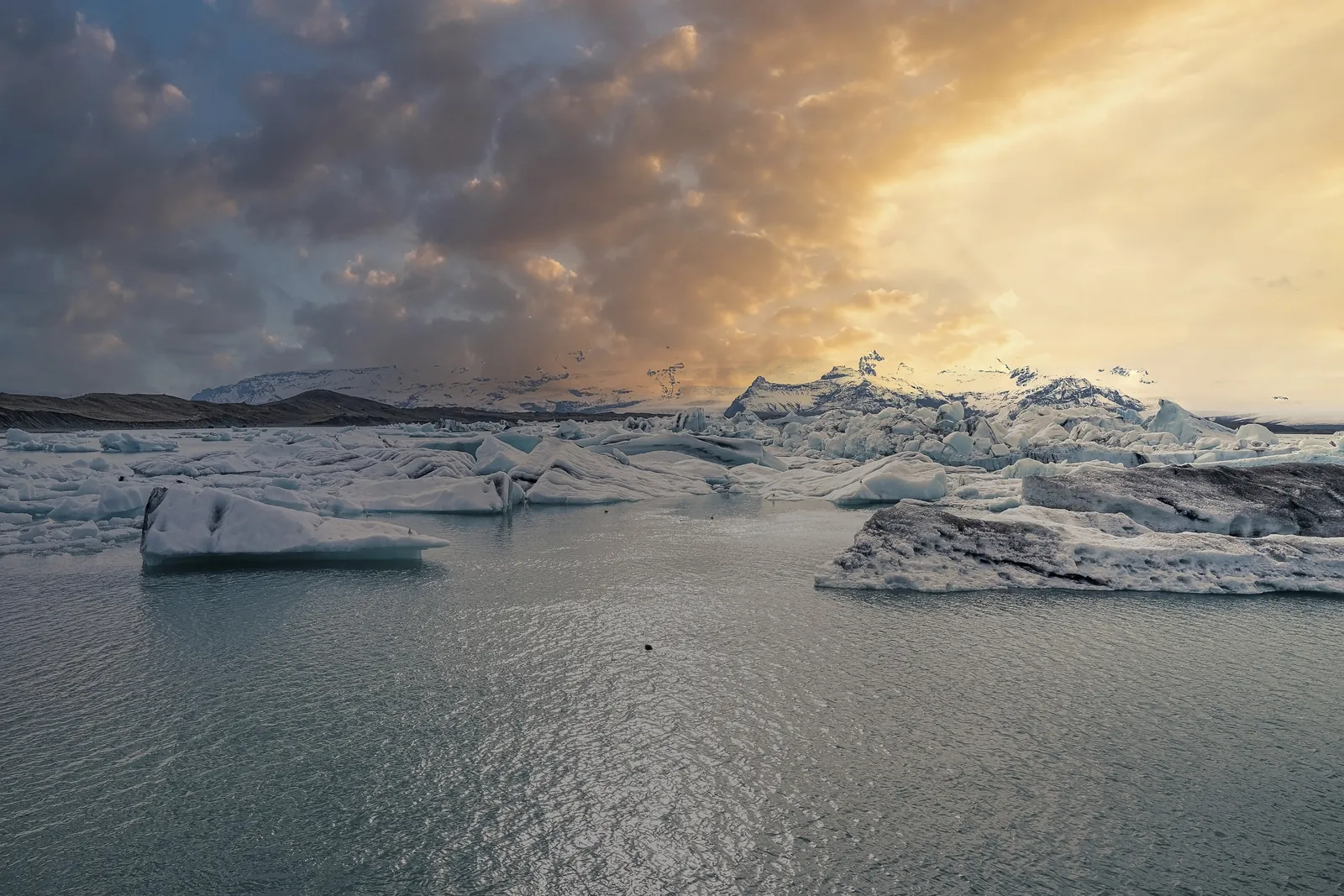
Short answer: with 7 days, base yourself in Reykjavík for the Golden Circle, then drive the south coast past Seljalandsfoss, Skógafoss and Vík to Skaftafell and the Jökulsárlón glacier lagoon, and drive back. With 10 days in summer, drive the whole Ring Road, adding the East Fjords, Lake Mývatn, Dettifoss and Akureyri. With 14 days, add the Snæfellsnes peninsula and a highland day to the Ring Road in summer, or in winter spend two weeks in the south, on Snæfellsnes and in the snowy north reached by plane. You will want a rental car on every route.
This guide turns the sample trips on our Iceland travel guide into day-by-day plans, with driving distances between the stops and the best place to sleep each night. To choose your dates, read our best time to visit Iceland guide; for the highlights in a few minutes, see our top places to visit in Iceland. For a plan built around your dates and interests, use our AI trip planner. Everything here was checked as of October 2026.
The three routes at a glance
| Route | Days | Stops (nights) | Best for |
|---|---|---|---|
| Golden Circle and south coast | 7 | Reykjavík (2), Vík (1), Skaftafell area (2), Reykjavík (1) | First trip, any season; the best winter week |
| Ring Road | 10 | Reykjavík (1), Hella or Selfoss (1), Vík (1), Skaftafell area (1), East Fjords (1), Mývatn (2), Akureyri (1), Reykjavík (1) | Summer road trip around the whole island |
| Ring Road plus Snæfellsnes | 14 | The 10-day loop at an easier pace, plus Snæfellsnes (2) and a highland day | June to early September, hikers, photographers |
| Winter fortnight | 14 | Reykjavík (3), south coast (5), Snæfellsnes (2), Akureyri and Mývatn by air (3) | Northern Lights, ice caves, snow, November to March |
Almost every flight lands at Keflavík, about 50 km from Reykjavík, so you will start and end there. Pick up your car at the airport if you go straight to the countryside, or take the Flybus into town (about 45 minutes, after every flight) and collect a car later.
Travel times between the main stops
Iceland has no trains, and public buses outside the capital are infrequent, so these are mostly driving legs. Distances and drive times are approximate and assume a dry summer road without stops; in practice you will stop constantly, so plan on about 300 km a day at most in summer, and much less in winter.
| Leg | How | Distance and time | Source |
|---|---|---|---|
| Keflavík Airport – Reykjavík (BSÍ) | Flybus, after every flight | about 45 min | Flybus |
| Reykjavík – Þingvellir | Car | about 45 km, 45 min (approximate) | Approximate |
| Golden Circle loop from Reykjavík | Car | about 230 km, 300 km with Kerið (approximate) | Approximate |
| Reykjavík – Vík | Car | about 185 km, 2 h 30 (approximate) | Approximate |
| Reykjavík – Skaftafell / Jökulsárlón | Car | about 330 km, 4 h / about 380 km, 5 h (approximate) | Approximate |
| Skaftafell – Jökulsárlón | Car | 57 km, about 45 min (approximate) | Approximate |
| Jökulsárlón – Höfn | Car | about 80 km, 1 h (approximate) | Approximate |
| Höfn – Egilsstaðir (East Fjords) | Car, coastal Ring Road | about 250 km, 3 h 30 (approximate) | Approximate |
| Egilsstaðir – Mývatn | Car | about 165 km, 2 h (approximate) | Approximate |
| Mývatn – Dettifoss | Car (Route 862, paved) | about 50 min (approximate) | Approximate |
| Mývatn – Akureyri | Car, via Goðafoss | about 100 km, 1 h 15 (approximate) | Approximate |
| Akureyri – Reykjavík | Car / domestic flight | about 390 km, 5 h / flight about 45 min (approximate) | Approximate |
| Reykjavík – Snæfellsnes (Arnarstapi or Stykkishólmur) | Car | about 170–190 km, 2 h 30 (approximate) | Approximate |
The Ring Road (Route 1) is about 1,300 km long and paved all the way. A new section near Höfn opened on 24 June 2026, cutting the road by 12 km and replacing old single-lane bridges. Check road conditions on umferdin.is and the weather on vedur.is every morning.
7 days: Reykjavík, the Golden Circle and the south coast
The best first week in any season, because the south coast road is kept open and well served in winter. In summer you can sleep further east each night; in winter, keep driving days short and drive only in daylight.
- Day 1, Reykjavík: Flybus or car into town. Climb the tower of Hallgrímskirkja, walk down to the harbor and Harpa, and end the day in a geothermal swimming pool, the best-value thing to do in Iceland. Sleep: central Reykjavík, near Laugavegur or the Old Harbour.
- Day 2, the Golden Circle: Þingvellir National Park, where you walk between two continental plates (parking ISK 1,000 a day for a car), the Strokkur geyser at Geysir, Gullfoss falls, and the Kerið crater (ISK 700 a person). Back to Reykjavík for the evening, or a hot spring on the way. Sleep: same.
- Day 3, the south coast to Vík: Seljalandsfoss (you can walk behind it in summer), Skógafoss, a guided glacier walk at Sólheimajökull, then the black sand and basalt columns of Reynisfjara. Stay well back from the water there: sneaker waves are a real danger. Sleep: Vík (1 night).
- Day 4, to Skaftafell: Across the Eldhraun lava fields and the black sands to Skaftafell in Vatnajökull National Park; walk to Svartifoss, the waterfall framed by basalt columns. Sleep: Skaftafell, Öræfi or Kirkjubæjarklaustur (2 nights).
- Day 5, glaciers and Jökulsárlón: A guided glacier hike from Skaftafell all year, or an ice cave tour in winter (roughly November to March, only with licensed guides). Then Jökulsárlón, where icebergs float to the sea, and Diamond Beach across the road. Lagoon boat tours run from about early May to October.
- Day 6, back to Reykjavík: The long drive west (about 4 to 5 hours), with stops you missed on day 3, and an evening in a lagoon. Sleep: Reykjavík (1 night).
- Day 7, home: Whale watching from the Old Harbour or a museum morning, then the Blue Lagoon on the way to the airport (it is near Keflavík; book ahead, and note that it closes during volcanic eruptions on the Reykjanes Peninsula).
Swap it: if the south coast is crowded, give days 6 and 7 to Snæfellsnes instead, about two and a half hours north-west of Reykjavík: Kirkjufell, the cliffs of Arnarstapi and the black church at Búðir. More on each stop: Reykjavík and the Golden Circle.
10 days: the Ring Road in summer
Ten days is the minimum for driving all the way round, usually anticlockwise so you see the south first. Do it from late May to September, when the north and east are reliably open. From November to March, storms can close the Ring Road in the north and east, so choose the 7-day route or the winter fortnight instead.
- Day 1, Reykjavík: Arrive, explore the center, swim. Sleep: central Reykjavík (1 night).
- Day 2, the Golden Circle: Þingvellir, Geysir, Gullfoss and Kerið, then south to the Ring Road. Sleep: Hella, Selfoss or Hvolsvöllur (1 night).
- Day 3, the south coast: Seljalandsfoss, Skógafoss, Dyrhólaey (puffins from about May to mid-August) and Reynisfjara. Sleep: Vík (1 night).
- Day 4, Skaftafell and Jökulsárlón: Svartifoss or a glacier hike in the morning, Jökulsárlón and Diamond Beach in the afternoon. Sleep: near Jökulsárlón or in Höfn (1 night), famous for langoustine.
- Day 5, the East Fjords: The coastal road through fishing villages such as Djúpivogur and Fáskrúðsfjörður, or over to Seyðisfjörður’s painted street. Sleep: Egilsstaðir or Seyðisfjörður (1 night).
- Day 6, to Mývatn via Dettifoss: Across the high plateau to Dettifoss, Europe’s most powerful waterfall (take paved Route 862; Route 864 is gravel and closes with snow), then to Lake Mývatn. Sleep: Mývatn (2 nights).
- Day 7, Mývatn and Húsavík: The mud pots of Hverir, the Hverfjall crater, the lava towers of Dimmuborgir, then whale watching from Húsavík (about April to November, with humpbacks on most summer trips). End at the Mývatn Nature Baths.
- Day 8, Goðafoss and Akureyri: Goðafoss on the way, then the cafés and botanic garden of Akureyri. Sleep: Akureyri (1 night).
- Day 9, back to Reykjavík: The long drive south-west (about 5 hours), with stops at the turf houses of Glaumbær or the waterfalls of Borgarfjörður. Sleep: Reykjavík (1 night).
- Day 10, home: A lagoon on the way to Keflavík.
Ten days means about 1,500 km of driving. Since 1 January 2026, every car pays a per-kilometer fee of ISK 6.95 per km, which rental companies usually add to your bill, so the full loop adds roughly ISK 10,400. Details for the east and north stops are in our Vatnajökull National Park guide, which covers Skaftafell, Jökulsárlón and Dettifoss.
14 days: the Ring Road, Snæfellsnes and the highlands (summer)
Two weeks lets you drive the same loop with fewer long days, add Snæfellsnes, and in high summer take a day into the highlands. Best from late June to early September, when the mountain roads are open.
- Days 1–2, Reykjavík and the Golden Circle: as in the 10-day plan, sleeping in Reykjavík, then near Hella or Selfoss. (2 nights).
- Day 3, Landmannalaugar: A day in the rhyolite mountains of the highlands, on a 4×4 bus tour or in a four-wheel-drive car on the F-roads (usually open from late June or July to early September; rental-car insurance does not cover river crossings). Sleep: same area (1 night).
- Days 4–5, the south coast: Waterfalls, Reynisfjara and Vík, with a glacier walk at Sólheimajökull. Sleep: Vík (1 night), then Skaftafell or Öræfi (1 night).
- Day 6, Jökulsárlón to Höfn: A lagoon boat tour and Diamond Beach. Sleep: Höfn (1 night).
- Days 7–8, the East Fjords: Slow driving through the fjords, a hike, and Seyðisfjörður. Sleep: Egilsstaðir or Seyðisfjörður (2 nights).
- Days 9–10, Dettifoss, Mývatn and Húsavík: Dettifoss and Ásbyrgi canyon on one day, Mývatn and whale watching on the other. Sleep: Mývatn or Húsavík (2 nights).
- Day 11, Akureyri: Goðafoss and a relaxed afternoon in town. Sleep: Akureyri (1 night).
- Days 12–13, Snæfellsnes: Drive west via Glaumbær to the peninsula: Kirkjufell, Stykkishólmur, the cliffs of Arnarstapi and Hellnar, and Snæfellsjökull National Park (service fee ISK 1,100 a car a day). Sleep: Stykkishólmur or Grundarfjörður (2 nights).
- Day 14, home: Drive to Keflavík (about three hours) with a stop at a lagoon.
Want the Westfjords instead of the highlands? Drop Landmannalaugar and add two nights there after Snæfellsnes; it is remote, with long gravel stretches, so allow plenty of time. More on the peninsula in our Snæfellsnes guide.
14 days: a winter fortnight
From November to March, the plan is to drive only where roads are kept open, sleep in the countryside for dark skies, and fly to the north rather than drive. Northern Lights need clear, dark skies; give yourself many nights outside the city.
- Days 1–3, Reykjavík and the Golden Circle: The city, the pools, a Northern Lights tour, and the Golden Circle in daylight. Sleep: central Reykjavík (3 nights).
- Days 4–8, the south coast: One night near Hella, two in Vík and two near Skaftafell, with an ice cave and a glacier hike, Jökulsárlón and short daylight drives. Sleep: country hotels with dark skies (5 nights).
- Days 9–10, Snæfellsnes: Back west and up to the peninsula; Kirkjufell under snow. Sleep: Grundarfjörður or Stykkishólmur (2 nights).
- Days 11–13, Akureyri and Mývatn: Return the car in Reykjavík and fly to Akureyri (about 45 minutes); use tours or a 4×4 rental for Mývatn’s snowy craters and the Nature Baths. Sleep: Akureyri (3 nights).
- Day 14, home: Fly back to Reykjavík and on to Keflavík.
Around the winter solstice, Reykjavík has only about four hours of daylight, so plan one main sight a day. Iceland Airwaves fills Reykjavík from 4 to 8 November 2026, and Christmas, New Year and February are popular.
Where to sleep, by stop
| Stop | Best area for a short stay | Why |
|---|---|---|
| Reykjavík | Around Laugavegur, Hallgrímskirkja or the Old Harbour | Walk to restaurants, pools and tour pick-ups |
| Golden Circle | Selfoss, Hella, Hvolsvöllur or Laugarvatn | On the way to the south coast; dark skies |
| South coast | Vík | Between the waterfalls and the glaciers; shops and fuel |
| Vatnajökull south | Skaftafell, Öræfi, Kirkjubæjarklaustur or Höfn | Glacier tours start here; rooms are few, so book early |
| East Fjords | Egilsstaðir or Seyðisfjörður | Services in Egilsstaðir; charm in Seyðisfjörður |
| North | Mývatn, Húsavík or Akureyri | Mývatn for the sights, Húsavík for whales, Akureyri for town life |
| Snæfellsnes | Stykkishólmur or Grundarfjörður | Harbour towns at each end of the peninsula’s sights |
Hotels and guesthouses add an accommodation tax of ISK 800 per room per night (ISK 400 per campsite pitch). In summer, rooms in the south-east and at Mývatn sell out months ahead, so book the whole route before you book the car.
Alternatives by interest
Northern Lights hunters
Come from September to April (the darkest nights are November to March), stay outside Reykjavík on most nights, and check the Icelandic Met Office’s aurora and cloud forecast on vedur.is. The 7-day route or the winter fortnight works best; displays are most common between about 22:00 and 02:00.
Hikers
From late June to early September, add Landmannalaugar and Þórsmörk, or walk the multi-day Laugavegur trek between them, and take longer trails at Skaftafell. Register your plans on safetravel.is, which is run by Iceland’s search and rescue association, and carry layers for wind and rain even in July.
Wildlife lovers
Puffins nest from about May to mid-August, at Dyrhólaey near Vík, on islands off Reykjavík and in the Westman Islands. Húsavík is the north’s whale-watching capital (about April to November), and seals rest at Ytri Tunga on Snæfellsnes and at Jökulsárlón.
Travelers without a car
Stay in Reykjavík and use day tours for the Golden Circle, the south coast, Snæfellsnes and the Northern Lights. Longer tours run two or three days to Jökulsárlón. The Reykjavík City Card covers city buses, museums and pools for 24 to 72 hours.
Families
Choose the 7-day route with shorter drives: the Golden Circle, a farm stay near Hella and two nights in Vík. Swimming pools are a big part of Icelandic family life and are cheap, and children under 18 get free museum entry with an adult City Card in Reykjavík. Minimum ages for glacier walks and ice caves are set by each operator.
Tips for planning your route
- Pick the season to match the route. June to August for the full Ring Road and the highlands; May and September for fewer people with most roads open; September to April for the Northern Lights and November to March for ice caves. Details are in our best time to visit Iceland guide.
- Book car and rooms together, early. Rental cars, campervans and countryside rooms sell out for summer and for the Christmas, New Year and February holidays. Campervans must stay on campsites.
- Budget for parking and fees. Most busy natural sites charge for parking by number-plate camera, paid by app or online the same day: Þingvellir ISK 1,000 a car, Skaftafell and Jökulsárlón ISK 1,110, Snæfellsjökull National Park ISK 1,100 (as of October 2026). Unpaid fees end up on your rental-car bill with an admin charge.
- Drive safely. The limit is generally 90 km/h on paved roads and 80 km/h on gravel, headlights must always be on, and off-road driving is illegal. Never stop on the road for photos; use a parking area. At single-lane bridges, the car closest to the bridge goes first.
- Leave a spare day in winter. Storms can close roads, including parts of the Ring Road, for a day or two. Keep the last night near Reykjavík or Keflavík.
Iceland itinerary FAQ
Is 7 days enough for Iceland?
Yes for Reykjavík, the Golden Circle and the south coast as far as Jökulsárlón, which hold many of Iceland’s best-known sights. It is not enough for the whole Ring Road; for that, plan at least 10 days in summer.
Can I drive the Ring Road in winter?
It is possible, but from November to March storms can close the road in the north and east for a day or two, and daylight is short. If you try, allow two weeks, carry spare days, and check umferdin.is and vedur.is every morning. Most winter visitors are happier in the south and on Snæfellsnes, flying to Akureyri for the north.
Do I need a car in Iceland?
For these routes, yes: there are no trains and countryside buses are infrequent. Without a car, base yourself in Reykjavík and use day tours, or join a multi-day tour of the south coast.
Do I need a 4×4?
Not for the Ring Road in summer, which is paved all the way. F-roads into the highlands are legal only in four-wheel-drive vehicles, and a 4×4 with good winter tires gives you more grip from October to April.
Which way should I drive the Ring Road?
Most people go anticlockwise, seeing the Golden Circle and the south coast first, so that if the weather turns, the most visited sights are already done. Either direction works.
How far is Jökulsárlón from Reykjavík?
About 380 km, roughly five hours of driving without stops. A day trip is possible on a long summer tour, but it is much better to sleep near Skaftafell or Höfn for one or two nights.
What is the best month for an Iceland road trip?
July for the fullest range of roads and services, and September for a balance of open roads, fewer people, autumn colors and the first Northern Lights.
Sources
Researched and last reviewed by TravelerCenter on 8 October 2026. The Flybus time comes from Flybus; Ring Road works and mountain-road seasons from the Icelandic Road and Coastal Administration (Vegagerðin); the kilometer fee and accommodation tax from Iceland’s government (island.is and Skatturinn); parking and service fees from Þingvellir National Park, Vatnajökull National Park, Snæfellsjökull National Park and Kerið; Jökulsárlón boat seasons from Ice Lagoon; Dettifoss roads from Vatnajökull National Park; aurora and seasonal facts from Visit Iceland and the Icelandic Met Office; Iceland Airwaves dates from the festival. Driving distances and times are approximate map figures. Roads, fees and rules change, so check umferdin.is, vedur.is and the operator before you travel.
Data: Natural Earth (PUBLIC DOMAIN) · © OpenStreetMap contributors (ODBL) · Wikidata (CC0)