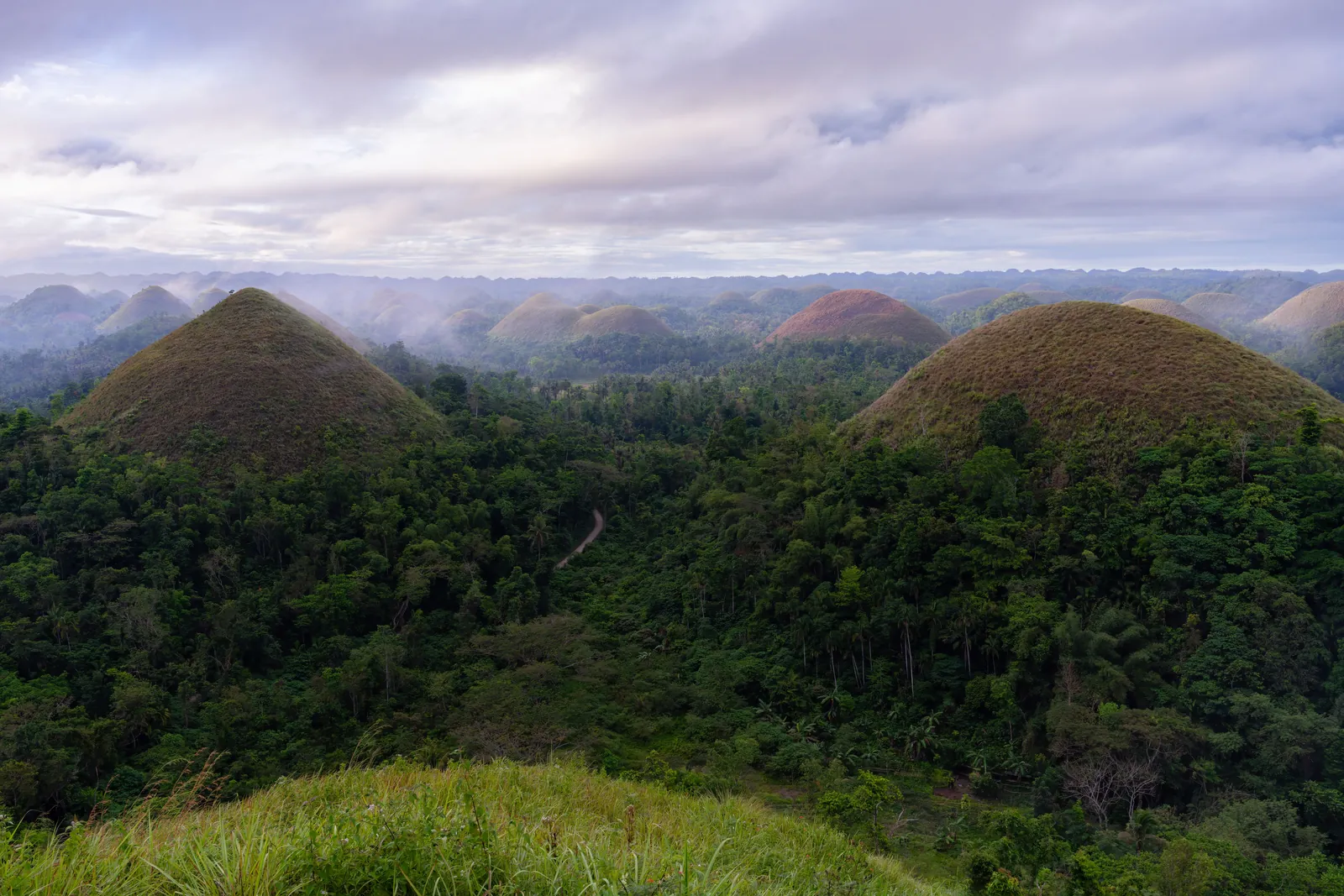
Short answer: with 7 days, spend a night in Manila, fly to Palawan and split the week between El Nido and Coron, linked by a four-hour fast boat. With 10 days, add Puerto Princesa and its Underground River on the way north. With 14 days, either follow Palawan with Bohol’s Chocolate Hills and Cebu, or head north to the rice terraces of Banaue and Batad, colonial Vigan and Baguio, then finish on Boracay’s White Beach. Plan these routes for the dry season, roughly December to May; on islands you get around by plane, boat and van, not by rental car.
This guide turns the sample trips on our Philippines travel guide into day-by-day plans, with travel times between the stops and the best area to sleep in each night. To pick your dates, read our best time to visit the Philippines guide; for the highlights in a few minutes, see our top places to visit in the Philippines. For a plan built around your dates and interests, use our AI trip planner. Everything here was checked as of October 2026.
The three routes at a glance
| Route | Days | Stops (nights) | Best for |
|---|---|---|---|
| Palawan classic | 7 | Manila 1, El Nido 3, Coron 2 (plus a last night or late flight home) | First trip, lagoons, island-hopping, snorkeling |
| All of Palawan | 10 | Manila 1, Puerto Princesa 2, El Nido 4, Coron 2 | Beaches plus the Underground River, a slower pace |
| Palawan, Bohol and Cebu | 14 | Manila 1, El Nido 4, Coron 3, Bohol 3, Cebu 2 | Two island groups, wildlife, diving, Spanish-era churches |
| The north and Boracay | 14 | Manila 1, Vigan 2, Baguio 2, Banaue 2, overnight bus 1, Boracay 5 | Rice terraces, heritage towns, mountains, then a beach finish |
Almost every international trip starts at Manila’s NAIA airport, whose three terminals are not connected airside, so check which one each flight uses and leave time to change. Mactan-Cebu, Clark and Puerto Princesa also have flights from elsewhere in Asia, and flying into Cebu can save a day on the Bohol routes. Domestic flights are cheap when booked early and rise sharply around Holy Week, Christmas and school holidays.
Travel times between the main stops
Philippine ferry and airline sites publish few fixed journey times, so most figures below are typical times from our destination guides and are marked approximate. Boat times depend on the sea, and every sailing can be canceled when the Coast Guard suspends sea travel for bad weather.
| Leg | How | Time | Source |
|---|---|---|---|
| Manila – Puerto Princesa | Flight (Philippine Airlines, Cebu Pacific) | about 1 h 20 | Approximate (flight schedules) |
| Manila – El Nido (Lio Airport) | Flight (small airline, AirSWIFT) | about 1 h 15–1 h 30 | Approximate (flight schedules) |
| Puerto Princesa – El Nido | Air-conditioned van or bus | about 5–6 h | Approximate |
| Puerto Princesa – Sabang (Underground River) | Van or tour | about 2 h | Approximate |
| El Nido – Coron | Fast boat, mainly in the dry season | about 4 h | Approximate (operators) |
| Coron (Busuanga airport) – Manila | Flight; airport 30–40 min from town | about 1 h | Approximate |
| Manila – Cebu | Flight | about 1 h 20 | Approximate |
| Cebu – Tagbilaran (Bohol) | OceanJet and other fast craft, many a day | about 2 h | OceanJet route list; time approximate |
| Manila – Caticlan (Boracay) | Flight, then 15-minute boat from Caticlan Jetty Port | about 1 h flight | Approximate |
| Manila – Laoag (for Vigan) | Flight, then about 1.5–2 h by road | about 1 h flight | Approximate |
| Vigan – Baguio | Bus | about 4–5 h | Approximate |
| Manila – Baguio | Deluxe bus on the expressways | about 4–5 h | Approximate |
| Baguio – Banaue | Bus | about 6–8 h | Approximate |
| Banaue – Manila | Overnight bus (348 km) | about 9–10 h | Distance: Department of Tourism; time approximate |
| Surigao – Dapa (Siargao) | Fast craft (RoRo ferry over 4 h) | about 1.5 h | Department of Tourism |
There are no direct flights between El Nido and Coron, which is why the boat matters; if the sea is too rough, the backup is a flight from each via Manila, which costs a day. Small turboprops on island routes have tight baggage limits, so check your allowance before you pack.
7 days: Manila, El Nido and Coron
The classic first trip: limestone cliffs, hidden lagoons and shipwrecks in northern Palawan. Fly into Manila, and book a flight home from Busuanga (for Coron) that connects in Manila.
- Day 1, Manila: Land, then head to Intramuros, the walled Spanish city, for Fort Santiago and San Agustin Church, and sunset over Manila Bay. Traffic is heavy, so allow at least an hour from the airport. Sleep: Makati, or Ermita and Malate near Intramuros.
- Day 2, to El Nido: Morning flight to El Nido’s Lio Airport, or fly to Puerto Princesa and take a van north (about 5–6 hours). Sunset at Las Cabanas or from the town beach. Sleep: El Nido town or Corong-Corong.
- Day 3, Bacuit Bay, Tour A: The Big and Small Lagoons on Miniloc, Secret Lagoon and Shimizu Island by banca. Lagoon visits are limited and paid, and the town also charges an ecotourism development fee, so book the tour a day ahead through your hotel or an accredited operator. Sleep: same.
- Day 4, Tour C or Nacpan Beach: Hidden beaches and Matinloc Shrine on Tour C, or a tricycle or scooter to Nacpan, a 4 km beach about 20 km north of town. Sleep: same.
- Day 5, by sea to Coron: Morning fast boat (about 4 hours; book a day or two ahead). Afternoon climb up Mount Tapyas for the view over town at sunset. Sleep: Coron town.
- Day 6, Coron Island: Kayangan Lake (a 15-minute boat ride and about 150 steps up), Twin Lagoon, Barracuda Lake and a reef snorkel; the Tagbanua community that manages Coron Island collects a fee at each site. Divers can spend the day on the Second World War Japanese wrecks instead; the shallow Skeleton Wreck works for snorkelers. Sleep: same.
- Day 7, home: A morning soak at Maquinit hot springs, then the 30–40 minute transfer to Busuanga airport for a flight to Manila and your connection.
Swap it: no appetite for open-water boats? Do Manila (1 night), Cebu (2) and Bohol (3) instead, linked by fast craft on a sheltered two-hour crossing, best from February to May. Details for each stop: Manila, El Nido and Coron.
10 days: Puerto Princesa, El Nido and Coron
This route covers Palawan from south to north by road and sea, adding the UNESCO-listed Underground River. Fly into Puerto Princesa and home from Busuanga, both via Manila.
- Day 1, Manila: Arrive; Intramuros and Binondo, Manila’s old Chinatown, for dinner. Sleep: Makati or Ermita/Malate.
- Day 2, to Puerto Princesa: Flight of about 1 hour 20 minutes. Go straight to the Underground River Booking Office, about 10 minutes from the airport, to secure your Visitor Entry Permit if your hotel or tour has not; the park takes 900 visitors a day, and there is no entry without a permit. Evening firefly watching on the Iwahig River. Sleep: Puerto Princesa city center.
- Day 3, the Underground River: About 2 hours by road to Sabang, then an outrigger to the cave and an hour by paddle boat along the navigable river among bats and swiftlets. It fills the day. Sleep: same, or a beach night in Sabang.
- Day 4, north to El Nido: Van of about 5–6 hours (book one that picks you up at your hotel). Many travelers break the trip with a night in Port Barton. Sleep: El Nido town, Corong-Corong or Marimegmeg.
- Days 5–7, El Nido: Tour A (Big and Small Lagoons), Tour C (hidden beaches) and a free day at Nacpan Beach, or a private boat to skip the crowds; Taraw cliff climbs and kayaking for the energetic. Sleep: same (4 nights in all).
- Day 8, to Coron: Fast boat of about 4 hours. Sleep: Coron town (2 nights).
- Day 9, Coron Island and the wrecks: Kayangan Lake, Twin Lagoon and Barracuda Lake, or a two-dive wreck trip.
- Day 10, home: Fly from Busuanga to Manila for your connection; allow a buffer, as island flights can be delayed.
Swap it: if the fast boat isn’t running (it runs mainly in the dry season), spend all five northern nights in El Nido and fly home from Lio, or reverse the route and start in Coron. More on each stop: Puerto Princesa, El Nido, Coron.
14 days: Palawan, Bohol and Cebu
Two very different island groups in one trip: Palawan’s lagoons and the Visayas’ wildlife, reefs and churches. It works best from February to May, when both regions are dry; April is the driest month at Mactan (Cebu).
- Day 1, Manila: Arrive; Intramuros and the National Museum. Sleep: Makati or Ermita/Malate (1 night).
- Days 2–5, El Nido: Fly to Lio, or to Puerto Princesa and van north. Tours A and C, Nacpan Beach and a lazy day. Sleep: El Nido town or Corong-Corong (4 nights).
- Days 6–8, Coron: Fast boat on day 6; Coron Island on day 7; wreck diving, Malcapuya and Banana islands or Maquinit hot springs on day 8. Sleep: Coron town (3 nights).
- Day 9, to Bohol: Fly from Busuanga to Cebu (direct if your dates allow, otherwise via Manila), then a fast craft to Tagbilaran (about 2 hours), or fly via Manila to Bohol-Panglao airport. Sleep: Panglao, near Alona Beach (3 nights).
- Day 10, the Bohol countryside: The Chocolate Hills in Carmen (about 200 steps to the viewing deck, open 8:30 a.m. to 5:30 p.m.), the Philippine Tarsier Sanctuary in Corella (9 a.m. to 4 p.m.), the Loboc River and the Baclayon church.
- Day 11, the sea: An early boat to Balicasag for snorkeling, and dolphin watching around Pamilacan. Bohol’s 2026 rules ban feeding, touching or chasing marine wildlife, so choose a permitted operator.
- Day 12, to Cebu City: Fast craft from Tagbilaran (about 2 hours). The Basilica del Santo Niño, Magellan’s Cross from 1521 and Fort San Pedro; lechon for dinner. Sleep: Cebu City or Mactan (2 nights).
- Day 13, Moalboal: About 3 hours by road for the sardine run and turtles off Panagsama, and Kawasan Falls on the way back. Start early.
- Day 14, home: Fly out of Mactan-Cebu (30–60 minutes from the city), either direct to another Asian hub or via Manila.
Details for the Visayas stops: Bohol and Cebu City. If you want white sand rather than wildlife, swap Bohol and Cebu for four nights on Boracay.
14 days: the north and Boracay
For travelers who want culture and mountain scenery as well as a beach. Go between November and April, when the north is dry and Boracay calm; the terraces fill with water around January and February and turn green in April and May.
- Day 1, Manila: Arrive; Intramuros and Binondo. Sleep: Makati or Ermita/Malate (1 night).
- Day 2, to Vigan: Fly to Laoag (about an hour) and drive about 1.5–2 hours south, stopping at Paoay Church, one of the UNESCO-listed Baroque Churches. Evening walk on Calle Crisologo. Sleep: Vigan’s historic center (2 nights).
- Day 3, Vigan: A kalesa (horse-drawn carriage) tour, the pottery workshops, the cathedral and empanada stalls; Vigan’s historic town has been on the UNESCO list since 1999.
- Day 4, to Baguio: Bus of about 4–5 hours into the mountains. Session Road and the market. Sleep: near Session Road (2 nights).
- Day 5, Baguio: Burnham Park, the Botanical Garden, strawberry farms in La Trinidad and the cool air at 1,500 m.
- Day 6, to Banaue: Bus of about 6–8 hours on mountain roads; viewpoints over the terraces at sunset. Sleep: Banaue, or a homestay in Batad (2 nights).
- Day 7, Batad: Tricycle or van about 16 km to the Batad saddle, then on foot to the village in the amphitheater of terraces, part of UNESCO’s Rice Terraces of the Philippine Cordilleras, and on to Tappiya Falls. Environmental fees are collected in Banaue and Batad.
- Day 8, Banaue to Manila: A slow morning in the terraces, then the overnight bus to Manila (about 9–10 hours). Sleep: on the bus.
- Day 9, to Boracay: Fly from Manila to Caticlan, a few minutes from the jetty port, then the 15-minute boat to Cagban. Hotels must be accredited, and terminal and environmental fees are paid at the jetty. Sleep: White Beach (5 nights).
- Days 10–13, Boracay: White Beach, about 4 km long; a paraw sailboat at sunset; island-hopping to Crystal Cove and Puka Beach; kitesurfing at Bulabog from November to April.
- Day 14, home: Fly from Caticlan to Manila for your connection.
More on each stop: Vigan, Baguio, Banaue and Boracay. If you’d rather not ride the overnight bus, fly Laoag–Manila at the start and do Baguio and Banaue as a loop by bus from Manila.
Where to sleep, by stop
| Stop | Best area for a short stay | Why |
|---|---|---|
| Manila | Makati or Bonifacio Global City; Ermita and Malate for Intramuros | Restaurants and Grab in Makati and BGC; Ermita and Malate are closer to the old city and the bay |
| Puerto Princesa | City center, around Rizal Avenue | Minutes from the airport, the booking office and van pickups |
| El Nido | El Nido town; Corong-Corong for sunsets; Nacpan or Lio for quiet | Tour boats leave from town; the beaches north of town are calmer |
| Coron | Coron town | Every island tour and dive boat leaves from the town piers |
| Bohol | Panglao, near Alona Beach; or a riverside lodge at Loboc | Beach, dive shops and the airport; Loboc for the countryside |
| Cebu | Cebu City center or IT Park; Mactan for resorts | History and food in the city; Mactan is close to the airport |
| Boracay | Station 1 (quieter, finest sand), Station 2 (lively, central) or Station 3 (cheaper) | All on White Beach, with e-trikes between them |
| Vigan | The historic center, around Calle Crisologo | Heritage houses turned into small hotels; everything on foot |
| Baguio | Around Session Road and Burnham Park | Walkable, with the bus terminals nearby |
| Banaue and Batad | Banaue town for buses; Batad homestays for the terraces | Batad has no road to the village, so pack light |
| Siargao | General Luna | Cloud 9, surf schools and the island-hopping boats |
ATMs run out of cash on smaller islands, and some island resorts take cash only, so carry enough pesos for El Nido, Coron, Batad and Siargao. Hotel prices rise steeply around Holy Week and Christmas.
Alternatives by interest
Beach lovers
Keep Manila to a single night and split the trip between two beach bases: El Nido or Coron for scenery, Boracay for a classic long white beach with easy restaurants. Panglao in Bohol is a quieter option. Boracay’s calmest, driest months are January to April; Palawan is at its best from December to May.
Divers and snorkelers
Coron’s Japanese wrecks, sunk in September 1944, are among the world’s best wreck dives. Moalboal in Cebu has turtles and a huge sardine shoal close to shore, Balicasag off Bohol has walls and a marine sanctuary, and Puerto Princesa is the jumping-off point for live-aboard trips to the UNESCO-listed Tubbataha Reefs, which run only in a short season, about March to June. Visibility and sea conditions are most reliable from March to May. More in our diving guide.
Surfers
Make Siargao the centerpiece. Fly from Manila, Cebu or Clark to Sayak Airport, or fly to Surigao and take the fast craft to Dapa (about 1.5 hours, according to the Department of Tourism). Siargao’s weather runs the opposite way to Palawan: it is driest roughly April to October and wettest November to February, and the surf season peaks in September and October, when the International Siargao Surfing Cup is held at Cloud 9. Five nights in General Luna, with the tri-island boat trip to Naked, Daku and Guyam, pairs well with Bohol and Cebu. See our Siargao guide.
Culture and history
Follow the second 14-day route, and add a day in Manila for the National Museum and San Agustin Church. Time a visit to Cebu for the Sinulog festival on the third weekend of January, or to Baguio for the Panagbenga flower festival in February. The Philippines has six UNESCO World Heritage sites, including four Baroque churches (San Agustin in Manila, Paoay, Santa Maria and Miagao).
Families
Pick two bases with short transfers: Cebu or Mactan and Panglao in Bohol, linked by a two-hour fast craft, or Boracay alone, where the transfer from Caticlan airport takes minutes. Bohol’s Chocolate Hills and tarsiers are big hits with children. Avoid the long van rides in Palawan with young kids, or break them with a night in Port Barton.
Tips for planning your route
- Match the route to the season. According to PAGASA, the dry season runs December to May (coolest December to February) and the rainy season June to November. About 20 tropical cyclones enter Philippine waters each year, mostly between July and October. Siargao and the east coast are the exception, best around April to October.
- Leave a buffer day. Boats stop and flights are delayed whenever storm signals are raised; keep a spare day before your international flight home, especially from June to November.
- Register for eTravel. All arriving passengers register free on the official etravel.gov.ph site within 72 hours before arrival, and show the QR code to the airline.
- Book the permits early. The Underground River admits only 900 visitors a day with a Visitor Entry Permit; El Nido’s lagoon slots are limited too.
- Bring ID for every boat. OceanJet asks passengers to check in at least 30 minutes before departure with a valid ID that matches the ticket.
- Hire drivers, not cars. Visitors may drive on a foreign license for up to 90 days, but most travelers use vans, tricycles, Grab in Manila and Cebu, and a car with driver for day trips.
- Avoid the peak holidays if you can. Holy Week (25–28 March 2027) and Christmas fill flights, boats and beaches.
Philippines itinerary FAQ
Is 7 days enough for the Philippines?
Seven days is enough for one region done well: El Nido and Coron in Palawan, or Cebu and Bohol. Trying to add a third island in a week means spending most of it in airports.
El Nido or Coron: which should I choose?
El Nido for lagoons, beaches and more restaurants and nightlife; Coron for crystal-clear lakes, a quieter town and world-class wreck diving. With five or more days in Palawan, do both, linked by the fast boat.
How do I get from El Nido to Coron?
By fast boat, about 4 hours across open water, running mainly in the dry season and canceled in rough seas. There are no direct flights; the alternative is flying each way via Manila.
Should I start in Manila or Cebu?
Start in Manila for Palawan and the north, and in Cebu for Bohol, Siargao and the Visayas. An open-jaw ticket, into Manila and out of Cebu, works well for the Palawan, Bohol and Cebu route.
Do I need a car in the Philippines?
No. Islands are linked by flights and boats, vans run between towns, and tricycles, scooters and drivers cover short trips. Manila’s traffic makes self-driving a poor choice.
Can I visit the Philippines in the rainy season?
Yes, with flexibility. June to November brings showers, fewer crowds and lower prices, but typhoons can halt boats and flights for days. Siargao and the east coast are often drier then, and the Underground River usually stays open.
How many days do I need in Palawan?
Five to six days for El Nido and Coron, and eight or nine if you add Puerto Princesa and the Underground River, or a night in Port Barton on the road north.
Is Boracay worth adding to a two-week trip?
Yes, if you want an easy, well-served beach to finish on. It is a short flight from Manila or Cebu to Caticlan, then 15 minutes by boat, and it is at its best from November to May.
Sources
Researched and last reviewed by TravelerCenter on 8 October 2026. Seasons and typhoon figures come from PAGASA and its 1991–2020 climate normals; the eTravel rules from the official eTravel site; NAIA terminals from New NAIA Infra Corp; the Underground River permit and visitor cap from the park; the Chocolate Hills, Tarsier Sanctuary, Kayangan Lake, Banaue distance and Siargao fast-craft times from the Department of Tourism; Bohol’s marine wildlife rules from the Provincial Government of Bohol; fast-craft routes and check-in rules from OceanJet; World Heritage sites from UNESCO; and the 2027 Holy Week dates from press reports of the presidential proclamation. Flight durations, van, bus and fast-boat times and Boracay fees come from general references and our destination guides and are approximate. Timetables, fees and rules change, so check with the operator before you travel.
Data: Wikidata (CC0)