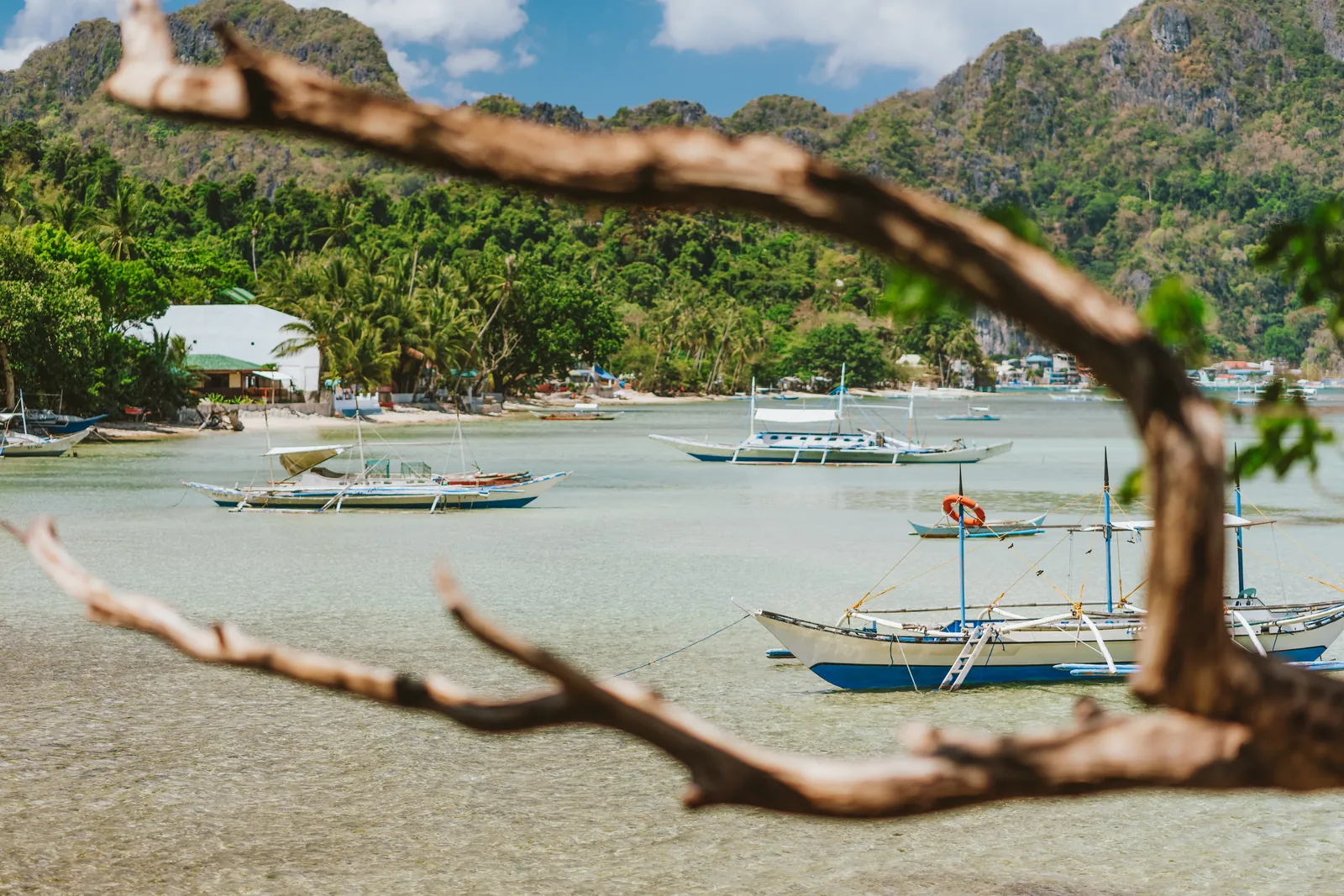
Short answer: The best time to visit the Philippines is the dry season from December to May, when Palawan, Boracay, Cebu, Bohol and Manila get little rain and boat trips run on calm seas. December to February is the coolest and most comfortable stretch; March to May is hotter but has the calmest water, and the trade-off is Holy Week (25–28 March 2027), when much of the country travels and beach towns fill up. Siargao and the east coast are the exception: they are drier from about April to October.
The Philippines has more than 7,600 islands, two monsoons and a typhoon season, so the right month depends on where you go. This page explains the seasons month by month and island by island, with festivals, holidays and the typhoon season, as of October 2026. For eTravel, entry rules, flights and ferries, see our Philippines travel guide, and plan your days with our AI trip planner.
Best time to visit the Philippines at a glance
| Goal | Best months | Why |
|---|---|---|
| Best weather overall | December to May | PAGASA’s dry season: little rain in the west and center, calm seas |
| Most comfortable temperatures | December to February | The cool dry season, with breezy days and slightly cooler nights |
| Palawan (El Nido, Coron) | December to May | Island-hopping tours run on calm seas; March is the driest month |
| Boracay | November to May | The northeast monsoon keeps White Beach sheltered and calm |
| Cebu and Bohol | February to May | The driest months; April is the driest |
| Siargao | April to October | The east coast’s drier season; September and October for the best surf |
| Rice terraces and the mountains | November to April | Dry trails; green terraces in April and May, golden rice in July and August |
| Diving and snorkeling | March to May | Calm, clear water across most of the country |
| Festivals | January | Sinulog in Cebu, Ati-Atihan in Kalibo and the Black Nazarene in Manila |
| Lowest prices | June to November (outside holidays) | The rainy season, with rainy-season discounts |
Philippines weather month by month
Weather month by month
The climate table shows average highs, lows and rain by month for Manila, from the 1991–2020 climate normals of PAGASA, the Philippine national weather agency, for its Port Area station on Manila Bay, as submitted to the World Meteorological Organization (WMO). Manila is typical of the western side of the country: almost dry from January to April, with about 19–23 mm (0.8–0.9 in) a month, and very wet from June to October, peaking at about 492 mm (19.4 in) in August. The east coast is the mirror image: Surigao City, near Siargao, gets about 662 mm (26.0 in) in January and only about 120 mm (4.7 in) in May. Baguio, at about 1,500 m (4,900 ft), is much cooler than the lowlands.
The Philippines month by month
January
Dry, sunny and comfortable in the west: Manila averages about 30 °C (86 °F) by day and 24 °C (75 °F) at night, with only about 19 mm (0.8 in) of rain. It is the wettest month on the east coast, with rough seas around Siargao. Festival month: the Feast of the Black Nazarene in Manila on 9 January, and Sinulog in Cebu City and Ati-Atihan in Kalibo on the third weekend (around 17 January 2027), when flights and hotels sell out. In the mountains around Banaue, the terraces are flooded and mirror-like.
February
Often the most pleasant month of the year: dry, breezy and not yet too hot, with Manila at about 31 °C (87 °F). Island-hopping in El Nido and Coron is excellent, and Puerto Princesa has its driest month (about 31 mm/1.2 in). Baguio holds Panagbenga, its month-long flower festival, and Chinese New Year (6 February 2027) is celebrated in Manila’s Binondo. Crowds are moderate, except in Baguio on festival weekends.
March
The hot dry season begins, with calm seas and long sunny days: Manila reaches about 32 °C (90 °F), and Coron gets only about 18 mm (0.7 in) of rain, its driest month. It is peak season for beaches and diving. Holy Week falls in late March in 2027: Maundy Thursday and Good Friday (25 and 26 March) are national holidays, and much of the country travels home or to the beach, so book Palawan, Boracay and ferries well ahead.
April
Hot and dry, and the hottest month in Manila, at about 34 °C (93 °F) by day and 27 °C (80 °F) at night. It is the driest month in Cebu and Bohol (about 56 mm/2.2 in at Mactan) and on Boracay. Siargao starts its drier season. School summer holidays keep resorts busy, but the beaches and the sea are at their best.
May
The warmest month nationally, according to PAGASA, and still mostly dry until the first thunderstorms late in the month (Manila about 159 mm/6.3 in). Bohol’s Chocolate Hills are at their brownest, and the terraces of Banaue turn green. Siargao has its driest month, with glassy seas. Pahiyas, the harvest festival of Lucban in Quezon, is held in mid-May. Prices stay high until the school holidays end.
June
The rainy season starts in the west: PAGASA declared its onset on 4 June in 2026. The southwest monsoon (habagat) brings waves and seaweed to Boracay’s White Beach and the first tour cancellations to El Nido and Coron, while Siargao stays fairly dry. Independence Day is 12 June. Crowds thin out and rainy-season discounts begin.
July
Monsoon rain in the west and the start of the typhoon peak: Manila gets about 432 mm (17.0 in) on 19 days, and Coron about 540 mm (21.3 in), its wettest month. Cebu and Bohol are wetter too, though rain comes in showers rather than all-day downpours. The rice terraces are at their greenest, with the harvest beginning in Banaue. It is the low season, with the lowest prices.
August
Usually the wettest month in Manila (about 492 mm/19.4 in) and in Baguio, where landslides can close mountain roads. Typhoons are possible anywhere; build spare days into island itineraries. On the east coast, Siargao’s surf season begins, and Davao holds its Kadayawan festival in the third week of the month.
September
Wet in the west and a peak month for typhoons, but often good on Siargao, where the surf is at its best and the International Siargao Surfing Cup is held at Cloud 9. The “ber” months begin, and with them the long Filipino Christmas season. Most beach resorts are quiet and cheap.
October
Rain begins to ease in Manila (about 221 mm/8.7 in), but typhoons are still possible, and it is the wettest month in Puerto Princesa (about 213 mm/8.4 in). Bacolod holds its MassKara festival, usually in the second half of the month. Siargao’s surf season continues. Prices are moderate.
November
A transition month: the northeast monsoon (amihan) starts, the west begins to dry out, and Boracay’s White Beach calms down again. Typhoons are still possible, and the east coast turns wet. All Saints’ Day (1 November) and All Souls’ Day (2 November, a special non-working day in 2027) are family days, when Filipinos travel home to visit cemeteries. A good-value month for Palawan and the north.
December
The cool dry season begins in the west and center, and the high season starts: from mid-December to New Year, flights, ferries and resorts are full and prices peak. Christmas is the biggest celebration of the year, with parol lanterns and the Simbang Gabi dawn masses from 16 December. It is very wet on Siargao and the east coast, with about 597 mm (23.5 in) at Surigao. Early December, before the holidays, is a good time for Palawan and the beaches.
Best time to visit by destination
Manila
December to April, the dry season; February is usually the most pleasant month, and April is very hot. July to September is wet, with flooding after heavy rain. See our Manila guide.
El Nido and Coron
December to May, when seas are calm and island-hopping tours rarely canceled; March is the driest month. From June to October, the southwest monsoon brings heavy rain and frequent tour cancellations. See our El Nido and Coron guides.
Puerto Princesa
December to May, with February the driest month. The rainy season here is milder than in northern Palawan, and the Underground River usually stays open, though rough seas can stop the boats at Sabang. October is the wettest month. See our Puerto Princesa guide.
Boracay
November to May, when the northeast monsoon keeps White Beach calm and Bulabog Beach on the other side gets the wind for kitesurfing; January to April is the driest. June to October brings rain, waves on White Beach and lower prices. See our Boracay guide.
Cebu and Bohol
February to May, the driest months, with April the driest. Rain is spread through much of the year here, with peaks from June to October and again in December and January, and typhoons are most likely from July to December. Sinulog in January is Cebu’s biggest event. See our Cebu City and Bohol guides.
Siargao
About April to October for sunny weather and calm lagoons, and September to October for the best surf. November to February is the wettest period, with rough seas and occasional ferry disruptions. See our Siargao guide.
Baguio, Banaue and Vigan
November to April, the dry season. Baguio is cool all year, coolest in January and February, and very wet from July to September. Banaue’s terraces are mirror-like in January and February, green in April and May and golden in July and August. Vigan, on the Ilocos coast, barely sees rain from November to April. See our Baguio, Banaue and Vigan guides.
Best time for beaches, diving, surfing and festivals
Beaches and island-hopping
December to May on the west side and in the Visayas: El Nido, Coron, Boracay, Bohol’s Panglao and the beaches of Cebu. March to May has the calmest seas. On Siargao and the east coast, go from April to October. See our beaches and boat trips guides.
Diving and snorkeling
March to May is the most reliable time across the country, with calm seas and good visibility; dry-season months from December are good in Palawan and the Visayas. The live-aboard season for Tubbataha Reefs, reached from Puerto Princesa, runs from about March to June. See our diving and snorkeling guides.
Surfing
Siargao’s main surf season runs from about August to November, with the biggest swells in September and October. See our surfing guide.
Hiking and rice terraces
November to April for dry trails in the Cordillera, around Baguio, Sagada and Banaue. See our hiking guide.
Festivals
January is the big festival month (the Black Nazarene, Sinulog and Ati-Atihan), followed by Panagbenga in Baguio in February, Holy Week in March or April, Pahiyas in May, Kadayawan in August, MassKara in October and the long Christmas season in December.
Seasons to plan around
- Typhoons: according to PAGASA, about 20 tropical cyclones enter the Philippine Area of Responsibility each year and eight or nine cross the country, most often from July to October. When wind signals are raised, sea trips are suspended and flights canceled; keep spare days in island itineraries from June to December and follow PAGASA’s forecasts.
- The southwest monsoon: from about June to September, heavy rain in the west, including Manila, Palawan, Boracay and the Ilocos coast, with tour cancellations and flooding in cities.
- The northeast monsoon: from about November to February, rain and rough seas on the east coast, including Siargao and Samar.
- El Niño in 2026–2027: in September 2026, PAGASA said a strong El Niño was expected to become very strong between September and December 2026 and last into the first half of 2027, usually bringing below-normal rain and warmer temperatures to most of the country.
- Holy Week and Christmas: Holy Week (25–28 March 2027) and mid-December to New Year are the busiest travel periods; flights, ferries and resorts sell out, so book early.
How long to stay
A week covers Manila and either Palawan (El Nido and Coron) or Cebu and Bohol; two weeks lets you combine Palawan with the Visayas, Boracay or Siargao. Domestic flights and boats can be canceled by weather, especially from June to December, so keep a day in hand before your international flight. See the sample itineraries in our Philippines travel guide.
Best time to visit the Philippines: FAQ
What is the best month to visit the Philippines?
February is often the best single month: it is dry across the west and center, comfortable rather than hot, and outside the busiest holidays. March and April are also excellent for beaches but hotter.
What is the rainiest month in the Philippines?
It depends on the coast. In Manila, August is wettest (about 492 mm/19.4 in); in northern Palawan, July (about 540 mm/21.3 in at Coron); and on the east coast near Siargao, January (about 662 mm/26.0 in at Surigao).
When is typhoon season in the Philippines?
Tropical cyclones can occur in any month, but most come between June and December, and PAGASA says July to October is the peak.
When is the rainy season in the Philippines?
PAGASA’s rainy season runs from June to November, and the dry season from December to May. The east coast, including Siargao, is different: it is wettest from November to February.
What is the cheapest time to visit the Philippines?
The rainy season from June to November, outside long weekends, has the lowest resort prices and the most promotions. Holy Week and mid-December to New Year are the most expensive.
Is December a good time to visit the Philippines?
Yes for Palawan, Boracay, Cebu, Bohol and Manila, where the dry season begins, though the second half of the month is the busiest and most expensive time of the year. It is very wet on Siargao and the east coast.
Is July a good time to visit the Philippines?
It is the low season: wet in the west, with typhoons possible and frequent tour cancellations in El Nido and Coron. Siargao, the rice terraces at their greenest and lower prices are the reasons to go.
Sources · last reviewed 9 Oct 2026
Researched and last reviewed by TravelerCenter on 8 October 2026. Monthly temperatures and rainfall are PAGASA’s 1991–2020 climate normals as submitted to the World Meteorological Organization; the seasons, the warmest month, tropical cyclone statistics, the 2026 rainy-season onset and the El Niño outlook come from PAGASA; the 2027 holidays from Proclamation No. 1427 as reported by the Philippine press; Tubbataha’s season from our Puerto Princesa guide; and destination seasons from our destination guides. Festival dates and monsoon months are general references, flagged for checking. Check forecasts and ferry schedules before you travel.
Also: PAGASA normals 1991–2020, Port Area, Manila (climate)
Data: Wikidata (CC0)