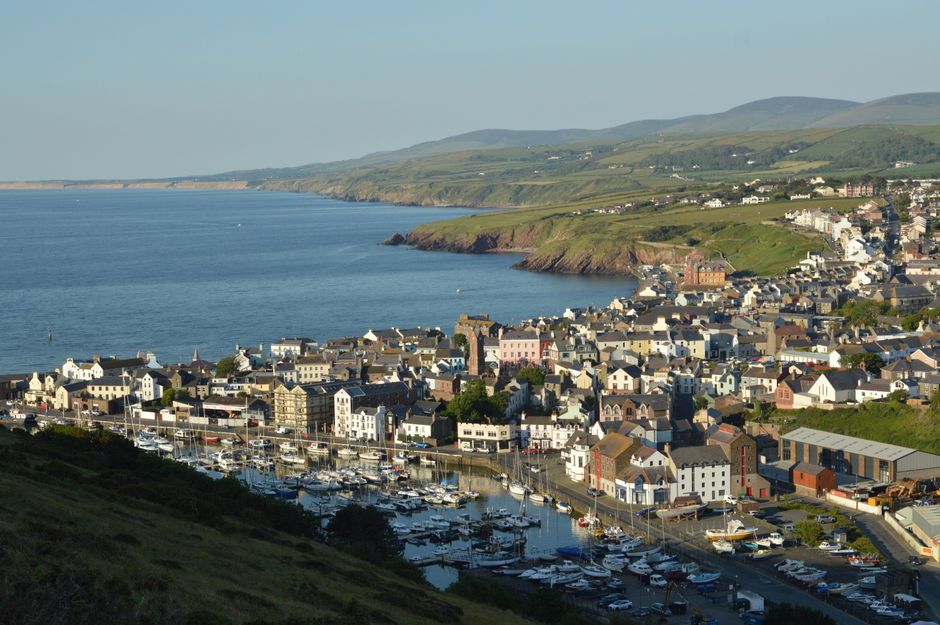
The Isle of Man is a self-governing island of about 572 km² (221 square miles) in the middle of the Irish Sea, with England to the east, Northern Ireland to the west and Scotland to the north. It is small enough to cross in under an hour, yet it holds a surprising amount: Victorian railways that still run on their original steam engines and electric trams, the world’s largest working waterwheel at Laxey, medieval castles at Castletown and Peel, a single mountain with views of the surrounding kingdoms, wooded glens, around 100 miles of coastal path and seals at the island’s southern tip. It is also the home of the TT, the famous motorcycle races on public roads, and in 2016 it became the first whole nation to be named a UNESCO Biosphere. The capital, Douglas, is a seaside town with a long promenade, horse-drawn trams and the free Manx Museum. Come from May to September for the railways, castles and long evenings, allow four days to a week, and book early for the TT fortnight; since April 2026 most non-British, non-Irish visitors coming straight from outside the Common Travel Area need an ETA.

Right now in Isle of Man
- Wed8–12°C47–53°F4 mm rain
- Thu8–13°C47–55°F4 mm rain
- Fri11–14°C53–57°F9 mm rain
Multi-day tours of Isle of Man
Multi-day tours from local operators. You check dates and book on Viator, our partner; we may earn a commission at no extra cost to you. How we earn money
The Isle of Man at a glance: overview and geography
The Isle of Man is a British Crown Dependency. It is not part of the United Kingdom or the European Union: it has its own parliament, Tynwald, its own laws and taxes, and its own notes, coins and stamps, while the UK looks after its defense and international relations. The 2021 census counted 84,069 residents, almost a third of them (26,677) in Douglas. Ramsey, Peel and Castletown are the other towns, and the rest of the island is villages, farms and open hills.
The island runs roughly northeast to southwest. A spine of hills crosses the middle, rising to Snaefell, the only mountain, at 621 m (2,036 ft). From its summit, on a clear day, you may see what islanders call the “seven kingdoms”: England, Scotland, Wales, Ireland, Mann, and the kingdoms of heaven and the sea. Steep, wooded valleys called glens run down from the hills to the coast. The north ends in a flat plain and the long beaches toward the Point of Ayre; the south ends in sea cliffs, the fishing harbors of Port St Mary and Port Erin, and the Sound, a narrow channel separating the island from the Calf of Man.
Mann’s history is Celtic and Norse. Viking settlers arrived from around the 9th century, and the island’s parliament traces its roots to their open-air assemblies: every year on 5 July, Tynwald still meets in the open air on Tynwald Hill at St John’s. The island later came under Scottish and then English lords before passing to the British Crown, and in Victorian times it became a favorite seaside escape for the industrial towns of northern England, which is why Douglas has its grand promenade and the island its railways. The native language, Manx Gaelic, nearly died out in the 20th century but is being revived: you will see it on signs, place names and in greetings such as Failt erriu (welcome). The three-legged symbol, the triskelion, is everywhere.
Time zone: the Isle of Man uses the same time as the UK, Greenwich Mean Time (UTC+0) in winter and British Summer Time (UTC+1) from late March to late October.
The Isle of Man’s areas
- Douglas and the east: the capital and ferry port, with the Manx Museum, the promenade and the horse trams, Groudle Glen and the start of the Manx Electric Railway.
- Laxey and the hills: the Great Laxey Wheel, Laxey’s old mines and harbor, and the Snaefell Mountain Railway up the island’s only mountain.
- The south (Castletown, Port St Mary, Port Erin): the old capital with Castle Rushen, the fishing harbors, Cregneash village, the Sound, the Chasms and boat trips to the Calf of Man.
- The west (Peel, St John’s): Peel Castle on St Patrick’s Isle, the House of Manannan, sunsets over the Irish Sea, and Tynwald Hill.
- The north (Ramsey and the Ayres): the island’s second town, the end of the Manx Electric Railway, flat farmland and long, wild beaches toward the Point of Ayre.
Where to go on the Isle of Man: town, castles, railways and coast
Most visitors stay in Douglas and explore by bus and heritage railway, but Peel, Port Erin, Castletown and Ramsey all make good bases too. Distances are short: most places are within about 45 minutes’ drive of each other.
Douglas
The capital is where the ferries arrive and where most hotels and restaurants are. Its long Victorian promenade curves around Douglas Bay, with horse-drawn trams in summer, the Tower of Refuge on its rock in the bay, and Douglas Head and the Great Union Camera Obscura above the harbor. The Manx Museum, free to enter, tells the island’s story from the Vikings to the TT. Douglas is also the starting point of the steam railway south and the electric railway north. See our Douglas travel guide for sights, areas and where to stay.
Laxey, the Great Laxey Wheel and Snaefell
Up the east coast, Laxey is a former mining village famous for the Great Laxey Wheel, nicknamed “Lady Isabella.” At 72 ft 6 in (22 m) across, it is the largest working waterwheel in the world, built in Victorian times to pump water from the lead and zinc mines; you can climb the spiral stairs to the top and walk the mines trail. Manx National Heritage opens it daily from 27 March to 1 November 2026, 9:30–16:30 (last entry 16:00), and adults pay £14, students £7, with children aged 16 and under free. From Laxey station, the Snaefell Mountain Railway, running since 1895 and the only electric mountain railway in the British Isles, climbs about five miles to the summit in about half an hour.
Castletown and Castle Rushen
The island’s old capital is a small harbor town of limestone streets, dominated by Castle Rushen, one of the best-preserved medieval castles in the British Isles, built about 800 years ago and later used as a prison. In 2026, it opens daily from 27 March to 1 November, 9:30–16:30 (last entry 16:00), and adults pay £14, students £7 and children 16 and under go free, according to Manx National Heritage. The Old House of Keys, the Old Grammar School and the Nautical Museum are a few steps away, and Rushen Abbey is in nearby Ballasalla. Castletown is on the steam railway, about £7 single from Douglas in 2026.
Port Erin, Port St Mary, Cregneash and the Sound
The steam railway ends at Port Erin, a horseshoe bay with a sandy beach and Bradda Head above it. Nearby Port St Mary is a working harbor, and the clifftop Chasms are a short walk away. Cregneash, a preserved crofting village with thatched cottages, shows how islanders lived in the 19th century (open daily 27 March to 1 November 2026, 10:00–16:30, adults £14). At the island’s tip, the Sound looks across to the Calf of Man and the rocky islet of Kitterland, where seals haul out; dolphins and basking sharks are seen here in summer. The Sound is also one of the island’s 26 registered Dark Sky Discovery Sites.
Peel and Peel Castle
On the west coast, Peel is a fishing town of narrow lanes, kipper smokehouses and a sandy beach, known for its sunsets. Peel Castle stands on St Patrick’s Isle, joined to the town by a causeway, with the ruins of a cathedral and Viking-age graves inside its red sandstone walls. In 2026, it opens daily from 27 March to 1 November, 11:00–16:30 (last entry 16:00), with adult tickets at £11; conservation work on the Barbican wall is planned from November 2026 to spring 2027. On the quay, the House of Manannan tells the story of the Celts, Vikings and seafarers of Mann (adults £14, open all year).
St John’s, Ramsey and the north
Inland from Peel, the small village of St John’s is home to Tynwald Hill, a four-tiered mound where the island’s parliament meets outdoors every 5 July. Ramsey, at the northern end of the Manx Electric Railway, is a harbor town with a long promenade and a park, Mooragh Park, with a boating lake. Beyond it, the north of the island flattens into farmland and wild shingle beaches toward the Point of Ayre lighthouse.
The Calf of Man
Half a mile off the southern tip, the Calf of Man is a 600-acre (about 250 ha) island cared for by Manx National Heritage as a nature reserve and bird observatory. Around 33 species of seabirds breed there, including Manx shearwaters, kittiwakes and razorbills. Small boats run from Port Erin and Port St Mary in summer, weather and tide permitting, and must be booked in advance; see our boat trips guide.
Beyond the island: Liverpool, the Lake District, Belfast and Dublin
Ferries and flights make the Isle of Man easy to combine with a wider trip. The fast craft from Liverpool lands you in one of England’s great cities (see our Liverpool guide); the Heysham ferry is a short drive from the Lake District; and sailings and flights link the island with Belfast and Dublin. For the rest of Britain, see our United Kingdom travel guide, and for the other Crown Dependency in our guides, see Jersey.
Douglas Travel Guide
Plan a visit to Douglas, the Isle of Man's capital: the Victorian promenade and the horse trams, the free Manx Museum with its Viking…
Best time to visit the Isle of Man
The Isle of Man has a mild, breezy, maritime climate: winters are rarely cold, summers rarely hot, and the weather changes quickly. The table below uses the Met Office’s official 1991–2020 averages for Ronaldsway, at the airport in the south of the island. The hills are cooler, windier and wetter, and Snaefell’s summit is often in cloud.
| Season (Ronaldsway, 1991–2020) | Average high / low | Sunshine a day | Rainfall a month | What it’s like |
|---|---|---|---|---|
| Spring (Mar–May) | 9.4–14.3 °C / 4.5–8.1 °C (49–58 °F / 40–47 °F) | about 4–7.5 hours | 55–62 mm | The sunniest and driest season, with bluebells and gorse in bloom; the railways and heritage sites open in late March. |
| Summer (Jun–Aug) | 16.5–18.2 °C / 10.6–12.7 °C (62–65 °F / 51–55 °F) | about 6–7 hours | 59–67 mm | The warmest months, with long evenings; the TT in late May and June and the main school holidays are the busiest times. |
| Autumn (Sep–Nov) | 16.6 °C falling to 11.1 °C (62–52 °F) | about 5 falling to 2 hours | 71–105 mm | September is often pleasant; October and November are the wettest months. Railways and most heritage sites close on 1 November. |
| Winter (Dec–Feb) | 8.4–9.2 °C / 3.9–4.9 °C (47–48 °F / 39–41 °F) | about 1.5–3 hours | 66–95 mm | Mild, gray and windy; the heritage railways do not run, but the Manx Museum and House of Manannan stay open. |
Over the year, Ronaldsway gets about 883 mm of rain and 1,651 hours of sunshine. May is both the sunniest and the driest month, which makes May, June and September the best months for walking, railways and sightseeing; July and August are warmest. The heritage railways, the horse trams and most Manx National Heritage sites run from late March to 1 November, so a winter trip is quieter but more limited.
The Isle of Man’s events calendar for 2027
- Isle of Man TT Races: Monday 31 May to Saturday 12 June 2027, starting on the Spring Bank Holiday Monday with qualifying and ending with the Senior TT on the final Saturday, according to the official TT organizers. The provisional dates for 2028 are 29 May to 10 June. Ferries and accommodation sell out many months ahead, and roads on the course close during practice and racing.
- Tynwald Day: 5 July, the island’s national day, with the open-air sitting of Tynwald at Tynwald Hill in St John’s and a fair around it.
How long to stay: sample itineraries
A long weekend (three days)
Day one: Douglas, with the Manx Museum, a horse tram along the promenade and sunset from Douglas Head. Day two: the Manx Electric Railway to Laxey for the Great Laxey Wheel, then the Snaefell Mountain Railway to the summit. Day three: the steam railway south to Castletown for Castle Rushen, then on to Port Erin and a walk or bus to the Sound to look for seals.
Five days
Add a day in the west, with Peel Castle, the House of Manannan, a kipper lunch and Tynwald Hill on the way back, and a day for Ramsey and the north on the electric railway, or for a glen walk and a section of the coastal path. A 5-day Go Explore Heritage card covers all of this travel and entry.
A week or more
Take a boat trip to the Calf of Man, visit Cregneash and the Chasms, walk longer stretches of the Raad ny Foillan, drive or ride the TT Mountain Course at a sensible speed, and spend an evening at a Dark Sky Discovery Site. Add a day in Liverpool or Dublin at the start or end of the trip.
Entry rules, money and costs
Entry and the ETA
The Isle of Man is part of the Common Travel Area (CTA) with the UK, Ireland, Jersey and Guernsey, and it is not part of the Schengen area. According to the Isle of Man Government and Visit Isle of Man:
- ETA: since 23 April 2026, people coming to the Isle of Man directly from outside the Common Travel Area who do not need a visa, for visits of up to six months, need an Electronic Travel Authorisation (ETA). It costs £20, is applied for online on GOV.UK or with the UK ETA app, and lasts two years or until the passport expires, whichever is sooner. Every traveler needs one, including children.
- Coming via the UK, Jersey or Guernsey: ETAs issued by the Isle of Man, the UK, Jersey and Guernsey are mutually recognized, so a UK ETA, which you need to enter Britain, also covers the Isle of Man. Visitors who are not visa nationals and enter the CTA through the Republic of Ireland need an ETA too.
- No ETA needed: British and Irish citizens, people who already hold a visa or permission to live, work or study in the CTA, people with EU Settlement Scheme status, and residents of Ireland traveling from Ireland, the UK, Jersey or Guernsey.
- Visa nationals need a visa before they travel; the Isle of Man Immigration Service can advise.
Money
The Isle of Man uses the pound. The Isle of Man Government issues its own Manx notes and coins in pounds and pence, worth the same as British pounds, and UK notes and coins are legal tender on the island. Manx money is not accepted in the UK, although UK banks can exchange the notes, so spend it or ask for UK notes in your change before you leave. Cards and contactless payments are widely accepted, including on buses.
Healthcare
Under the Reciprocal Healthcare Arrangement with the UK, updated in 2023, visitors from the UK receive free medical care if the need for it arises within six months of arriving on the island. Visitors from other countries are generally entitled only to urgent and emergency care free of charge and pay for GP consultations, treatment and prescriptions, according to Isle of Man Government guidance, so bring travel insurance. Noble’s Hospital, near Douglas, has the island’s Emergency Department.
How expensive is the Isle of Man?
Prices are similar to the north of England, with accommodation the biggest cost, and much higher during the TT. Walking, beaches, glens and views are free, and the Manx Museum is free to enter. The figures below are our estimates for one person per day, sharing a double room, as of October 2026, outside the TT.
| Style | Estimated cost per day | What that looks like |
|---|---|---|
| Budget | about £65–100 | A campsite, hostel or simple guesthouse, a Go Explore card, picnic lunches, the free Manx Museum |
| Mid-range | about £140–230 | A promenade hotel, a Go Explore Heritage card or a rental car, castles and restaurant dinners |
| High-end | about £300+ | A boutique hotel, the steam railway’s dining car, private tours and boat trips |
Passes save money. In 2026, Go Explore cards for unlimited travel on scheduled buses, steam and electric railways and the horse trams cost £22 for one day, £44 for three, £50 for five and £61 for seven days (children 5–15 half price or less, family cards from £49), plus £2 for the reusable card. The 5-day Go Explore Heritage card (£79, adults) adds unlimited entry to all Manx National Heritage sites, and a 7-day Manx National Heritage Holiday Pass for the sites alone costs £35. Accompanied children 16 and under get into heritage sites free anyway.
Getting there and getting around
By air
Isle of Man Airport at Ronaldsway, near Ballasalla in the south, is the island’s only airport. According to Visit Isle of Man, easyJet flies from London Gatwick, Liverpool, Manchester, Bristol and Belfast International; Loganair from London Heathrow, London City, Manchester, Liverpool, Birmingham and Edinburgh; and Aer Lingus from Dublin and Belfast City. Some routes are seasonal, and there are no direct flights from North America, so most overseas visitors connect in London, Manchester or Dublin. Bus routes 1, 2, 2A, 12 and 12A (and the N1 at night) run daily between the airport and Douglas, and there are taxis and rental cars at the terminal.
By sea
The Isle of Man Steam Packet Company sails to the Sea Terminal in Douglas from four ports, all taking cars as well as foot passengers:
- Heysham (Lancashire): daily, all year, on the ferry Manxman, about 3 hours 45 minutes.
- Liverpool: all year from the Isle of Man Ferry Terminal; the fast craft Manannan takes about 2 hours 45 minutes in the April–November season, and Manxman, about 4 hours 15 minutes, sails at weekends from November to March.
- Larne (Northern Ireland): all year, mainly on Ben-my-Chree, about 4 hours 30 minutes.
- Dublin: seasonal sailings on Manannan, about 2 hours 55 minutes.
Timetables change with the seasons and the weather, and during the TT ferries are fully booked long in advance, so check the Steam Packet’s current timetable and book early.
Getting around
- Heritage railways: in 2026, the Isle of Man Steam Railway (Douglas to Port Erin, opened in 1873, about an hour end to end) ran from 19 March, the Manx Electric Railway (Douglas to Laxey and Ramsey, 17 miles, built 1893–1899) from 17 March, the Snaefell Mountain Railway (Laxey to the summit) from 28 March, and the Douglas Bay Horse Tramway from 2 April, all until 1 November. 2026 single fares included Douglas to Port Erin by steam £9 (return £17), Derby Castle to Laxey by electric tram £7 (return £13), and Laxey to Snaefell Summit £8.50 (return £16). Tickets are sold at staffed stations and on board.
- Bus: Bus Vannin runs services all over the island, all year, from Douglas. Pay by contactless or cash on board; one-day Go Explore cards are also sold on the bus, and multi-day cards at the airport information desk, the Welcome Centre in the Sea Terminal and main stations.
- Car: drive on the left. Unlike the UK, the Isle of Man has no national speed limit, so some roads outside towns are “derestricted,” but towns and many roads have limits of 20–40 mph and careless and dangerous driving laws apply everywhere. Many towns use disc parking: display a parking disc showing your arrival time, available from rental firms, the sea terminal, police stations and post offices.
- Bike and on foot: the island is hilly but compact, and the coastal path and glens are best on foot.
Outdoors: walking, glens, wildlife and the sea
Walking is the best way to see the Isle of Man. The Raad ny Foillan, Manx Gaelic for “the way of the gull,” is a coastal path of almost 160 km (100 miles) right around the island, which you can walk in sections from towns on the bus and rail lines. Inland, paths climb Snaefell and the other summits, and the national glens, such as Groudle, Dhoon and Glen Maye, are wooded valleys with waterfalls and short trails. Check Visit Isle of Man’s path map for any closures before you set out. See our hiking guide and our cycling guide.
The island’s status as a UNESCO Biosphere, granted in 2016 to the whole island and its waters, reflects its wildlife: grey seals at the Sound and the Calf of Man, seabird colonies, and, in summer, basking sharks, dolphins and porpoises offshore. Boat trips and wildlife cruises leave from Douglas, Port Erin, Port St Mary and Peel in season. With little light pollution, the island also has 26 registered Dark Sky Discovery Sites for stargazing.
Beaches are mostly small bays and coves: Port Erin’s sandy bay is the classic family beach, Peel has a sheltered town beach, and the north has long, empty stretches of shingle and sand. The Irish Sea is cool all year, so most swimmers wear wetsuits. See our beaches guide.
Safety, health and staying connected
The Isle of Man is a quiet, low-crime island, and the main things to watch are natural: changeable weather on the hills, cliff edges on the coastal path, strong currents in the Sound and around the coast, and narrow country lanes. During the TT, take extra care on the roads and follow the marshals’ instructions and road-closure times. In an emergency, call 999 for police, ambulance and fire. The Isle of Man Constabulary’s non-emergency number is +44 1624 631212, and Noble’s Hospital is on +44 1624 650000.
Plugs are the UK three-pin type (G), so visitors from Europe and North America need an adapter. Isle of Man phone numbers start with +44 1624, but the island has its own mobile networks, Manx Telecom and Sure, and is outside EU roaming rules, so check your plan’s roaming charges before you travel.
Food and culture
Manx food is simple and local. Try Manx kippers, smoked over oak in Peel; queenies, the island’s small queen scallops, often served in garlic butter; Manx lamb and beef; local cheeses, ice cream and craft beers; and chips, cheese and gravy, the island’s favorite snack. Harbor towns have good fish restaurants, and farmers’ markets sell island produce.
Manx culture mixes Celtic and Norse roots with a strong sense of island identity. You will hear Manx music and see the triskelion flag everywhere, and on 31 October children celebrate Hop-tu-Naa, the Manx version of Halloween, carving turnips and singing traditional songs. It is a local tradition to say hello to the fairies when crossing the Fairy Bridge on the road between Douglas and the airport.
Things to do on the Isle of Man
- Ride the Isle of Man Steam Railway from Douglas to Port Erin.
- Take the Manx Electric Railway to Laxey and climb to the top of the Great Laxey Wheel.
- Ride the Snaefell Mountain Railway and look for the “seven kingdoms” from the summit.
- Explore Castle Rushen and the old capital, Castletown.
- Walk around Peel Castle and visit the House of Manannan.
- See the Viking hoards and TT motorcycles in the free Manx Museum in Douglas.
- Ride a horse tram along Douglas Promenade.
- Watch seals from the Sound and take a boat trip to the Calf of Man.
- Step back in time at Cregneash village.
- Walk a section of the Raad ny Foillan coastal path or a national glen.
- See Tynwald Hill at St John’s, or the open-air Tynwald ceremony on 5 July.
- Watch the TT Races in late May and June.
- Stargaze at a Dark Sky Discovery Site.
- Eat kippers in Peel and queenies anywhere on the coast.
Isle of Man travel FAQ
Is the Isle of Man part of the UK?
No. It is a self-governing British Crown Dependency with its own parliament, Tynwald, and its own laws and taxes. The UK is responsible for its defense and international relations, and it is part of the Common Travel Area, but it is not part of the United Kingdom or the European Union.
Do I need a passport or an ETA for the Isle of Man?
Most visitors from outside the UK and Ireland need a passport. Since 23 April 2026, non-visa nationals, including Americans, Canadians, Australians and EU citizens, need an ETA (£20) to come directly from outside the Common Travel Area. A UK, Jersey or Guernsey ETA also covers the Isle of Man, so if you arrive from Britain with a UK ETA, you do not need another one. British and Irish citizens do not need an ETA.
How do I get to the Isle of Man?
By Steam Packet ferry from Heysham (about 3 hours 45 minutes), Liverpool (about 2 hours 45 minutes on the fast craft), Larne or, seasonally, Dublin; or by air from London, Manchester, Liverpool, Bristol, Birmingham, Edinburgh, Belfast and Dublin to Ronaldsway Airport.
When is the TT in 2027?
From Monday 31 May to Saturday 12 June 2027, with the Senior TT on the final Saturday. Provisional dates for 2028 are 29 May to 10 June. Book ferries and rooms as early as possible.
What currency is used on the Isle of Man?
The pound. The island issues its own Manx notes and coins at the same value as British pounds, and UK money is legal tender there. Manx money is not accepted in the UK, so spend or exchange it before you leave.
When do the Isle of Man heritage railways run?
From mid- to late March until 1 November. In 2026, the Manx Electric Railway opened on 17 March, the steam railway on 19 March, the Snaefell Mountain Railway on 28 March and the horse trams on 2 April. They do not run in winter.
What is the best time to visit the Isle of Man?
May to September, when the railways and castles are open and the days are long; May is the sunniest and driest month. Avoid the TT fortnight unless you are coming for the racing.
How many days do you need on the Isle of Man?
Three days covers Douglas, Laxey and Snaefell, and Castletown and Port Erin. Five days adds Peel and the north, and a week gives time for the Calf of Man, long walks and slow days.
Do I need a car on the Isle of Man?
No. Buses and heritage railways reach all the main sights from Douglas, and a Go Explore card makes them good value. A car helps for glens, remote beaches and the hills, and in winter when the railways do not run.
Is healthcare free for visitors to the Isle of Man?
For UK visitors, yes, under the reciprocal arrangement, if the need arises within six months of arrival. Visitors from other countries generally get only urgent and emergency care free and pay for GP visits and prescriptions, so bring travel insurance.
What language is spoken on the Isle of Man?
English. Manx Gaelic, the island’s native language, is being revived and appears on signs and place names.
Plugs and power in Isle of Man
Isle of Man uses 230 V, 50 Hz and these plugs (left) and wall sockets (right):
UK-style three-pin sockets, as in the rest of the British Isles.
All plug types and voltages by country → · Check what you need to pack →
Plan your trip
Partner links: TravelerCenter may earn a commission if you book, at no extra cost to you.
Sources · last reviewed 6 October 2026
Researched and last reviewed on 6 October 2026. ETA rules come from the Isle of Man Government and Visit Isle of Man; healthcare from the Isle of Man Government’s Department of Health and Social Care; population from the 2021 Isle of Man Census; climate averages from the Met Office (Ronaldsway, 1991–2020); heritage railway seasons and fares and Go Explore card prices from Isle of Man Bus and Rail; heritage site hours, prices and passes from Manx National Heritage; ferries from the Isle of Man Steam Packet Company; airlines, currency, phones, parking, walking, wildlife and Dark Sky sites from Visit Isle of Man; the UNESCO Biosphere from Visit Isle of Man and the Isle of Man Government; emergency and police numbers from the Isle of Man Constabulary; and TT dates from the official Isle of Man TT Races site. The speed-limit rules are general information flagged for checking, and daily costs are our estimates. Prices, timetables and rules change, so check the official sites before you travel.
Data: Weather: MET Norway (CC BY 4.0) · Rates: ECB · Wikidata (CC0)