Short answer: The best places to visit in Iceland on a first trip are Reykjavík, the Golden Circle, the south coast waterfalls and Vík, the Jökulsárlón glacier lagoon, Skaftafell, the Snæfellsnes peninsula, Lake Mývatn, Húsavík, Landmannalaugar and the Westfjords. With a week, focus on the first six; with ten days to two weeks in summer, you can see them all.
Iceland packs glaciers, volcanoes, black-sand beaches, waterfalls and hot water into an island you can drive around in about ten days. This list is ordered the way we would recommend places for a first visit: the sights near Reykjavík first, then the glaciers of the south-east, the north, the Highlands and the remote west.
Prices and fees are as of October 2026. For driving, money and entry rules, see our Iceland travel guide.
1. Reykjavík
Why it made the list: the world’s northernmost capital is where almost every trip starts and ends, and it is worth more than a night between flights. It is small and walkable, with colorful corrugated-iron houses, a working harbor, good museums and cafés, and mountains across the bay.
Best time to go: any time of year. In June the sun sets just after midnight and it never gets dark; around the winter solstice there are about four hours of daylight.
Don’t miss: the view from the tower of Hallgrímskirkja church (ISK 1,500 for adults), and an evening in one of the city’s geothermal swimming pools, where adult entry is ISK 1,500.
Getting there and how long: the Flybus runs from Keflavík International Airport to the BSÍ bus terminal after every flight in about 45 minutes, for ISK 3,999 one way. Give the city one or two full days.
Practical note: Reykjavík is the easiest place in Iceland to see the Northern Lights without a car, on clear nights from September to April. See our Reykjavík travel guide for sights, pools, lagoons and transport.
2. The Golden Circle
Why it made the list: Iceland’s classic day trip links three sights in one loop east of Reykjavík: Þingvellir National Park, a UNESCO site where the old Icelandic parliament met from 930 and the North American and Eurasian plates pull apart; the Geysir geothermal area, where Strokkur erupts every few minutes; and Gullfoss, a waterfall that drops in two steps into a canyon.
Best time to go: all year. The main roads are kept open in winter, which makes the Golden Circle one of the most reliable trips in the dark months.
Don’t miss: the walk through the Almannagjá rift at Þingvellir, and snorkeling or diving in the clear glacial water of the Silfra fissure, which the park permits with licensed operators. Add the Kerið crater lake on the way.
Getting there and how long: the loop is roughly 230–300 km from Reykjavík, depending on the stops. Do it in a long day by car or on a day tour.
Practical note: parking at Þingvellir costs ISK 1,000 for a car with up to five seats, one fee for all the park’s car parks for the day. Our Golden Circle travel guide has the full route.
3. The South Coast: Seljalandsfoss, Skógafoss and Vík
Why it made the list: Route 1 east of Reykjavík runs along a strip of farmland squeezed between glaciers and the sea, with waterfalls pouring off the old sea cliffs.
Best time to go: June to August for long days and green fields; winter for frozen waterfalls and quieter car parks. The coast near Vík is the wettest part of the country, with about 1,730 mm of rain or snow a year, so pack waterproofs in any month.
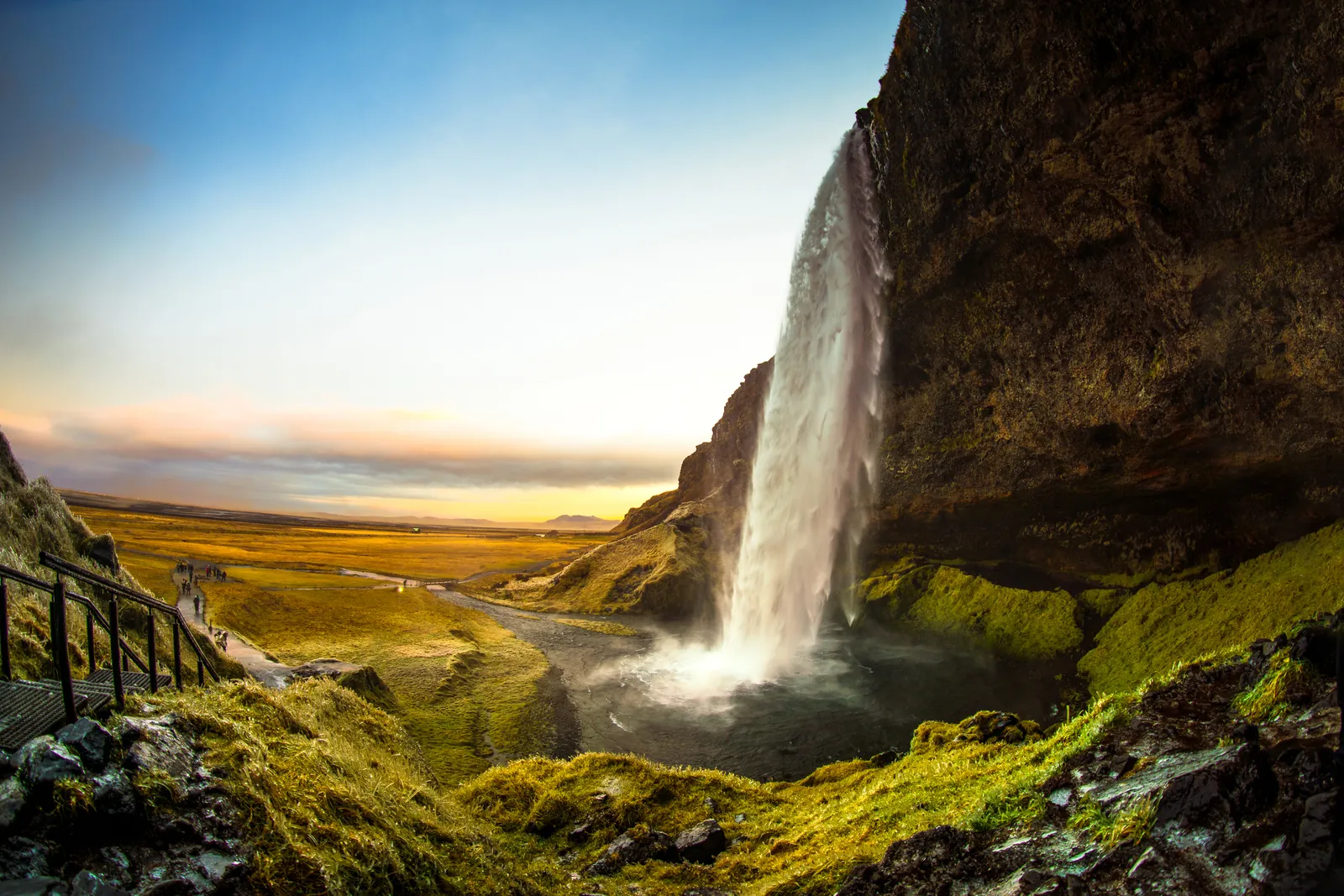
Don’t miss: the path that leads behind the curtain of Seljalandsfoss, and Skógafoss, a 60-meter waterfall protected as a natural monument, where a trail climbs past a whole series of falls on the Skógá river. Near Vík, see the basalt columns of Reynisfjara beach.
Getting there and how long: Vík is about a two-and-a-half to three-hour drive from Reykjavík. Spend at least one night along the coast; day tours from Reykjavík cover the highlights in a long day.
Practical note: at Reynisfjara, stay well back from the water and follow the warning lights at the beach entrance. The south coast is covered in our Iceland travel guide.
4. Jökulsárlón and Diamond Beach
Why it made the list: icebergs break off the Breiðamerkurjökull glacier and drift across a lagoon to the sea, where the ice washes up on black sand at Diamond Beach. The lagoon has been part of Vatnajökull National Park, a UNESCO World Heritage Site, since 2017.
Best time to go: the lagoon is open all year. Boat tours run from spring to autumn: amphibian boats from May to November and Zodiac boats from May to October, according to the lagoon’s tour operator. From about November to March, licensed guides take visitors into blue ice caves in the glacier.
Don’t miss: a boat trip among the icebergs, and the walk along Diamond Beach at sunrise or sunset.
Getting there and how long: Jökulsárlón is about five hours’ drive from Reykjavík along Route 1. Stay one or two nights in the area, combined with Skaftafell.
Practical note: the park charges an area fee of ISK 1,110 for a car, valid until midnight. See our Vatnajökull National Park travel guide.
5. Skaftafell
Why it made the list: Skaftafell, about an hour west of Jökulsárlón, is the green, walkable corner of Vatnajökull National Park, with birch woods, waterfalls and glacier tongues spilling down from Europe’s largest ice cap.
Best time to go: June to September for the hiking trails; guided glacier walks run all year. The visitor center and campsite stay open in winter.
Don’t miss: the Svartifoss waterfall, framed by dark basalt columns, on an easy 5.8 km loop of about two hours, and the 4.1 km Glacier Trail to the snout of Skaftafellsjökull. Then join a guided glacier hike.
Getting there and how long: Skaftafell is about four hours’ drive from Reykjavík. One full day here and one at Jökulsárlón is the ideal pairing.
Practical note: the same area fee covers Skaftafell and Jökulsárlón, so a second visit on the same day costs half. Trails and tours are in our Vatnajökull National Park travel guide.
6. The Snæfellsnes Peninsula
Why it made the list: Snæfellsnes is often called Iceland in miniature: a glacier-capped volcano, lava fields, black and golden beaches, sea cliffs, fishing villages and the much-photographed cone of Kirkjufell, all on one peninsula. It is quieter than the south coast.
Best time to go: all year. In winter, Kirkjufell under snow with the Northern Lights is a classic shot. Stykkishólmur, on the north shore, is drier than Reykjavík, with about 740 mm of rain or snow a year.
Don’t miss: Kirkjufell and its waterfall near Grundarfjörður, and the coastal walk between Arnarstapi and Hellnar. Inside Snæfellsjökull National Park, see the black pebbles of Djúpalónssandur and join a guided tour of the Vatnshellir lava cave.
Getting there and how long: the peninsula is about two and a half hours’ drive north-west of Reykjavík. It works as a long day trip, but two days is better.
Practical note: since 6 August 2026, Snæfellsjökull National Park collects a service fee of ISK 1,100 for a car, valid for the whole park until midnight. Read our Snæfellsnes travel guide.
7. Lake Mývatn and Dettifoss
Why it made the list: the area around Lake Mývatn in the north is a volcanic landscape you can walk through: pseudo-craters, the lava towers of Dimmuborgir, the steaming mud pots of Hverir and the Hverfjall crater, all within a short drive. North of the lake, Dettifoss, which the national park calls the most powerful waterfall in Europe, thunders into a canyon.
Best time to go: June to September. The north is drier than the south, but the area inland near Mývatn has hard winters, with average January lows of about 18°F (−8°C).
Don’t miss: the rim of Hverfjall, a crater about 1 km across and 140 m deep that formed in an explosive eruption around 2,500 years ago, with an easy 2 km trail toward Dimmuborgir. Then drive to Dettifoss, about 44–45 m high and some 100 m wide.
Getting there and how long: Mývatn is about an hour east of Akureyri, the “capital of the north”, which is about five hours’ drive or a short domestic flight from Reykjavík. Stop at Goðafoss, a waterfall about 30 m wide on the way from Akureyri. Allow two days.
Practical note: the paved road to Dettifoss on the west bank (Route 862) has limited winter service, and the gravel road on the east bank (Route 864) closes with the autumn snow. Dettifoss is covered in our Vatnajökull National Park travel guide.
8. Húsavík
Why it made the list: this small harbor town on Skjálfandi Bay is known as Iceland’s whale-watching capital. Humpback whales feed in the bay through the summer, and operators report sightings on almost every trip in a good season.
Best time to go: the main whale-watching season runs from spring to the end of November, with June to August the busiest months.
Don’t miss: a whale-watching trip into the bay, on a classic boat or one of the quiet sailing tours. Humpbacks are the main draw; minke whales and white-beaked dolphins are also seen, and blue whales sometimes visit.
Getting there and how long: Húsavík is about an hour’s drive north of Lake Mývatn and Akureyri. Half a day for a boat trip is enough, or stay overnight and add the horseshoe canyon of Ásbyrgi in the north of Vatnajökull National Park.
Practical note: even on a sunny day it is cold out on the water, so bring a hat, gloves and a warm layer. Our Iceland travel guide covers the north.
9. Landmannalaugar
Why it made the list: in the Highlands, the uninhabited heart of Iceland, rhyolite mountains streaked with red, yellow and green rise around lava fields and a natural hot spring. It is the start of the Laugavegur, Iceland’s best-known multi-day hike,.
Best time to go: summer only. The Iceland Touring Association gives the Laugavegur trail’s average open season as 25 June to 15 September, with July and August the most reliable. Highland roads (F-roads) are closed for the rest of the year.
Don’t miss: a soak in the natural hot spring by the hut at Landmannalaugar, and a day hike into the colored hills. Hikers can walk the whole Laugavegur, about 54–55 km to Þórsmörk, usually in two to four days, staying in the association’s mountain huts.
Getting there and how long: several companies run highland buses from Reykjavík from late June to early September. Driving needs a four-wheel-drive car that your hire company allows on F-roads. A day trip is possible; the trek takes several days.
Practical note: from 20 June to 13 September, drivers arriving between 9:00 and 16:00 must reserve a parking space and pay a service fee in advance. Hut beds sell out early, so book well ahead.
10. The Westfjords
Why it made the list: the Westfjords are Iceland at its most remote: steep, flat-topped mountains, deep fjords, empty roads and tiny fishing villages.
Best time to go: June to August. Many roads are gravel, and some mountain passes close in winter.
Don’t miss: Dynjandi, a fan-shaped waterfall that cascades about 100 m and has been protected as a natural monument since 1981; it is about a 15-minute walk from the car park on Route 60. Add the bird cliffs of Látrabjarg and the town of Ísafjörður.
Getting there and how long: the Baldur car ferry crosses from Stykkishólmur on Snæfellsnes to Brjánslækur, which saves a long drive, and domestic flights reach Ísafjörður from Reykjavík. Give the region at least three or four days.
Practical note: fuel stations and shops are far apart, so fill up when you can. The Baldur sails a reduced timetable in winter, with no Saturday sailings from 1 September to 31 December 2026. More in our Iceland travel guide.
How to fit them into one trip
Plan on about 300 km of driving a day at most, and much less in winter.
Four or five days: Reykjavík, the Golden Circle and the south coast to Vík. One week: add Skaftafell and Jökulsárlón, staying two nights in the south-east, then finish with Snæfellsnes. This is also the best one-week plan in winter, when the southern road is kept open and well served.
Ten days to two weeks in summer: drive the Ring Road, usually counterclockwise: Golden Circle, south coast, Skaftafell and Jökulsárlón, the East Fjords, Mývatn and Dettifoss, Húsavík and Akureyri, and back via Snæfellsnes. Two weeks lets you add a day in Landmannalaugar or the Westfjords via the Baldur ferry.
Our free AI trip planner builds the day-by-day plan for your dates, travelers and budget. To choose your season, read our best time to visit Iceland guide, and check typical conditions for your dates with the Destination weather tool.
Road and volcano facts: from about October to April, snow, ice and wind can close stretches of road, including parts of the Ring Road in the north and east, for a day or two, so check road conditions on umferdin.is and the forecast on vedur.is each morning. The Icelandic Met Office monitors volcanic activity on the Reykjanes Peninsula and posts updates on vedur.is.
Frequently asked questions
What is the most beautiful place in Iceland?
Most visitors name Jökulsárlón, where icebergs float across a lagoon below a glacier and wash up on Diamond Beach. Kirkjufell on Snæfellsnes, Skógafoss on the south coast and the colored mountains of Landmannalaugar are close behind.
What is the best place in Iceland for first-time visitors?
Reykjavík as a base, with day trips to the Golden Circle and the south coast.
How many days do you need to see Iceland?
Four or five days for Reykjavík, the Golden Circle and the south coast; a week to add Skaftafell, Jökulsárlón and Snæfellsnes; and ten days to two weeks to drive the whole Ring Road, ideally in summer.
Can you visit these places in winter?
Reykjavík, the Golden Circle, the south coast, Skaftafell, Jökulsárlón and Snæfellsnes all work in winter, and winter adds ice caves and the Northern Lights. Landmannalaugar is reachable only in summer, and the Westfjords and the north are best from June to September.
Do you need a car to see Iceland?
Not for Reykjavík, the Golden Circle, the south coast or Snæfellsnes, which day tours from Reykjavík cover all year. To reach Skaftafell, Jökulsárlón, the north and the Westfjords comfortably, a hire car or a multi-day tour is the practical choice, as long-distance buses are infrequent.