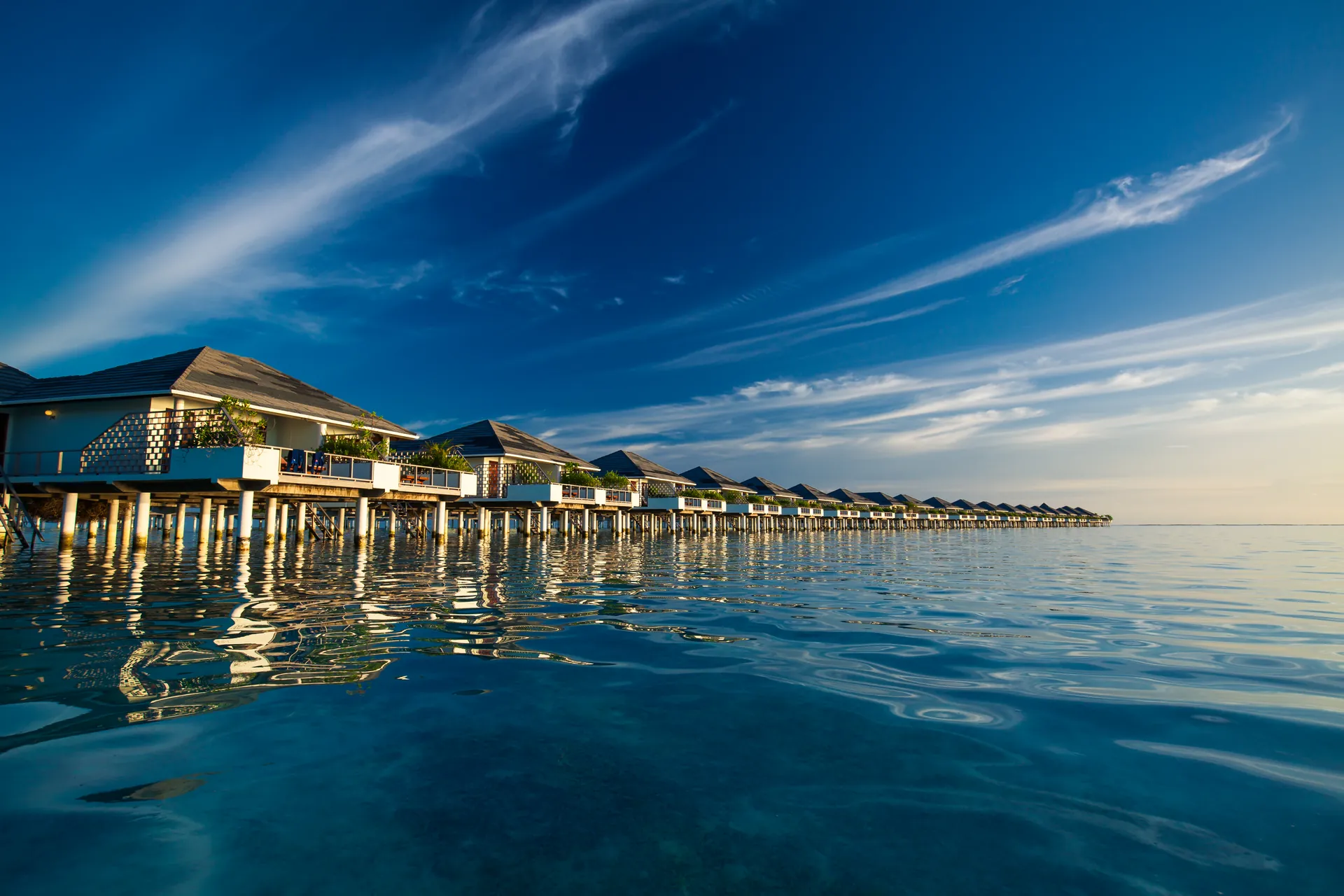
Short answer: with 7 days in the Maldives, spend three nights on a guesthouse island such as Maafushi or Thulusdhoo and three at a resort near the airport, all in Kaafu Atoll and all by speedboat. With 10 days, add South Ari for the whale sharks: a few nights on Dhigurah and a resort to finish. With 14 days, either add a week on a liveaboard in the dry season (December to April) or fly north to Baa Atoll for the Hanifaru Bay mantas (about June to October). In the Maldives, a route means a combination of islands and atolls, not a road trip. Every move is a boat or a plane ride, so fewer stops make a better trip.
This guide turns the sample stays on our Maldives travel guide into day-by-day plans, with transfer times between islands and the right kind of place to sleep each night. Check our best time to visit the Maldives guide before you choose a route, and our list of the top places to visit in the Maldives for more ideas. For a plan built around your dates and interests, use our AI trip planner. Everything was checked as of October 2026.
The three routes at a glance
| Route | Days | Stops (nights) | Best for |
|---|---|---|---|
| Local island + resort, Kaafu Atoll | 7 | Maafushi or Thulusdhoo 3, Kaafu resort 3 | First trip, short transfers, mixing budget and comfort |
| Kaafu and South Ari: two atolls | 10 | Maafushi 3, Dhigurah 3, South Ari resort 3 | Whale sharks, snorkelers, sandbanks |
| Dry season: island, liveaboard, resort | 14 | Hulhumalé 1, Thulusdhoo 2, liveaboard 7, resort 3 | Divers and keen snorkelers, December to April |
| Manta season: Baa and Ari | 14 | Hulhumalé 1, Dharavandhoo 4, Dhigurah 4, resort 4 | Manta rays and whale sharks, about June to October |
Almost every international flight lands at Velana International Airport (MLE) on Hulhulé island, next to Malé, and every plan below starts and ends there. Your resort or guesthouse normally books the transfer for you, and transfers between two islands usually go back through the airport or Malé, so think of the airport as the hub of a wheel.
Travel times between the main stops
There is no single public timetable for Maldivian boats and seaplanes: resorts, guesthouses and boat companies set their own schedules, and the state ferry network publishes its times separately. The times below are typical and approximate; your hotel will confirm the exact transfer when you book.
| Leg | How | Time | Notes |
|---|---|---|---|
| Airport – Malé or Hulhumalé | Taxi or bus over the Sinamalé Bridge | about 15–25 min | Ferries also cross from the airport to Malé |
| Airport – Maafushi (South Malé) | Shared speedboat | about 30–45 min | Several departures a day |
| Malé – Maafushi | Public ferry | about 1.5 h (approximate) | Cheap, set days only, rarely on Fridays |
| Airport – Thulusdhoo (North Malé) | Shared speedboat | about 30 min | Surf island |
| Airport – Kaafu resorts | Resort speedboat | about 15 min–1.5 h | Runs day and night |
| Airport – Fulidhoo (Vaavu) | Speedboat | about 1.5 h | Channel dives, small guesthouse island |
| Airport – Ari Atoll | Speedboat | about 1.5–2 h | Open-sea crossing, rough in the southwest monsoon |
| Airport – Ari resorts | Seaplane | about 20–35 min | Daylight only |
| Velana – Maamigili (South Ari) | Domestic flight, then boat | about 20–25 min | Short boat ride on to Dhigurah or resorts |
| Velana – Dharavandhoo (Baa) | Domestic flight, then boat | about 30–40 min | Maldivian serves Dharavandhoo |
| Airport – Baa resorts | Seaplane | about 35–45 min | Daylight only |
| Malé – Baa | Shared speedboat | about 2.5–3 h | A few operators; rough in the southwest monsoon |
| Velana – Gan (Addu City) | Domestic flight | about 1 h 15 | For the far south |
Seaplanes fly only in daylight. If your international flight lands in the late afternoon or evening, either choose a resort reached by speedboat or plan a first night in Hulhumalé and fly on in the morning. The same rule works in reverse on the way home.
7 days: a local island and a resort in Kaafu Atoll
The best first week combines two islands in one atoll: a guesthouse on an inhabited island, for village life, cheap excursions and sandbank trips, and then a resort, for the lagoon, the house reef and a drink at sunset. Both are reached by speedboat from the airport, so you never depend on a seaplane, and you lose very little time in transit.
- Day 1, arrive and go to Maafushi: Submit the IMUGA Traveller Declaration before you fly. Take a shared speedboat from the jetty in front of the terminal (about 30–45 minutes). Swim at the island’s bikini beach and watch the sunset from the harbor. Sleep: guesthouse on Maafushi.
- Day 2, snorkeling and a sandbank: A morning boat trip to nearby reefs and turtle spots, then a picnic on a sandbank. In the evening, eat grilled reef fish and try hedhikaa at a tea shop. Sleep: same.
- Day 3, dolphins or a resort day pass: A dolphin cruise, a fishing trip at dusk or a resort day pass with lunch, which many nearby resorts sell. Divers can do two dives in the South Malé channels. Sleep: same.
- Day 4, to your resort: Back to the airport by shared speedboat and on by the resort’s own boat (15 minutes to 1.5 hours). Snorkel the house reef in the afternoon. Sleep: resort in North or South Malé Atoll.
- Day 5, the reef: A guided snorkel or a boat dive; Manta Point (Lankan) is active in the southwest monsoon, and the Maldives Victory wreck suits experienced divers. Sleep: same.
- Day 6, slow day: Kayak or paddleboard the lagoon, spa, sunset cruise. Sleep: same.
- Day 7, Malé and home: Speedboat to Malé for a few hours: the coral-stone Old Friday Mosque (Hukuru Miskiy), the fish market and the waterfront. Then across the Sinamalé Bridge to the airport.
Swap it: surfers should stay on Thulusdhoo or Himmafushi instead of Maafushi, close to the North Malé breaks; the season runs from about mid-February to November, best March to May and September to November. For a quieter local island, choose Guraidhoo, Gulhi, Huraa or Dhiffushi. All of these islands are covered in our Kaafu Atoll guide.
10 days: Kaafu and South Ari, two atolls
Ten days lets you cross the Ariadhoo Channel to Ari Atoll, the heart of Maldivian snorkeling and diving. The South Ari Marine Protected Area is one of the few places in the world where whale sharks are seen all year, so this route works in any month; December to April gives the calmest crossings.
- Day 1, Maafushi: Arrive and take the shared speedboat to Maafushi. Sleep: guesthouse on Maafushi (3 nights).
- Day 2, reefs and a sandbank: Snorkeling trip and a sandbank picnic.
- Day 3, free day: A dive, a resort day pass or a sunset fishing trip with local fishermen.
- Day 4, to South Ari: Back to the Malé area, then a shared speedboat to Dhigurah (about 1.5–2 hours across open sea), or a domestic flight to Maamigili (about 20–25 minutes) and a short boat ride. Sleep: guesthouse on Dhigurah or Dhangethi (3 nights).
- Day 5, whale sharks: A morning boat trip along the outer reef of the marine protected area. Guides follow the whale shark code of conduct: at least 3 m (10 ft) from the head and 4 m (13 ft) from the tail, no touching and no flash.
- Day 6, Dhigurah’s sandbank: Walk to the long sandbank at the tip of the island, swim at the tourist beach, and join a manta snorkel or dive if the guides report activity.
- Day 7, to a resort: A short speedboat transfer to a South Ari resort with a house reef. Sleep: South Ari resort (3 nights).
- Day 8, the house reef: Snorkel from the beach, take a second whale shark trip if you missed one, or rest.
- Day 9, sunset and sandbank dinner: A last full day on the island.
- Day 10, home: Seaplane (about 20–35 minutes) or flight from Maamigili back to Velana. Keep the transfer in daylight hours and allow plenty of time before your international flight.
Swap it: in North Ari, Ukulhas, Rasdhoo, Mathiveri and Thoddoo are good guesthouse islands, and Rasdhoo is known for hammerhead dives at dawn. A popular week in our Ari Atoll guide pairs three nights on Ukulhas or Rasdhoo with four at a South Ari resort.
14 days, dry season: a local island, a liveaboard and a resort
From December to April the northeast monsoon brings sunshine, light winds, calm seas and visibility of often 25–40 m (80–130 ft), the best conditions for a liveaboard. Dive and snorkel boats leave from Malé and Hulhumalé for a week or more, usually cruising Ari, Vaavu and Kaafu. They serve alcohol under license, and many also welcome snorkelers and non-diving partners.
- Day 1, Hulhumalé: Arrive, taxi to Hulhumalé (about 15–25 minutes), swim at the public beach. Sleep: Hulhumalé (1 night).
- Day 2, Malé and on to Thulusdhoo: A morning in Malé, then a shared speedboat to Thulusdhoo (about 30 minutes). Sleep: guesthouse on Thulusdhoo (2 nights).
- Day 3, island day: A surf session at Cokes for experienced surfers (the season starts around mid-February), or a lesson with a surf camp, snorkeling or a sandbank trip.
- Days 4–10, liveaboard: Board in the Malé area. A typical week visits the thilas and channels of North and South Ari, with whale sharks in South Ari and manta cleaning stations on the western side in this season, then the shark-filled channels of Vaavu, before returning to Kaafu. Sleep: on board (7 nights).
- Day 11, to a resort: Disembark and transfer to a resort by speedboat or seaplane. Divers should wait the recommended interval before flying, so pick a speedboat resort in Kaafu if your last dive was the day before. Sleep: resort (3 nights).
- Days 12–13, resort: House reef, spa and sunsets.
- Day 14, home: Transfer back to Velana for your flight.
No liveaboard? Swap days 4–10 for three nights on Fulidhoo in Vaavu Atoll (about 1.5 hours by speedboat) and four on Dhigurah in South Ari. Book early: Christmas, New Year and February are the most expensive and busiest weeks of the year.
14 days, manta season: Baa Atoll and South Ari
During the southwest monsoon, currents push plankton into Hanifaru Bay in Baa Atoll, a UNESCO Biosphere Reserve, and reef mantas gather to feed, sometimes in their hundreds. The season runs from about May or June to October or November, peaking from about June to October. It is also the low season for prices. Expect showers, wind and rougher boat rides, so this plan uses flights for the long legs.
- Day 1, Hulhumalé: Arrive and rest. Sleep: Hulhumalé (1 night).
- Day 2, to Baa: Morning domestic flight to Dharavandhoo (about 30–40 minutes). Sleep: guesthouse on Dharavandhoo (4 nights).
- Days 3–5, Hanifaru Bay: Check the day’s conditions with your host; the best days usually fall around the new and full moons. Hanifaru Bay is snorkel-only, with approved guides, limited numbers and a token bought through the visitor center on Dharavandhoo (reported at about US$30). On the other days, visit the lacquer workshops of Thulhaadhoo, a sandbank or a manta cleaning station.
- Day 6, to South Ari: Fly back to Velana and continue to Maamigili, or take a shared speedboat from Malé to Dhigurah. Domestic connections vary by day, so check the timings with both hosts. Sleep: guesthouse on Dhigurah (4 nights).
- Days 7–9, whale sharks and reefs: Whale shark trips, which run all year, plus mantas feeding on the eastern side of the atoll in this season.
- Day 10, to a resort: A short transfer to a South Ari resort. Sleep: resort (4 nights).
- Days 11–13, resort: House reef, a sunset cruise, a rest after the boat trips.
- Day 14, home: Seaplane or domestic flight to Velana in daylight.
Many visitors prefer a Baa resort with its own marine biologist and Hanifaru trips, reached by seaplane in about 35–45 minutes, in place of Dharavandhoo. Rules, seasons and island tips are in our Baa Atoll guide.
Where to sleep, by stop
| Stop | Best area for a short stay | Why | Green tax (as of Oct 2026) |
|---|---|---|---|
| Arrival or departure night | Hulhumalé, or Malé | Minutes from the airport, beach, restaurants | US$6 at small hotels with 50 rooms or fewer, US$12 at larger ones |
| Kaafu, local island | Maafushi (most choice), Thulusdhoo or Himmafushi (surf), Guraidhoo, Huraa or Dhiffushi (quiet) | Short shared speedboat rides, many excursion operators | US$6 per person per night |
| Kaafu, resort | North or South Malé Atoll | Speedboat transfers day and night, no seaplane needed | US$12 per person per night |
| Ari Atoll | Dhigurah or Dhangethi (whale sharks), Ukulhas, Rasdhoo or Thoddoo (North Ari) | Closest to the reefs that matter | US$6 guesthouse, US$12 resort |
| Baa Atoll | Dharavandhoo, or a Baa resort | Airport and Hanifaru visitor center on the island | US$6 guesthouse, US$12 resort |
| Vaavu Atoll | Fulidhoo | Small island near the channel dives | US$6 per person per night |
Room rates are usually quoted before tax. On top of the green tax, the Maldives charges 17% Tourism GST, and most resorts and many guesthouses add a 10% service charge. Local islands are dry: alcohol is served only at resorts and on licensed boats, and on inhabited islands you swim in swimwear only on the designated bikini beach.
Alternatives by interest
Divers
Choose the dry-season liveaboard plan, or base yourself in Ari, where thilas such as those of North Ari and the channels draw reef sharks, eagle rays and schooling fish. Vaavu is known for channel dives with gray reef sharks, and Fuvahmulah, reached by domestic flight, for tiger sharks. Channel dives are drift dives in current and suit divers with some experience; hyperbaric chambers can be more than an hour away, so dive within your limits. See our diving guide.
Surfers
Stay the whole trip in North Malé Atoll, on Thulusdhoo or Himmafushi or at a resort near the breaks (Cokes, Lohis, Jailbreaks, Honky’s, Sultans), or join a surf charter boat. Visit Maldives gives the season as about mid-February to November, with the best conditions from March to May and from September to the end of November. Most breaks are over shallow reef; wear reef boots. More in our surfing guide.
Families
Pick one or two islands at most, with speedboat transfers from the airport so tired children don’t wait for a seaplane. A Kaafu resort with a kids’ club and a shallow lagoon, plus a day trip to Malé, makes an easy week; strong currents run at reef edges and in channels, so swim in supervised areas and snorkel with a guide. Our snorkeling guide and water shoes guide help with planning.
Travelers on a budget
Skip the resort, or keep it to one or two nights at the end, and split your stay between two guesthouse islands. Use shared speedboats and, if your dates fit their set days, the public ferries. Guesthouse doubles typically start around US$60–150 a night before taxes, and many resorts sell day passes, so you can enjoy a resort beach without staying the night.
Honeymooners
Reverse the balance: two resorts of three or four nights each, for example one in Kaafu reached by speedboat and one with overwater villas in Ari or Baa reached by seaplane. The seaplane flight over the atolls is half the experience. Add a night or two on a local island only if you are curious about everyday Maldivian life.
Tips for planning your route
- Fewer islands, longer stays. Each move costs half a day. Two islands in a week and three or four in two weeks is plenty.
- Match the season to the route. December to April is dry and calm, with the best visibility; May to November is wetter and windier but cheaper, with the best surf and the Baa manta season. Whale sharks in South Ari are seen all year.
- Plan around daylight. Seaplanes don’t fly after dark, so late arrivals need a speedboat resort or a night in Hulhumalé.
- Watch Fridays. Public ferries rarely run on Fridays, government offices close and life on local islands slows down around midday prayers; schedule transfers on other days where you can.
- Leave a buffer before your flight home. Weather can delay boats and seaplanes in the southwest monsoon; on longer trips, a last night near the airport is a safe choice.
- Complete IMUGA. Every traveler, including children, submits the free Traveller Declaration on the IMUGA portal within 96 hours before arrival. You also need a confirmed booking at a registered tourist facility and an onward ticket.
- Check Ramadan dates. In 2027, Ramadan is expected to begin in early February. Resorts carry on as normal; on local islands, cafés close in the daytime.
Maldives itinerary FAQ
Is 7 days enough for the Maldives?
Yes. A week is enough for two islands in Kaafu Atoll, a local island and a resort, with time to snorkel, see a sandbank and visit Malé. Add a second atoll only if you have 10 days or more.
Can you visit more than one island in the Maldives?
Yes, and it is a good idea. Combining islands is the Maldives version of a route: for example, a guesthouse on a local island and then a resort, or two atolls such as Kaafu and Ari. Transfers usually go back through the airport or Malé.
Resort or local island for a first trip?
Both, if you can. A local island is cheaper and shows everyday Maldivian life, but it is dry and you swim in swimwear only on the bikini beach. A resort gives you a house reef, alcohol and total privacy. Many visitors spend three nights on each.
How do you get between atolls in the Maldives?
By speedboat for atolls near Malé (about 1.5 to 2 hours to Ari), by seaplane to many resorts (daylight only) and by domestic flight to airports such as Maamigili, Dharavandhoo, Fuvahmulah and Gan, followed by a boat ride. Public ferries are cheap but slow and run only on set days.
Do I need a night in Malé or Hulhumalé?
Only if your flight lands after dark and your resort is reached by seaplane, or if your flight home leaves early in the morning. Hulhumalé, minutes from the airport, has hotels, a public beach and restaurants.
When is the best time for a Maldives itinerary with mantas?
For the Hanifaru Bay aggregation in Baa Atoll, about June to October, during the southwest monsoon. Mantas also visit cleaning stations in other atolls in both seasons, on the western side of the atolls in the dry season and the eastern side in the wet season.
Is the Maldives worth visiting in the rainy season?
Yes, if you are flexible. Rain often comes in short, heavy showers with sunny spells, prices are lower, the surf is at its best and the manta season is on. Boat crossings are rougher, so favor flights for long transfers.
Sources
Researched and last reviewed by TravelerCenter on 8 October 2026. Entry rules and the IMUGA Traveller Declaration come from Maldives Immigration; the green tax and the 17% T-GST from the Maldives Inland Revenue Authority; whale sharks in South Ari, the Baa manta season and the surf season from Visit Maldives; dry-season visibility and seasons from our best-time guide, based on Maldives Meteorological Service normals; seaplane daylight rules from the UK government’s factual travel pages; the list of Maldivian’s domestic airports from the airline. Boat, seaplane and domestic flight times are typical figures from our atoll guides and booking sources and are approximate, because no single official timetable covers them. Schedules, taxes and rules change, so check with your resort, guesthouse or operator before you travel.
Data: Wikidata (CC0)