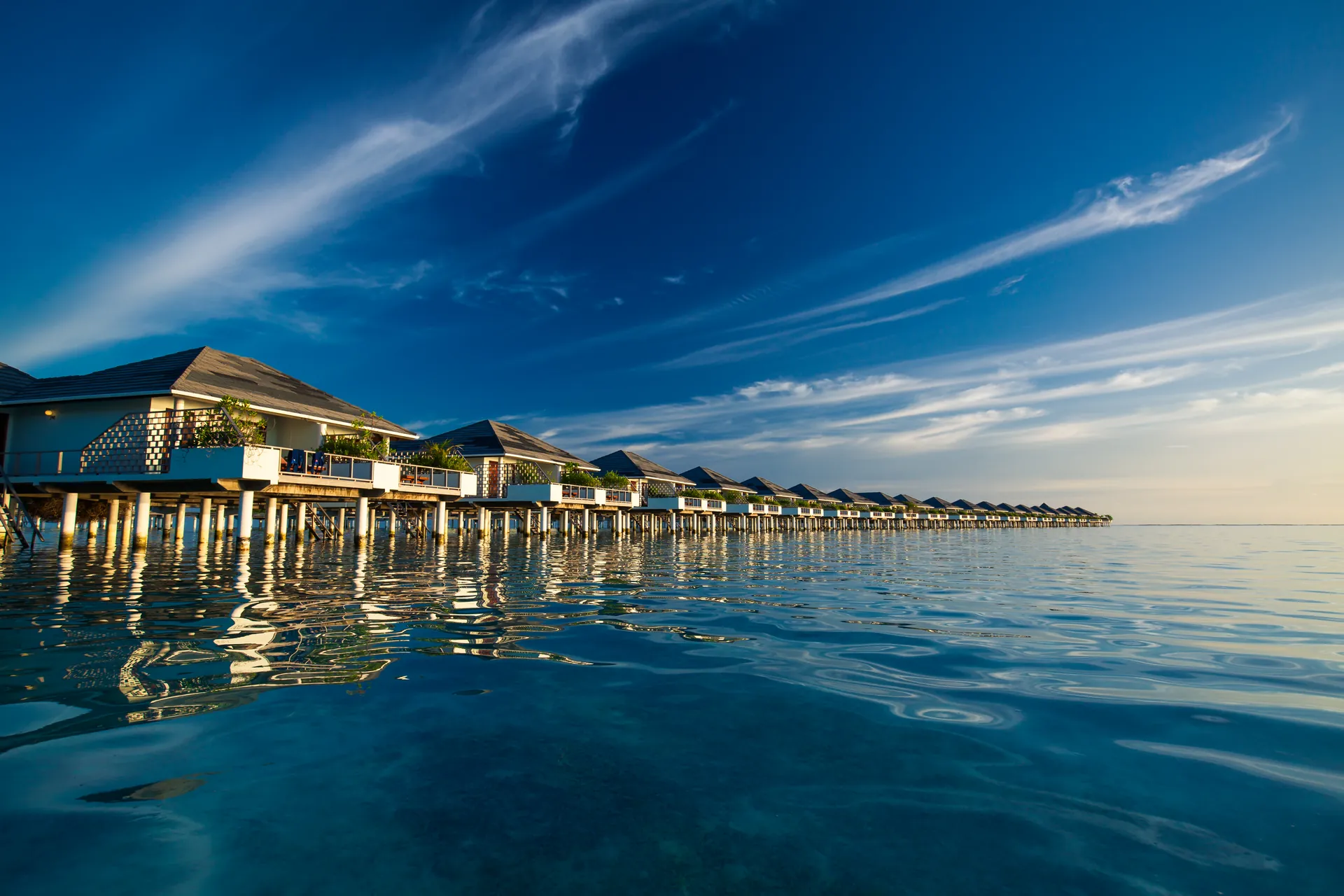
Short answer: For a first trip, the top 10 places to visit in the Maldives are the resort islands of North Malé Atoll, Malé and Hulhumalé, Maafushi and the guesthouse islands of South Malé, South Ari Atoll for whale sharks, the local islands of North Ari, Baa Atoll and Hanifaru Bay, Vaavu Atoll, the northern atolls of Lhaviyani, Raa and Noonu, Fuvahmulah and Addu City. In the Maldives, “places” means atolls and islands: choose one or two, and the type of stay matters as much as the location.
The Maldives is a chain of 26 coral atolls strung across the equator, with about 1,190 low islands spread over some 35,000 square miles (90,000 km²) of sea. Most visitors stay on a private resort island; since 2009, guesthouses on inhabited “local islands” have opened the country to smaller budgets too. This list is ordered the way we would recommend it for a first visit, starting near the airport and moving out to the remote atolls. For each place you get why it made the list, the best time to go, what not to miss, how to get there and how long to stay, plus one practical note. Prices are as of October 2026.
1. North Malé Atoll
The easiest place to start is right next to the airport. North Malé, part of Kaafu Atoll, has dozens of resort islands within a short speedboat ride, so you lose no time or money on long transfers, plus some of the best-known dive sites and surf breaks in the country.
Best time: December to April for sunshine and calm seas. Visit Maldives gives the surf season as about mid-February to November, with the best waves from March to May and from September to the end of November.
Don’t miss: snorkeling your resort’s house reef, and a dive at Banana Reef or on the Maldives Victory, a cargo ship that sank in 1981. Surfers head for breaks such as Cokes, Lohis, Jailbreaks, Honky’s and Sultans.
Getting there and how long: resort speedboats take from about 15 minutes to an hour or so from the airport. Four or five nights at one resort is a good first stay.
Practical note: short speedboat transfers make Kaafu the easiest atoll in the wetter months, when longer crossings can be rough. Look closely at the house reef and the meal plan when you choose a resort. See our Kaafu Atoll guide and our surfing guide.
2. Malé and Hulhumalé
The capital, Malé, is home to about a third of the country’s people on an island of less than a square mile (2 km²), and it shows a side of the Maldives most resort guests never see. Next to the airport, the planned city of Hulhumalé has hotels, a public beach and restaurants.
Best time: any time; it makes a good half-day outing or a first or last night near the airport.
Don’t miss: the coral-stone Old Friday Mosque (Hukuru Miskiy), the fish market and local market, Sultan Park and the National Museum. Mulee Aage, built between 1914 and 1919 and later the presidential residence, is nearby.
Getting there and how long: the Sinamalé Bridge links Malé with the airport island and Hulhumalé, and taxis and buses run across it. Half a day in Malé is enough.
Practical note: Malé is a conservative city: cover shoulders and knees, and note that government offices and many shops close on Fridays, especially around midday prayers. Seaplanes don’t fly after dark, so a late arrival may mean a night in Hulhumalé. See our Kaafu Atoll guide.
3. Maafushi and the guesthouse islands of South Malé
Maafushi, in South Malé Atoll, is the best-known of the local islands that took in guests after 2009, and a good first taste of Maldivian village life on a budget. Guesthouses cost a fraction of a resort and run the same snorkeling, sandbank and dolphin trips.
Best time: January to April for flat water and sandbank trips; the wetter months from May to November bring lower prices.
Don’t miss: a sandbank picnic and a snorkeling trip, then an evening in the island’s tea shops. Thulusdhoo and Dhiffushi in North Malé are good alternatives.
Getting there and how long: shared speedboats from the airport, or the slower public ferry. Three or four nights is typical, often combined with a few nights at a resort.
Practical note: local islands follow local rules: no alcohol, modest dress in the village, and swimwear only on the designated “bikini beach.” Guesthouses with 50 or fewer rooms charge a green tax of US$6 per person per night, against US$12 at resorts. See our boat trips guide.
4. South Ari Atoll and the whale sharks
Ari Atoll, west of Malé, is one of the largest in the country, and its southern tip is famous for whale sharks. Visit Maldives lists the South Ari Marine Protected Area as a place to see them all year, and Ari has some of the best diving in the Maldives.
Best time: December to April for calm seas and the best visibility, especially on the western side; whale sharks can be seen in every season.
Don’t miss: a whale shark snorkeling trip with a licensed operator, and manta cleaning stations on the reefs.
Getting there and how long: by seaplane, domestic flight to Maamigili, or speedboat. A week lets you combine three nights on a local island in Ari for whale sharks with four at a resort.
Practical note: in the southwest monsoon, speedboat crossings to Ari can be rough, so seaplanes or flights are more comfortable from May to November. Keep your distance from whale sharks and never touch them. See our Ari Atoll guide and snorkeling guide.
5. Rasdhoo, Ukulhas and Thoddoo (North Ari)
The local islands of North Ari are where many independent travelers spend their first week in the Maldives: small, walkable villages with guesthouses, bikini beaches and dive centers, within reach of famous reefs.
Best time: December to April for sun and clear water; May to November for lower prices.
Don’t miss: diving or snorkeling the channels and thilas (underwater pinnacles) of North Ari, and a cycle around a village island in the evening, when families sit out on rope chairs in the breeze.
Getting there and how long: shared speedboats from the airport; plan two or three islands at most. Three to five nights is a good stay.
Practical note: public ferries and shared speedboats rarely run on Fridays, the Maldivian weekend, so plan island-hopping for other days. See our Ari Atoll guide and diving guide.
6. Baa Atoll and Hanifaru Bay
Baa Atoll, in the north, is a UNESCO Biosphere Reserve, and its Hanifaru Bay is one of the world’s great wildlife spectacles: in the southwest monsoon, plankton draws hundreds of manta rays, and sometimes whale sharks, into the bay to feed.
Best time: for the mantas, about June to October; Visit Maldives gives the season as about May or June to October or November. For dry, calm weather, come from December to April, when the mantas are absent from the bay.
Don’t miss: snorkeling Hanifaru Bay with an approved guide on a good day; allow several days, since numbers depend on the tide, moon and wind.
Getting there and how long: by seaplane, or by domestic flight to Dharavandhoo and a short speedboat ride. Plan four nights or more in the manta season.
Practical note: Hanifaru is snorkel-only, and guesthouses on Dharavandhoo fill early in the peak months, so book well ahead. See our Baa Atoll guide.
7. Vaavu Atoll
Vaavu, south of Malé, is one of the least developed atolls, with only a few islands and fewer visitors. It is known for its channel dives (kandu), where currents bring gray reef sharks, eagle rays and big schools of fish.
Best time: December to April, for calm seas and the clearest water.
Don’t miss: a channel dive, for experienced divers, or a night snorkel from a guesthouse island.
Getting there and how long: by speedboat from the airport, or on a liveaboard; most liveaboard routes through the central atolls include Ari, Vaavu and Kaafu. A liveaboard week is the best way to dive it.
Practical note: channel dives depend on currents, so dive with experienced local guides who plan each day around the tides. See our diving guide.
8. Lhaviyani, Raa and Noonu
The northern atolls are where to go for a classic, secluded resort stay away from the busier central atolls, with good diving and long seaplane views on the way in.
Best time: January to April. The north is slightly drier in these months, and gets less rain over the year than the south: about 70 inches (1,770 mm) at Hanimaadhoo, in the far north.
Don’t miss: the seaplane flight itself, with views of the atolls from the air, then the house reef and a sunset dolphin cruise.
Getting there and how long: seaplanes from the water aerodrome at the airport take about 20 to 60 minutes to resorts across the central and northern atolls, and there are domestic flights to Hanimaadhoo. Allow at least a week to make the transfer worthwhile.
Practical note: a seaplane return transfer typically adds roughly US$600 to US$1,000 per person to your bill, so compare total costs, not just room rates. See our Maldives travel guide.
9. Fuvahmulah
Fuvahmulah, in the deep south, is a single-island atoll, and it has become one of the world’s great shark-diving destinations. Visit Maldives cites a study that counted 239 individual tiger sharks over six years, and says it is the only place in the country where divers are guaranteed to see sharks on every dive.
Best time: the far south gets rain more evenly through the year than the north, so diving runs year-round; ask your dive center about sea conditions for your dates.
Don’t miss: the tiger shark dive, and thresher sharks if you are lucky.
Getting there and how long: domestic flights from Malé to Fuvahmulah’s airport. Allow at least four nights to get several dives in.
Practical note: this is diving for confident, certified divers; dive only with registered operators and follow their briefings. See our diving guide.
10. Addu City
Addu, the southernmost atoll, has a character of its own: islands joined by a causeway road that you can cycle, wetlands at Eedhigali Kilhi, and remains of the British Royal Air Force base on Gan, whose site is now Gan International Airport.
Best time: Addu sits south of the equator and is wetter and less seasonal than the north, with about 90 inches (2,280 mm) of rain a year and the wettest months from September to December.
Don’t miss: a bike ride along the causeway between the islands, and the snorkeling and diving on the outer reefs.
Getting there and how long: domestic flights from Malé to Gan take about 1 hour 15 minutes, and Gan has a few international links. Three or four nights is enough.
Practical note: Addu has resorts and guesthouses, so you can mix both on one trip. See our Maldives travel guide.
How to fit them into one trip
The Maldives is not a place to rush. For four or five nights, stay at one resort in North Malé or Ari Atoll, or on a guesthouse island such as Maafushi. For a week, combine three nights on a local island in Ari for the whale sharks with four nights at a resort. With 10 to 14 nights, add a liveaboard through Ari, Vaavu and Kaafu, Baa Atoll in the manta season, or a few days in Fuvahmulah or Addu for diving. Leave a spare night near the airport before a long-haul flight.
Our AI trip planner builds the day-by-day plan for your dates. To match the atoll to the season, read our best time to visit the Maldives guide.
Plan your trip
Start with our Maldives travel guide for the visa on arrival, the online IMUGA Traveller Declaration, taxes and transfers. Check the monsoon for your dates with the Destination weather tool, and see our beaches guide for the best stretches of sand.
Frequently asked questions
What is the most beautiful place in the Maldives?
There is no single answer, because the beauty is in the lagoons, reefs and sandbanks found across all the atolls. Many travelers rate the remote northern atolls and Baa Atoll highest for scenery, and Hanifaru Bay in the manta season for wildlife.
What is the best place in the Maldives for first-time visitors?
North or South Malé Atoll (Kaafu), close to the airport, with short, cheap transfers and the widest choice of resorts and guesthouse islands. Ari Atoll is a close second, especially for whale sharks.
How many days do you need in the Maldives?
Four or five nights is enough for one resort or a guesthouse island near Malé. A week lets you combine a local island and a resort, and 10 to 14 nights lets you add a liveaboard or Baa Atoll in the manta season.
Can you visit the Maldives on a budget?
Yes. Guesthouses on local islands such as Maafushi, Rasdhoo and Ukulhas cost a fraction of a resort, with shared speedboats instead of seaplanes and the same snorkeling and sandbank trips. The trade-offs are no alcohol and modest dress in the village.
When is the best time to visit the Maldives?
December to April, during the dry northeast monsoon, when days are sunny, seas are calm and the water is clearest. February is the driest month. May to November is wetter and windier but cheaper, with the best surf and the manta season in Baa Atoll.
Where can you see whale sharks and manta rays in the Maldives?
Whale sharks are seen all year in the South Ari Marine Protected Area. For hundreds of feeding mantas, go to Hanifaru Bay in Baa Atoll from about June to October; mantas also visit cleaning stations across the atolls in every season.