Short answer: On the ground in El Salvador, plan on roughly $30–65 per person per day on a hostel-and-pupusas budget, $90–165 in a mid-range hotel shared by two with a shuttle or guided outing most days, and from about $250 for boutique hotels, beach resorts and private drivers. A week therefore costs about $210–455, $630–1,155 or from about $1,750 per person, before flights. For a reality check, international tourists spent about $140 a day in the first quarter of 2026 and stayed 5.5 nights on average, according to figures from the Salvadoran Tourism Corporation (Corsatur) reported in the national press.
El Salvador is one of the easiest countries in Central America to budget for, because it uses the US dollar: there is nothing to convert if you come from the United States, and prices on menus are the prices you know. A plate of pupusas costs a few dollars, city buses cost well under a dollar, and the country is small enough that the beaches of Surf City, the volcanoes and the Ruta de las Flores are all within a couple of hours of the capital. The big costs are where you sleep, whether you use shuttles and private drivers instead of buses, and how many guided trips you book. This guide breaks it all down so you can build a realistic budget for your own trip to El Salvador. If you earn in another currency, our Money exchange tool has today’s rate.
El Salvador daily costs at a glance
These example days are built from the prices further down this page: one person, one day in San Salvador or on the Surf City coast around El Tunco. They leave out flights to El Salvador, surfboard rental and souvenirs.
| Per person, per day | Budget | Mid-range | Comfort |
|---|---|---|---|
| Bed | Hostel or guesthouse bed: $15–30 | Half of a mid-range double at $60–120: $30–60 | Half of a boutique or beach-resort room: from about $100 |
| Food | Pupusas, a comedor lunch and one simple restaurant meal: $12–20 | A simple lunch plus half of a $45 dinner for two, and drinks: $35–45 | Restaurant and hotel meals with drinks: $60–80 |
| Transport | City and regional buses, the odd ride-hailing trip: $1–10 | Ride-hailing in the city or a shared shuttle to the coast: $15–40 | Private driver or rental car with fuel: from about $50 |
| Sights | Free beaches and viewpoints, or Santa Ana volcano ($3): $0–5 | A museum, archaeological park or volcano hike: $5–20 | Guided day trips and surf lessons: from about $40 |
| Total | About $30–65 | About $90–165 | From about $250 |
The Santa Ana volcano fee is the Ministry of Tourism’s published price; meal and local transport prices are typical October 2026 San Salvador prices from the crowd-sourced Numbeo index; room, shuttle and tour figures are the typical ranges used in our El Salvador guides. Treat them as typical ranges, not quotes.
What visitors actually spend in El Salvador
Corsatur, the government tourism corporation, tracks how much international visitors spend. In the first quarter of 2026, tourists who stayed at least one night spent about $140 per person per day and stayed an average of 5.5 nights, which works out at roughly $770 per trip. Daily spending has eased in recent years, from $162 a day in 2022 to $156 in 2023 and about $140.50 in January–September 2024, while visitor numbers have grown fast: more than 1.1 million tourists arrived in the first three months of 2026 alone. A typical visitor’s day, in other words, sits right in our mid-range band.
On our Travel costs by country scale, which compares hotel, restaurant and transport prices with the United States (US = 100), El Salvador scores 48. In plain words, a typical room, meal or ride costs roughly half of what it would at home in the US. That makes El Salvador cheaper than Costa Rica (67) and a little cheaper than Honduras (57), but pricier than Guatemala (35) on the same scale.
Accommodation costs
El Salvador has a good spread of beds, from surf hostels on the coast to boutique hotels in the capital and mountain lodges on the Ruta de las Flores. As typical ranges, the same ones we use in our destination guides:
- Hostel or guesthouse bed: about $15–30, in San Salvador and in surf towns such as El Tunco and El Zonte.
- Mid-range double room: about $60–120 in the western districts of San Salvador, such as Escalón and San Benito, and in many beach hotels.
- Boutique hotels and beach resorts: from about $200 a night, more on holiday weekends.
Two charges are added to hotel bills. El Salvador’s Tourism Law sets a special tourism contribution of 5% on the nightly price of accommodation, calculated before value-added tax (IVA), and IVA itself is 13%. Together they add a little under a fifth to the room price, so check whether a quoted rate already includes them. Rooms are dearest in the dry season from November to April, especially at Christmas, New Year and Holy Week (March 21–28 in 2027), and easiest to find in September and October.
Food and drink costs
Eating is where El Salvador is best value. The national dish, the pupusa, a thick corn tortilla filled with cheese, beans, pork or loroco flower, typically costs $0.75–1.50 each at a pupusería, and two or three make a meal. A set lunch at a local comedor runs about $3–6. Numbeo’s October 2026 figures for San Salvador put a meal at an inexpensive restaurant at about $6.75 (range $3.50–14), a three-course dinner for two at a mid-range restaurant, without drinks, at about $45, and a fast-food combo at about $7. A cappuccino costs about $3.55 and a half-liter of local draft beer about $2.
Restaurants in the beach towns and in hotels charge more than neighborhood pupuserías, and food fairs such as the weekend market in Juayúa on the Ruta de las Flores are a cheap way to try many dishes. Tap water is not recommended for drinking, so budget for bottled or filtered water.
Getting around: buses, shuttles, ride-hailing and car hire
El Salvador has no passenger trains and no scheduled domestic flights, so everything happens by road, and distances are short.
- Public buses: the cheapest option. Numbeo puts a one-way local ticket at about $0.35 (range $0.25–0.50). Buses are crowded and slow, and most visitors use them only for short hops.
- Ride-hailing apps: work across greater San Salvador and are the usual way to get around the city; a trip across town typically costs $4–10. Avoid hailing taxis on the street.
- Tourist shuttles: link the airport, San Salvador, Surf City, Santa Ana and the Ruta de las Flores, and run on to Antigua in Guatemala and Copán in Honduras. A shuttle or taxi from San Salvador to El Tunco typically costs $10–40, depending on whether it is shared or private.
- Car hire: handy for the Ruta de las Flores and the eastern beaches. You can drive on your home license for up to 90 days (an International Driving Permit is not accepted), and gasoline cost about $1.26 a liter in early October 2026.
For realistic travel times between the coast, the volcanoes and the colonial towns, see our El Salvador itinerary for 7, 10 and 14 days.
Sightseeing fees and free things to do
Most of El Salvador’s best experiences cost little or nothing. The headline paid sight is the hike up Santa Ana (Ilamatepec), the country’s highest volcano at 2,381 m, with its emerald crater lake: the Ministry of Tourism lists the entry fee at $3 for foreign visitors, with access from 8:00 to 16:00, and hikers go up in guided groups. The Maya archaeological parks of Joya de Cerén, a UNESCO World Heritage Site since 1993, San Andrés and Tazumal charge small entry fees for foreign visitors; check the current price at the gate.
Free or nearly free:
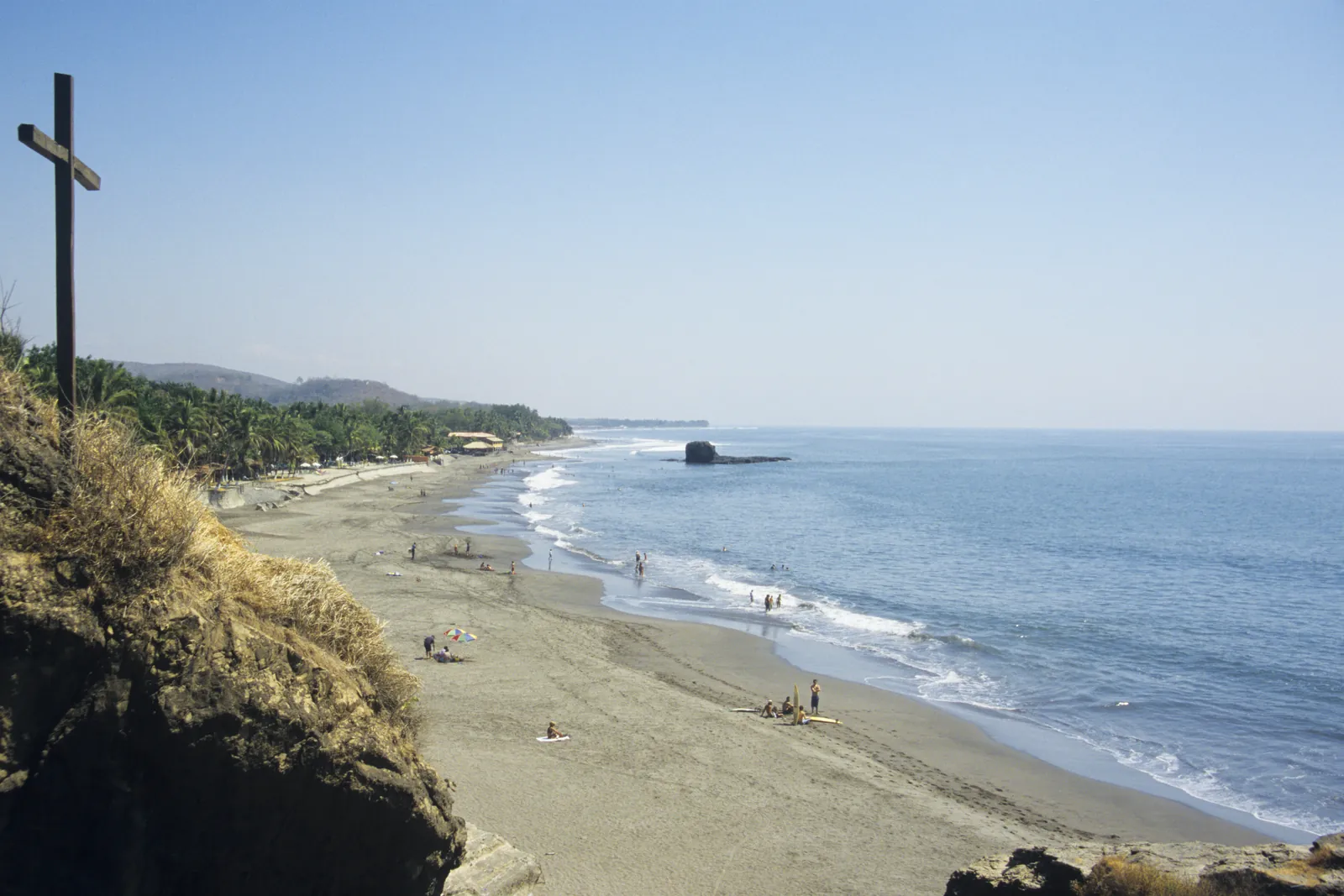
- The black-sand beaches and sunsets of Surf City, from El Tunco to El Zonte, and the surf-watching at El Sunzal, a long right point that breaks every day of the year. See our surfing guide if you want lessons.
- The historic center of San Salvador: Plaza Libertad, the National Palace, the light-filled El Rosario church and the BINAES national library, open around the clock.
- The El Congo viewpoint over Lake Coatepeque, and the Puerta del Diablo lookouts above the capital.
- Walking the murals and coffee-country streets of Ataco and Juayúa, and the cobbled lanes of Suchitoto.
Our Top 10 places to visit in El Salvador covers each of these in more detail, and our hiking guide has tips for volcano days.
Taxes and visitor fees
- Tourism contribution on lodging: 5% of the nightly room price, before IVA, collected by the hotel under Article 16 of the Tourism Law.
- Air departure contribution: the same law sets a $7 charge per person each time you leave the country by air, collected by the airline, so it normally comes with your ticket rather than at the airport. Aircraft crews and some official delegations are exempt.
- Land borders: migration registration at land borders is personal, needs no intermediary and has no cost, according to the General Directorate of Migration (DGME).
- Value-added tax: IVA of 13% is usually already included in shop and menu prices; hotels and some restaurants quote before tax.
Tipping in El Salvador
In sit-down restaurants a 10% tip (propina) is customary, and many add it to the bill, so check before leaving more. Small change for hotel porters and a tip for surf instructors and volcano guides are appreciated. Our tip calculator does the math.
Money and payments
El Salvador has used the US dollar since 2001. Bring small notes: many smaller restaurants, bars and shops do not accept $50 and $100 bills, according to the UK government. ATMs are widely available, particularly in San Salvador and La Libertad, and cards are accepted in hotels, malls and larger restaurants. Bitcoin is still recognized, but since the 2025 reform of the Bitcoin Law businesses accept it only if they choose to, so do not count on paying with it.
Money-saving tips for El Salvador
- Eat like a local. Pupuserías and comedores feed you well for a few dollars a meal.
- Share shuttles. A shared shuttle to the coast costs a fraction of a private transfer.
- Base yourself in one or two places. The country is small, so day trips from San Salvador or the coast save on moving costs.
- Travel outside the holiday peaks. Christmas, New Year and Holy Week are the busiest weeks; the rainy months of September and October are the quietest. Our best time to visit El Salvador guide has the month-by-month details.
- Check whether rates include tax. The 5% tourism contribution and 13% IVA can make a cheap-looking room less cheap.
- Carry small bills. It avoids refused notes and overpaying for lack of change.
Plan your trip: our free trip planner can build a day-by-day plan for El Salvador from our guides, starting with San Salvador and the coast. The El Salvador itinerary shows how to fit the beaches, volcanoes and colonial towns into one, two or three weeks, and the Money exchange tool turns dollars into your own currency.
Frequently asked questions
How much money do I need for a week in El Salvador?
Using the example days above, seven days on the ground cost roughly $210–455 per person on a tight budget, $630–1,155 mid-range and from about $1,750 in comfort, before flights. Corsatur’s figures for early 2026, about $140 a day per tourist, put a typical week at close to $1,000.
Is El Salvador expensive?
Not by US standards. On our travel cost scale El Salvador scores 48 against 100 for the United States, so rooms, meals and transport cost about half as much. It is cheaper than Costa Rica but a little dearer than Guatemala.
Do I need cash in El Salvador?
Yes, some. Pupuserías, buses, markets and small shops work in cash, and many do not accept $50 or $100 bills. Cards work in hotels, malls and larger restaurants, and ATMs are easy to find in San Salvador and La Libertad.
Do I need to change money for El Salvador?
Not if you carry US dollars, the country’s currency since 2001. Visitors from elsewhere can withdraw dollars from ATMs. Bitcoin acceptance has been voluntary for businesses since 2025, so dollars are what you will use.
Is the departure tax included in my plane ticket?
Normally yes. The Tourism Law’s $7 charge per air departure is collected by the airline, so it is part of the taxes and fees on your ticket rather than something you pay at the airport.
What is the cheapest month to visit El Salvador?
September and October, in the wet season, are the quietest months, when rooms are easiest to find and deals are most likely. The dry season from November to April, and especially Christmas, New Year and Holy Week, is the busiest and dearest time.