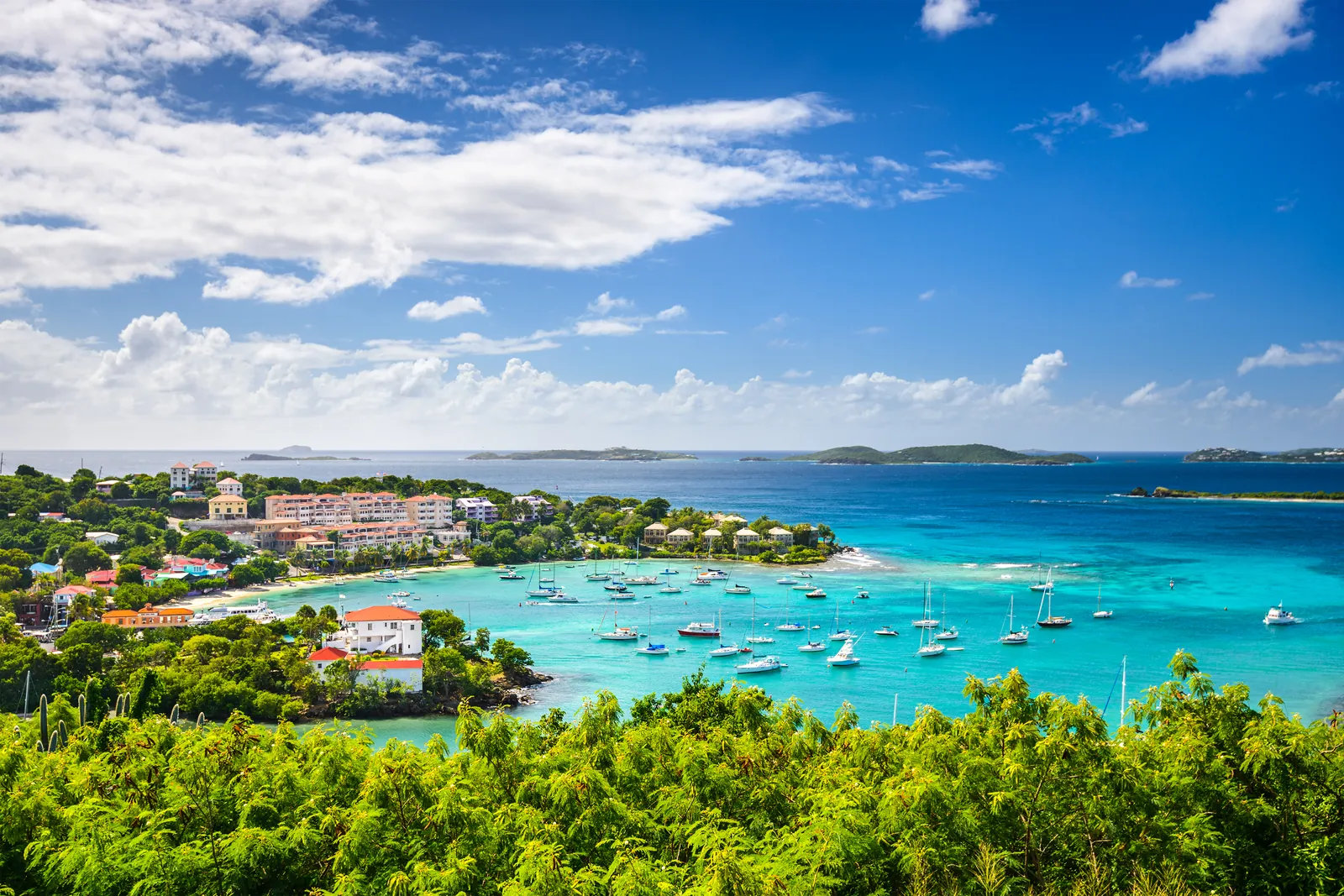
Short answer: For a first trip, the top places to visit in the US Virgin Islands are Trunk Bay and the North Shore beaches of St. John, the Annaberg ruins and Waterlemon Cay, Ram Head and Salt Pond Bay, Magens Bay and the harbor town of Charlotte Amalie on St. Thomas. Round out the list with Coki Point, and on St. Croix, Christiansted, Buck Island, Frederiksted and the West End, and Salt River Bay.
The territory has three main islands: St. Thomas, the busy hub with the airport; St. John, two-thirds national park and a 15- to 20-minute ferry ride away; and quieter St. Croix, about 65 km (40 miles) to the south. The list is ordered the way we would recommend places to a first-time visitor. December to April is the dry, breezy high season, May to July is good value, and the Atlantic hurricane season runs from June 1 to November 30.
1. Trunk Bay and St. John’s North Shore
Why it made the list: Virgin Islands National Park covers about 60% of St. John’s land, 7,259 acres, plus 5,650 acres of sea and reef, according to the National Park Service, which keeps the island green and almost free of large hotels. Along the North Shore Road, one white-sand bay follows another: Hawksnest, Trunk, Cinnamon, Maho and Francis.
Best time to go: December to April for dry, breezy weather, or May to July for calm water and lower prices. Go early in the day in winter, before cruise passengers from St. Thomas arrive.
Don’t miss: the marked underwater snorkel trail at Trunk Bay, and the sea turtles grazing on the seagrass at Maho Bay.
Getting there and how long: ferry from Red Hook on St. Thomas to Cruz Bay, about 15 to 20 minutes, then a taxi or jeep along the North Shore Road. Stay at least three nights on St. John, or visit on a long day trip.
Practical note: there is no entrance fee for the park itself, but Trunk Bay charges US$5 per person aged 16 and over, paid by card or phone at the booth or online through Recreation.gov; since October 1, 2026, cash is not accepted. See our US Virgin Islands travel guide.
2. Annaberg and Waterlemon Cay
Why it made the list: on St. John’s north-east coast, the stone ruins of the Annaberg sugar plantation, with its windmill tower, look over Leinster Bay and the channel toward the British Virgin Islands. Below, a shoreline path leads to Waterlemon Cay, one of the best snorkels on the island.
Best time to go: May to July, when lighter winds usually mean flatter water for the swim around the cay.
Don’t miss: the ruins and their views, and a snorkel around Waterlemon Cay, with turtles, rays and reef fish.
Getting there and how long: at the end of the North Shore Road, about 30 minutes by car from Cruz Bay. Allow half a day.
Practical note: the swim out to the cay is longer than it looks, so wear a bright snorkel vest and fins, and never stand on coral. See our snorkeling guide.
3. Ram Head, Salt Pond Bay and the Reef Bay Trail
Why it made the list: St. John’s dry south-east feels wilder than the North Shore, with cactus-covered headlands and quiet bays. Salt Pond Bay is a calm beach for swimming, and the trail to Ram Head climbs to a windswept point with views over the sea. On the island’s south side, the Reef Bay Trail leads down through forest past Taíno petroglyphs to plantation ruins.
Best time to go: December to April, when the trade winds keep hiking temperatures down.
Don’t miss: the walk to Ram Head in the early morning, then a swim at Salt Pond Bay, and the petroglyphs on the Reef Bay Trail.
Getting there and how long: beyond Coral Bay, about 40 minutes by car from Cruz Bay. A half day for Ram Head, a full day for the Reef Bay Trail.
Practical note: there is little shade, so carry plenty of water and sun protection, and lock valuables out of sight in parked cars. See our hiking guide.
4. Magens Bay
Why it made the list: a deep, calm horseshoe bay on the north side of St. Thomas, with a long arc of white sand, Magens Bay is the island’s most famous beach. It is run as a public park, with lifeguards, changing rooms and a snack bar.
Best time to go: any time of year; on winter days with several cruise ships in port it can be busy, so go early or late. From November to April, north swells can occasionally make the water rougher.
Don’t miss: a swim in the sheltered water, and the view of the bay from Drake’s Seat on the road above.
Getting there and how long: about 20 minutes by taxi from Charlotte Amalie. Half a day.
Practical note: there is a small admission fee; check the current amount before you go. See our beaches guide.
5. Charlotte Amalie
Why it made the list: the territory’s capital climbs the hills above one of the Caribbean’s busiest harbors. Danish warehouse alleys off Main Street are now full of duty-free shops, and stepped streets lead up past red-roofed houses.
Best time to go: December to April for the weather; visit on a day with only one or two cruise ships in, or late in the afternoon after they sail.
Don’t miss: the 99 Steps, a brick stairway built from ships’ ballast bricks, the red Fort Christian, built in the 1670s, and the St. Thomas Synagogue of 1833, with its sand floor. For views, take the Skyride cable car up to Paradise Point.
Getting there and how long: just east of Cyril E. King Airport. A half day to a full day.
Practical note: returning US residents can bring back US$1,600 worth of goods duty-free from the islands, double the usual allowance, and everyone flying to the mainland passes a US Customs and Border Protection check before departure. See our US Virgin Islands travel guide.
6. Coki Point and the East End
Why it made the list: on the East End of St. Thomas, Coki Point has some of the easiest snorkeling on the island, with crowds of fish just off the sand, next to Coral World Ocean Park. Nearby, Sapphire, Secret Harbor and Lindquist Beach are lovely for a swim.
Best time to go: May to July for calm, clear water; the dry months are good too.
Don’t miss: a snorkel from the beach at Coki Point, and the view from the hills toward St. John at sunset.
Getting there and how long: about 30 minutes from Charlotte Amalie, close to Red Hook and the ferries to St. John. Half a day.
Practical note: wear water shoes on rocky entries, and watch out for spiny sea urchins and fire coral. See our snorkeling guide.
7. Christiansted
Why it made the list: St. Croix’s old Danish capital has some of the best-preserved colonial architecture in the Caribbean. Christiansted National Historic Site, established in 1952 as the first National Park Service unit in the Virgin Islands, includes Fort Christiansvaern, the Customs House, the Scale House and the Steeple Building, completed in 1751.
Best time to go: December to April for the weather; the Crucian Christmas Festival runs from December into early January.
Don’t miss: the yellow walls of Fort Christiansvaern, and dinner on the waterfront boardwalk.
Getting there and how long: fly from St. Thomas in about 25 minutes, or take the QE IV ferry, which runs Thursday to Monday between Charlotte Amalie and Christiansted in about 2 hours 10 minutes, for US$60 one way. Stay three nights or more on St. Croix.
Practical note: traffic in the territory drives on the left, though most cars have the steering wheel on the left too, so take extra care on turns. See our city sightseeing guide.
8. Buck Island Reef National Monument
Why it made the list: a 176-acre island off St. Croix’s north-east coast, ringed by coral, with a famous underwater snorkel trail and a beautiful west-facing beach, according to the National Park Service. It is one of the best snorkels in the Caribbean.
Best time to go: May to July for the calmest seas, or the dry months from December to April.
Don’t miss: the marked underwater trail through the coral gardens, led in small groups, and time on the beach afterward.
Getting there and how long: about 2.4 km (1.5 miles) offshore, reached on half-day or full-day trips on the park’s concessioner boats from Christiansted and Green Cay Marina.
Practical note: reef-safe sunscreen and a rash guard protect both you and the coral; take nothing from the reef. See our boat trips guide.
9. Frederiksted and the West End
Why it made the list: Frederiksted, on St. Croix’s west coast, is a quiet town of arcaded streets with a cruise pier and calm sunset beaches. Its red Fort Frederik is where emancipation was proclaimed in 1848. Between the island’s two towns are rum distilleries, the Estate Whim plantation museum and the rainforest along Mahogany Road.
Best time to go: any time of year; the west is wetter in the hills, so the dry months are best for the rainforest.
Don’t miss: a rum distillery tour, and a sunset swim on the beaches north of the Frederiksted pier. Divers should not miss the wall at Cane Bay, which drops off a short swim from the beach.
Getting there and how long: about 30 to 40 minutes by car from Christiansted. One or two days.
Practical note: a rental car is the easiest way to explore St. Croix; a US or foreign license is valid for up to 90 days. See our diving guide.
10. Salt River Bay
Why it made the list: on St. Croix’s north coast, Salt River Bay National Historical Park and Ecological Preserve protects mangroves, beaches and reefs and a long human story, from early Indigenous settlements to clashes between seven colonial European powers, according to the National Park Service. Columbus’s crew landed here in 1493.
Best time to go: any time of year; night paddles on the bay’s bioluminescent water are best on dark nights around the new moon.
Don’t miss: a kayak tour through the mangroves, and a guided night paddle among the glowing plankton.
Getting there and how long: about 15 minutes west of Christiansted. A half day, or an evening for the night paddle.
Practical note: start at the park’s visitor contact station overlooking the bay, and book kayak tours ahead. See our US Virgin Islands travel guide.
How to fit them into one trip
St. Thomas and St. John combine easily by ferry, while St. Croix needs its own few days.
Four days: Charlotte Amalie and Magens Bay on St. Thomas, an afternoon at Coki Point, and a day trip to St. John’s North Shore beaches.
One week: two nights on St. Thomas and five on St. John, with Trunk Bay, Annaberg and Waterlemon Cay, Ram Head and Salt Pond Bay, and the Reef Bay Trail.
Ten days: add three nights on St. Croix for Christiansted, Buck Island, Frederiksted, Cane Bay and Salt River Bay.
Timing matters for the weather: December to April is the driest and busiest time, while August to November is the wettest and the heart of hurricane season. Our best time to visit the US Virgin Islands guide goes month by month, and our AI trip planner builds the day-by-day plan for your dates.
Plan your trip
Start with our US Virgin Islands travel guide for entry, ferries, the hotel room tax and driving. Use the AI trip planner to turn this list into a route, check what to expect on your dates with the Destination weather tool, and build a list for beach and boat days with the packing list tool.
Frequently asked questions
What is the most beautiful place in the US Virgin Islands?
For most visitors it is St. John’s North Shore, especially Trunk Bay, with its white sand and clear water inside Virgin Islands National Park. Magens Bay on St. Thomas and Buck Island off St. Croix are close behind.
How many days do you need in the US Virgin Islands?
Four days covers St. Thomas and a day on St. John. A week lets you stay on St. John and see the national park properly, and ten days adds St. Croix.
What is the best island for first-time visitors?
St. John for beaches, snorkeling and hiking, or St. Thomas for the most hotels, easy access from the airport and nightlife. Many first-time visitors stay on one and day-trip to the other.
Is St. Croix worth visiting?
Yes, if you have a few extra days. It is bigger and quieter than St. Thomas and St. John, with two historic Danish towns, Buck Island, rum distilleries and the Cane Bay wall for divers.
Do US citizens need a passport for the US Virgin Islands?
Not for direct travel from the US mainland or Puerto Rico, but you need proof of citizenship for the customs check when you fly home: a passport, or a raised-seal birth certificate plus photo ID. A passport is needed for day trips to the British Virgin Islands.