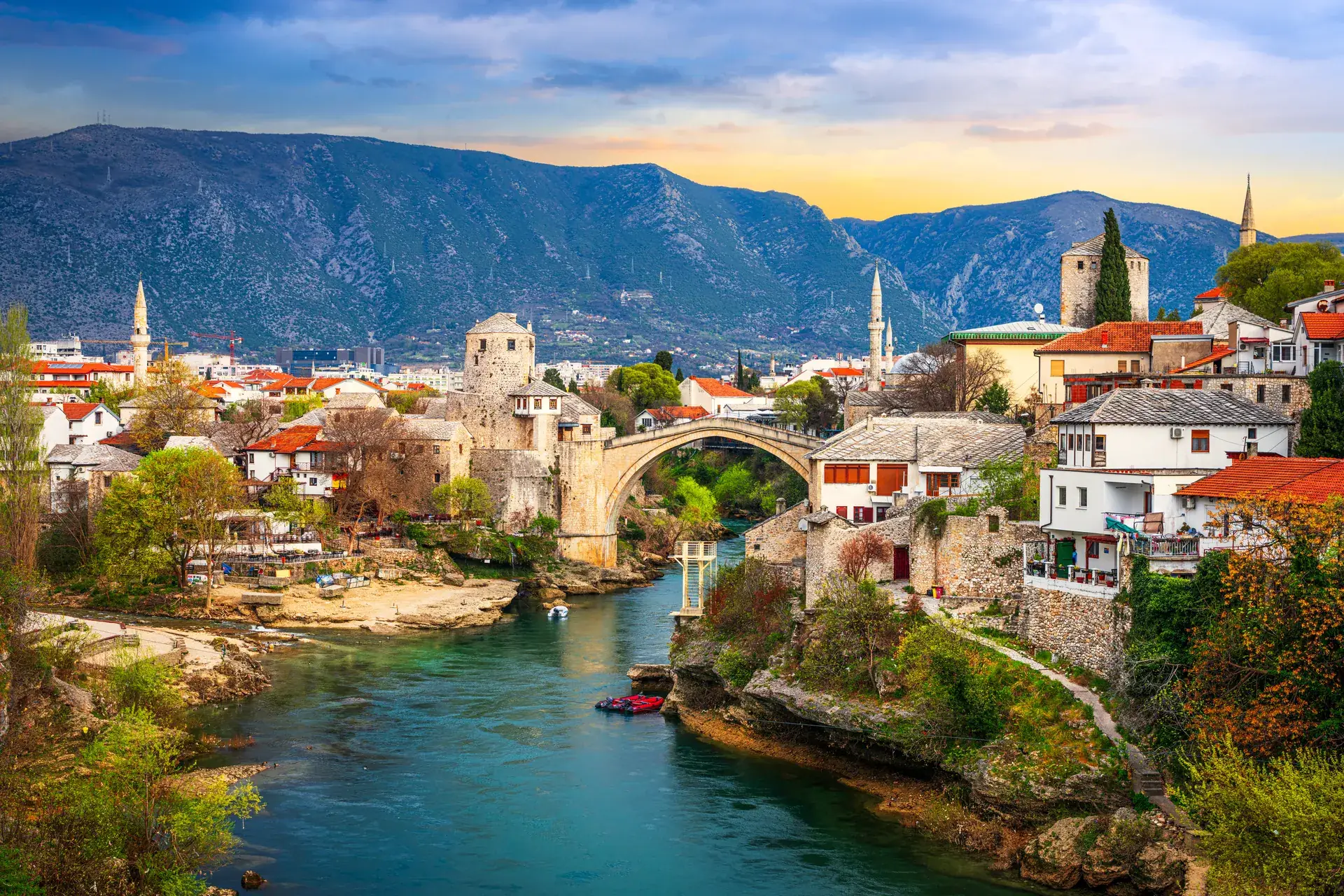
Short answer: On the ground in Bosnia and Herzegovina, plan on roughly KM 45–75 (about $25–45) per person per day on a hostel-and-ćevapi budget, KM 110–200 (about $65–115) in a good mid-range hotel shared by two with restaurant meals and a paid sight or two, and about KM 240–410 ($140–235) for the best hotels, upscale dining and taxis. A week therefore costs roughly $180–300, $440–800 or $960–1,640 per person, before flights. It is one of the best-value countries in Europe for travelers.
Bosnia and Herzegovina packs a lot into a small country: the Ottoman bazaar and mountain views of Sarajevo, the Old Bridge in Mostar, waterfalls and green rivers in Herzegovina, and ski slopes an hour from the capital. Everyday costs are low: a portion of ćevapi, a Bosnian coffee and a tram ride together cost less than a single museum ticket in Western Europe. The bigger costs are a nice hotel in summer, guided tours, rafting and ski passes. This guide breaks it all down with figures from official sources where they exist, so you can build a realistic budget for your trip to Bosnia and Herzegovina. The convertible mark (KM, or BAM) is fixed to the euro at KM 1.95583 = €1, which made it about KM 1.75 to the US dollar in early October 2026; dollar figures here are rounded at that rate, and our Money exchange tool has today’s rate.
Bosnia and Herzegovina daily costs at a glance
These example days are built from the prices further down this page: one person, one sightseeing day in Sarajevo. They leave out flights, intercity travel, rafting, skiing and shopping. Mostar costs about the same, and small towns less.
| Per person, per day | Budget | Mid-range | Comfort |
|---|---|---|---|
| Bed | Hostel dorm bed at €10–15: KM 20–29 | Half of a mid-range hotel double at €50–90: KM 49–88 | Half of a luxury hotel double at KM 200–400: KM 100–200 |
| Food | Burek, two portions of ćevapi and a Bosnian coffee: KM 23–29 | Mid-range restaurant meals: KM 30–50 | Upscale restaurants: KM 70–120 |
| Local transport | Tram tickets at KM 2.20, or a day ticket at KM 7.10: KM 2–7 | Day ticket plus a short taxi: KM 7–20 | A couple of taxi rides: KM 15–35 |
| Sights | Free old town, a mosque and a small museum: KM 0–10 | City Hall and the cable car, or two museums: KM 25–40 | Cable car, City Hall and the Tunnel of Hope: about KM 55 |
| Total | About KM 45–75 ($25–45) | About KM 110–200 ($65–115) | About KM 240–410 ($140–235) |
Transport and most entry prices are the operators’ official prices; bed and meal figures are typical 2026 ranges from travel guides and transfer companies, listed in our sources. Treat them as typical ranges, not quotes.
What visitors actually spend in Bosnia and Herzegovina
Bosnia and Herzegovina does not publish an official survey of how much visitors spend, but its Agency for Statistics does count them. In 2025, tourists made 1,963,443 arrivals and 4,083,977 overnight stays in the country’s accommodation, an average of about two nights per stay, and foreign visitors accounted for 70.3% of the nights. Croatia (14.1% of foreign nights), Serbia (10.9%) and Turkey (9.7%) were the biggest markets; visitors from the United States made up 3.4%. Hotels and similar accommodation took 93.7% of all overnight stays.
On our Travel costs by country scale, which compares hotel, restaurant and transport prices with the United States (US = 100), Bosnia and Herzegovina scores 66. In plain words, typical travel prices are about two-thirds of US levels, close to Montenegro (66) and Serbia (68) and well below Greece (83). Everyday living costs are lower still: on the general price-level measure, the country scores 40, among the lowest in Europe.
Accommodation costs
Sarajevo and Mostar have plenty of small hotels, family guesthouses and hostels in or near the old towns. As typical 2026 ranges from travel guides and local transfer companies:
| Per night | Typical price |
|---|---|
| Hostel dorm bed | About €10–15 (KM 20–29, $11–17) |
| Private room in a hostel | About €18–30 (KM 35–59, $20–34) |
| Budget guesthouse or hostel room, Sarajevo | About KM 25–45 ($14–26) |
| Mid-range hotel double | About €50–90 (KM 98–176, $56–101) |
| Boutique hotel in Sarajevo’s old town | About KM 80–140 ($46–80) |
| Four-star or boutique hotel | About €85–150 (KM 166–293, $95–168) |
| Luxury hotel | About KM 200–400 ($115–230) |
Rates rise in summer and especially during the Sarajevo Film Festival in August, and at ski weekends near Jahorina and Bjelašnica; late autumn and winter are the low season in the cities, with the lowest prices of the year. Hotels also collect a tourist tax: as reported for 2025–2026, it is KM 3 per person per night in Sarajevo Canton and in Herzegovina-Neretva Canton, which includes Mostar. Međugorje is at its busiest around the anniversary in late June and the Youth Festival in late July or early August.
Food and drink costs
Bosnian food is hearty and cheap, and the classic meals are the cheapest. A transfer company’s 2026 price guide puts a portion of ten ćevapi with somun bread and onions at about €4–5 (KM 8–10) and a burek from a bakery at about €1.50–2.50 (KM 3–5). A traditional Bosnian coffee in Sarajevo’s old bazaar costs about KM 4. For sit-down meals, one 2026 travel guide suggests about KM 30–50 per person per day for mid-range restaurants and KM 70–120 at upscale places.
Prices include VAT at a single rate of 17%. Bakeries, ćevapi shops and markets often take cash only, so keep some marks with you.
Getting around: trams, buses, trains and driving
| Fare (as of October 2026) | Price |
|---|---|
| Sarajevo tram, trolleybus or bus, single ticket | KM 2.20 ($1.25) |
| Sarajevo public transport day ticket | KM 7.10 ($4) |
| Airport bus, Sarajevo Airport to Baščaršija | KM 5 ($3) |
| Trebević cable car, return | KM 30 ($17) |
| Bus, Sarajevo to Mostar (about 2 h 40 min), booked online | KM 36 ($21) |
| Train, Sarajevo to Mostar (about 2 h) | About KM 11.90 ($7) one way |
The Sarajevo–Mostar train along the Neretva valley is one of the most scenic rail journeys in Europe and the cheapest way between the two cities; the bus runs more often, about eight times a day. A rental car is the easiest way to see Herzegovina’s waterfalls, villages and monasteries in a day. Motorway tolls on the short sections of the A1 can be paid in marks, euros or by card.
Sightseeing fees and free things to do
Entry fees are low by European standards, and many are cash only.
| Sight | Adult entry |
|---|---|
| Gazi Husrev-beg Mosque, Sarajevo (with English guide) | KM 3 ($1.70) |
| Museum Sarajevo 1878–1918 or Svrzo’s House | KM 5 ($3); joint ticket for five branches KM 20 |
| Sarajevo City Hall (Vijećnica) | KM 10 ($6); KM 35 with the Trebević cable car |
| War Childhood Museum, Sarajevo | KM 15 ($9) |
| Tunnel of Hope, Sarajevo (cash only) | About KM 20 ($11) |
| Kravica waterfalls, near Mostar | KM 20 ($11); ages 7–18 KM 10 |
| Štrbački buk waterfall, Una National Park | KM 8–20 ($5–11) by season |
Much of the best of the country costs nothing: wandering Baščaršija and the Ferhadija street, crossing the Old Bridge in Mostar and watching the divers, sunset at the Yellow Fortress viewpoint above Sarajevo, and walking the old towns of Jajce, Počitelj and Trebinje. In winter, a day ski pass for the 2026/27 season was reported at KM 98 at Jahorina and KM 69 at Bjelašnica, the two Olympic mountains near Sarajevo.
What a day around Mostar costs
Mostar is the usual base for Herzegovina’s highlights, and most of them can be seen in a day by car or on a tour. Budget for the Kravica waterfalls (KM 20 per adult, KM 10 for ages 7–18, children under 7 free, plus parking at KM 3 per hour or KM 6 per day), the dervish house at Blagaj (reported at about KM 10, with wraps provided for visiting), and a free walk up to the hilltop fortress village of Počitelj. Kravica is open all year and stays open until 22:00 from June to September, so a late-afternoon swim avoids the busiest hours. In Mostar itself, the small museums, the minaret climb at the Koski Mehmed-Pasha Mosque and the Ottoman houses charge small fees in cash; prices vary by source, so carry a few marks.
Taxes, VAT refunds and tipping
The tourist tax of about KM 3 per person per night in Sarajevo and Mostar is added to your hotel bill. Visitors can claim back VAT on goods bought for export; the minimum purchase was reported to have risen from KM 100 to KM 200 per receipt, with fuel, alcohol and tobacco excluded. Citizens of the United States, Canada, the UK, Australia and the EU can visit without a visa for up to 90 days in any 180-day period, so there is no visa fee to budget for.
Tipping is appreciated rather than expected: round up the bill or leave about 10% in restaurants if the service was good, round up taxi fares, and tip guides and rafting instructors a little. Our tip calculator does the math.
Money-saving tips for Bosnia and Herzegovina
- Take the train to Mostar. At about KM 11.90 one way it is cheaper than the bus and far more scenic.
- Buy a day ticket in Sarajevo (KM 7.10) on days with several tram rides; one ride costs KM 2.20.
- Combine City Hall and the cable car. The joint ticket costs KM 35, against KM 40 bought separately.
- Eat ćevapi, burek and pita. Two of the country’s best meals cost under €5 each.
- Travel in spring or autumn. May, June, September and October are warm, with lower prices than July, August and the film festival; see the best time to visit Bosnia and Herzegovina.
- Pay in marks. Euros are often accepted in tourist places, usually at a rounded rate of 1:2, so you lose a little; and when a card machine offers to charge you in your home currency, choose marks.
For a route that links Sarajevo, Mostar and Herzegovina, see our Bosnia and Herzegovina itinerary, and for ideas on where to go, our top places to visit in Bosnia and Herzegovina.
Plan your trip: our free trip planner can build a day-by-day plan for Bosnia and Herzegovina from our guides to Sarajevo, Mostar and Međugorje. Then use the Money exchange tool to turn marks into your own currency, and the Destination weather tool to pick your dates.
Frequently asked questions
How much money do I need for a week in Bosnia and Herzegovina?
Using the example days above, seven days on the ground cost roughly KM 315–525 (about $180–300) per person on a tight budget, KM 770–1,400 (about $440–800) mid-range, and KM 1,680–2,870 (about $960–1,640) in comfort, before flights, intercity travel and activities such as rafting or skiing.
Is Bosnia and Herzegovina expensive?
No. It is one of the cheapest countries in Europe for travelers. On our travel cost scale it scores 66 against 100 for the US, and everyday prices are lower still: ćevapi cost about €4–5, a tram ride KM 2.20 and most museums KM 3–15.
Can I use euros in Bosnia and Herzegovina?
Often, but marks are better. The mark is fixed at KM 1.95583 to the euro, and many hotels, tourist restaurants and motorway toll booths accept euros, usually rounding at 1:2. Small shops, bakeries and buses expect marks.
Do I need cash in Bosnia and Herzegovina?
Yes, some. Cards and phone payments work in hotels, supermarkets, most restaurants and fuel stations in the cities, but bakeries, ćevapi shops, markets, small guesthouses and the Tunnel of Hope take cash. ATMs are everywhere in towns.
How much does it cost to get from Sarajevo to Mostar?
The train costs about KM 11.90 ($7) one way and takes about two hours, with two departures a day in the 2025–26 timetable. Buses run about eight times a day, take about 2 hours 40 minutes and cost KM 36 ($21) booked online.
What is the cheapest month to visit Bosnia and Herzegovina?
November and the winter months outside ski weekends and the holidays have the lowest hotel prices of the year in Sarajevo and Mostar. For good weather at lower prices than summer, go in May, early June, September or October.