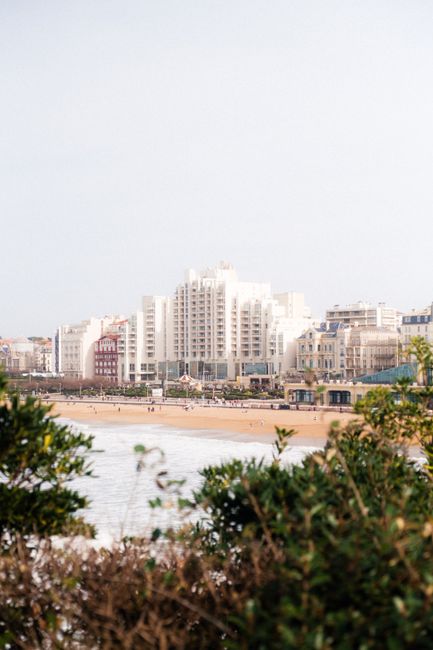
Biarritz is the elegant seaside town of the French Basque coast, where 19th-century glamour meets surf culture. Empress Eugénie made it fashionable in the 1850s, and her summer palace still faces the Grande Plage; a century later, surfers arrived at the Côte des Basques and never left. Today you come for big Atlantic beaches and rocky headlands, a tiny fishermen’s port, Basque food from the market halls and easy trips to Bayonne, Saint-Jean-de-Luz, the Rhune mountain and San Sebastián in Spain. Give it two or three days, more if you want to learn to surf.
Right now in Biarritz
- Thu17–19°C62–66°F5 mm rain
- Fri14–18°C57–64°FMostly clear
- Sat14–19°C58–67°FMostly clear
Top tours in Biarritz
See all tours for Biarritz →
From local operators, with prices and reviews; you check availability and book on Viator, our partner. We may earn a commission at no extra cost to you. How we earn money
Biarritz at a glance
- Best for: surfing and beaches, coastal walks, Basque food and day trips across the French and Spanish Basque Country.
- How long: 2 days for the town, 3–5 with surf lessons and day trips.
- Best time: June and September for warm water and fewer crowds; autumn for the biggest surf.
- Getting in: Biarritz airport is about 5 minutes from the centre by bus; TGV trains from Paris take about 4 hours.
- Getting around: on foot along the coast, and Txik Txak buses at €1.40 a ticket or €3.80 for a day (as of October 2026).
- Before you go: entry rules, money, trains and general safety are on our France travel guide.
Biarritz’s areas and who each one suits
Biarritz is small and built along a series of beaches and headlands. The centre sits above the Grande Plage; the lighthouse marks the northern end of town, and the Côte des Basques and the Milady beach run south towards Bidart. Biarritz is part of a single built-up area with Anglet and Bayonne.
The centre and the Grande Plage
Shops, cafés, the casino and the covered market halls are all a few minutes from the main beach. It is the most convenient base, with sea views if you pay for them, and lively on summer evenings.
Côte des Basques
South of the old port, below steep cliffs, this is the surfers’ beach, with surf schools, board hire and long views to the Spanish coast. Stay up on the cliff for sunsets and an easy walk to the waves.
Saint-Charles, the lighthouse and Anglet
Residential districts of villas and gardens behind the centre, quieter and often better value. North of the lighthouse, Anglet’s long sandy beaches are less glamorous, popular with surfers and families, and backed by a pine forest.
Top things to see in Biarritz
Most of Biarritz’s pleasures are free: the coastal promenade links the main sights in about an hour’s walk. Prices below are as of October 2026.
The Grande Plage and the Hôtel du Palais
The town’s showpiece beach curves below the casino and the Hôtel du Palais, the former summer villa that Napoleon III built for Empress Eugénie, now a luxury hotel. The promenade above is perfect for an evening walk, and the beach is lifeguarded in season. Nearby, the Russian Orthodox church and the Sainte-Eugénie church recall the town’s aristocratic past.
Rocher de la Vierge and the Port des Pêcheurs
An iron footbridge leads out to the Rocher de la Vierge, a rock topped by a statue of the Virgin, with waves crashing below on rough days. Close by, the little Port des Pêcheurs is lined with former fishermen’s huts (crampottes) now used as bars and seafood restaurants. The Port Vieux, a small sheltered cove, is the calmest place to swim.
The lighthouse
The Phare de Biarritz stands on the Pointe Saint-Martin at the northern end of town. Climb its spiral stairs on opening days for a view along the whole coast, from the Landes to Spain, or simply walk around the gardens at its foot at sunset.
Aquarium and Cité de l’Océan
The Aquarium de Biarritz, in an Art Deco building on the seafront, has sharks, seals and fish from the Bay of Biscay and tropical seas; allow about 1½ hours. The Cité de l’Océan, south of town, explains the ocean, waves and surfing through interactive exhibits; allow about 3 hours. As of October 2026, adult tickets cost €17 for the aquarium and €15 for the Cité de l’Océan, or €28 for a combined ticket. In early October 2026, the aquarium opens 9:30–19:00 and the Cité 10:00–19:00; hours change with the season, so check before you go. Both are good on a rainy day.
Les Halles
Biarritz’s covered market is the place to taste the Basque Country: cured ham from Bayonne, sheep’s cheese from the mountains, cherry jam, peppers and fresh fish. In the morning, locals gather at the counters around the halls for oysters, a glass of white wine and a plate of pintxos, the Basque version of tapas.
Surfing in Biarritz
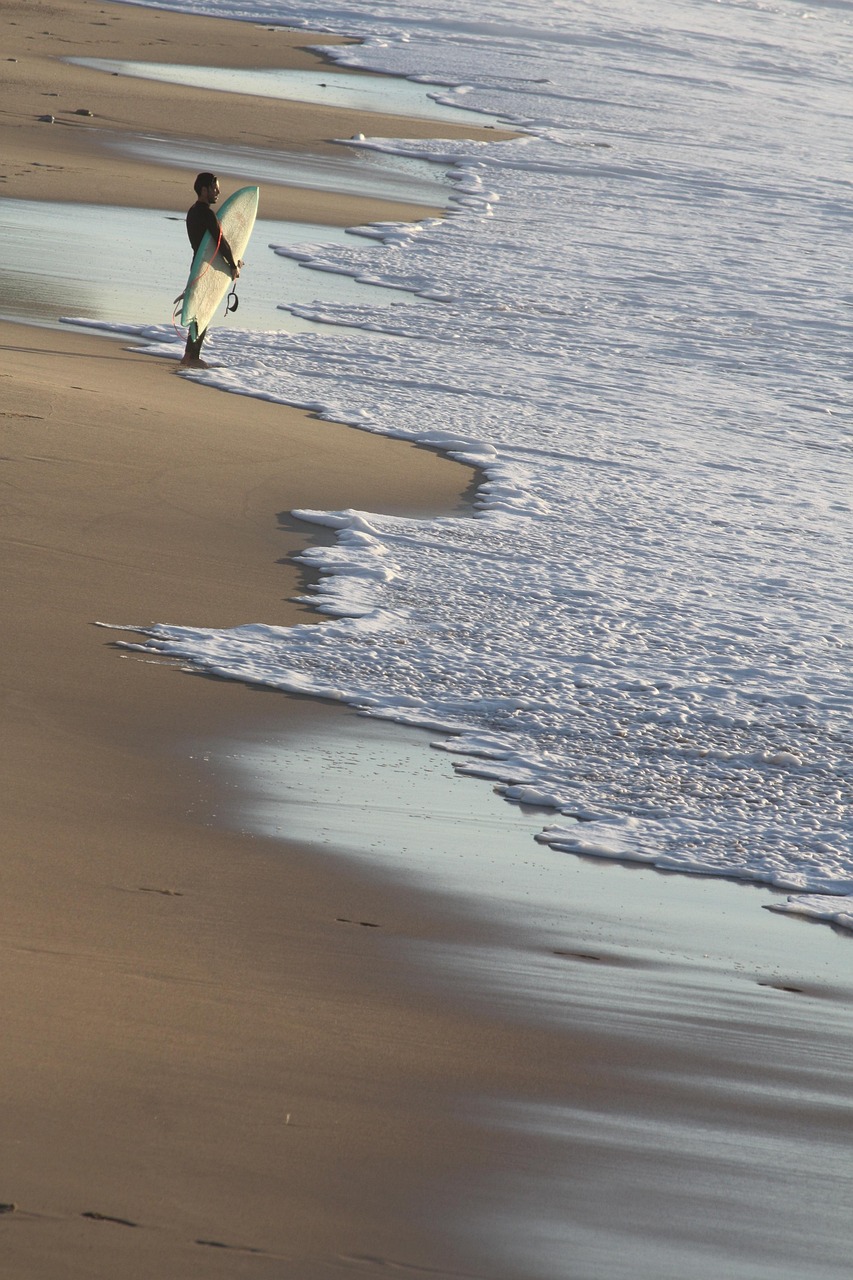
Biarritz is one of the birthplaces of European surfing, and it is a fine place to learn. The Côte des Basques is the classic beginners’ beach at low and mid tide, with gentle, long waves; the Grande Plage and Anglet’s beaches suit improving surfers. Many surf schools offer group and private lessons from spring to autumn; book a few days ahead in July and August. See our surfing guide for gear and technique.
- Seasons: summer brings smaller waves and warmer water, best for beginners; autumn and winter bring the biggest swells, for experienced surfers only.
- Lifeguards: the main beaches have lifeguards in summer; swim and surf only in the zones marked by flags, and respect the separate areas for swimmers and surfers.
- Baïnes and rip currents: on the Atlantic coast, sandbanks create pools called baïnes that empty towards the open sea as the tide rises, with strong currents. If you are caught, don’t swim against it: float, raise an arm and let the current carry you out until it weakens, then swim parallel to the beach.
- Wetsuits: a full wetsuit is needed most of the year; in high summer a shorty or a thin suit is often enough.
Basque food and other things to do
Basque cooking is simple and full of flavour. Try piperade (peppers, tomatoes and onions with ham or eggs), axoa (minced veal with Espelette pepper), squid in its ink, grilled fish, gâteau basque (an almond tart filled with cream or black cherry jam), and sheep’s cheese from Ossau-Iraty with cherry jam. Drink local cider or wine from Irouléguy. Many restaurants close on Mondays out of season.
- Coastal walk: follow the Basque coast path south towards Bidart and Guéthary for cliff views; see our hiking guide.
- Beach days: Milady, Marbella and the Anglet beaches are less crowded than the centre; see our beaches guide.
- Basque pelota: watch a match of pelote basque, the local ball game, at a fronton in summer.
Events on the Basque coast
- 1–4 April 2027: Bayonne’s ham fair (Foire au jambon), with tastings and stalls in the old town.
- 14–18 July 2027: the Fêtes de Bayonne, five days of music, processions and street parties, with everyone dressed in white with a red scarf. Hotels across the coast fill months ahead, and trains and buses are packed.
- Surf contests: Biarritz hosts surf competitions on its beaches, including the long-running Maider Arosteguy contest; check the town’s events calendar for dates.
Day trips from Biarritz
The French Basque Country is compact, and most trips take less than an hour. Times are approximate.
Bayonne
The capital of the French Basque Country, 15–20 minutes away by bus, has half-timbered houses painted red and green along the River Nive, a Gothic cathedral with a cloister, the Basque Museum and chocolate shops; chocolate-making came here in the 17th century. Buy ham at the market halls on the riverbank.
Saint-Jean-de-Luz and Hendaye
Saint-Jean-de-Luz, about 20 minutes south by Txik Txak line 3 or regional train, is a pretty fishing port with a sheltered bay, ideal for children, and the church where Louis XIV married in 1660. Ciboure faces it across the harbour. Hendaye, at the Spanish border, has a long, gentle beach and the Abbadia castle on the cliffs.
La Rhune by little train
A wooden rack railway climbs from the Col de Saint-Ignace, near Sare, to the summit of La Rhune at 905 metres, on the border with Spain, in 35 minutes each way. On a clear day you see the whole coast and the Pyrenees. In 2026 the train runs every day from 28 March to 1 November. As of October 2026, a return ticket costs €26 for adults and €18 for children aged 4–12, and under-4s travel free; book online in summer. Txik Txak lines 44 and 45 stop at the Col de Saint-Ignace, and there is free parking around the station. The summit is often in cloud, so check the weather and bring a jacket.
Espelette and the Basque villages
Espelette, about 30–40 minutes inland by car, is famous for its red peppers, hung to dry on the white house fronts in autumn. Combine it with Ainhoa and Sare, two of the prettiest villages in the hills.
San Sebastián
San Sebastián, the food capital of the Spanish Basque Country, is about an hour away by car. Without a car, take Txik Txak bus line 3 and line 4 or a regional train to Hendaye, then the Euskotren “Topo” across the border. As of October 2026, a combined Txik Txak bus and train ticket to San Sebastián costs €6.50. Go for the pintxos bars of the old town and the Concha beach.
Nearby destinations
- San Sebastián39 km
- Bilbao114 km
- Lourdes130 km
- Arcachon Bay139 km
- Bordeaux170 km
- Zaragoza211 km
- Toulouse242 km
- Dordogne262 km
Getting there and getting around
By air
Biarritz Pays Basque airport (BIQ) is about 5 minutes from the centre of Biarritz, 10 from Anglet and 15 from Bayonne. Txik Txak line 3 links the airport with Bayonne station and Saint-Jean-de-Luz every 15 minutes or so (less often at weekends); line 8 runs to Biarritz railway station on weekdays. Taxis wait outside, and long-distance coaches to Spain also stop here.
By train
Biarritz station is in the La Négresse district, about 3 km south of the centre, so take a bus or taxi into town. TGV trains from Paris-Montparnasse take about 4 hours via Bordeaux; many continue to Saint-Jean-de-Luz and Hendaye. Bayonne station, the main hub, has more regional trains and coaches. Check times on SNCF Connect.
Txik Txak buses
The Txik Txak network covers the whole Basque Country agglomeration. As of October 2026, a single ticket costs €1.40 and is valid for 1 hour 30 minutes (not for a return on the same line), a 10-trip ticket €10.50, a one-day pass €3.80, a three-day pass €8.70 and a seven-day pass €14.60; a group day ticket for up to five people costs €7.70. Line 11 links central Biarritz with Anglet. The centre is walkable, though hilly.
Driving and parking
Parking in central Biarritz is scarce and paid in summer; use the car parks on the edge of town and walk or take the bus. A car is useful for the inland villages and La Rhune. The Basque Country agglomeration prepared a low-emission zone (ZFE) on 11 coastal towns west of the A63 motorway, including Biarritz, which was to ban only the oldest vehicles (Crit’Air 5 and unclassified) from June 2025; according to local press it has since been put on hold. Modern rental cars are not affected either way.
When to go and how long to stay
Biarritz has a mild, green, oceanic climate: summers are warm rather than hot, winters are soft, and rain falls in every season. The table uses Météo-France’s official 1991–2020 normals for the Biarritz-Pays-Basque station at the airport: average daily highs and lows, and days with at least 1 mm of rain.
| Season | Average high / low | Rainy days per month | What it’s like | Good for |
|---|---|---|---|---|
| Winter (Dec–Feb) | 12–13 °C / 5–6 °C | 12–14 | Mild but wet and stormy | Big-wave watching, quiet town, food |
| Spring (Mar–May) | 15–20 °C / 7–12 °C | 12–13 | Fresh, green, showery | Walking, villages, La Rhune |
| Summer (Jun–Aug) | 22–25 °C / 15–17 °C | 9–10 | Warm, sometimes humid, with sea mist | Beaches, surf lessons, Fêtes de Bayonne |
| Autumn (Sep–Nov) | 23 °C falling to 15 °C / 15 °C falling to 8 °C | 10 in September, 12–14 in October–November | Golden September, then very wet | Surfing, Espelette peppers, fewer crowds |
Biarritz gets about 1,474 mm of rain a year, more than twice as much as Paris, over about 141 days; November is the wettest month. August is the warmest, with an average high of about 25 °C. Rain often comes in short bursts between sunny spells, so pack for both.
How long to stay: 2-, 3- and 5-day plans
2 days: Day 1, Les Halles in the morning, the Grande Plage, the Rocher de la Vierge and the Port des Pêcheurs, and sunset at the Côte des Basques. Day 2, a surf lesson or the aquarium, the lighthouse and an evening in Bayonne.
3 days: add Saint-Jean-de-Luz and La Rhune. 5 days: add Espelette and the inland villages, and a day in San Sebastián.
Where to stay in Biarritz
- Centre and Grande Plage: everything on foot; the priciest area in summer.
- Côte des Basques: best for surfers and sunsets.
- Saint-Charles and the lighthouse: quieter villas and guesthouses.
- Anglet: beach apartments and campsites, better value, a bus ride away.
- Bayonne: cheaper, with the main station; good for day trips without a car.
The town of Biarritz charges a tourist tax (taxe de séjour) per adult per night; under-18s are exempt. As of October 2026, the 2026 rates, including the 10% department surcharge and the 34% surcharge that funds the south-west high-speed rail project, are €1.15 in a 1-star hotel, chambre d’hôtes or hostel, €1.44 in a 2-star, €2.45 in a 3-star, €3.74 in a 4-star, €5.18 in a 5-star and €7.06 in a palace. Unclassified rentals pay 5% of the nightly price per person, capped, plus surcharges. July and August, and the Fêtes de Bayonne, are the most expensive and booked-up times.
Practical tips for Biarritz
- Respect the flags: swim only in lifeguarded zones; green means safe, orange means take care, red means no swimming.
- Check the tide: some beaches nearly disappear at high tide, and surf conditions change through the day.
- Book La Rhune early: summer trains sell out; go on the first departure for clear views.
- Eat early or book: popular restaurants fill fast in summer.
- Learn two words: kaixo (hello) and eskerrik asko (thank you) in Basque are always appreciated.
What to pack for Biarritz
Bring swimwear, a beach towel, sunscreen and a hat, but also a light rain jacket and a warm layer: Atlantic weather changes fast. Surfers can hire wetsuits and boards locally. Pack walking shoes for the coastal path and La Rhune, and something smart-casual for the evening. For the Fêtes de Bayonne, wear white clothes with a red scarf and sash, which you can buy in town.
Biarritz travel FAQ
How many days do you need in Biarritz?
Two days covers the beaches, the Rocher de la Vierge, the port, Les Halles and the lighthouse. Three to five days lets you add surf lessons, Bayonne, Saint-Jean-de-Luz, La Rhune and San Sebastián.
Is Biarritz good for beginner surfers?
Yes. The Côte des Basques has gentle waves at low and mid tide and many surf schools. Summer has the smallest waves and warmest water; autumn and winter swells are for experienced surfers.
Is it safe to swim in Biarritz?
Yes, if you swim in the lifeguarded zones and follow the flags. Atlantic currents and baïnes can be strong; never swim alone or on unguarded beaches when the sea is rough.
How much are the Biarritz aquarium and Cité de l’Océan?
As of October 2026, adult tickets cost €17 for the aquarium, €15 for the Cité de l’Océan and €28 for both. Allow about 1½ hours for the aquarium and 3 hours for the Cité.
When does the La Rhune train run, and how much is it?
In 2026 it runs every day from 28 March to 1 November. As of October 2026, a return costs €26 for adults and €18 for children aged 4–12; the ride takes 35 minutes each way.
How do I get from Biarritz airport to the town?
The airport is about 5 minutes from the centre. Take a taxi, or a Txik Txak bus (€1.40 a ticket as of October 2026): line 3 runs to Bayonne and Saint-Jean-de-Luz, and line 8 to Biarritz station on weekdays.
How long is the train from Paris to Biarritz?
About 4 hours by TGV from Paris-Montparnasse to Biarritz station at La Négresse, about 3 km from the centre. Bayonne, the main hub, is a few minutes before.
How do I get from Biarritz to San Sebastián?
About an hour by car. By public transport, go to Hendaye by bus or train and take the Euskotren “Topo” across the border; as of October 2026, a combined Txik Txak ticket costs €6.50.
When are the Fêtes de Bayonne in 2027?
From Wednesday 14 to Sunday 18 July 2027, according to the Bayonne tourist office. Book accommodation on the coast months ahead, and wear white with a red scarf.
What is the best time to visit Biarritz?
June and September, with average highs of about 22–23 °C, warm sea and fewer crowds than July and August. Autumn has the best surf but more rain.
How much is the tourist tax in Biarritz?
As of October 2026, from €1.15 per adult per night in a 1-star hotel or B&B to €2.45 in a 3-star and €3.74 in a 4-star, surcharges included. Under-18s don’t pay.
Plan your trip
Partner links: TravelerCenter may earn a commission if you book, at no extra cost to you.
🇫🇷 Useful French phrases for Biarritz
All 38 French phrases: restaurant, hotel, emergencies, romance (printable) →
Sources · last reviewed 4 October 2026
Researched and last reviewed on 4 October 2026. Aquarium and Cité de l’Océan prices and hours: their official websites; La Rhune train season and fares: the Train de la Rhune; bus fares: Txik Txak; airport buses: Biarritz Pays Basque airport; tourist tax: the Town of Biarritz’s tax portal; Fêtes de Bayonne dates: the Bayonne tourist office; ham fair dates: the fair’s official site; low-emission zone: the Basque Country agglomeration’s plans and local press; climate: Météo-France 1991–2020 normals for Biarritz-Pays-Basque. Paris journey times and day-trip times are general guidance. Prices, hours and timetables change, so check the official links before you go. For entry rules, money and general safety, see our France travel guide.
Data: Weather: MET Norway (CC BY 4.0) · Sea temperature: NOAA CoastWatch · Rates: ECB · Costs: World Bank ICP and price levels · Wikidata (CC0)