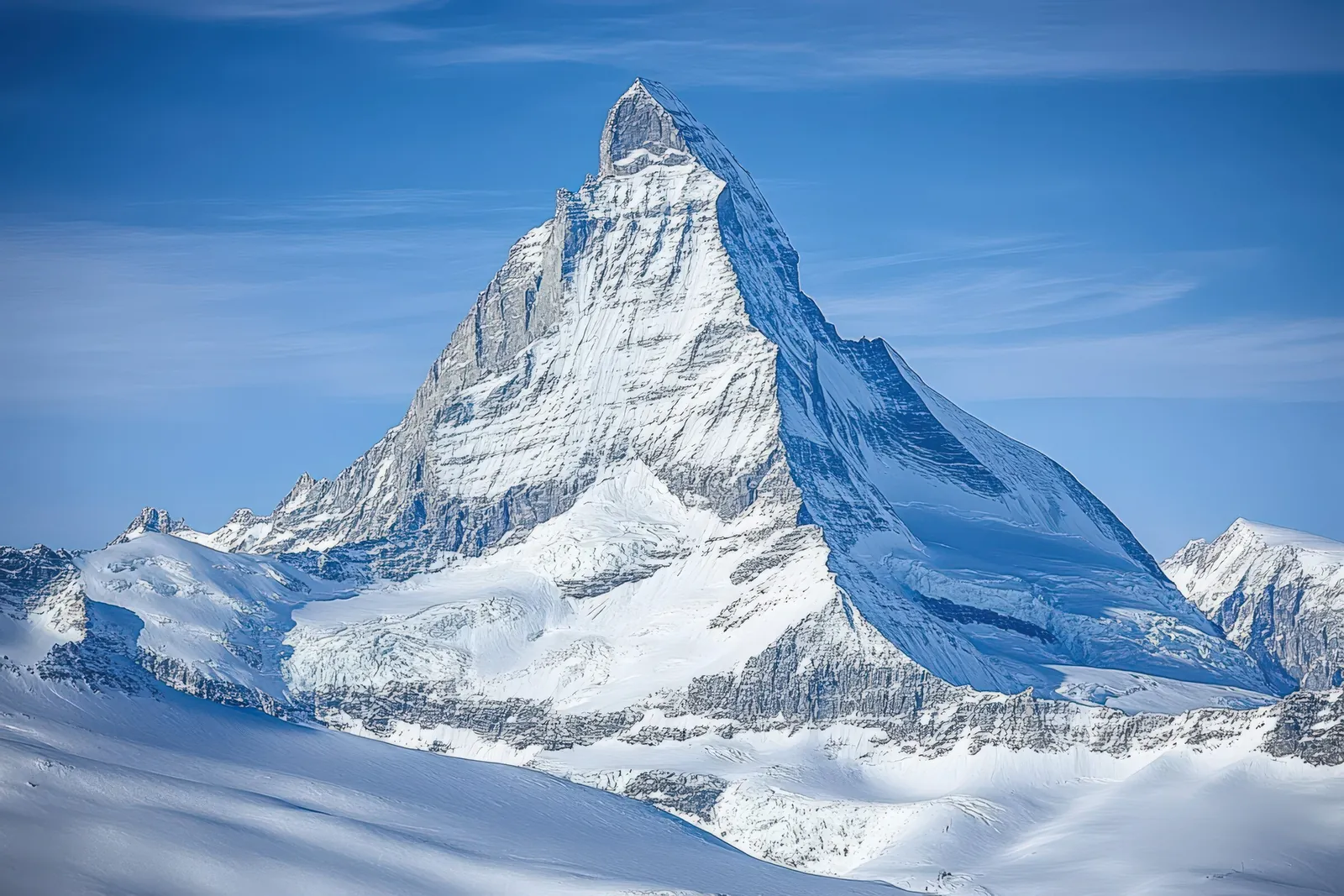
Short answer: The top places to visit in Switzerland are Lucerne, Interlaken and the Jungfrau region, Zermatt and the Matterhorn, Zurich, Bern, Geneva, Montreux and the Lavaux vineyards, Lugano, St. Moritz and Basel. On a first trip, pair one or two cities with two mountain bases, such as Lucerne and Interlaken, and add Zermatt if you have a week.
Switzerland is small, and trains, boats and mountain railways connect almost everything, so the hard part is choosing. This list is ordered the way we would recommend places to a first-time visitor, with when to go, what not to miss and a practical note for each. Our Switzerland travel guide covers passes, costs and entry rules.
1. Lucerne
Why it made the list: Lucerne packs what people picture as Switzerland into one compact town: a medieval old town, covered wooden bridges, a lake ringed by mountains, and two classic summits, Pilatus and Rigi, close by.
When to go: May to October, when the Golden Round Trip up Pilatus runs and the lake steamers sail their fullest timetables.
Don’t miss: walk across the Chapel Bridge and past the Water Tower, then visit the Lion Monument. For the mountains, do the Golden Round Trip to Pilatus by boat, cogwheel railway and cable car, or ride Europe’s first mountain railway, opened in 1871, from Vitznau to Rigi Kulm at 1,797 m (5,896 ft).
Getting there and how long: Lucerne is on the main rail network, and the Luzern–Interlaken Express links it with Interlaken in about 1 hour 50 minutes, every hour. Give it two or three days.
Practical note: lake boats on Lake Lucerne and the Rigi railways are free with a Swiss Travel Pass, and overnight guests get a Visitor Card for local buses and trains. If you are here in late summer, the Lucerne Festival runs from August 12 to September 12, 2027. See our Lucerne travel guide.
2. Interlaken and the Jungfrau region
Why it made the list: Interlaken sits between two lakes below the Eiger, Mönch and Jungfrau, and is the base for the most famous scenery in the Swiss Alps, including the Jungfraujoch, Lauterbrunnen, Grindelwald and Mürren.
When to go: July to September for hiking and the clearest views, with June and late September a little quieter. The Jungfraujoch is open all year, so the real rule is to go up on the clearest morning you get, in any season. Skiing runs from late November to April 25, 2027.
Don’t miss: the Jungfraujoch, at 3,454 m (11,332 ft) the highest railway station in Europe, reached via the Eiger Express gondola from Grindelwald Terminal and the cogwheel railway through the mountain. Even in July, highs average only about 38°F (3°C). Then see Lauterbrunnen, the valley of 72 waterfalls: Staubbach Falls drops almost 300 m (about 980 ft) from a cliff by the village, and the Trümmelbach Falls hide ten glacier waterfalls inside the mountain.
Getting there and how long: Interlaken is about 1 hour 50 minutes from Lucerne on the Luzern–Interlaken Express and about 3 hours 15 minutes from Montreux on the GoldenPass Express. Stay two or three nights, so you can add the Schilthorn or Grindelwald First.
Practical note: the Jungfraujoch return fare starts at CHF 129.60 from Grindelwald Terminal, and a seat reservation (CHF 10) is strongly recommended in summer. Hotel guests in Interlaken get a Guest Card with free local public transport. See our Interlaken travel guide.
3. Zermatt and the Matterhorn
Why it made the list: Zermatt is a car-free village at the foot of the Matterhorn, the 4,478 m (14,692 ft) pyramid that has become the symbol of the Alps.
When to go: July to September for hiking; the ski season runs from November 1, 2026, to May 3, 2027. Zermatt is one of the driest places in the Alps, with only about 25 inches (640 mm) of rain and snow a year.
Don’t miss: the Gornergrat railway to 3,089 m (10,135 ft), with views of the Matterhorn and 28 peaks over 4,000 m, and the Matterhorn Glacier Paradise cable cars. In summer, walk the 5-Lakes Trail from Blauherd to Sunnegga: 7 miles (11.3 km), about 3 hours 30 minutes, with the Matterhorn reflected in three of the lakes.
Getting there and how long: allow about 3 hours 30 minutes by train from Zurich Airport. Drivers park in Täsch and take the shuttle train, which runs every 20 minutes and takes about 12 minutes. Stay two or three nights.
Practical note: the Matterhorn often hides in cloud, so check the webcams before buying lift tickets. See our Zermatt travel guide.
4. Zurich
Why it made the list: Switzerland’s largest city and main airport is where most trips begin, and it deserves more than a night.
When to go: May to September, when lake and river baths are open and the city lives outdoors; the average July high is about 76°F (24°C).
Don’t miss: Marc Chagall’s windows in the Fraumünster, the old town lanes, and the Swiss National Museum or the Kunsthaus. On a warm day, swim in the lake or the river.
Getting there and how long: trains from Zurich Airport reach the main station in minutes. Give it one or two days at the start or end of your trip.
Practical note: the Zürich Card covers city trams, buses, trains and boats, the airport train and free entry to the Swiss National Museum. The Street Parade is on August 14, 2027. See our Zurich travel guide.
5. Bern
Why it made the list: Bern, Switzerland’s “federal city” and seat of government, has a medieval old town listed as a UNESCO World Heritage Site, lined with stone arcades and painted fountains, on a loop of the green Aare river.
When to go: May to September, when locals float down the Aare on hot afternoons. On November 23, 2026, the old town hosts the Zibelemärit, its traditional onion market.
Don’t miss: the Zytglogge clock tower and its mechanical figures, then climb the Minster tower for views over the rooftops to the Alps. Bears live in the BärenPark by the river, free to visit,.
Getting there and how long: Bern is on the main line between Zurich and Geneva and on the way to Interlaken. One day, or even a half day, is enough.
Practical note: free tours of the Federal Palace run outside parliamentary sessions and must be booked online at least three days ahead; bring photo ID. Hotel guests get the Bern-Ticket for local transport, including the Gurten funicular. See our Bern travel guide.
6. Geneva
Why it made the list: Geneva is Switzerland’s most international city, home to the United Nations’ European headquarters, the Red Cross and CERN, set at the tip of Lake Geneva with the Alps and the Jura on either side.
When to go: May to September for the lake and its terraces; the average July high is about 80°F (27°C). In December, Geneva celebrates the Escalade festival, on December 11–13, 2026.
Don’t miss: the Jet d’Eau, the lake fountain that shoots water 140 m (459 ft) into the air, and the old town around St. Pierre Cathedral, whose towers you can climb. Then visit CERN’s Science Gateway, which is free and open Tuesday to Sunday, about 25 minutes by tram 18 from the main station.
Getting there and how long: trains run from Geneva Airport to the main station, Cornavin, in 7 minutes. Two days covers the city.
Practical note: the Jet d’Eau is switched off for maintenance from November 2 to December 3, 2026. Hotel guests get a free Geneva Transport Card for local buses, trams, trains and lake shuttles. See our Geneva travel guide.
7. Montreux and the Lavaux vineyards
Why it made the list: Montreux is the gentle side of Switzerland: a palm-lined lakeside promenade, a castle on the water and steep vineyards stretching along the shore toward Lausanne.
When to go: May to October for the promenade and the vineyards, with September and October for the grape harvest. The Montreux Jazz Festival runs from July 2 to 17, 2027, and the Montreux Noël Christmas market from November 20 to December 24, 2026.
Don’t miss: Chillon Castle, Switzerland’s most visited historic monument, on a rock in the lake. Then walk or ride through Lavaux, a UNESCO World Heritage Site of about 10,000 terraces where local families grow Chasselas grapes; the Lavaux Express tourist train runs from April 1 to November 1, 2026.
Getting there and how long: Montreux is on the line along Lake Geneva from Geneva and Lausanne, and the GoldenPass Express runs to Interlaken in about 3 hours 15 minutes. One or two days is ideal.
Practical note: for mountain views, take the cogwheel railway up to Rochers-de-Naye at 2,042 m (6,699 ft), which runs all year. See our Montreux travel guide.
8. Lugano
Why it made the list: south of the Alps, in Italian-speaking Ticino, Lugano feels like a different country: palm trees, piazzas, lakeside villages and espresso in the sun. Lugano gets about 2,120 hours of sunshine a year.
When to go: April to June and September to October. July is warm, with an average high around 81°F (27°C), and May is the wettest month, with heavy showers rather than steady rain.
Don’t miss: take a funicular up Monte San Salvatore or Monte Brè for the classic view over the lake, then take a boat or bus to a lakeside village such as Morcote.
Getting there and how long: direct trains run from Zurich, and Lugano is close to Milan if you are continuing to Italy. Two days is a good stay.
Practical note: the Monte San Salvatore funicular and restaurant close for renovation from November 9, 2026, to March 12, 2027, so use Monte Brè in winter. See our Lugano travel guide.
9. St. Moritz and the Engadin
Why it made the list: St. Moritz sits in the high, sunny Engadin valley in the far southeast, surrounded by lakes and peaks. It is famous for winter glamour, and it is the end of the line for the Glacier Express and the start of the Bernina Express.
When to go: December to March for crisp, sunny winter days and events on the frozen lake, such as Snow Polo on January 22–24, 2027, and the White Turf horse races on February 7, 14 and 21, 2027. Late June to September is the season for hiking and lake sports. Winter nights are cold: the average January low at nearby Samedan is about 3°F (−16°C).
Don’t miss: the Bernina Express from St. Moritz to Tirano in Italy, about 2 hours 15 minutes over the Bernina Pass on a UNESCO-listed line with 196 bridges and 55 tunnels. Or ride the funicular to Muottas Muragl at 2,456 m (8,058 ft) for the view down the chain of Engadin lakes.
Getting there and how long: about 3 hours by train from Zurich, or about 8 hours on the Glacier Express from Zermatt. Stay two nights.
Practical note: the Glacier Express needs a paid seat reservation, and it takes a seasonal break: in 2026 there is no service from October 11 to December 4. See our St. Moritz travel guide.
10. Basel
Why it made the list: Basel, on the Rhine where Switzerland meets France and Germany, is the country’s art capital. It hosts Art Basel, one of the world’s leading art fairs,.
When to go: June to September for swimming in the Rhine; Art Basel runs from June 17 to 20, 2027. The Christmas market fills Barfüsserplatz and Münsterplatz from November 26 to December 23, 2026, and the city’s Fasnacht carnival comes in late winter.
Don’t miss: the Kunstmuseum and the Fondation Beyeler for art, then do as the locals do on a summer afternoon: put your clothes in a waterproof Wickelfisch bag and float downstream along the Rhine.
Getting there and how long: Basel has its own airport, EuroAirport, and direct trains to Zurich, Bern and Lucerne. Spend one or two days.
Practical note: hotel guests get a free BaselCard with local transport and 50% off more than 40 museums. For Rhine swims, follow the posted water rules and stay near the Kleinbasel bank. See our Basel travel guide.
How to fit them into one trip
Base yourself in a few places rather than moving every night, and keep a spare day for mountain weather.
5 days: one day in Zurich, two in Lucerne with Pilatus or Rigi and a lake cruise, then the Luzern–Interlaken Express to Interlaken for two days with the Jungfraujoch and Lauterbrunnen. A stop in Bern fits easily on the way back.
7 to 10 days: add two or three nights in Zermatt after Interlaken, then either head west along the Rhône valley to Montreux and Geneva, or take the Glacier Express east to St. Moritz and the Bernina Express toward Lugano.
14 days: start in Geneva and Montreux, take the GoldenPass Express to Interlaken, continue to Bern and Lucerne, then Zermatt, the Glacier Express, St. Moritz and Lugano, and finish in Zurich or Basel.
Once you know how long you have, our AI trip planner builds the day-by-day plan for your dates, using the places above. To choose your season, read our guide to the best time to visit Switzerland.
Plan your trip
Check typical conditions for your month with our Destination weather tool, budget in Swiss francs with our Money exchange tool, and let our trip planner turn this list into a route.
Frequently asked questions
What is the most beautiful place in Switzerland?
Most visitors would pick the Lauterbrunnen valley in the Jungfrau region, with its 72 waterfalls under sheer cliffs, or Zermatt with its view of the Matterhorn. For a lake view, Lucerne and Lugano are hard to beat.
How many days do you need in Switzerland?
Five days covers Zurich, Lucerne and Interlaken. Seven days lets you add Zermatt, and ten to fourteen days leaves time for the scenic trains, Geneva and Montreux, St. Moritz and Lugano.
What is the best place in Switzerland for first-time visitors?
Lucerne is the easiest first stop: a beautiful old town on a lake with mountain excursions right on the doorstep. Pair it with Interlaken for the high Alps.
Is the Jungfraujoch worth it?
On a clear day, yes: it is the highest railway station in Europe, at 3,454 m (11,332 ft), with views over the glaciers of a UNESCO World Heritage area. It is open all year, but it is expensive, so check the summit webcam and go up on the clearest morning you have.
What is the best time to visit Switzerland?
June to September for hiking, lakes and mountain railways, with June and September less crowded than July and August. Come from mid-December to March for skiing and winter scenery. Many mountain lifts close for maintenance in April, May and November.