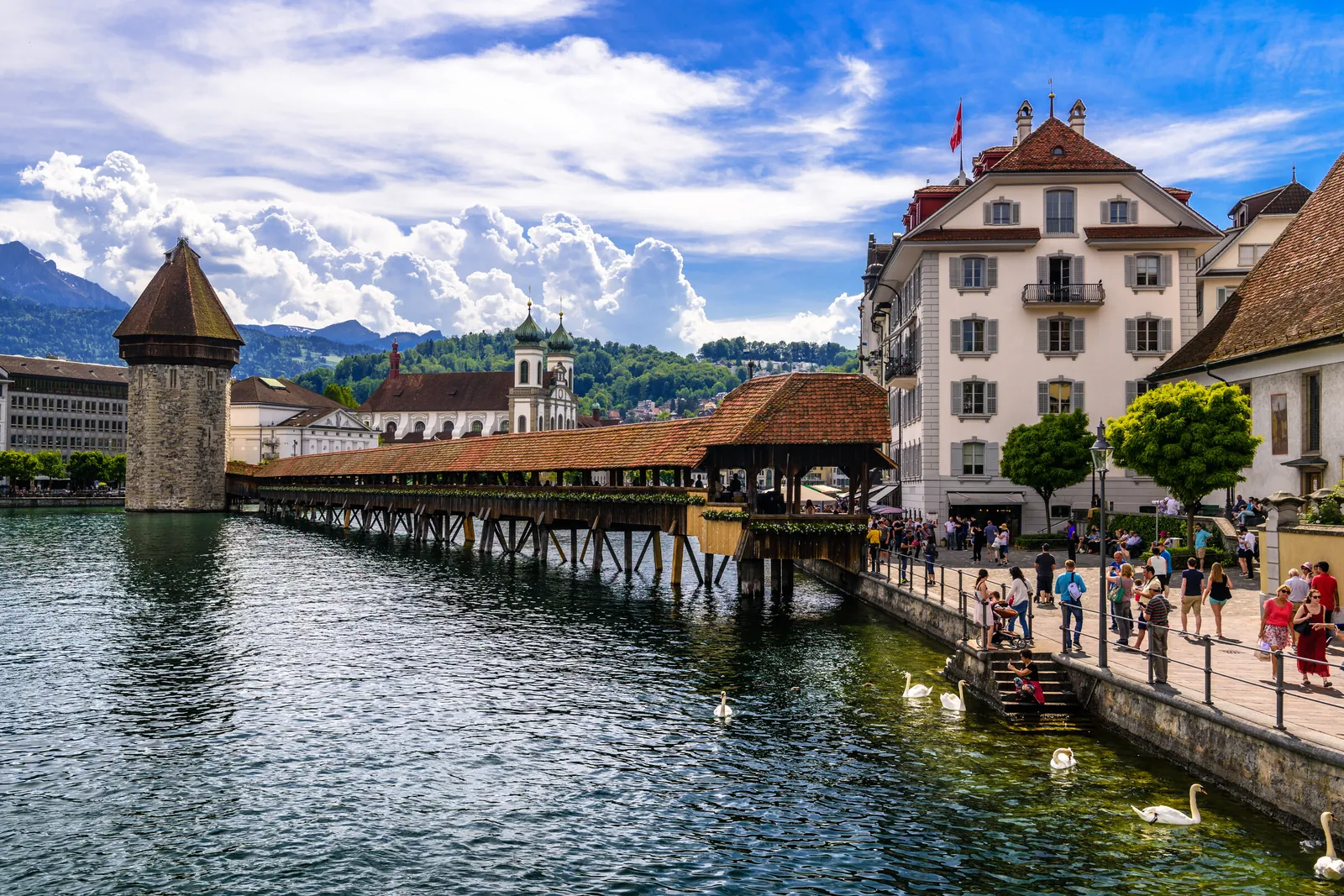
Short answer: June to September is the best time to visit Switzerland for hiking, lakes and mountain railways, when every lift, trail and lake steamer runs; June and September are less crowded than July and August, and September often has the most settled weather. For skiing and Christmas markets, come from mid-December to March. April, May and November are cheaper and quieter, but many mountain lifts and the Glacier Express take a break.
This page explains Switzerland’s weather month by month in the cities and the Alps, when the mountain railways and ski areas open and close, and which festivals and holidays to plan around, as of October 2026. For train passes, mountain excursions and costs, see our Switzerland travel guide, and plan your days with our AI trip planner.
Best time to visit Switzerland at a glance
| Goal | Best months | Why |
|---|---|---|
| Best all-round weather | June to September | Warmest months, long days, all mountain railways and high trails open |
| Fewest crowds with good weather | June and September | Lifts running, lower demand than July and August; September has fewer rainy days |
| Hiking in the Alps | July to September | High trails are free of snow; June can still have snow above about 2,000 m |
| Lakes and swimming | July and August | Lakes and rivers warm enough from about late June to August |
| Skiing | Mid-December to March | Most resorts open from December; Zermatt and the Jungfrau region run into late April or May |
| Christmas markets | Late November to December | Basel, Zurich, Montreux and other cities |
| Lowest prices | April to May, late October to November | The “between seasons”, outside Easter |
| Autumn color and harvest | September to October | Golden larches in the Alps, grape harvest in Lavaux, the Valais and Ticino |
| Sunniest lakes in spring | March to May in Ticino | Lugano and Locarno are the mildest and sunniest region |
Switzerland weather month by month
Weather month by month
The climate table shows average daily highs and lows and rain or snow for each month from MeteoSwiss’s 1991–2020 climate normals, as published by the World Meteorological Organization. Altitude matters more than the calendar: temperatures fall by about 6 °C for every 1,000 m you climb, so Zurich averages 24 °C (76 °F) on a July afternoon, Zermatt 20 °C (68 °F), and the Jungfraujoch only 3 °C (38 °F). North of the Alps, summer is the wettest season, with afternoon thunderstorms, and winter is cold and often foggy in the lowlands while the mountains are sunny. Ticino, south of the Alps, is the warmest and sunniest region, and the inner Alpine valleys of the Valais and the Engadin are the driest.
Switzerland month by month
January
Cold and often foggy in the lowlands, with highs of about 3–5 °C (37–41 °F) in Zurich and Geneva, but often bright and sunny above the fog. Peak ski season after New Year’s week: the Lauberhorn races are in Wengen on January 15–17, 2027, and Snow Polo plays on the frozen lake at St. Moritz on January 22–24. In the Upper Engadine nights average about −16 °C (3 °F).
February
Still deep winter in the mountains and one of the busiest ski months, with school sports holidays across Europe. Carnival season arrives: Lucerne’s Fasnacht in early February, and Basel’s Morgestraich at 4 a.m. on February 15, 2027. White Turf horse races run on the frozen lake at St. Moritz on February 7, 14 and 21, 2027.
March
Days lengthen and the lowlands reach about 10 °C (50 °F), while spring skiing in sunshine is excellent high up. The Engadin Marathon Week (March 6–14, 2027) ends with the cross-country ski marathon. Ticino starts to bloom with camellias. Easter falls on March 28 in 2027, and Good Friday and Easter Monday are holidays in most cantons.
April
Changeable spring weather, with highs of about 15 °C (59 °F) in Zurich and 17 °C (62 °F) in Lugano. Ski areas close one by one (the Jungfrau Ski Region on April 25, 2027), and many summer lifts haven’t opened yet. Zurich’s Sechseläuten guild parade and Zermatt Unplugged (April 6–10, 2027) fill the calendar. Good value in the cities and Ticino.
May
Spring flowers in the valleys and snow on the peaks. Lake steamers move to fuller timetables, the Glacier Express summer season starts in early May, and Pilatus’s cogwheel railway and Lucerne’s Golden Round Trip reopen. Higher trails are still snowbound. Ascension (May 6, 2027) and Whit Monday (May 17) are holidays, so expect busy trains on long weekends. Lugano’s wettest month, with heavy showers.
June
The start of summer: about 22 °C (72 °F) in Zurich, long evenings and most mountain railways running. High passes and trails above about 2,000 m may still have snow early in the month. Art Basel runs from June 17 to 20, 2027. A good month to beat the crowds.
July
Peak summer, with Zurich around 24 °C (76 °F), Geneva and Lugano 27 °C (80–81 °F), and Zurich’s sunniest month. All trails, lifts and boats are running, and lakes are warm enough for swimming. Afternoon thunderstorms are common in the mountains, so go up early. The Montreux Jazz Festival runs from July 2 to 17, 2027. Busiest and most expensive in Lucerne, Interlaken and Zermatt.
August
Similar to July, and still busy. Swiss National Day on August 1 brings bonfires, fireworks and village celebrations everywhere. The Locarno Film Festival (August 4–14, 2027), Zurich’s Street Parade (August 14) and the Lucerne Festival (from August 12) fill the cultural calendar. The Jungfraujoch averages only about 3.5 °C (38 °F) on a summer afternoon.
September
For many, the best month of the year: Zurich averages about 19 °C (66 °F), with fewer rainy days than any summer month, clear mountain air and thinner crowds once the school holidays end. Cows come down from the alpine pastures in decorated processions, and the grape harvest begins in Lavaux, the Valais and Ticino. The Lucerne Festival runs until September 12, 2027.
October
Crisp, often sunny days and golden larches in the Alps, with highs around 14 °C (57 °F) in Zurich. Mountain lifts and summer excursions start closing for maintenance: Grindelwald First’s summer season ends in late October and the Glacier Express doesn’t run from October 11 to December 4, 2026. Lugano is still mild, at about 17 °C (62 °F), with chestnut season in Ticino. Geneva’s wettest month.
November
Quiet, grey and often foggy in the lowlands, with many hotels and lifts in the mountains closed between seasons; Zermatt’s glacier ski area keeps going. Bern’s onion market is on November 23, 2026, and Christmas markets open toward the end of the month, including Basel’s from November 26. Prices are low.
December
Winter returns, with ski areas opening from late November to mid-December and the Glacier Express back from December 5. Christmas markets in Basel, Zurich and Montreux run until just before Christmas, and Geneva celebrates the Escalade on December 11–13, 2026. Christmas and New Year are the busiest, most expensive weeks in ski resorts.
Best time to visit by region
Zurich, Basel and Bern
Warm summers and cold, foggy winters. May to September is best for lake and river swimming and outdoor cafés; December is lovely for Christmas markets. See our guides to Zurich, Basel and Bern.
Lucerne and Central Switzerland
May to October, when Pilatus’s cogwheel railway and the Golden Round Trip run and the lake steamers have full timetables. In winter, fog often covers the lake while Rigi and Pilatus are in sunshine. See our Lucerne guide.
Interlaken and the Jungfrau region
July to September for hiking and the clearest views, with June and late September quieter. The Jungfraujoch is open all year, so pick the clearest morning in any season. Skiing runs from late November to late April. See our Interlaken guide.
Zermatt and the Valais
One of the driest places in the Alps, with only about 640 mm (25 in) of rain and snow a year. July to September is the hiking season; skiing runs from November to early May, and glacier skiing continues in summer. See our Zermatt guide.
Geneva, Montreux and Lake Geneva
The mildest region north of the Alps. May to September for the lake and terraces, September and October for the grape harvest in Lavaux, and December for the Escalade and Christmas markets. See our Geneva and Montreux guides.
St. Moritz and the Engadin
A high, dry, sunny valley: cold, bright winters from December to March with events on the frozen lake, and fresh summers from late June to September for hiking, sailing and the Bernina Express. See our St. Moritz guide.
Lugano and Ticino
Warm and sunny, with about 2,120 hours of sunshine a year, but heavy downpours from May to October. April to June and September to October are best; some attractions close in winter. See our Lugano guide.
Best time for hiking, skiing, scenic trains and cycling
Hiking
July to September, when high trails are snow-free; June and October for lower routes. Start early to avoid afternoon thunderstorms. See our hiking guide.
Skiing
Mid-December to March for the widest choice, with January and March often the best value outside school holidays. Zermatt, Saas-Fee and the Jungfrau region have the longest seasons.
Scenic trains and boat trips
May to October, when the Glacier Express runs its summer timetable and lake steamers sail most often; winter rides through snowy landscapes are just as spectacular. See our boat trips guide.
Cycling and wine tasting
May to September for cycling routes and mountain passes, and September to October for the grape harvest and wine festivals. See our cycling and wine tasting guides.
Seasons to plan around
The between seasons (April to May, late October to November): many mountain railways, high-altitude hotels and some scenic trains close for maintenance. Check each excursion’s operating dates before booking; the Glacier Express doesn’t run from October 11 to December 4, 2026.
Summer thunderstorms: in the mountains, afternoon storms are common from June to August. Go up early, and check the MeteoSwiss forecast before high trips.
Avalanche risk in winter: stay on marked runs and trails, and check the SLF avalanche bulletin before going off-piste.
Busy holidays: Christmas, New Year, February sports holidays, Easter, Ascension and Whitsun weekends, and July–August. Public holidays are set by each canton, except Swiss National Day on August 1; shops close and transport runs a Sunday timetable.
How long to stay
Five days covers Zurich, Lucerne and Interlaken; seven adds Zermatt; ten to fourteen days lets you add the Glacier and Bernina Express, Geneva and Ticino. Keep a spare day for the weather in the mountains. Our Switzerland travel guide has sample 5-, 7-, 10- and 14-day itineraries.
Best time to visit Switzerland: FAQ
What is the best month to visit Switzerland?
September: warm days, fewer rainy days than in summer, all mountain railways running and fewer crowds after the school holidays. June is the next best, though high trails may still have snow.
What is the cheapest time to go to Switzerland?
April to May and late October to November, outside Easter. Many mountain lifts are closed then, so focus on the cities, lakes and Ticino.
When does it snow in Switzerland?
In the mountains from about November to April, and on the highest peaks all year. In the lowland cities, snow is occasional from December to February and rarely lasts long.
What is the rainiest month in Switzerland?
North of the Alps, the summer months, with thunderstorms: Zurich gets the most rain in May to July, and Lucerne about 170 mm (6.7 in) in August. In Lugano, May is wettest; in Geneva, October.
Is October a good time to visit Switzerland?
Yes for golden autumn colors, clear days and lower prices, but some mountain lifts and excursions close during the month and the Glacier Express stops on October 11, 2026. Check opening dates.
When is ski season in Switzerland?
Most resorts open from early or mid-December to late March or April. Zermatt opens on November 1, 2026 and runs until May 3, 2027, and its glacier offers summer skiing.
Sources · last reviewed 4 Oct 2026
Researched and last reviewed by TravelerCenter on 8 October 2026. Temperatures, rain, rainy days and sunshine come from MeteoSwiss’s 1991–2020 climate normals as published by the WMO (archived by NOAA NCEI) for Zurich-Fluntern, Geneva, Lugano, Lucerne, Interlaken, Zermatt, Samedan and the Jungfraujoch. Lift, train and ski-season dates come from the operators (Glacier Express, Jungfrau Railways, Zermatt Bergbahnen, Pilatus, Engadin St. Moritz); event dates from the organizers and tourism offices; Easter and holiday dates are calculated. The Basel Fasnacht and Lucerne Fasnacht dates and the cantonal holiday rules are flagged for checking. Check opening dates with each operator before you travel.
Also: MeteoSwiss normals 1991–2020, Zurich Fluntern (climate)
Data: Natural Earth (PUBLIC DOMAIN) · © OpenStreetMap contributors (ODBL) · Wikidata (CC0)