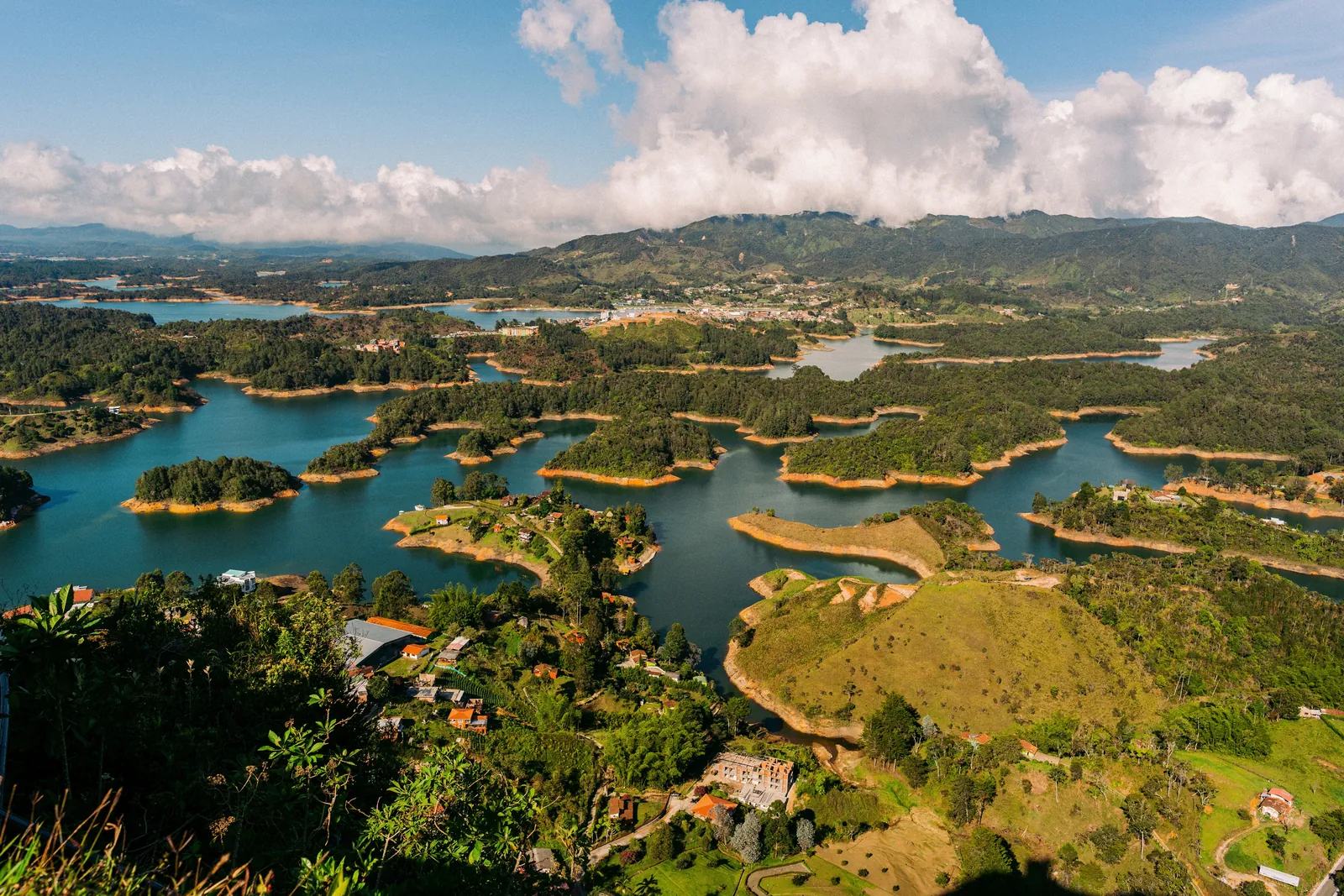
Short answer: with 7 days, pair one Andean city with the Caribbean: two nights in Medellín with a day at Guatapé, then fly to Cartagena for four nights in the walled city and a boat day to the Rosario Islands. With 10 days, follow the classic mountains-to-the-sea route: Bogotá, Medellín, three nights in Salento for coffee farms and the wax palms of the Cocora Valley, and Cartagena. With 14 days, add Santa Marta and Tayrona National Natural Park, or a few days of beach and diving on San Andrés. Colombia is big and its mountain roads slow, so fly between regions: domestic flights are short and frequent.
This guide turns the sample trips on our Colombia travel guide into day-by-day plans, with travel times between stops and the best area to sleep each night. To pick your month, see the best time to visit Colombia, and for the places themselves, our top 10 places to visit in Colombia. For a plan built around your dates and interests, use our AI trip planner. Everything was checked as of October 2026.
The three routes at a glance
| Route | Days | Stops (nights) | Best for |
|---|---|---|---|
| One city and the Caribbean | 7 | Medellín 2, Cartagena 4 | First trip, short vacation, warm weather |
| Cities, coffee and the Caribbean | 10 | Bogotá 2, Medellín 2, Salento 3, Cartagena 2 | The classic first trip: culture, mountains, beach |
| Andes to Tayrona | 14 | Bogotá 2, Medellín 2, Salento 3, Cartagena 3, Santa Marta or Tayrona 3 | Beaches, jungle trails, Caribbean coast |
| Andes and San Andrés | 14 | Bogotá 2, Medellín 2, Salento 3, Cartagena 3, San Andrés 3 | Divers, snorkelers, island time |
Bogotá’s El Dorado is the main international hub, and Medellín and Cartagena also have nonstop flights from the United States, so you can fly into one and home from another. Before any international flight into or out of Colombia, fill in Migración Colombia’s free online Check-Mig form, between 72 hours and one hour before departure. Entry rules and money are covered in our Colombia guide.
Travel times between the main stops
Colombia has no long-distance passenger trains. Domestic flights link all the main cities, often for less than a long bus ride, while buses through the Andes are slow and winding; our Colombia guide suggests flying any leg over about six hours. Flight times below are typical scheduled times and road times depend on traffic and weather, so treat them as approximate; the Guatapé and Tayrona figures are published by ProColombia and the national parks service.
| Leg | How | Time | Source |
|---|---|---|---|
| Bogotá – Medellín | Flight | under 1 h | Approximate |
| Bogotá – Cartagena or Santa Marta | Flight | about 1 h 30 | Approximate |
| Medellín – Cartagena | Flight | about 1 h 15 | Approximate |
| Bogotá – Pereira or Armenia (for Salento) | Flight | about 50 min | Approximate |
| Bogotá – San Andrés | Flight | about 2 h | Approximate |
| Medellín – Salento | Bus | about 6–7 h | Approximate |
| Armenia or Pereira – Salento | Bus or taxi (Salento is 25 km from Armenia) | about 1 h | ProColombia (distance); time approximate |
| Medellín – Guatapé | Bus from the North Terminal | about 2 h | ProColombia |
| Medellín airport (Rionegro) – city | Taxi or airport bus, through a tunnel | about 45 min–1 h | Approximate |
| Cartagena – Santa Marta | Bus or shared shuttle | about 4–5 h | Approximate |
| Santa Marta – Tayrona (El Zaino entrance) | Road, Troncal del Caribe (32 km) | about 1 h (approximate) | Parques Nacionales (distance) |
| Cartagena – Rosario Islands | Speedboat | about 1 h | Approximate |
Direct flights between the coffee region and the Caribbean are limited, so the plans below change planes in Bogotá or Medellín where needed; check routes when you book. Book domestic flights early for mid-December to mid-January, Holy Week and the June–July school holidays.
7 days: Medellín, Guatapé and Cartagena
One Andean city and one Caribbean city, linked by a flight of about an hour and a quarter. Fly into Medellín and out of Cartagena if you can.
- Day 1, Medellín: Land at José María Córdova airport in Rionegro and transfer to the city (about 45 minutes to an hour). Ride the Metro and a Metrocable into the hills, then the Botero sculptures on Plaza Botero. Sleep: El Poblado or Laureles.
- Day 2, Guatapé: An early bus from the North Terminal (about 2 hours) to climb the 740 numbered steps of El Peñol for the view over the reservoir islands, then lunch among the painted zócalos of Guatapé and a boat ride on the lake. Back for dinner. Sleep: same.
- Day 3, to Cartagena: A guided walk through Comuna 13’s murals and outdoor escalators in the morning, then a flight to Cartagena. Rafael Núñez airport is about 3 km (2 miles) from the walled city. Sunset on the city walls. Sleep: the walled city or Getsemaní (4 nights).
- Day 4, the walled city: Explore early and late, resting through the midday heat: the Clock Tower gate, the plazas, the churches and the colorful streets of Getsemaní at night.
- Day 5, the Rosario Islands: A speedboat (about an hour) to the coral islands of the Corales del Rosario y San Bernardo National Natural Park for swimming and snorkeling. Ask whether the mandatory accident insurance is included.
- Day 6, San Felipe and the mud volcano: The Castillo de San Felipe fortress in the morning; in the afternoon, the El Totumo mud volcano, about an hour away, or a beach day.
- Day 7, home: A last coffee on a plaza before the short ride to the airport.
Swap it: our Colombia guide suggests Bogotá as the city instead, with the Gold Museum, La Candelaria and Monserrate; it has more nonstop flights from the US. Coffee lovers can replace Medellín with three nights in Salento. More on each stop is in our Medellín and Cartagena guides.
10 days: Bogotá, Medellín, the coffee region and Cartagena
The classic first trip, from the mountains to the sea, with three short flights. Fly into Bogotá and home from Cartagena.
- Day 1, Bogotá: Arrive at El Dorado (about 30–60 minutes to the center by road; use the official yellow taxi line or an app). Take it slowly: the city is at about 2,600 m (8,500 ft). Sleep: La Candelaria, Chapinero or Usaquén (2 nights).
- Day 2, Bogotá: The Gold Museum (closed Mondays; Tuesday to Saturday 9 a.m. to 6 p.m., Sunday 10 a.m. to 4 p.m., per ProColombia), the street art and colonial lanes of La Candelaria, and the cable car or funicular up Monserrate for the view at sunset.
- Day 3, to Medellín: A flight of under an hour. Metrocable and Plaza Botero in the afternoon. Sleep: El Poblado or Laureles (2 nights).
- Day 4, Guatapé: El Peñol and the painted town, as in the 7-day plan.
- Day 5, to the coffee region: Fly to Pereira or Armenia, then about an hour by road to Salento (or take the bus from Medellín’s South Terminal, about 6–7 hours). Evening on the main street and the Alto de la Cruz viewpoint. Sleep: Salento or a coffee farm nearby (3 nights).
- Day 6, the Cocora Valley: A Willys jeep from the plaza to the trailhead and the classic loop walk (about 5–6 hours) through cloud forest and up to the wax palms, Colombia’s national tree.
- Day 7, coffee: A farm tour (about two hours) from picking to roasting and a tasting, then the colorful village of Filandia.
- Day 8, to Cartagena: Fly from Pereira or Armenia, usually changing in Bogotá or Medellín. Evening in Getsemaní. Sleep: the walled city or Getsemaní (2 nights).
- Day 9, Cartagena: The walled city in the morning, the Castillo de San Felipe in the afternoon, sunset on the walls. With an extra day, add the Rosario Islands.
- Day 10, home: Fly from Cartagena.
Swap it: short on time in the cities? Our top 10 post suggests dropping Bogotá and giving Cartagena a third night with the islands. Plan each stop with our Bogotá, Medellín, Salento and Cartagena guides.
14 days: from the Andes to Tayrona
The 10-day route with an extra night in Cartagena and three on the coast around Santa Marta, where the jungle of Tayrona National Natural Park meets the Caribbean below the Sierra Nevada.
- Days 1–7: Bogotá (2 nights), Medellín (2) and Salento (3), as in the 10-day plan.
- Days 8–10, Cartagena: The walled city, San Felipe and a Rosario Islands boat day. Sleep: the walled city or Getsemaní (3 nights).
- Day 11, to Santa Marta: Bus or shared shuttle along the coast (about 4–5 hours). Sunset on the seafront. Sleep: Santa Marta’s historic center, or Taganga or Rodadero (3 nights).
- Day 12, Tayrona: Be at the El Zaino entrance, 32 km (20 miles) east on the Troncal del Caribe, when it opens. Walk from Cañaveral through the forest to Arrecifes, La Piscina and Cabo San Juan del Guía, about two hours from Cañaveral. Tickets are sold at the entrance on the day, with no advance reservations, and every visitor must also buy accident insurance. Or sleep in or near the park.
- Day 13, Minca: The cool foothill village of Minca, about 45 minutes away, for coffee and cacao farms, waterfalls and birdwatching.
- Day 14, home: Fly from Santa Marta’s airport, about 16 km (10 miles) south of the center, connecting in Bogotá, or ride back to Cartagena for an international flight.
Check Tayrona’s closures: under its “Respira Tayrona” plan the park closes completely three times a year, for about two weeks each in February and June and once between October and November, so confirm the dates with the national parks service before you book. In those weeks, spend the days in Minca, Palomino or on the beaches of Taganga instead. Details are in our Santa Marta and Tayrona National Natural Park guides.
14 days: the Andes and San Andrés
Swap the Santa Marta coast for the island of San Andrés, the “sea of seven colors”, about two hours by air from Bogotá and also reached from Medellín and Cartagena.
- Days 1–10: Bogotá (2 nights), Medellín (2), Salento (3) and Cartagena (3), as above.
- Day 11, to San Andrés: Buy the archipelago’s tourist card at the departure airport when you check in (reported at COP 153,000 in 2026; not needed for stays under 24 hours). Afternoon on Spratt Bight beach. Sleep: the North End, near the airport and beach (3 nights).
- Day 12, Johnny Cay: A short boat ride (about 15 minutes) to the island’s most famous cay; swim only in marked areas.
- Day 13, around the island: A golf cart or scooter loop, snorkeling or a dive on the reef, or a day trip to quieter Providencia by small plane (about 20 minutes).
- Day 14, home: Fly back to Bogotá or via Panama City.
More on the islands, Providencia and diving is in our San Andrés guide.
Where to sleep, by stop
| Stop | Best area for a short stay | Why |
|---|---|---|
| Bogotá | La Candelaria (historic center), or Chapinero or Usaquén (restaurants, calmer evenings) | Walk to museums by day; more choice of dining in the north |
| Medellín | El Poblado or Laureles | Restaurants, parks, easy taxis and Metro |
| Salento and the coffee region | Salento town, or a coffee farm stay nearby | Jeeps to Cocora leave from the plaza |
| Cartagena | Inside the walled city, or Getsemaní; Bocagrande for beach hotels | Walk everywhere; Getsemaní is livelier and often cheaper |
| Santa Marta and Tayrona | The historic center, Taganga or Rodadero; or stay in or near the park | Close to the El Zaino road; easy trips to Minca |
| San Andrés | The North End | Walk to the beach, restaurants and boats |
Cartagena and San Andrés are the most expensive places to stay; the coffee region and smaller towns are the cheapest. Book early for Colombia’s own vacation peaks: mid-December to mid-January, Holy Week and June to July.
Alternatives by interest
Beach lovers
Keep one Andean city and spend the rest on the Caribbean: Cartagena with the Rosario Islands, then Santa Marta with Tayrona and a couple of slow days in Palomino, where you float down the river to the sea on an inner tube; or San Andrés for clear water. December to April is the dry season on the coast, and January to April the calmest sea on San Andrés. See our beaches guide.
Hikers
Swap the beach days for the Lost City (Ciudad Perdida), a four- to six-day guided trek from near Santa Marta that can only be done with an authorized operator. In the coffee region, add a second Cocora walk, and from Bogotá visit the Guatavita crater lake on a guided trail. Plan the Andes for the drier windows of December to February and July to August. More in our hiking guide.
Coffee and food lovers
Give the coffee region four or five nights and stay on a working farm; the area has two harvests a year. Bogotá’s restaurant scene is one of the best in Latin America, Medellín has bandeja paisa, and Cartagena serves Caribbean seafood, coconut rice and fresh fruit at every corner.
Nature and the Amazon
From Bogotá, fly to Leticia for three or four nights on the Amazon at the triple border with Brazil and Peru, with pink river dolphins and the village of Puerto Nariño. ProColombia recommends the yellow fever vaccine at least 15 days before you travel, plus non-spray repellent and long, light clothing.
Tips for planning your route
- Match the season to the route. December to March is dry on the Caribbean coast and in Bogotá; July and August are a second dry window in the Andes and the coffee region. April–May and October–November are the rainiest months. See our best time to visit Colombia guide.
- Fly the long legs. Mountain roads are slow; a flight of an hour or so often replaces a full day on a bus.
- Fill in Check-Mig. It is free, on Migración Colombia’s own website, between 72 hours and one hour before international flights.
- Plan around Tayrona’s closures and buy the park’s mandatory accident insurance along with your ticket.
- Use app or hotel-called taxis. Don’t hail taxis in the street; at El Dorado, use the authorized yellow taxis with white plates. In Cartagena, most taxis have no meter, so agree the fare first.
- Ease into the altitude. Bogotá sits at about 2,600 m (8,500 ft); start with an easy first day.
Colombia itinerary FAQ
Is 7 days enough for Colombia?
Yes for one Andean city and Cartagena, such as Medellín and Guatapé plus four nights on the Caribbean. To add the coffee region, plan about 10 days; with two weeks you can add Tayrona or San Andrés.
Should I start in Bogotá or Medellín?
Start where your flight is cheapest. Bogotá has the most international flights and the Gold Museum; Medellín has a milder climate and Guatapé nearby. Either way, end on the Caribbean coast so you finish with warm weather and beaches.
How do I get to Salento and the Cocora Valley?
Fly to Armenia or Pereira (about 50 minutes from Bogotá), then about an hour by bus or taxi; Salento is 25 km (16 miles) from Armenia. From Salento’s plaza, Willys jeeps run to the Cocora Valley trailheads.
Should I fly or take the bus in Colombia?
Fly between regions: Bogotá to Cartagena takes about an hour and a half by air, while Medellín to Salento is six to seven hours by bus. Buses work well on shorter legs such as Medellín to Guatapé or Cartagena to Santa Marta; travel by day.
Cartagena or Santa Marta?
Cartagena for colonial streets, food and island boat trips; Santa Marta as a base for Tayrona, Minca, Palomino and the Lost City. With two weeks, do both: they are four to five hours apart by road.
When is Tayrona closed?
Three times a year for about two weeks: in 2026 from February 1 to 15, June 1 to 15, and once between October and November. Check the national parks service’s announcements before you plan your Santa Marta days.
What is the best month for a Colombia trip?
January, the driest month in much of the country, or any time from December to March. July and August are good for the Andes and the coffee region; avoid Colombia’s own holiday peaks if you want lower prices.
Sources
Researched and last reviewed by TravelerCenter on 8 October 2026. Tayrona’s distance from Santa Marta, closures, ticket sales and insurance come from Parques Nacionales Naturales de Colombia; Guatapé, El Peñol, the Gold Museum’s hours, Salento’s distance from Armenia, coffee farm tours and Leticia from ProColombia; Check-Mig from Migración Colombia; the San Andrés tourist card from the UK and Canadian governments and press reports; seasons from IDEAM’s 1991–2020 climate normals in our best-time guide. Flight, bus and boat times come from our destination guides and are approximate. Times, fees and rules change, so check before you travel.
Data: Wikidata (CC0)