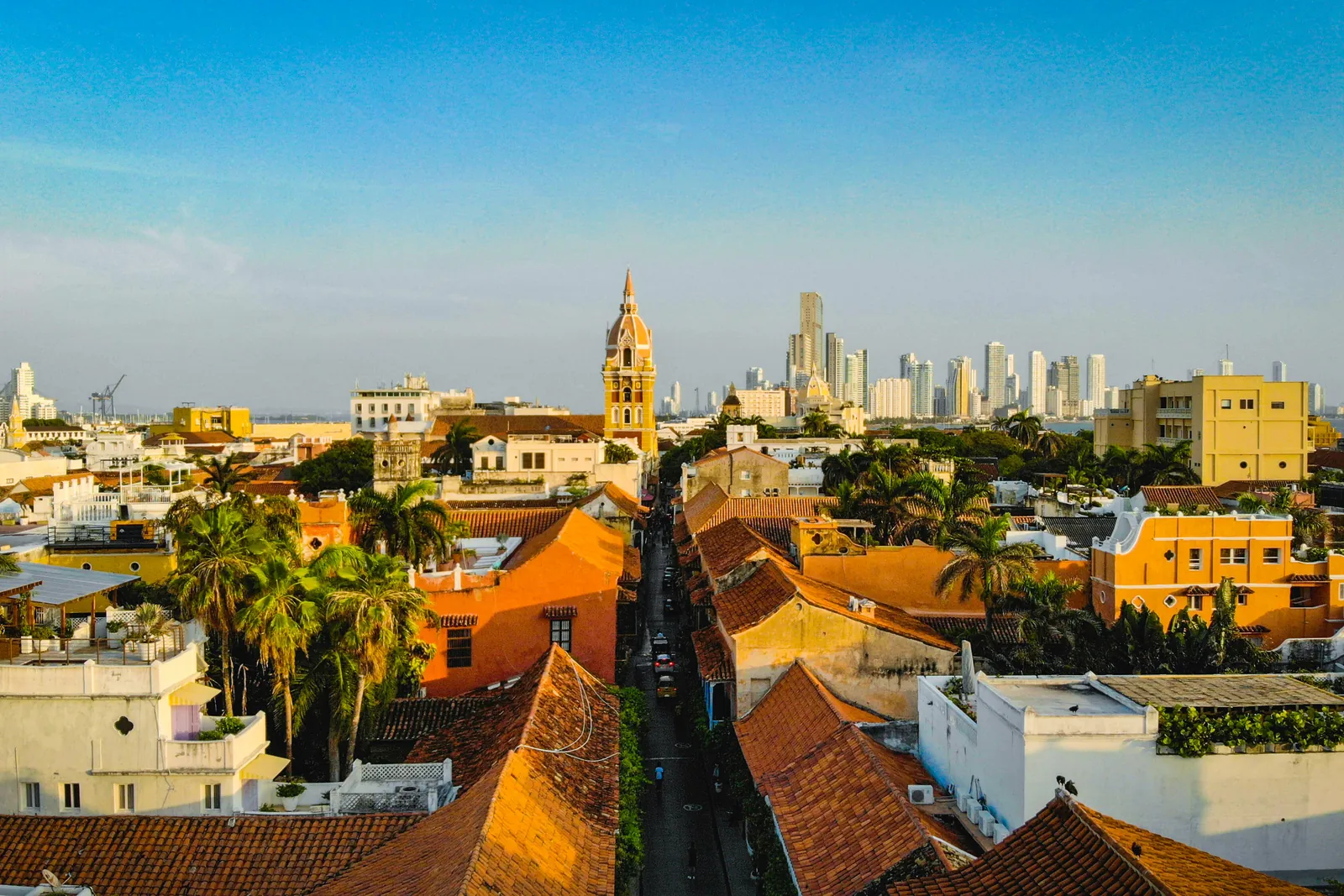
Short answer: December to March is the best time to visit Colombia: it is the dry season on the Caribbean coast around Cartagena, Santa Marta and Tayrona, and the driest stretch in Bogotá, with January the driest month in much of the country. July and August are a second, shorter dry window in the Andes, good for Medellín, Bogotá and the coffee region. The trade-off is that mid-December to mid-January, Holy Week and the June–July school holidays are Colombia’s own vacation peaks, with the highest prices; April–May and October–November are the rainiest months.
Because Colombia lies near the equator, its climate depends on altitude rather than season, so this page explains each region’s dry and rainy months, what each month is like, and when parks close and holidays fill the roads, as of October 2026. For entry rules, Check-Mig, money and getting around, see our Colombia travel guide, and plan your days with our AI trip planner.
Best time to visit Colombia at a glance
| Goal | Best months | Why |
|---|---|---|
| Best weather overall | December to March | Dry season on the Caribbean coast; Bogotá’s driest months |
| Caribbean beaches (Cartagena, Santa Marta) | December to April | Cartagena averages under 4 mm (0.2 in) of rain a month from January to March, with steady breezes |
| Andes and coffee region | July and August, and December to February | The drier windows between the two rainy seasons |
| Tayrona National Natural Park | December to April, avoiding the closures | Drier trails; the park closes for about two weeks in February, June and October–November |
| San Andrés | January to April | The driest months, with calm, clear sea |
| Lowest prices and fewest crowds | Late January to mid-March (outside Holy Week), late April to May, September to November | Between Colombia’s vacation seasons |
| Festivals | February and early August | Barranquilla’s carnival (February 6–9, 2027); Medellín’s Flower Fair |
Colombia weather month by month
Weather month by month
The climate table shows average daily highs and lows and rain for each month in Bogotá, from the 1991–2020 climate normals that Colombia’s weather institute, IDEAM, submitted to the World Meteorological Organization (WMO) for El Dorado airport, at about 2,550 m (8,400 ft). Bogotá is cool all year, with highs of 19–20 °C (66–68 °F) and lows of 6–10 °C (43–50 °F); its rain has two peaks, April–May and October–November, at about 107–117 mm (4.2–4.6 in) a month, and two drier spells, with January the driest at about 33 mm (1.3 in). The same pattern holds in Medellín and the coffee region, which are warmer and wetter. The Caribbean coast works differently: one long dry season from December to April and a wet second half of the year, with October the wettest month in Cartagena at about 237 mm (9.3 in). Temperature depends on altitude, not the month: Cartagena is 31–32 °C (88–90 °F) all year.
Colombia month by month
January
The driest month across most of Colombia: under 1 mm of rain in Cartagena and Santa Marta and about 33 mm (1.3 in) in Bogotá, with cold mornings of about 6 °C (43 °F) in the capital. The first half of the month is the end of the Colombian vacation season, so the coast and Salento are busy and expensive until about Epiphany (Monday, January 11, 2027). After that, it is one of the best months of the year.
February
Dry, sunny and windy on the Caribbean coast, and still fairly dry in Bogotá. Barranquilla’s carnival, one of the biggest in the Americas, runs from February 6 to 9, 2027, two hours from Cartagena. Tayrona usually closes for its first rest period in early February (February 1–15 in 2026), so check the dates before you plan a visit.
March
Still dry on the coast and in San Andrés, while the Andes start to get wetter. In 2027, Holy Week falls from March 21 to 28, with St. Joseph’s Day (Monday, March 22) and Holy Thursday and Good Friday (March 25–26) as holidays: it is a major domestic travel week, and beaches and Tayrona fill up. Book well ahead.
April
The end of the dry season on the Caribbean, which is calm, hot and sunny, and the start of the first rainy season in the Andes: April is Bogotá’s wettest month, with about 117 mm (4.6 in), and the coffee region gets afternoon storms. After Easter, crowds fall and prices drop.
May
Rainy in the Andes, with Medellín‘s wettest month at about 219 mm (8.6 in), and the first rains on the Caribbean coast, where Cartagena jumps to about 117 mm (4.6 in). It is low season, with good hotel rates. Labor Day (May 1) is a public holiday.
June
Rain eases in the Andes as the mid-year dry spell begins. Colombian school vacations start mid-month, and Tayrona counts June 1 to July 31 as high season, though it usually closes for its second rest period in early June (June 1–15 in 2026). The Atlantic hurricane season begins on June 1.
July
One of the best months for the Andes: Bogotá averages about 49 mm (1.9 in) of rain and is often breezy, and the coffee region around Salento and Medellín is at its driest. Vacation crowds continue into late July. Independence Day (July 20) is a national holiday. The Caribbean coast is hot and humid with passing showers.
August
Dry and windy in Bogotá, where it is kite-flying season in the parks and the city celebrates its founding on August 6, followed by the Battle of Boyacá holiday on August 7. Medellín’s Flower Fair (Feria de las Flores), held since 1957, fills the first weeks of the month with parades of flower growers carrying their silletas. Book Medellín hotels early.
September
The second rainy season starts building in the Andes, and the Caribbean coast gets wetter, with about 133 mm (5.2 in) in Cartagena. It is a quiet, good-value month, though the hurricane season is near its peak in the Caribbean.
October
The wettest month on the Caribbean coast, with about 237 mm (9.3 in) in Cartagena and 127 mm (5.0 in) in Santa Marta, and very wet in the Andes and San Andrés. Tayrona’s third closure of 2026 runs from October 19 to November 2, according to Parques Nacionales. Columbus Day (Monday, October 12, 2026) makes a long weekend.
November
Still rainy, especially in the coffee region and on San Andrés, where November averages about 318 mm (12.5 in); Cartagena eases to about 178 mm (7.0 in). Cartagena celebrates its independence around November 11, with the holiday on Monday, November 16, 2026, and All Saints’ Day (Monday, November 2, 2026) makes another long weekend. The hurricane season ends on November 30.
December
The dry season returns to the Caribbean coast, with Cartagena down to about 45 mm (1.8 in), and the Andes dry out. On December 7, candle night opens the Christmas season before the Immaculate Conception holiday (December 8), and Medellín’s Christmas lights draw crowds all month. From mid-December, the Colombian vacation season makes the coast and Salento the busiest and most expensive of the year; Tayrona’s high season runs from December 1 to January 31.
Best time to visit by region
Cartagena
December to April, the dry season, with breezes and blue skies; late December and January are the busiest and most expensive weeks. September to November is the wettest stretch, with short, heavy showers. See our Cartagena guide.
Bogotá
December to March and July to August are the drier months, but it can rain any afternoon, so carry a light jacket and umbrella. Nights are cool all year. See our Bogotá guide.
Medellín
Pleasant all year, with highs of 27–29 °C (81–84 °F) and lows near 17–18 °C (63–64 °F). December to February and July to August are drier; early August brings the Flower Fair and December the Christmas lights. See our Medellín guide.
Salento and the coffee region
July and August are the driest months, with about 87–102 mm (3.4–4.0 in) at Armenia’s airport; December to February is drier than the rainy peaks of April and October–November, when Cocora Valley trails are very muddy. See our Salento guide.
Santa Marta and Tayrona
December to April, the dry season, with strong breezes; Santa Marta is one of the driest places on the coast, with about 562 mm (22 in) of rain a year. Avoid Tayrona’s closure periods and the crowded holiday weeks. See our Santa Marta and Tayrona guides.
San Andrés
January to April, the driest months, with about 27–28 mm (1.1 in) in March and April, trade winds and calm, clear water. Rain increases from June, and October and November are the wettest months. See our San Andrés guide.
Best time for beaches, hiking, diving and festivals in Colombia
Caribbean beaches
December to April for Cartagena’s islands, Santa Marta and Tayrona, and January to April for San Andrés. Avoid Holy Week and late December if you want quiet sand. More in our beaches guide.
Hiking
December to February and July to August for the Cocora Valley and Andean trails, and December to April for the coastal trails of Tayrona and the Sierra Nevada, when paths are driest. See our hiking guide.
Diving and snorkeling
January to April in San Andrés and around Cartagena’s Rosario Islands, when the sea is calmest and clearest. See our diving and snorkeling guides.
Festivals
Barranquilla’s carnival (February 6–9, 2027), Holy Week processions (March 21–28, 2027), Medellín’s Flower Fair (early August), Cartagena’s independence festivities (around November 11) and candle night (December 7). Check event dates with the organizers.
Seasons to plan around
The rainy seasons: April–May and October–November in the Andes, and roughly May to November on the Caribbean coast, wettest from September to November. Rain usually comes as afternoon storms. Heavy rain can cause floods and landslides on Andean roads, so allow extra time for overland travel.
The Atlantic hurricane season, June 1 to November 30: hurricanes are uncommon on the mainland, but tropical storms can affect the Caribbean coast and the San Andrés archipelago. Follow forecasts from IDEAM if you travel in the autumn.
Tayrona closures: the park closes three times a year for about two weeks, in February, June and between October and November, as environmental and cultural rest periods (“Respira Tayrona”). In 2026 the dates were February 1–15, June 1–15 and October 19 to November 2; 2027 dates are announced by Parques Nacionales during the year.
Holiday peaks and long weekends: mid-December to mid-January, Holy Week and mid-June to July are the busiest times. Colombia also moves many holidays to the following Monday, creating long weekends (“puentes”) when roads, buses and beach hotels fill.
How long to stay
Ten days covers Cartagena, Medellín and the coffee region by air; two weeks adds Bogotá or Santa Marta and Tayrona. Fly between regions, as overland journeys are long, especially in the rainy months. Our Colombia travel guide has sample itineraries.
Best time to visit Colombia: FAQ
What is the best month to visit Colombia?
February is a strong choice: dry on the Caribbean coast and fairly dry in Bogotá, after the January holiday crowds and before Holy Week. Check Tayrona’s early-February closure if it is on your list.
What is the rainiest month in Colombia?
October on the Caribbean coast, with about 237 mm (9.3 in) in Cartagena, and April or October–November in the Andes. On the WMO 1991–2020 normals, Bogotá’s wettest month is April, at about 117 mm (4.6 in).
What is the cheapest time to go to Colombia?
Outside the Colombian vacation peaks: late January to mid-March (excluding Holy Week), late April to May, and September to November, avoiding long weekends.
When is the best time to visit Cartagena?
December to April, the dry season. January to March has almost no rain; late December and early January are the busiest and most expensive weeks.
Is Colombia hot all year?
Only at low altitude. The Caribbean coast is 31–33 °C (88–91 °F) by day all year, Medellín is spring-like, and Bogotá is cool, with highs of about 19–20 °C (66–68 °F) and chilly nights.
When is hurricane season in Colombia?
June 1 to November 30. Hurricanes rarely reach the mainland, but tropical storms can affect the Caribbean coast and San Andrés, mostly from September to November.
Sources · last reviewed 9 Oct 2026
Researched and last reviewed by TravelerCenter on 8 October 2026. Monthly temperatures and rain come from the WMO 1991–2020 climate normals submitted by IDEAM for Bogotá (El Dorado), Medellín (Olaya Herrera), Cartagena (Rafael Núñez), Santa Marta (Simón Bolívar), San Andrés (Sesquicentenario) and Armenia (El Edén), archived by NOAA NCEI; dry and rainy seasons and the Flower Fair from ProColombia; Tayrona closures, high season and the 2026 closure dates from Parques Nacionales Naturales de Colombia (Resolution 091 of 2026); the hurricane season from NOAA’s National Hurricane Center. Holiday dates are calculated under Colombia’s holiday-moving law; carnival dates, candle night and crowd and price patterns come from our country and destination guides and general sources and are flagged for checking. Check park closures before you travel.
Also: IDEAM normals 1991–2020, Bogotá El Dorado (CATAM) (climate)
Data: Wikidata (CC0)