Short answer: with 7 days, fly into Split and out of Dubrovnik, with two nights each in Split, on Hvar and in Dubrovnik, linked by catamaran. With 10 days, start in Zadar for a day at Plitvice Lakes, stop at Krka’s waterfalls on the way to Split, then island-hop via Hvar and Korčula to Dubrovnik. With 14 days, add Zagreb at the start, or begin in Istria for Rovinj, Pula and the hill towns, then work south. Distances are short, but ferries and coast roads are slow, so plan one move every two or three days and travel in one direction.
This guide turns the sample trips on our Croatia travel guide into day-by-day plans, with travel times between stops and the best area to sleep each night. Late May to June and September to early October are the best months: warm sea, summer ferry timetables and fewer crowds than July and August. Our best time to visit Croatia guide goes month by month, and our top 10 places to visit in Croatia explains each stop. For a plan built around your dates and interests, use our AI trip planner. Everything here was checked as of October 2026.
The three routes at a glance
| Route | Days | Stops | Best for |
|---|---|---|---|
| Split, Hvar and Dubrovnik | 7 | Split (2 nights), Hvar (2 nights), Dubrovnik (2 nights) | First trip, island hopping without a car |
| The Dalmatian coast and Plitvice | 10 | Zadar (2 nights), Split (2 nights), Hvar (2 nights), Korčula (1 night), Dubrovnik (2 nights) | National parks plus islands, a bit of everything |
| Zagreb to Dubrovnik | 14 | Zagreb (2), Plitvice (1), Zadar (2), Split (2), Hvar (2), Korčula (2), Dubrovnik (2) | The whole country north to south |
| Istria and the coast | 14 | Istria (4), Plitvice (1), Zadar (2), Split (2), Hvar (2), Dubrovnik (2) | Food lovers, drivers, travelers arriving from Italy |
Croatia’s main airports are Zagreb, Split, Dubrovnik, Zadar and Pula. In summer, dozens of airlines fly direct to the coast; in winter, most international flights use Zagreb. Book an open-jaw ticket (into Zadar, Split, Zagreb or Pula and home from Dubrovnik) so you never backtrack. There are no trains to Dubrovnik.
Travel times between the main stops
These are the legs used in the plans below. Jadrolinija, the state ferry line, runs most car ferries and many catamarans; Krilo and TP Line add fast passenger catamarans along the Split–Hvar–Korčula–Dubrovnik coast. Most of these catamarans run only in summer, roughly June to September, and strong bura or jugo winds can cancel sailings, so check the operator’s site on the day. Times not from an operator are approximate.
| Leg | How | Time | Source |
|---|---|---|---|
| Split – Hvar Town | Catamaran (Jadrolinija, Krilo, TP Line) | about 1 h 05 | Jadrolinija |
| Split – Stari Grad (Hvar) | Jadrolinija car ferry, all year | about 2 h (approximate) | General reference |
| Split – Dubrovnik, calling at Hvar and Korčula | Summer catamaran | about 4 h 30–6 h end to end, depending on operator and stops (approximate) | Booking sites |
| Split – Dubrovnik | Bus, all year | about 4 h (approximate) | Booking sites |
| Zadar – Plitvice Lakes | Car or bus | about 1 h 30–2 h (approximate) | General reference |
| Zagreb – Plitvice Lakes | Car or bus (from Zagreb bus station) | about 2 h (approximate) | General reference |
| Split – Plitvice Lakes | Car | about 3 h (approximate) | General reference |
| Zagreb – Split | Train (summer night train too) | about 6–8 h (approximate) | General reference |
| Split – Makarska | Road (59 km) | about 1 h 15 by bus (approximate) | Biokovo Nature Park for the distance |
| Pula – Zadar | Krilo catamaran (Krilo Lux) | check the timetable | Krilo |
| Venice – Istria | Summer catamaran | about 2 h 30–3 h 30 (approximate) | General reference |
Buy catamaran tickets online or at the port a day or two ahead in July and August. On car ferries, vehicles often board in order of arrival on busy summer routes, so arrive an hour or two early even with a ticket. Buses are the backbone of public transport along the coast and between Zagreb and the main cities; expect a small charge for luggage in the hold.
7 days: Split, Hvar and Dubrovnik
The classic first week, no car needed. It works best from June to September, when catamarans link the islands directly; in May and October, check the timetables, as you may have to go back via Split or take the bus to Dubrovnik.
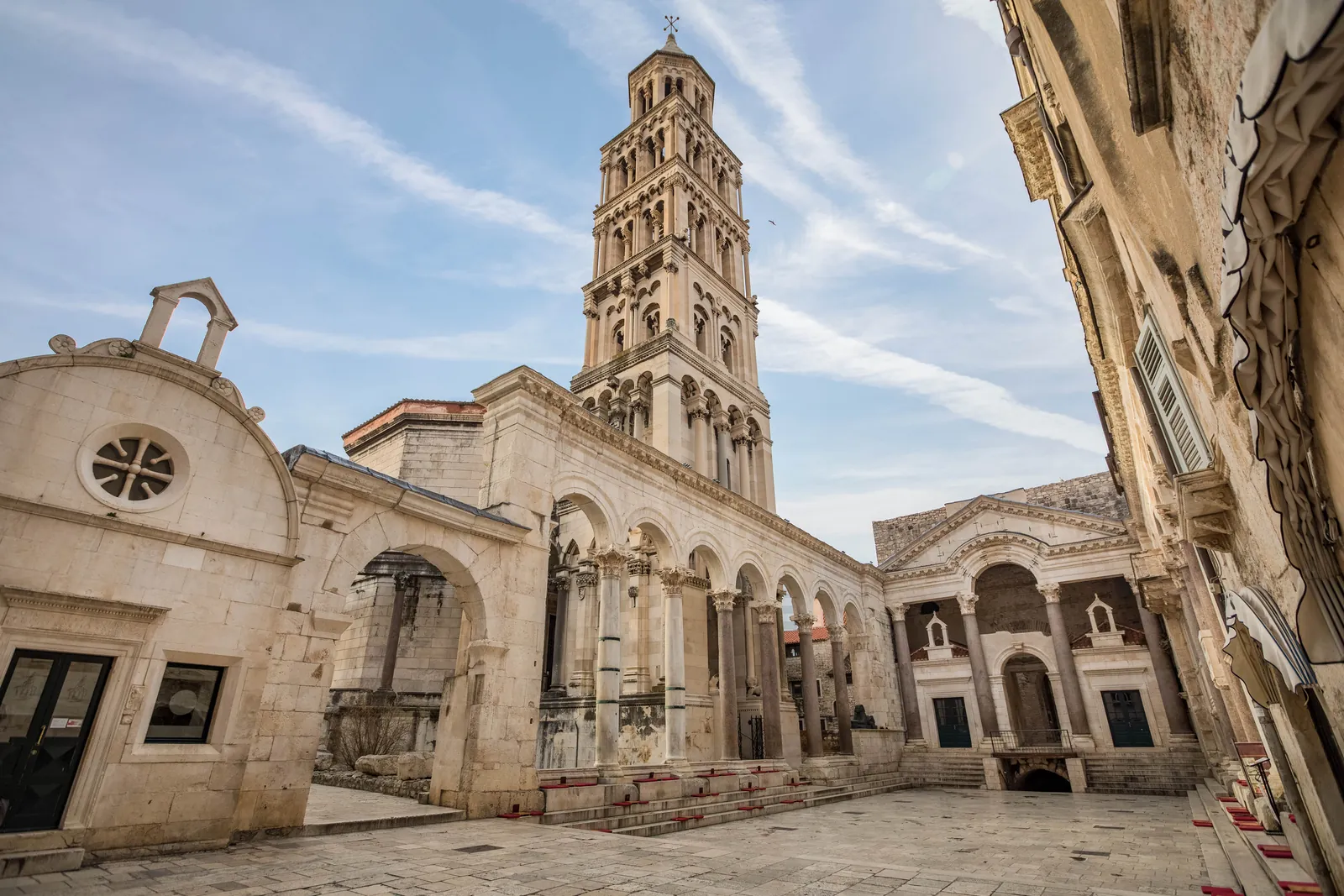
- Day 1, Split: Fly into Split and take the bus into town. Evening in Diocletian’s Palace, a Roman emperor’s retirement home that became the old town, and a walk on the Riva. Sleep: inside or just outside Diocletian’s Palace (2 nights).
- Day 2, Split and Trogir or Krka: Morning in the palace cellars and up the cathedral bell tower, then Marjan Hill for the view. Afternoon in the little UNESCO-listed town of Trogir, or a half-day trip to Krka National Park’s waterfalls.
- Day 3, to Hvar: Catamaran to Hvar Town (about 1 h 05). Climb to the Fortica fortress for sunset over the harbor and the Pakleni islands. Sleep: Hvar Town, or quieter Stari Grad or Jelsa (2 nights).
- Day 4, the Pakleni islands: A taxi boat to the Pakleni islands for swimming coves, or rent a scooter or car to see the lavender villages (in bloom in June) and Stari Grad’s old plain.
- Day 5, to Dubrovnik: Morning catamaran via Korčula, where you can sometimes break the journey for a few hours, to Dubrovnik. Evening walk on the Stradun. Sleep: the old town or Ploče (2 nights).
- Day 6, Dubrovnik: Walk the city walls first thing, before the heat and the cruise passengers, then the cable car up Mount Srđ for the view, and an afternoon swim from the rocks or a boat to Lokrum island.
- Day 7, home: A last coffee in the old town and the airport bus, about 20 km south of the city.
Swap it: beach lovers can trade Hvar for Brač and the long pebble spit of Zlatni Rat at Bol, or for Makarska’s beaches below Biokovo mountain. More detail is in our Split, Hvar and Dubrovnik guides.
10 days: Zadar, Plitvice, Krka and the islands to Dubrovnik
Croatia’s two famous waterfall parks plus the island-hopping classic. Fly into Zadar and home from Dubrovnik. A hire car helps for days 1 to 4; return it in Split before the islands.
- Day 1, Zadar: Arrive and walk the old town on its peninsula, ending at the Sea Organ and the Sun Salutation at sunset. Sleep: Zadar old town or nearby (2 nights).
- Day 2, Plitvice Lakes: Leave early (about 1 h 30–2 h by road) for your booked entry time. Online tickets are sold for an entrance and a time window, you may be at most an hour late, and swimming is strictly prohibited. Route C (8 km, 4–5 hours) covers the Upper and Lower Lakes, with the park’s boat and panoramic train included. In summer 2026, the day ticket was €40.
- Day 3, Krka and Šibenik, on to Split: Drive south to Krka National Park and walk the paths around Skradinski buk (the boat from Skradin is included from April to October), then lunch in Šibenik’s old town. Continue to Split. Sleep: Diocletian’s Palace area (2 nights).
- Day 4, Split: The palace, the cathedral, the Riva and Marjan Hill; drop the car.
- Day 5, to Hvar: Catamaran to Hvar Town; Fortica at sunset. Sleep: Hvar Town or Stari Grad (2 nights).
- Day 6, Hvar: The Pakleni islands by taxi boat, or the island’s villages and coves.
- Day 7, to Korčula: Catamaran to Korčula Town, a walled town on a small peninsula. Afternoon swim, evening in the old streets. Sleep: Korčula Town (1 night).
- Day 8, to Dubrovnik: Morning catamaran to Dubrovnik; the Stradun and the old harbor. Sleep: old town or Ploče (2 nights).
- Day 9, Dubrovnik: The city walls early, Lokrum island, and the Mount Srđ cable car at sunset.
- Day 10, home: From Dubrovnik airport.
Swap it: Plitvice’s falls are fullest from late April to June, and its forests turn gold and red in October. Without a car, take a day tour to Plitvice from Zadar and a tour to Krka from Split. Details: Zadar, Plitvice Lakes and Krka National Park.
14 days: Zagreb to Dubrovnik
The whole country from the capital to the far south, with a night beside Plitvice so you can be on the trails when the gates open (7:00 on the park’s autumn 2026 schedule). Fly into Zagreb, out of Dubrovnik.
- Days 1–2, Zagreb: The Upper Town’s lanes and the funicular, the Museum of Broken Relationships, Dolac market, cafés on Tkalčićeva street. Sleep: the Lower or Upper Town (2 nights).
- Day 3, to Plitvice: Pick up a hire car (about 2 hours’ drive) or take the bus. Walk the Lower Lakes in the afternoon light. Sleep: near the park entrances (1 night).
- Day 4, Plitvice and on to Zadar: The Upper Lakes at opening time, then drive to the coast. Sleep: Zadar (2 nights).
- Day 5, Zadar or the islands: The old town and Sea Organ, or a boat day to the Kornati islands or Telašćica nature park.
- Day 6, Krka and Šibenik to Split: As in the 10-day plan. Sleep: Split (2 nights).
- Day 7, Split: The palace and Marjan, or Trogir; return the car.
- Days 8–9, Hvar: Catamaran across; Fortica, the Pakleni islands, the lavender villages. Sleep: Hvar Town, Stari Grad or Jelsa (2 nights).
- Days 10–11, Korčula: The walled old town, wine villages and sandy coves around Lumbarda. Sleep: Korčula Town or Lumbarda (2 nights).
- Days 12–13, Dubrovnik: Catamaran south; the walls, Lokrum, Mount Srđ, and a day trip to Ston’s long walls and oyster beds on the Pelješac peninsula. Sleep: old town or Ploče (2 nights).
- Day 14, home: From Dubrovnik.
Prefer Vis or Mljet to Korčula? Vis is about two and a half hours from Split by sea and suits a quiet two nights; Mljet’s national park, with its saltwater lakes, is reached by catamaran from Split or Dubrovnik. More in our Zagreb guide.
14 days: Istria and the coast
A road trip that suits food lovers and anyone arriving from Italy or Slovenia: Istria’s coastal towns and truffle-country hill villages, the Kvarner island of Krk, Plitvice, and the Dalmatian coast. Fly into Pula (or arrive from Venice or Trieste) and home from Split or Dubrovnik.
- Days 1–4, Istria: Base yourself in Rovinj. See Pula’s Roman arena, the Euphrasian Basilica in Poreč, the hill towns of Motovun and Grožnjan, and an evening on Rovinj’s harbor. September to November brings the grape and olive harvests and the white truffle season. Sleep: Rovinj (4 nights).
- Day 5, Krk and on to Plitvice: Drive via the bridge to Krk for a swim and lunch in Krk Town or Vrbnik, then inland to Plitvice. Sleep: near the park (1 night).
- Day 6, Plitvice to Zadar: The lakes at opening time, then on to Zadar. Sleep: Zadar (2 nights).
- Day 7, Zadar: The old town, the Sea Organ, or a Kornati boat day.
- Days 8–9, Krka and Split: Krka and Šibenik on the way, then a day in Split; return the car. Sleep: Split (2 nights).
- Days 10–11, Hvar: Sleep: Hvar Town or Stari Grad (2 nights).
- Days 12–13, Dubrovnik: Catamaran south via Korčula. Sleep: old town or Ploče (2 nights).
- Day 14, home: From Dubrovnik.
Shorter on time? End in Split after day 11 and fly home from there. Details: Istria and Krk.
Where to sleep, by stop
| Stop | Best area for a short stay | Why |
|---|---|---|
| Zagreb | Lower Town or Upper Town | Walk to the squares, markets and museums |
| Plitvice Lakes | Villages near Entrances I and II | Be at the gate when it opens, before the day-trippers |
| Zadar | The old town peninsula or just outside it | Car-free streets, the Sea Organ, island boats |
| Split | Inside or near Diocletian’s Palace | Walk to the ferry port and bus station |
| Hvar | Hvar Town for nightlife; Stari Grad or Jelsa for quiet | Hvar Town has the most catamarans |
| Korčula | Korčula Town, or Lumbarda for beaches | Catamarans dock at the old town |
| Dubrovnik | The old town, Ploče or Lapad | The old town and Ploče are walkable; Lapad is quieter, with beaches and buses |
| Istria | Rovinj, or a farm stay inland | Rovinj for the coast; the interior for truffles and wine |
Every registered stay carries a tourist tax per person per night, set by each town and higher in summer; in Dubrovnik, as of October 2026, it is €2.65 per adult per night from April to September, one of the highest rates in the country. Booking sites don’t always include it in the headline price.
Alternatives by interest
Beach lovers
Most Croatian beaches are pebble or rock, so bring water shoes. For softer beaches, pick Zlatni Rat on Brač, Lumbarda on Korčula, Saplunara on Mljet, Sakarun on Dugi Otok near Zadar, or the sandy beaches of Nin. The Makarska Riviera gives a week of long pebble beaches below Biokovo. The sea is warm enough for most swimmers from mid-June to late September.
Hikers and nature lovers
Spend two nights at Plitvice for the long routes (route K1 covers about 16.5 km), add Krka, Paklenica above the Zadar coast, and Biokovo Nature Park above Makarska, where the road to the Skywalk and Sveti Jure (1,762 m) is open from April to October with timed online tickets. May, June, September and October are the best months; summer midday heat is hard work.
Food and wine lovers
Follow the Istria route in September to November for truffles, olive oil and the grape harvest, then add Ston’s oysters and the red wines of the Pelješac peninsula near Dubrovnik, and Korčula’s white wines. Zadar is famous for maraschino cherry liqueur.
Families
Use fewer bases: Split with day trips to Krka and a Brač beach day, then one island such as Hvar or Brač, then Dubrovnik. Shallow, sandy spots such as Nin and Lumbarda suit small children, and Plitvice’s shorter routes (route A is about 3.5 km) are easy with kids.
Tips for planning your route
- Travel in one direction. North to south (or the reverse) with an open-jaw ticket; backtracking by ferry wastes a day.
- Match the route to the season. Island-hopping catamarans mostly run June to September; late May, June and September give summer service with fewer crowds. In winter, base yourself in Zagreb, Split and Dubrovnik.
- Book the parks online. Plitvice sells tickets for a set entrance and time window; Biokovo’s road is online-only with 20 vehicles an hour.
- Hire a car only for the mainland legs. You don’t need one in Dubrovnik, Split or Hvar Town, and old-town parking is scarce and expensive. Dipped headlights are compulsory in daylight from the last Sunday in October to the last Sunday in March.
- Know the toll change. Motorways still use tickets and toll booths; the barrier-free Crolibertas system is due on 1 March 2027, when foreign-registered cars will need to register.
- Keep a buffer before flights. Bura and jugo winds can cancel sailings, so don’t take the last catamaran on the day you fly.
- Mind the summer fire ban. From 1 June to 31 October, open fires and barbecues outside designated places are banned across Croatia.
Croatia itinerary FAQ
Is 7 days enough for Croatia?
Yes for Split, one island and Dubrovnik. Add Plitvice and Krka with 10 days, and Zagreb or Istria with two weeks.
Should I start in Split or Dubrovnik?
Either works; go one way with an open-jaw flight. Starting in the north (Zadar, Split or Zagreb) and ending in Dubrovnik saves the best-known old town for last.
How do I get from Split to Hvar?
By catamaran to Hvar Town, about 1 hour 5 minutes according to Jadrolinija, or by the year-round car ferry to Stari Grad, about 2 hours.
Do I need a car in Croatia?
Not for Split, the islands and Dubrovnik, where catamarans and buses do the job. A car makes Istria, Plitvice and Krka much easier.
Can I visit Plitvice as a day trip?
Yes, from Zadar or Zagreb (about 1 h 30 to 2 hours each way); from Split it is a long day of about three hours each way. Sleeping nearby lets you start at opening time.
Which Croatian island should I choose?
Hvar for lively Hvar Town and lavender, Korčula for a walled old town and wine, Brač for Zlatni Rat, Vis for quiet, and Mljet for its national park.
What is the best month for a Croatia road trip?
June and September: warm sea, full ferry timetables and fewer crowds than July and August. May and early October are cheaper, with fewer catamarans.
Sources
Researched and last reviewed by TravelerCenter on 8 October 2026. The Split–Hvar catamaran time comes from Jadrolinija; catamaran routes from Jadrolinija, Krilo and TP Line; Plitvice tickets, hours and routes from Plitvice Lakes National Park; Krka boats and seasons from Krka National Park; Biokovo access rules and distances from Biokovo Nature Park; driving rules from the Croatian Automobile Club (HAK); the toll change from Croatian Motorways (HAC); the Dubrovnik tourist tax from the Dubrovnik-Neretva County Assembly; and seasons from our best-time guide, based on Croatian Meteorological and Hydrological Service (DHMZ) data. Other ferry, bus, train and drive times are approximate, from booking sites and general reference. Timetables, fares and rules change, so check with the operator before you travel.
Data: Natural Earth (PUBLIC DOMAIN) · © OpenStreetMap contributors (ODBL) · Wikidata (CC0)