Short answer: The top places to visit in Turkey (Türkiye) are Istanbul, Cappadocia, Ephesus, Pamukkale, Antalya, Fethiye and Ölüdeniz, Kaş and Kekova, Bodrum, Bursa and Trabzon on the Black Sea. For a first trip, plan ten days to two weeks and combine Istanbul, Cappadocia, the Aegean ruins and a few days on the Turquoise Coast.
Turkey packs a great imperial city, valleys of fairy chimneys, Roman cities and more than 8,000 km of coastline into one country. This list is ordered the way we would recommend the places for a first visit, with when to go, what not to miss, how to get there and a practical note for each.
April to June and September to October suit almost the whole country. July and August are hot, with highs around 35 °C (95 °F) on the south coast, and winter is cheap and quiet in Istanbul and snowy in Cappadocia. Our best time to visit Turkey guide covers every region month by month.
1. Istanbul
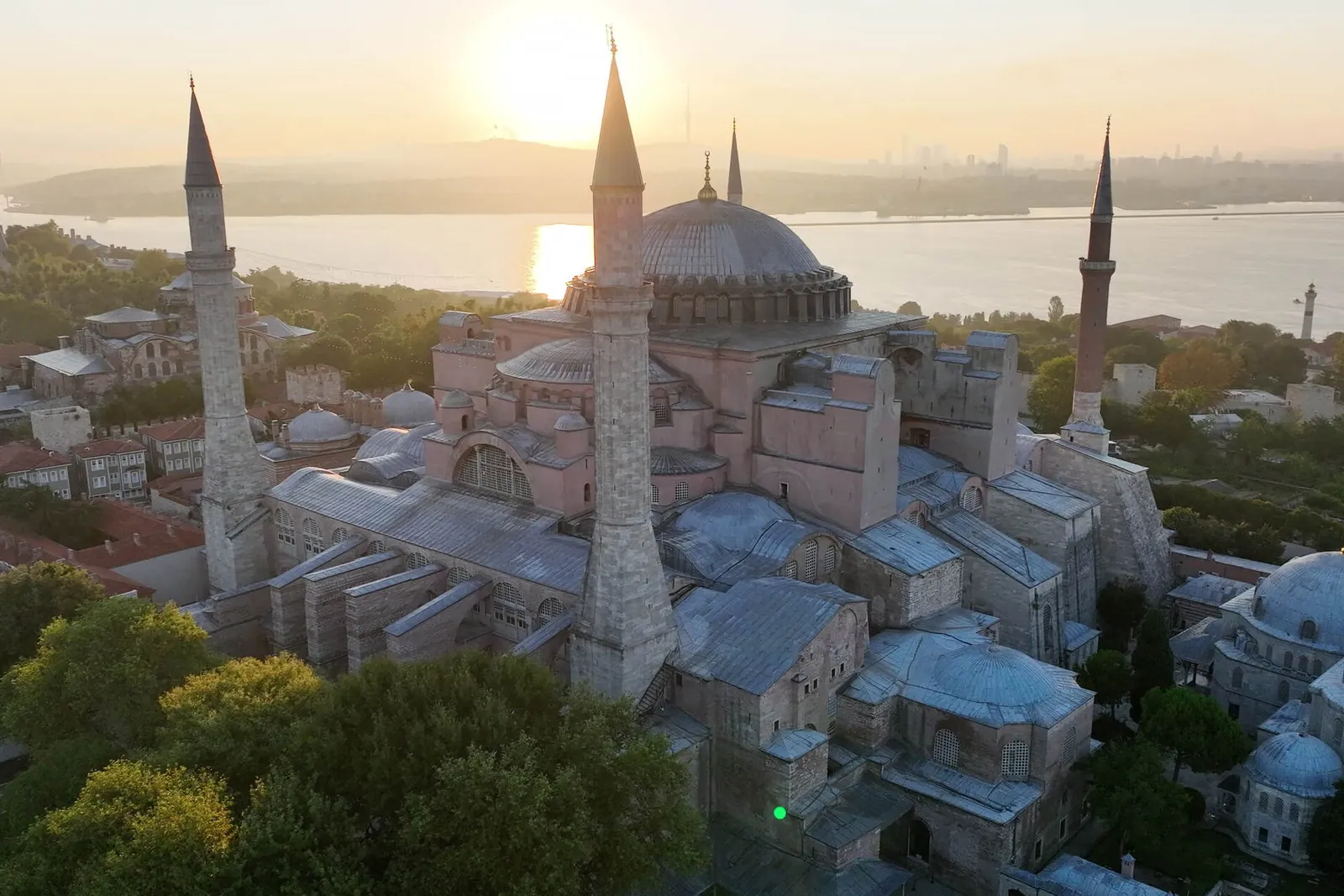
Why it made the list: Istanbul is the only great city built on two continents, with ferries crossing the Bosphorus between Europe and Asia all day. The Historic Peninsula holds Hagia Sophia, the Blue Mosque, Topkapı Palace, the Basilica Cistern and the Grand Bazaar, and the Historic Areas of Istanbul have been a UNESCO World Heritage Site since 1985.
Best time to go: April to early June and September to November, when it is mild and clear for walking; the parks fill with tulips in April. July and August are hot and crowded, and January averages about 9 °C (49 °F), often grey and wet.
Don’t miss: the gallery of Hagia Sophia, with its Byzantine mosaics, Topkapı Palace and its Harem, and a Bosphorus ferry to the Asian side.
Getting there and how long: Istanbul Airport is Turkey’s main hub, linked to the city by the M11 metro and Havaist buses. Give it at least three full days; five lets you add the Princes’ Islands and a full Bosphorus cruise.
Practical note: visitors to Hagia Sophia pay €25 for the gallery route, sold at a booth on the south side; it is not covered by the Museum Pass. Topkapı Palace is closed on Tuesdays and Dolmabahçe on Mondays. See our Istanbul travel guide.
2. Cappadocia
Why it made the list: on the high plateau of central Anatolia, wind and water have carved soft volcanic rock into valleys of “fairy chimneys,” with frescoed cave churches, dovecotes and whole underground cities cut into the stone. Göreme National Park and the Rock Sites of Cappadocia have been a UNESCO World Heritage Site since 1985,.
Best time to go: April to June and September to October. Nevşehir averages about 29 °C (84 °F) by day in July and August, with cool nights, and only about 4 °C (39 °F) in January, when snow is common and balloon cancellations are more frequent.
Don’t miss: a balloon flight at dawn, the painted churches of the Göreme Open-Air Museum, and a walk through one of the underground cities, Derinkuyu or Kaymaklı.
Getting there and how long: fly from Istanbul to Kayseri or Nevşehir, then take a shuttle to Göreme, Uçhisar or Ürgüp. Stay at least two nights, three if you want a spare morning for the balloon.
Practical note: balloons fly only in calm wind, so book your flight for your first morning and keep the next one free. The Göreme Open-Air Museum costs €20; a three-day Museum Pass Cappadocia costs €65. See our Cappadocia travel guide.
3. Ephesus and Selçuk
Why it made the list: Ephesus is the greatest Roman city in the eastern Mediterranean, with the Library of Celsus and the Great Theatre, and a UNESCO World Heritage Site since 2015. The relaxed market town of Selçuk, about 3 km away, is the best base.
Best time to go: April to June and September to early November. July and August often top 35 °C (95 °F), and the site has almost no shade.
Don’t miss: the covered Terrace Houses, whose painted walls and mosaics are some of the finest Roman homes anywhere, and in Selçuk the Basilica of St John and the single standing column of the Temple of Artemis.
Getting there and how long: trains and İZBAN commuter trains run from İzmir and its airport to Selçuk, and minibuses link Selçuk with Kuşadası. Stay one night to see Ephesus early, before the cruise groups, and two to see everything.
Practical note: the Ephesus ticket costs €40 and includes the Ephesus Experience Museum; the Terrace Houses are an extra €15. Opening hours are 08:00 to 18:00. See our Selçuk and Ephesus travel guide.
4. Pamukkale
Why it made the list: the “cotton castle” is a hillside of white travertine terraces and turquoise pools built up by warm, mineral-rich springs. On top stands the Roman spa city of Hierapolis; together they have been a UNESCO World Heritage Site since 1988.
Best time to go: April to June and September to October. Nearby Denizli averages about 35 °C (95 °F) by day in July and August, and the white rock reflects the sun, so in summer go at opening time or late in the day.
Don’t miss: a barefoot walk up the terraces, a swim among the sunken marble columns of the Antique Pool, and sunset over the plain.
Getting there and how long: trains and buses run to Denizli from İzmir, and minibuses continue to Pamukkale village. Most visitors come on a long day trip, but a night in the village lets you see the travertines at their emptiest.
Practical note: the Hierapolis and travertines ticket costs €30 and the site is open from 08:00 to 18:00. The Antique Pool charges a separate fee and is not covered by the Museum Pass. See our Pamukkale travel guide.
5. Antalya
Why it made the list: the big, sunny capital of the Turkish Riviera has a walled old town, Kaleiçi, of Ottoman houses, Roman gates and a little harbor, with long beaches on either side and the Taurus mountains behind. Within about an hour are the Roman theatre of Aspendos and the city of Perge.
Best time to go: April to June and September to October. Highs average about 35 °C (95 °F) in July and August, with almost no rain from June to September, and the sea stays warm enough for swimming from late May into October.
Don’t miss: the lanes of Kaleiçi and Hadrian’s Gate, the Düden waterfalls and the Roman theatre of Aspendos.
Getting there and how long: Antalya airport, 13 km from the center, has flights from across Europe and from Istanbul, and a tram links it with the city. Stay two days for the city and a beach, four or five to add the ruins.
Practical note: Aspendos and Perge are open from 08:00 to 19:00, and a car is the easiest way to reach the ancient sites. It is also the gateway to Side and Alanya. See our Antalya travel guide.
6. Fethiye and Ölüdeniz
Why it made the list: Fethiye is a working harbor town on an island-dotted bay, and the base for some of the most famous scenery on the Turquoise Coast. Nearby, the Blue Lagoon of Ölüdeniz curls behind a sand spit under Babadağ, where paragliders take off.
Best time to go: May, June, September and October. Highs reach about 35 °C (95 °F) in July and August, and the sea is about 27–28 °C (81–82 °F) in August and September.
Don’t miss: a tandem paragliding flight or the cable car up Babadağ, a gulet trip around the bay’s islands, and the abandoned stone village of Kayaköy.
Getting there and how long: fly into Dalaman, about an hour away, with a Havaş shuttle to Fethiye. Stay three days for the highlights, five to seven to add Saklıkent Gorge, Butterfly Valley and the Lycian sites.
Practical note: the 760 km Lycian Way, one of Turkey’s best long-distance walks, starts near Ölüdeniz; Culture Routes in Turkey recommends walking it from February to May and September to November. See our Fethiye travel guide.
7. Kaş and Kekova
Why it made the list: Kaş is a small, laid-back harbor town where the Taurus mountains drop into some of the clearest water in the Mediterranean. It has no big resorts, just whitewashed lanes, an ancient theatre, Lycian rock tombs and some of Turkey’s best diving.
Best time to go: May, June, September and October. July and August are hot, with highs around 33 °C (91 °F), but breezier than the big resorts.
Don’t miss: a boat trip over the sunken city of Kekova to the castle village of Simena, a dive or snorkel off the coast, and the cove of Kaputaş.
Getting there and how long: fly into Dalaman, about 1 hour 45 minutes away, or Antalya, about three hours away; buses run from both. Stay at least four days, ideally a week.
Practical note: the Greek island of Kastellorizo is a short ferry ride from the harbor, an easy day trip. The ancient sites of Myra and Patara are an easy drive. See our Kaş travel guide.
8. Bodrum
Why it made the list: the most stylish resort on the Turkish Aegean is a white town of cube houses around two bays, with a castle built by the Knights Hospitaller on the rock between them. It stands on the site of ancient Halicarnassus, home of the Mausoleum, one of the Seven Wonders of the Ancient World.
Best time to go: May, June, September and October. Highs average about 35 °C (95 °F) in July and August, and the sea is warmest from July to September.
Don’t miss: the Museum of Underwater Archaeology inside Bodrum Castle, with shipwrecks more than 3,000 years old, and a day around the peninsula’s bays, such as Gümüşlük and Yalıkavak.
Getting there and how long: Milas-Bodrum airport is about 45 minutes away by Havaş shuttle, and ferries link the town with the Greek island of Kos. Stay four days to a week.
Practical note: from October 1 the castle and museum are open from 08:30 to 17:30 (tickets until 17:00). See our Bodrum travel guide.
9. Bursa
Why it made the list: the first capital of the Ottoman Empire is a green city at the foot of Uludağ, full of early Ottoman mosques, tombs, silk markets and thermal baths. “Bursa and Cumalıkızık: the Birth of the Ottoman Empire” has been a UNESCO World Heritage Site since 2014, and it is an easy break from Istanbul.
Best time to go: April to June and September to October for sightseeing; December to March for skiing on Uludağ, with season dates set each autumn. Highs average about 31–32 °C (88–89 °F) in July and August.
Don’t miss: the Grand Mosque (Ulu Cami) with its twenty domes, the tiles of the Green Mosque and Green Tomb, the silk sellers in the Koza Han, and the cable car up Uludağ.
Getting there and how long: fast ferries cross the Sea of Marmara from Istanbul to Mudanya, with a short bus ride on to Bursa, or take a coach of about three hours. Spend one or two nights, or a long day trip.
Practical note: try İskender kebab, the city’s own dish, and a soak in one of the historic thermal baths. The cable car runs from 10:00 to 18:00. See our Bursa travel guide.
10. Trabzon and Sümela Monastery
Why it made the list: on the green, rainy Black Sea coast, Trabzon feels like a different country, with tea gardens on the hillsides. Its highlight is Sümela Monastery, clinging to a cliff in a forested valley about an hour south of town.
Best time to go: May to September, when the mountain roads and highland plateaus are open. Trabzon averages about 27–28 °C (81–82 °F) in July and August, but rain is possible in any month and heaviest from September to November.
Don’t miss: Sümela Monastery and its frescoes, the 13th-century church of Hagia Sophia with its Byzantine paintings, and the mountain lake of Uzungöl.
Getting there and how long: flights reach Trabzon in about 1 hour 50 minutes from Istanbul; there is no railway. Stay two to four days.
Practical note: Sümela costs €20 and is open daily from 08:00 to 17:00 (box office until 16:30); the valley around it is a national park with its own small entry fee. See our Trabzon travel guide.
How to fit them into one trip
With about two weeks, start with three or four days in Istanbul, then fly to Kayseri or Nevşehir for three nights in Cappadocia. Fly on to İzmir for two nights in Selçuk with a full day at Ephesus, continue to Pamukkale for a night, then drive or bus down to Fethiye and Kaş for four or five days on the Turquoise Coast, and fly home from Dalaman or Antalya.
With a week, keep to Istanbul and Cappadocia. With ten days, add Ephesus and Pamukkale. Bursa fits as a day or two from Istanbul, Bodrum pairs with Ephesus, and Trabzon works as an extra flight from Istanbul. Use domestic flights for the long jumps. Our Turkey itinerary guide has day-by-day plans for 7, 10 and 14 days.
Our AI trip planner builds the day-by-day plan for your dates, travelers and budget from our Turkey guides. Check the seasons for each region in our best time to visit Turkey guide, look up typical conditions with the Destination weather tool, and work out lira prices with the Money exchange tool. For visas and money, see our Turkey travel guide.
Frequently asked questions
What is the most beautiful place in Turkey?
Many travelers would say Cappadocia at sunrise, with hundreds of balloons over the fairy chimneys. Ölüdeniz and Pamukkale are close behind.
How many days do you need in Turkey?
About ten days to two weeks for a first trip. A week covers Istanbul and Cappadocia, ten days adds Ephesus and Pamukkale, and two weeks lets you finish on the Turquoise Coast around Fethiye, Kaş and Antalya.
What is the best place in Turkey for first-time visitors?
Istanbul. It has the most flights, the most famous sights and the best transport links, and it is the starting point for most trips. Pair it with Cappadocia for the classic first visit.
What is the best month to visit Turkey?
May or September. Both are warm enough for the beach on the south coast and comfortable for sightseeing in Istanbul and Cappadocia, with fewer crowds than July and August. See our best time to visit Turkey guide for every month.
Is there a pass for Turkey’s museums and ancient sites?
Yes. The Ministry of Culture and Tourism sells Museum Passes for Istanbul (€105 for five days), Cappadocia (€65 for three days), the Aegean and the Mediterranean, and a 15-day Museum Pass Türkiye (€165) covering more than 350 sites. Hagia Sophia and the Basilica Cistern are not included.