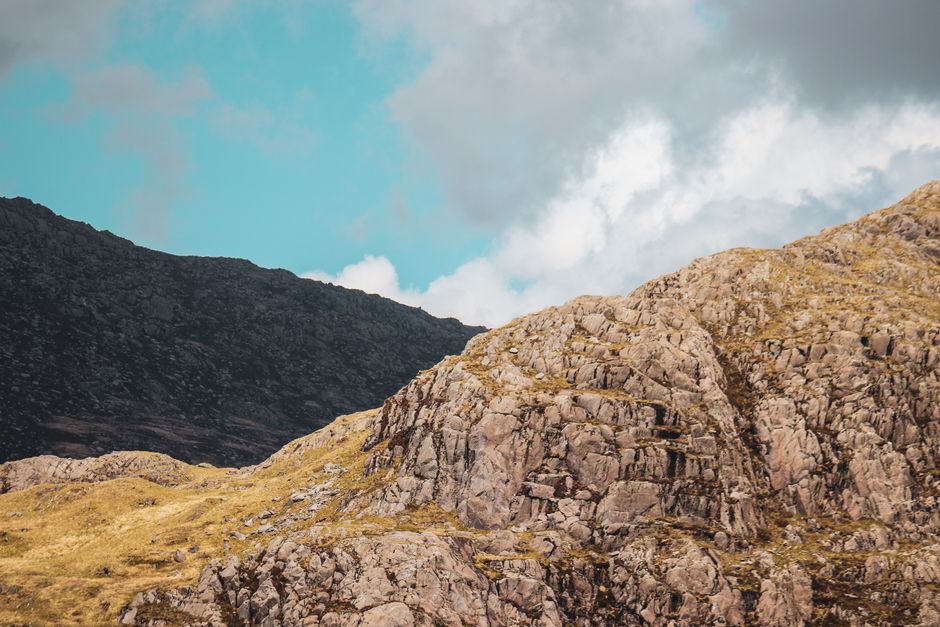
Eryri, the national park also known in English as Snowdonia, is the mountain heart of North Wales: a wild knot of rocky peaks, deep glacial lakes, slate villages, waterfalls and oak woods running down to the sea. It holds Yr Wyddfa (Snowdon), at 1,085 metres the highest mountain in Wales, which you can climb on six paths or ride up on a rack railway that has run since 1896. Around it you will find the stone villages of Betws-y-Coed, Beddgelert and Llanberis, the narrow-gauge steam trains of the Ffestiniog and Welsh Highland Railways, the giant zip lines of Zip World in old slate quarries, and on the edges of the park the great castles of Edward I at Caernarfon, Conwy and Harlech. Welsh is the everyday language here, so you will hear it in shops and pubs. Give it three days for the classic sights, or a week to walk and explore the quieter valleys.
Right now in Eryri (Snowdonia) (Capel Curig)
- Wed7–10°C44–50°F9 mm rain
- Thu7–11°C44–52°F4 mm rain
- Fri10–13°C50–56°F14 mm rain
Top tours in Eryri (Snowdonia)
See all tours for Eryri (Snowdonia) →
From local operators, with prices and reviews; you check availability and book on Viator, our partner. We may earn a commission at no extra cost to you. How we earn money
Eryri at a glance
- Best for: mountain walking, the Snowdon Mountain Railway, castles, steam railways, waterfalls and lakes, zip lines and adventure sports, and Welsh language and culture.
- How long: 1 day for Yr Wyddfa by path or train; 3 days to add Betws-y-Coed, Beddgelert, a steam railway and a castle; a week for the big walks and the southern hills.
- Best time: May, June and September for long days and the best chance of clear summits; July and August are busiest. It is one of the wettest places in Britain, with most rain from October to January.
- Getting in: by car on the A55 along the north coast or the A5; by train to Bangor, Llandudno Junction or Betws-y-Coed, or along the Cambrian Coast to Harlech and Porthmadog.
- Getting around: the Sherpa’r Wyddfa buses circle Yr Wyddfa and link the villages and paths. As of October 2026, parking at Pen y Pass had to be booked in advance, from £25.
- Before you go: entry rules, money and general safety are in our United Kingdom travel guide. As of October 2026 there was no tourist tax in Gwynedd or Conwy.
Eryri, area by area
The national park covers more than 2,000 km² of north-west Wales, from the Conwy Valley in the north-east to the Dyfi estuary in the south. Most visitors stay in the north, around Yr Wyddfa, where the main villages sit in the valleys between the mountain ranges, linked by the A5, the A4086 and the A498.
Llanberis and the north side of Yr Wyddfa
Llanberis, on the shore of Llyn Padarn at the foot of the Llanberis Pass, is the start of the Snowdon Mountain Railway and the gentlest path to the summit. The town has the free National Slate Museum, the ruined tower of Dolbadarn Castle and the vast terraces of the Dinorwig slate quarry above the lake. Best for: the mountain railway, first-time Yr Wyddfa walkers and families.
Betws-y-Coed and the Conwy Valley
Betws-y-Coed is Eryri’s busiest village, a Victorian resort of grey stone hotels, outdoor shops and tea rooms where two rivers meet in a wooded valley. Walks lead to Swallow Falls (Rhaeadr Ewynnol), the Fairy Glen and the Miners’ Bridge, and the Gwydir Forest has mountain-bike trails. Best for: woodland walks, cafés and an easy base by train.
Beddgelert and Nant Gwynant
South of Yr Wyddfa, Beddgelert is perhaps the prettiest village in Wales, with stone bridges over the river and the legend of Gelert, Prince Llywelyn’s faithful dog. The road north climbs through Nant Gwynant past the lakes of Llyn Dinas and Llyn Gwynant to the start of the Watkin Path, and the Aberglaslyn Pass gorge lies to the south. Best for: romantic stays, riverside walks and the Welsh Highland Railway.
Capel Curig and the Ogwen Valley
East of Yr Wyddfa, the A5 runs through the Ogwen Valley between the Carneddau and Glyderau ranges, with Tryfan’s jagged peak above Llyn Ogwen and the glacial bowl of Cwm Idwal, a national nature reserve. Capel Curig, a scattered village of climbers’ inns, is the mountain hub. Best for: serious walkers and scramblers.
Porthmadog, Harlech and the south
Toward the coast, Porthmadog is the base of the Ffestiniog Railway, near the Italianate village of Portmeirion. Harlech Castle looks over the sea from its rock, and further south rise Cadair Idris, the Rhinogydd and Bala, with Llyn Tegid, the largest natural lake in Wales. Best for: castles, beaches and quieter mountains.
Top things to see in Eryri
Prices and hours below were checked on the official sites in October 2026. They change, so check before you go.
Yr Wyddfa (Snowdon) and the Snowdon Mountain Railway
Yr Wyddfa is the most climbed mountain in Britain, with more than 600,000 people a year walking up according to the national park. From the summit, on a clear day, you can see across Eryri to Anglesey, the Isle of Man and sometimes Ireland; often you will be in cloud. The summit visitor centre, Hafod Eryri, opens from 1 May to 25 October, weather permitting.
The railway. The Snowdon Mountain Railway, Britain’s only public rack-and-pinion railway, climbs from Llanberis to the summit in about an hour. A return trip to the summit takes about 2 hours 30 minutes, including a 30-minute stop at the top, and you must come down on the same train. As of October 2026 a return on the Traditional Diesel Service to the summit cost £45 off-peak or £48 peak for adults, and £35–£38 for children aged 3–15; a Heritage Steam Experience return cost £62–£72 for adults. A £4 booking fee applies per online booking, and trains sell out weeks ahead in summer and fine weather. In autumn 2026 essential works mean that some trains stop at Clogwyn Station, three-quarters of the way up: from 5 to 16 October and from 26 October to 1 November trains run to Clogwyn (return from £36), and from 17 to 25 October to the summit. The last steam train runs on 30 October and the last diesel train on 1 November 2026; the railway then closes for winter. Walkers cannot use a return ticket to ride down, and single tickets down are sold only at the summit, if there are seats. High winds can stop trains at any time.
Caernarfon Castle
The mightiest of Edward I’s castles in Wales, built from 1283 on the Menai Strait with polygonal towers and banded stone inspired by Constantinople’s walls, Caernarfon is where Prince Charles was invested as Prince of Wales in 1969. It is part of a UNESCO World Heritage Site with Conwy, Harlech and Beaumaris, and is run by Cadw. Cadw’s adult ticket was reported at £14.90, with 5% off online; from September to October it opens 9:30–17:00 and from November to February 10:00–16:00. The Welsh Highland Railway starts beside the walls.
Conwy Castle and Harlech Castle
Conwy Castle, with eight great towers, and its almost complete town walls, which you can walk, guard the mouth of the River Conwy on the park’s north-eastern edge; the adult ticket was reported at £12.90. Harlech Castle, on a crag above the dunes with the mountains behind, inspired the song Men of Harlech; its adult ticket was reported at £10.40. Both keep the same seasonal hours as Caernarfon.
The Ffestiniog and Welsh Highland Railways
The Ffestiniog Railway, the world’s oldest independent railway company, climbs 13½ miles from Porthmadog harbour through oak woods to the slate town of Blaenau Ffestiniog, with steam engines pulling little carriages along the mountainside. The Welsh Highland Railway runs 25 miles from Caernarfon across the foothills of Yr Wyddfa and through the Aberglaslyn Pass to Porthmadog, stopping at Rhyd Ddu (for the Rhyd Ddu Path) and Beddgelert. As of October 2026 children travelled for a flat £5 on standard services; adult fares vary by journey, so check the timetable and book online.
Zip World and the slate quarries
Eryri’s old slate quarries have found a new life as adventure parks. At Zip World Penrhyn Quarry near Bethesda, Velocity 2 is one of the fastest zip lines in the world, flying riders face-down high over a quarry lake; Zip World Fforest near Betws-y-Coed and Zip World Llechwedd in Blaenau Ffestiniog have more zip lines, underground adventures and coasters. Book ahead; prices vary by activity and date. For quieter history, the National Slate Museum in Llanberis is free.
Waterfalls, lakes and viewpoints
Swallow Falls near Betws-y-Coed, the Aber Falls on the north coast, Cwm Idwal’s ring of cliffs, Llyn Padarn and Llyn Gwynant, the Llanberis Pass and the view of Yr Wyddfa across Llynnau Mymbyr from Capel Curig are all easy to reach by car or bus.
Climbing Yr Wyddfa and mountain safety
Yr Wyddfa is a real mountain, not a walk in the park, and the national park and the volunteer mountain rescue teams deal with many walkers each year who are lost, tired or badly equipped. The summit is often in cloud, it is much colder and windier than the valleys, and in winter the upper paths are covered in snow and ice.
The six paths to the summit
The Eryri National Park Authority describes six main routes, all rated hard or strenuous; round trips take 4 to 7 hours depending on fitness and weather:
- Llanberis Path: 14.5 km there and back, about 7 hours; the longest but most gradual, beside the railway.
- Pyg Track: 11 km, about 6 hours from Pen y Pass; the shortest, rocky and steep near the top.
- Miners’ Track: 13 km, about 6 hours from Pen y Pass; flat past lakes at first, then very steep.
- Watkin Path: 13 km, about 6 hours from Nant Gwynant; starts lowest, past waterfalls, with a loose final climb.
- Rhyd Ddu Path: 12 km, about 6 hours; quieter, with fine views west.
- Snowdon Ranger Path: 13 km, about 6 hours from Llyn Cwellyn; the oldest route, steady and quiet.
How to stay safe
- Check the forecast: look at the Met Office mountain forecast for Yr Wyddfa, and in winter at the national park’s ground conditions reports.
- Navigate: carry a map and compass and know how to use them (OS Explorer OL17 covers Yr Wyddfa); phones lose signal and battery.
- Dress for the mountain: boots with grip, waterproof jacket and trousers, warm layers, hat and gloves even in summer, plenty of food and water and a head torch.
- Start early and turn back: allow plenty of daylight and turn round if the cloud comes down, the wind rises or you are behind time.
- Do not rely on the train: trains can stop in high winds, and single tickets down are not guaranteed.
- In an emergency: call 999 or 112, ask for Police and then Mountain Rescue, and give your location.
See our hiking guide for gear and more routes.
Things to do in Eryri
Walk the low-level classics
Not every walk has to reach a summit. Try the lakeside loop around Llyn Padarn, the Cwm Idwal nature trail, the Precipice Walk near Dolgellau, the river path from Beddgelert through the Aberglaslyn Pass, or the woods and waterfalls around Betws-y-Coed.
Ride a steam train
Combine a steam trip on the Ffestiniog or Welsh Highland Railway with a walk: take the train from Caernarfon to Rhyd Ddu and climb Yr Wyddfa, or ride to Beddgelert and walk back along the river.
Get on the water
Paddle, kayak or swim in Llyn Padarn, raft the white water at the National White Water Centre near Bala, or try a gentle boat trip on Llyn Tegid. See our boat trips guide.
Cycle and mountain bike
The Lôn Las Peris path runs along Llyn Padarn, the Lôn Eifion and Lôn Las Menai trails follow old railways near Caernarfon, and Coed y Brenin forest near Dolgellau and the Gwydir Forest are famous for mountain biking. Bikes are allowed on the Llanberis, Snowdon Ranger and Rhyd Ddu paths only outside the voluntary summer restriction times. See our cycling guide.
Eat and drink like a local
Try Welsh lamb, cawl, bara brith, Welsh cakes and Welsh rarebit, local cheeses, and a pint of local ale in a climbers’ pub. Pete’s Eats in Llanberis is a legendary walkers’ café.
Getting to Eryri
By train. Avanti West Coast runs from London Euston along the North Wales coast to Bangor, the nearest main-line station for Llanberis and Caernarfon, in about 3 hours 15 minutes. At Llandudno Junction, change for the Conwy Valley line to Betws-y-Coed and Blaenau Ffestiniog. Transport for Wales trains also run from Manchester, Chester and Birmingham to the North Wales coast, and the Cambrian Coast line from Machynlleth to Harlech and Porthmadog.
By air. Manchester and Liverpool airports are about 2 hours away by car; Manchester Airport has trains towards North Wales with a change.
By car. The A55 expressway runs along the North Wales coast from Chester, with exits for Conwy, Bangor and Caernarfon; the A5 crosses the park from Betws-y-Coed through Capel Curig and the Ogwen Valley. Mountain roads are narrow and twisty.
Getting around and parking
Sherpa’r Wyddfa buses. The national park’s bus network circles Yr Wyddfa and links the starts of all six paths: the S1 runs from Betws-y-Coed and Caernarfon via Llanberis to Pen y Pass, the S2 from Bangor, the S3 from Caernarfon to the Snowdon Ranger and Rhyd Ddu paths, the S4 from Porthmadog via Beddgelert to Pen y Pass and Pont Bethania for the Watkin Path, and the S5 between Llanberis, Nant Peris and Pen y Pass. As of October 2026 a day ticket for unlimited travel on all buses in North Wales cost £7.50 for an adult or £16 for a family of up to two adults and three children. Timetables are thinner in winter.
Parking at Pen y Pass. Pen y Pass, at the top of the Llanberis Pass, is the start of the Pyg and Miners’ tracks and the busiest car park in the park. As of October 2026 it had to be booked in advance through JustPark, until 1 November 2026, at £25 for up to 8 hours, £35 for 8–12 hours and £45 for a full day, with no extensions. The national park advises parking in Llanberis or Nant Peris and taking the Sherpa bus up instead. Do not park in the lay-bys or on the verges of the pass: the road gets dangerous and fines are issued.
Other parking. Car parks in Llanberis, Betws-y-Coed, Beddgelert and Ogwen fill by mid-morning on summer weekends. At Llanberis station, the railway’s car park cost £6 for 4 hours as of October 2026.
Speed limits. Since September 2023 the default speed limit in villages and built-up areas across Wales has been 20 mph, rather than 30 mph, unless signs say otherwise. Watch for sheep on unfenced mountain roads.
When to go and how long to stay
Eryri has a mild, very wet mountain climate: cool summers, damp winters that are rarely very cold in the valleys, and snow on the summits from about December to March. The table uses the Met Office 1991–2020 averages for Capel Curig (216 m), in the heart of the park; the summit of Yr Wyddfa, about 870 m higher, is typically 5–6 °C colder, much windier and often in cloud.
| Season | Average high / low | Rainy days per month | What it’s like |
|---|---|---|---|
| Spring (Mar–May) | 9–14 °C / 3–7 °C | 14–17 | Lambs and bluebells, April and May the driest months, snow possible on the tops into April |
| Summer (Jun–Aug) | 17–18 °C / 9–11 °C | 14–17 | Long days, the mountain railway runs to the summit, busiest paths and car parks, midges by the lakes |
| Autumn (Sep–Nov) | 16 °C falling to 10 °C / 9 °C falling to 5 °C | 16–21 | Golden bracken and woods, quieter in September, wetter and windier from October; the railway closes in early November |
| Winter (Dec–Feb) | 7–8 °C / about 2 °C | 18–20 | Short days, snow and ice on the summits needing winter skills, quiet villages and cosy inns |
Capel Curig records about 2,700 mm of rain a year, more than four times London, falling on about 206 days; November to January are the wettest months, with 300–350 mm each, and May and June the driest, with about 140 mm. In practice, late May, June and September give the best chance of a clear summit with fewer crowds than in the school summer holidays.
Eryri in 3 days
Day 1: Yr Wyddfa, on foot from Pen y Pass or Llanberis, or by the mountain railway, then the National Slate Museum. Day 2: Caernarfon Castle in the morning, the Welsh Highland Railway to Beddgelert, and the river walk through the Aberglaslyn Pass. Day 3: Betws-y-Coed, Swallow Falls and the Fairy Glen, then Cwm Idwal in the Ogwen Valley or Conwy Castle and its walls.
Eryri in a week
Add the Ffestiniog Railway from Porthmadog to Blaenau Ffestiniog, Portmeirion and Harlech Castle, Zip World or a day on the water at Llyn Padarn, a climb of Cadair Idris or Tryfan with the right skills, and a rest day by Llyn Tegid in Bala.
Where to stay in Eryri
- Llanberis: guesthouses, hostels and B&Bs at the foot of Yr Wyddfa, best for the railway and the walking paths.
- Betws-y-Coed: the widest choice of hotels and B&Bs, with a railway station and many restaurants.
- Beddgelert: small hotels, inns and cottages in a beautiful village between the mountains.
- Capel Curig and Ogwen: climbers’ inns, hostels and bunkhouses for an early start.
- Caernarfon, Conwy and Porthmadog: towns just outside the park with castles, harbours and more choice.
There is no visitor levy in Gwynedd or Conwy: in Wales, only Cardiff has decided to charge one, from April 2027. Book well ahead for summer weekends and school holidays.
Practical tips for Eryri
- Book the railway early: summit trains sell out weeks ahead in summer and fine weather.
- Book or avoid Pen y Pass: pre-book the car park or use the Sherpa’r Wyddfa buses from Llanberis or Nant Peris.
- Start early: the paths and car parks are calmest before 8:00.
- Respect the farms: most of the mountain is working farmland; keep dogs on leads near sheep and close gates.
- Take your litter home: the national park is campaigning to make Yr Wyddfa plastic-free.
- Learn some Welsh: many place names are in Welsh only; bore da (good morning) and diolch (thank you) are appreciated.
What to pack for Eryri
Walking boots with grip, a waterproof jacket and trousers, warm layers, a hat and gloves even in summer, a map and compass, a head torch, a small first aid kit, a refillable water bottle and enough food for the day. Add insect repellent for the midges from June to September, and a swimsuit for the lakes in summer.
Eryri travel FAQ
Is Eryri the same as Snowdonia?
Yes. Eryri is the Welsh name for the national park and the area around Yr Wyddfa, and the national park authority now uses it as its main name. Yr Wyddfa is the Welsh name for Snowdon.
How long does it take to climb Yr Wyddfa?
Between 4 and 7 hours there and back, depending on the path, your fitness and the weather. The Pyg Track is the shortest at 11 km; the Llanberis Path, at 14.5 km, is the longest but most gradual.
Which is the easiest path up Yr Wyddfa?
The Llanberis Path is the most gradual, though also the longest. All six paths are rated hard by the national park, and none should be attempted without boots, waterproofs and a map.
How much is the Snowdon Mountain Railway?
As of October 2026 a diesel return to the summit cost £45 off-peak or £48 peak for adults, and a steam return £62–£72, plus a £4 booking fee. Trains to Clogwyn Station were cheaper.
When does the Snowdon Mountain Railway run?
In 2026 the last steam train ran on 30 October and the last diesel train on 1 November; in October some trains turned at Clogwyn Station because of works. The railway runs again from spring, and trains are always weather-dependent.
Can you walk up Yr Wyddfa and take the train down?
Only if there is space: single tickets down are sold at the summit on a first-come basis, and return tickets are only valid from Llanberis. Be ready to walk down.
Do you need to book parking at Pen y Pass?
As of October 2026, yes: parking had to be pre-booked through JustPark until 1 November 2026, from £25 for up to 8 hours. Many walkers use the Sherpa’r Wyddfa bus from Llanberis or Nant Peris instead.
Can you get around Eryri without a car?
Yes. Trains reach Bangor, Betws-y-Coed, Harlech and Porthmadog, and the Sherpa’r Wyddfa buses link the villages with all six paths up Yr Wyddfa. Services are thinner in winter and on Sundays.
How much does it cost to visit Caernarfon Castle?
Cadw’s adult ticket was reported at £14.90, with a small discount for booking online. From September to October it opens 9:30–17:00, and from November to February 10:00–16:00.
Is there a tourist tax in Eryri?
No. As of October 2026, neither Gwynedd nor Conwy council charges a visitor levy; in Wales only Cardiff has decided to introduce one, from April 2027.
When is the best time to visit Eryri?
Late May, June and September, for long days, the full railway service and the best chance of clear summits. July and August are busiest; winter brings snow on the tops and needs mountain skills.
How many days do you need in Eryri?
Three days cover Yr Wyddfa, a castle, a steam railway and Betws-y-Coed. A week lets you add the Ogwen Valley, Harlech, Portmeirion and the southern mountains.
Nearby destinations
- Liverpool82 km
- Manchester128 km
- Birmingham146 km
- Peak District148 km
- Dublin162 km
- Cardiff169 km
- Stratford-upon-Avon172 km
- Lake District177 km
Plan your trip
Partner links: TravelerCenter may earn a commission if you book, at no extra cost to you.
Sources · last reviewed 4 October 2026
Researched and last reviewed on 4 October 2026. Paths, Pen y Pass parking and the Sherpa’r Wyddfa routes: the Eryri National Park Authority; bus day tickets: Sherpa’r Wyddfa; the mountain railway’s fares, dates and the Clogwyn works: the Snowdon Mountain Railway; Ffestiniog and Welsh Highland Railways: the railways’ official site; the 20 mph default and the visitor levy: the Welsh Government; climate: Met Office 1991–2020 averages for Capel Curig. Cadw castle prices and hours were read through search summaries of Cadw’s pages, and some details, including Zip World and train journey times, come from general knowledge; they are flagged for checking. Prices, timetables and rules change, so check the official links before you go. For entry rules, money and general safety, see our United Kingdom travel guide; for more British mountains, see our guides to the Lake District and the Scottish Highlands.
Data: Weather: MET Norway (CC BY 4.0) · Sea temperature: NOAA CoastWatch · Rates: ECB · Costs: World Bank ICP and price levels · Wikidata (CC0)