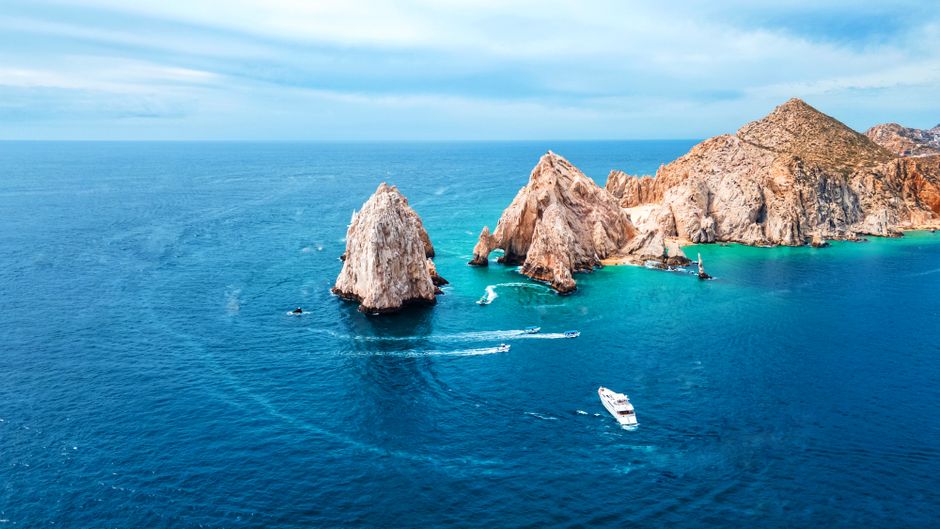
Los Cabos is the resort area at the southern tip of the Baja California peninsula, where the desert mountains meet the Sea of Cortez and the Pacific Ocean. It joins two towns, about 30 km (19 miles) apart: lively Cabo San Lucas, with its marina, nightlife and the famous rock arch at Land’s End, and quieter San José del Cabo, with a historic center of galleries and restaurants, linked by “the Corridor” of luxury resorts, golf courses and coves. Visitors come for the sunshine (it rains on only a handful of days a year), boat trips to El Arco, snorkeling, sport fishing, golf, whale watching in winter and the coral reef of Cabo Pulmo, a few hours up the coast. Not every beach is safe for swimming, so choose carefully. The best weather is from November to May; summer is hot and humid, and the eastern Pacific hurricane season runs from May 15 to November 30.
Right now in Los Cabos Municipality (Cabo San Lucas)
- Wed29–30°C84–87°FClear
- Thu29–30°C84–87°FMostly clear
- Fri29–30°C85–87°FClear
Top tours in Los Cabos Municipality
See all tours for Los Cabos Municipality →
From local operators, with prices and reviews; you check availability and book on Viator, our partner. We may earn a commission at no extra cost to you. How we earn money
Los Cabos at a glance
- Best for: sunshine, resorts and spas, boat trips to the Arch, snorkeling and diving, sport fishing, golf, whale watching from about December to April, and nightlife in Cabo San Lucas.
- How long: 4–5 days for the Arch, a beach, a snorkel trip and San José; a week to add Todos Santos, Cabo Pulmo or La Paz.
- Best time: November to May, with highs of about 27–32 °C (80–90 °F), cool nights in winter and almost no rain. August and September are the hottest, most humid and stormiest months.
- Getting there: Los Cabos International Airport (SJD), about 11 km (7 miles) from San José del Cabo and roughly 45 minutes from Cabo San Lucas, with many flights from the United States and Canada.
- Getting around: rental cars, shared shuttles and taxis; local buses run along the Corridor; water taxis go to the Arch.
- Before you go: entry rules, the tourist fee, money and general safety are in our Mexico travel guide. Baja California Sur uses Pacific time (UTC−7) all year.
Los Cabos’ areas: where things are
Los Cabos is a municipality, not a single town. Highway 1 runs along the coast between the two towns, and resorts, beaches and golf courses sit on side roads off it. The airport is inland, north of San José del Cabo. North of San José, along the Sea of Cortez, the East Cape is wilder, with small villages and dirt roads.
Cabo San Lucas
At the tip of the peninsula, Cabo San Lucas grew around its marina and harbor, with boats for fishing, snorkeling and sunset cruises, waterfront restaurants and the bars and clubs that give it a party reputation. Médano Beach, the town’s main beach, faces the bay and is calm enough for swimming, with water sports and beach bars. Land’s End and El Arco are at the end of the bay. Pedregal, the hillside west of the marina, has luxury hotels on the Pacific.
The Corridor (El Corredor Turístico)
The coast between the two towns is lined with resorts, villas, golf courses and some of the best swimming and snorkeling coves, such as Santa María and Chileno. Most places here are self-contained; you will need a car or taxis to get around.
San José del Cabo
San José del Cabo is the municipal seat and the older town, with an 18th-century mission church, a shady main square, art galleries, restaurants and a relaxed pace. Its hotel zone runs along a long beach where the sea is often rough, next to the estuary, a protected wetland of palms and birds. It is the closer town to the airport.
The East Cape and the Pacific coast
Beyond San José, the road along the Sea of Cortez leads to the quiet villages of La Ribera and Los Barriles and to Cabo Pulmo. North-west of Cabo San Lucas, Highway 19 follows the Pacific coast to the surf beaches of Cerritos and the arts town of Todos Santos.
Top things to see in Los Cabos
Prices and hours below were checked on the official sites in October 2026, unless we say otherwise; check again before you go. Boat and tour prices vary by operator; buy from established companies at the marina or through your hotel.
El Arco and Land’s End
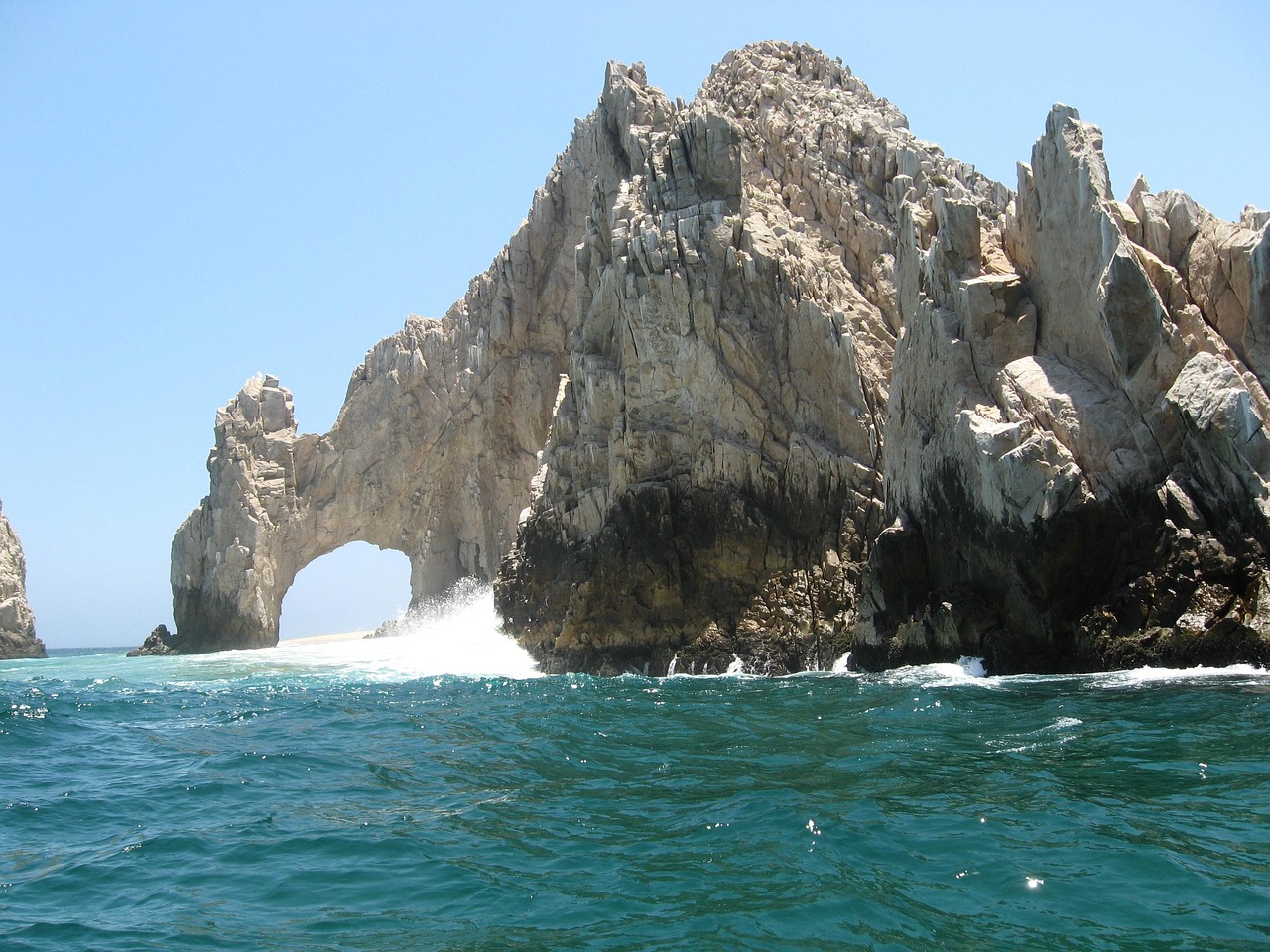
The granite rock arch at Land’s End, where the Sea of Cortez meets the Pacific, is the symbol of Los Cabos. You see it by boat: glass-bottom boats and water taxis leave from the marina and Médano Beach for a short loop past the Arch, the sea lion colony and Lover’s Beach, and most can drop you on the beach and pick you up later. The area is inside the Cabo San Lucas Flora and Fauna Protection Area, where the national protected areas agency, CONANP, charges MXN 125 (about US$7) per person per day, usually collected by boat operators; children under 12, seniors and people with disabilities are exempt.
Lover’s Beach (Playa del Amor)
Next to the Arch, this small beach spans the rocks between the bay and the ocean. Its bay side is calm and good for snorkeling, while the Pacific side, sometimes called Divorce Beach, has powerful waves and currents: never swim there. Bring water and shade, as there are no services.
Santa María and Chileno bays
The two best-known swimming and snorkeling coves on the Corridor have calm, clear water, rocky reefs with tropical fish and public access with parking. Visit Los Cabos, the tourism board, lists both among the area’s swimmable beaches, and the municipality’s beach department includes them in its water-quality testing. Go early: parking fills up, and there is little shade.
San José del Cabo’s historic center
The old town, around Plaza Mijares and the mission church, is the place for an evening stroll, dinner and galleries. Its art district is busiest on Thursday evenings in the high season, when galleries open late. Nearby, the estuary at the mouth of the San José River is good for birdwatching.
More to see
- The marina: Cabo San Lucas’ harbor, for boat tours, seafood, people-watching and the fishing fleet’s catches.
- Médano Beach: the town beach on the bay, with water sports, beach clubs and views of the Arch.
- The Pacific beaches: long, wild and beautiful beaches west of Cabo San Lucas for walking and sunsets, but generally too dangerous for swimming.
Protected areas
- Cabo Pulmo National Park
Museums
- Museum of Natural History in Cabo San Lucas
Nature
- El Arco (Arch of Cabo San Lucas)
Activities and best months
- Beaches and swimmingVisit Los Cabos lists the swimmable beaches (Médano, Playa del Amor by the Arch, Santa María, Chileno) and the flag system: green means swim, red or black no; Los Cabos has 25 Blue Flag beaches.
- Boat tripsCONANP's Cabo San Lucas protected area (the Arch and Playa del Amor, reached by boat) is open every day, MXN 125 per person per day.
Other things to do in Los Cabos
Whale watching
From about December to April, humpback whales and gray whales migrate past Los Cabos, and boats leave the marina and San José daily to watch them breaching close to the coast; you can also see spouts from the shore. Mexico’s federal rules limit how close boats may approach and for how long, so choose an operator with a whale-watching permit. Our guides to boat trips have more ideas.
Snorkeling, diving and Cabo Pulmo
Close to town, divers and snorkelers visit the Arch area, the reefs of Santa María and Chileno, and the deep submarine canyon off Land’s End. About two hours north-east by road, Cabo Pulmo National Park protects one of the few coral reefs in the Sea of Cortez, famous for its recovery since it was protected, with huge schools of fish, sea lions and sharks. CONANP charges MXN 125 (about US$7) per person per day, and the park is open daily from 8 a.m. to 6 p.m.; go with local operators, who know the rules on where and how to dive. See our guides to snorkeling and diving.
Sport fishing
Los Cabos is one of the world’s great places for marlin, tuna and dorado, with charters leaving the Cabo San Lucas marina before dawn. The Bisbee’s fishing tournaments, among the richest in the sport, are held here each October. Catch-and-release is encouraged for billfish, and every angler on board needs a Mexican fishing license, which charter companies usually arrange.
Golf, spas and food
The Corridor and the hills above the towns hold some of Mexico’s most famous golf courses, and the area hosts the PGA Tour’s World Wide Technology Championship (November 2–8, 2026). Resorts have large spas. For food, try fish tacos, chocolate clams, fresh ceviche and the farm-to-table restaurants in the countryside around San José.
Surfing and hiking
The Pacific side, around Cerritos near Todos Santos, has surf schools and beginner waves; the East Cape has summer breaks for experienced surfers. Inland, the Sierra de la Laguna mountains offer multi-day hikes with a guide. See our guides to surfing and hiking.
Day trips from Los Cabos
- Todos Santos: about an hour north of Cabo San Lucas on the Pacific, a “Pueblo Mágico” of colonial buildings, art galleries and restaurants, near the surf beach of Cerritos.
- Cabo Pulmo: the coral reef national park on the East Cape, about two hours from San José; best with an overnight stay or an early start.
- La Paz and Espíritu Santo: the state capital, about two to two and a half hours north, with a seafront promenade and boat trips to the islands of Espíritu Santo to snorkel with sea lions and, in season, whale sharks.
- The East Cape villages: La Ribera and Los Barriles, for empty beaches, kiteboarding in winter and a slower pace.
- Further afield: for the Pacific coast of the mainland, see our Puerto Vallarta guide; for the capital, our Mexico City guide.
Nearby destinations
- La Paz112 km
Getting there and getting around
By air
Los Cabos International Airport (SJD), run by the GAP group, is about 11 km (7 miles) from San José del Cabo, according to the airport. Terminal 1 handles domestic and some international flights, and Terminal 2 international flights only, with many direct routes from cities in the United States and Canada and connections through Mexico City and Guadalajara. Ground transportation desks in the arrivals halls of both terminals operate from 7 a.m. to 10 p.m. Pre-book your transfer or use the authorized shuttles and taxis inside the terminal, and ignore the timeshare sellers in the arrivals hall. Shared shuttles are the cheapest door-to-door option; the drive to Cabo San Lucas takes about 45 minutes.
By land and sea
Highway 1, the Transpeninsular, runs the length of Baja California from the US border at Tijuana, more than 1,600 km (1,000 miles) to the north, a multi-day drive; from San Diego, most travelers fly instead, often via the Cross Border Xpress bridge to Tijuana’s airport. Cruise ships anchor in the bay at Cabo San Lucas and tender passengers to the marina; foreign cruise passengers pay Mexico’s cruise passenger fee through the cruise line, about US$10 per passenger as of October 2026.
Getting around Los Cabos
A rental car is the easiest way to explore the beaches, Todos Santos and the East Cape; read the insurance terms carefully, as Mexican liability insurance is required by law. Taxis are plentiful but expensive; agree the fare before you get in. Public buses run along Highway 1 between Cabo San Lucas and San José del Cabo, cheap and frequent but slow, and water taxis link the marina and Médano Beach with Lover’s Beach. Don’t drive at night outside town, as livestock and potholes can be hard to see.
When to go and how long to stay
Los Cabos is one of the driest places in Mexico. The table uses the National Meteorological Service’s (SMN-Conagua) 1991–2020 climate normals for the Cabo San Lucas weather station: average daily highs and lows, and days with rain. San José del Cabo is similar, with slightly cooler nights in winter.
| Season | Average high / low | Rainy days per month | What it’s like | Good for |
|---|---|---|---|---|
| Winter (Dec–Feb) | 27 °C (80–81 °F) / 13–14 °C (55–57 °F) | Under 1 | Sunny and pleasant, with cool evenings and breezy days; the sea is cooler | Whale watching, golf, sightseeing; peak prices around the holidays |
| Spring (Mar–May) | 29–32 °C (83–90 °F) / 14–17 °C (57–62 °F) | Almost none | Dry, sunny and warming up, with windy afternoons | Beaches, snorkeling, whale watching until April |
| Summer (Jun–Aug) | 33–35 °C (91–94 °F) / 19–24 °C (65–75 °F) | Under 1 in June and July, 4 in August | Hot, increasingly humid, with the first storms in August | Calm, warm seas, fishing, diving; lower prices outside July |
| Fall (Sep–Nov) | 34 °C falling to 30 °C (93 to 87 °F) / 23 °C falling to 18 °C (74 to 64 °F) | 4 in September, 1 in October and November | Hot and humid with storms in September, then dry and pleasant | Fishing tournaments, golf; peak hurricane risk in September |
The Cabo San Lucas station records only about 265 mm (10 in) of rain a year, almost all from August to October; September is the wettest month, with about 110 mm (4.3 in), much of it from passing tropical storms.
Hurricane season: according to NOAA’s National Hurricane Center, the eastern Pacific hurricane season runs from May 15 to November 30, peaking from about August to October. Most days are fine, but a storm can close the airport and the port and cut power and water for days, as Hurricane Odile did in 2014. In late September 2026, Hurricane Polo, a powerful storm, passed several hundred kilometers west of Cabo San Lucas before reaching land farther north on the Baja California Sur coast, according to the National Hurricane Center’s storm bulletins. If a storm threatens, follow the instructions of Baja California Sur’s civil protection authorities and your hotel, and check Mexico’s National Meteorological Service (SMN) and the National Hurricane Center; travel insurance that covers weather is wise.
Events and crowds: the busiest times are mid-December to Easter, US spring break in March, and the long weekends of US and Canadian holidays. In 2026, Visit Los Cabos lists the Bisbee’s fishing tournaments in October, Day of the Dead celebrations on November 1–2, the World Wide Technology Championship golf tournament on November 2–8 and the Los Cabos International Film Festival on December 9–13.
4 days in Los Cabos
Day one, settle in and watch the sunset from Médano Beach. Day two, a morning boat trip to the Arch and Lover’s Beach, then the marina. Day three, snorkel at Santa María or Chileno, and spend the evening in San José del Cabo’s historic center. Day four, a day trip to Todos Santos and the Pacific beaches, or, in season, a whale-watching trip.
A week in Los Cabos
Add a full day at Cabo Pulmo for snorkeling or diving, a fishing charter or round of golf, and a day in La Paz with a boat trip to Espíritu Santo. Keep one easy day for the resort or spa.
Where to stay in Los Cabos and the hotel taxes
- Cabo San Lucas: hotels of every level near the marina and Médano Beach, close to restaurants, nightlife and boat trips.
- The Corridor: luxury resorts, all-inclusives and villas on secluded coves, with golf and spas; you will need transport.
- San José del Cabo: boutique hotels in the historic center and resorts along the hotel zone beach; quieter and closer to the airport.
- Todos Santos and the East Cape: small hotels and guesthouses for a slower, more remote stay.
Rooms carry Mexico’s 16% value-added tax (IVA) plus Baja California Sur’s state lodging tax, listed at 4% on the state government’s tax procedures page. Los Cabos’ municipality also charges an environmental sanitation fee (Derecho de Saneamiento Ambiental), collected by the business: for hotel rooms, 70% of Mexico’s daily UMA reference unit, about MXN 82 (about US$4.50) per room per night as of 2026, and more for stays booked through digital platforms; smaller amounts apply to car rentals, boat rentals and restaurant meals. Many resorts quote prices in US dollars and before tax, so compare totals. The Quintana Roo VISITAX does not apply here.
Practical tips for Los Cabos
- Beach safety: swim only on beaches known to be safe, such as Médano, the bay side of Lover’s Beach, Santa María and Chileno, and follow the flags: green means you can swim, red or black means don’t. Many beaches, especially on the Pacific, have strong waves and undertow, even on calm-looking days.
- Money: US dollars are widely accepted, but paying in pesos is usually cheaper; decline the “conversion” offered by card machines.
- Touts: “free” tours, breakfasts or transfers offered at the airport and in town are usually bait for timeshare presentations.
- Tipping: about 10–15% in restaurants; tip boat crews, fishing guides and resort staff too.
- Sun and heat: the desert sun is strong all year; drink plenty of water, wear a hat and use biodegradable sunscreen.
- Safety: the tourist areas are busy and well policed. Cartel-related crime does occur in Mexico, mostly between criminal groups and concentrated in certain states and areas away from the resorts. Use authorized airport transportation or pre-booked transfers, keep valuables in your hotel safe, and don’t buy drugs. The bigger risks for visitors are natural: the sea, the sun and storms in hurricane season.
- Emergencies: call 911.
What to pack for Los Cabos
Pack light, breathable clothes, swimwear, a rash guard, a wide-brimmed hat, sunglasses and plenty of biodegradable, reef-friendly sunscreen. Bring water shoes for rocky coves, comfortable sandals, a light sweater or jacket for winter evenings and boat trips, seasickness tablets for whale watching and fishing, and smart-casual clothes for resort restaurants. If you plan to drive, bring your driver’s license and check your card’s rental insurance. Mexico uses 127 V and the same flat-pin plugs as the United States.
What to pack
- Day packs and anti-theft bagsCarries water, towel and sunscreen down the long stairways to Algarve coves.
- Dry bags and phone pouchesProtects phones and cameras from sand and spray on beaches reached by ferry or steep paths.
- Fleeces and warm layersIt is cooler at sea than on land, especially on morning whale-watching trips.
- Quick-dry beach towelsA sand-shedding quick-dry towel packs small for beach days and lido visits.
- Rain jacketsA windproof, waterproof shell keeps you warm on open boats, where wind and spray cool you quickly.
- Reef-friendly sunscreenSummer UV is strong on Portuguese beaches and there is little shade below the cliffs.
- Water shoesRocky coves, lava pools and weever fish in shallow sand make water shoes useful.
- WetsuitsOn the west and north coasts the sea stays around 16–18 °C even in summer, so a thin suit helps for long swims.
Los Cabos travel FAQ
What is the difference between Cabo San Lucas and San José del Cabo?
Cabo San Lucas is the livelier town, with the marina, nightlife and boats to the Arch. San José del Cabo is quieter and older, with a historic center, galleries and restaurants, and is closer to the airport.
How far is Cabo San Lucas from the airport?
Los Cabos International Airport (SJD) is about 11 km from San José del Cabo and about 45 minutes by road from Cabo San Lucas.
Can you swim at the beaches in Los Cabos?
Only at some. Médano, the bay side of Lover’s Beach, Santa María and Chileno are the best-known swimmable beaches. Many others, especially on the Pacific, have dangerous waves and currents; follow the flags.
How do you get to the Arch in Cabo San Lucas?
By boat: glass-bottom boats and water taxis leave from the marina and Médano Beach. CONANP’s protected-area fee of MXN 125 per person per day is usually collected by the operator.
When is whale-watching season in Los Cabos?
Roughly from December to April, when humpback and gray whales migrate past the coast. Go with a permitted operator.
When is hurricane season in Los Cabos?
The eastern Pacific hurricane season runs from May 15 to November 30, peaking from about August to October. September is the wettest month.
What taxes are added to hotel bills in Los Cabos?
16% IVA, Baja California Sur’s 4% lodging tax and the municipality’s sanitation fee of about MXN 82 per room per night, more for platform stays.
Do I need to pay VISITAX in Los Cabos?
No. VISITAX is a Quintana Roo fee for the Mexican Caribbean. Mexico’s federal non-resident fee is normally included in your air fare.
Is Cabo Pulmo worth the trip?
Yes, for snorkelers and divers. Its protected reef has some of the richest marine life in the Sea of Cortez; it is about two hours from San José, and CONANP charges MXN 125 per person per day.
Plan your trip
Partner links: TravelerCenter may earn a commission if you book, at no extra cost to you.
🇪🇸 Useful Spanish phrases for Los Cabos Municipality
All 38 Spanish phrases: restaurant, hotel, emergencies, romance (printable) →
Sources · last reviewed 4 October 2026
Researched and last reviewed on 4 October 2026. Protected-area fees, hours and exemptions: the National Commission of Natural Protected Areas (CONANP); the airport: Grupo Aeroportuario del Pacífico (GAP); swimmable beaches, flags and 2026 events: Visit Los Cabos, the area’s official tourism board; beach water testing: the municipality of Los Cabos; the state lodging tax: Baja California Sur’s tax procedures page (the state law text we found shows an older rate, so we flag it for checking); the sanitation fee: the Los Cabos municipal treasury; the cruise passenger fee: the federal decree of June 30, 2025; hurricane season and Hurricane Polo’s track: NOAA’s National Hurricane Center; climate: SMN-Conagua 1991–2020 normals for the Cabo San Lucas station; exchange rate: the Bank of Mexico. Distances and drive times, whale species and seasons, boat trips, fishing and golf details, Hurricane Odile, Cabo Pulmo’s history and local transport come from secondary sources or general knowledge and are flagged for checking. Prices and timetables change, so check the official sites before you go. For entry rules, money and general safety, see our Mexico travel guide.
Also: visitaloscabos.travel · descubreanp.conanp.gob.mx
Data: Weather: MET Norway (CC BY 4.0) · Sea temperature: NOAA CoastWatch · Rates: ECB · Costs: World Bank ICP and price levels · © OpenStreetMap contributors (ODBL) · Wikidata (CC0)