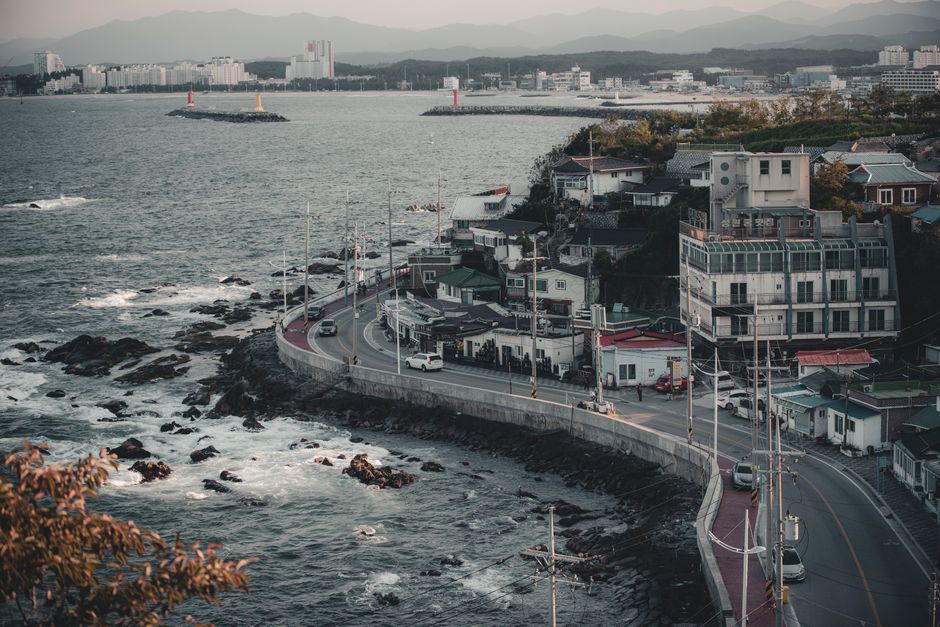
Gangneung is the main city of Korea’s east coast, a laid-back seaside city of pine-backed beaches, a lagoon-like lake, old Confucian houses and, surprisingly, some of the best coffee in the country. Koreans come here for the sunrise over the East Sea at Jeongdongjin and Gyeongpo, for the cafés of Anmok’s “coffee street,” for soft tofu made with seawater in Chodang, and for the fish market and breakwaters of Jumunjin. It was also the host city for the ice events of the 2018 Winter Olympics, and the mountains of Pyeongchang and Odaesan are close by. Since the KTX reached Gangneung in 2017, it has been under two hours from Seoul, and since December 2025 a new high-speed line runs down the coast to Gyeongju and Busan. Summer is beach season; spring and fall are the most pleasant times, and winter brings clear, dry days and snow in the mountains.
Right now in Gangneung
- Fri10–25°C50–77°FPartly cloudy
- Sat11–24°C51–75°FClear
- Sun15–23°C59–74°FClear
- Fri 9 Oct Hangul Day (한글날)
Top tours in Gangneung
See all tours for Gangneung →
From local operators, with prices and reviews; you check availability and book on Viator, our partner. We may earn a commission at no extra cost to you. How we earn money
Gangneung at a glance
- Best for: beaches and sunrise, coffee culture, seafood and soft tofu, Joseon-era houses, coastal walks, and a base for Seoraksan, Odaesan and Pyeongchang.
- How long: 1–2 days; 3 or more with the mountains or Sokcho.
- Best time: May to June and September to October, with highs of about 21–25 °C (69–78 °F); July and August for the beaches.
- Getting there: about 2 hours by KTX from Seoul Station or Cheongnyangni; about 3 hours 50 minutes from Busan by the coastal KTX-Eum.
- Getting around: city buses, taxis (from 4,600 won) and bicycles along the coast; a car helps for Jeongdongjin and the mountains.
- Good to know: the beaches have lifeguards only in summer, and the coast can be very windy and dry in spring.
- Before you go: the K-ETA (and the exemption for 22 countries until December 31, 2026), the e-Arrival card, money and general safety are in our South Korea travel guide; see also our Seoraksan guide.
Gangneung’s areas and where to stay
Gangneung lies between the Taebaek Mountains and the East Sea in Gangwon State. The compact city center, with the KTX station and the central market, sits a few kilometers inland; the beaches stretch for about 30 km (19 miles) along the coast, from Jumunjin in the north to Jeongdongjin in the south.
Gyeongpo
The best-known resort area, where a long beach backed by pines separates the sea from Gyeongpoho lake. Big hotels, motels, raw fish restaurants and cycle paths around the lake; the most convenient beach base, about 15 minutes by bus from the station.
Anmok and Gangmun
South of Gyeongpo, Anmok Beach’s seafront is lined with dozens of coffee shops and roasteries, the origin of Gangneung’s coffee fame; Gangmun, between Anmok and Gyeongpo, has a small beach and a harbor. Good for café-hopping and quieter stays.
Downtown and the station
The old center around Gangneung Station has the Central Market, the Gangneung Daedohobu government office, shopping streets and business hotels. Practical for train travelers and food.
Jumunjin and the north coast
A fishing port with a busy fish market, breakwaters and the beaches of Jumunjin, Sodol and Yeongjin, about 30 minutes north of the center; good for seafood and a quieter coast.
Jeongdongjin and the south coast
About 30 minutes south, Jeongdongjin is famous for its sunrise and its railway station right on the beach, with resort hotels, a sculpture park and the coastal walk along the Badabuchae-gil cliffs.
Top things to see in Gangneung
Gyeongpo Beach and Gyeongpoho Lake
A 1.8 km (1.1-mile) sweep of white sand backed by pine woods, the most popular beach on the east coast, with sunrise views and summer crowds. Behind it, Gyeongpoho, a shallow coastal lake, has a 4.3 km (2.7-mile) walking and cycling path, fields of flowers and cherry trees in April. On the hill above the lake, the Gyeongpodae pavilion has been a famous spot for moon-watching since the 14th century.
Anmok Coffee Street
Gangneung’s coffee culture started with vending machines on Anmok’s seafront and grew into a street of cafés and roasteries with sea views; some of Korea’s pioneering specialty roasters started here. The Gangneung Coffee Festival fills the city with tastings and workshops every fall, usually in October.
Ojukheon
The birthplace of the Confucian scholar Yi I (Yulgok) and his mother, Shin Saimdang, a celebrated artist, who appear on Korea’s 5,000-won and 50,000-won notes. The house, among the oldest wooden residences in Korea, is set in a garden of black bamboo (ojuk), with a museum of the family’s art and writing.
Seongyojang House
A grand aristocratic mansion of the late Joseon period, with more than 100 rooms, a lotus pond and a pavilion; one of the best-preserved traditional houses in Korea, with a hanok stay program.
Jeongdongjin
According to the Korea Tourism Organization (KTO), the coastal KTX-Eum calls at Jeongdongjin, a station almost on the beach, long famous as the place where Koreans welcome the New Year’s sunrise. Nearby are the Sandglass Park, with a giant hourglass, the ship-shaped Sun Cruise resort on the cliff, and the Badabuchae-gil, a coastal walkway along the cliffs formed millions of years ago. The Unification Park displays a North Korean submarine that ran aground here in 1996.
Jumunjin
The fishing port has a lively market for squid, crab and dried fish, and the breakwater where a K-drama couple met, now one of the most photographed spots on the coast; nearby Hyangho Beach has a bus stop made famous by a BTS album cover.
More classic sights
- Gangneung Central Market: food stalls, dakgangjeong (sweet fried chicken) and potato dumplings.
- Chodang Soft Tofu Village: restaurants making sundubu tofu with seawater as a coagulant, a Gangneung specialty.
- Gangneung Daedohobu: the restored regional government office of the Joseon dynasty, in the city center.
- Gangneung Olympic Park: the 2018 ice venues, including the Gangneung Ice Arena and Oval.
- Haslla Art World: a hillside sculpture park and museum above the sea, south of Jeongdongjin.
Parks and gardens
- Gangneung Olympic Park
Monuments
- Seongyojang
Beaches
- Gyeongpo Beach
- Jumunjin Beach
Other things to do in Gangneung
Food and drink
Gangneung’s must-eats are chodang sundubu, silky soft tofu curdled with seawater, eaten plain or in a spicy jjamppong-style stew; fresh raw fish and mulhoe (cold raw fish soup) at Jumunjin and Sacheon; grilled squid and crab in season; gamja ongsimi (potato dumplings in soup), a Gangwon specialty; and coffee, everywhere. The Central Market’s dakgangjeong and the hand-made jjinppang buns are good snacks.
Beaches, surfing and cycling
Beaches open with lifeguards in July and August. Besides Gyeongpo, try Sacheon and Sodol for quieter sand, and Yangyang, about 40 minutes north, for Korea’s best surfing. Bike paths circle Gyeongpoho and follow the coast. See our beaches, surfing and cycling guides.
Sunrise on the East Sea
Watching the sun rise out of the East Sea is a Korean ritual, and Gangneung is one of the best places for it. Crowds gather on Gyeongpo and Jeongdongjin beaches before dawn on New Year’s Day, when the city holds sunrise festivals, but any clear morning works; in October, the sun rises around 6:30 a.m. Cafés along Anmok and the hotels at Jeongdongjin have rooms and terraces facing the sunrise, and the quieter beaches north of Gyeongpo, such as Sacheon and Sodol, offer the same view without the crowds.
Walking
The Gangneung Baudil trails and the Haeparang-gil, the coastal trail of the east coast, follow the shore through pine woods and fishing villages; the Badabuchae-gil cliff walk at Jeongdongjin is the most dramatic short walk.
Festivals
The Gangneung Danoje Festival, held around the fifth day of the fifth lunar month (usually in June), is a UNESCO-listed festival of shamanic rites, mask dance, wrestling and swings. New Year’s Day brings sunrise festivals on the beaches, and the coffee festival takes place in the fall.
Day trips from Gangneung
- Seoraksan National Park: granite peaks, the cable car and Ulsanbawi, about an hour north by bus via Sokcho; peak fall colors in late October. See our Seoraksan guide.
- Sokcho and Yangyang: the fish market and Abai Village, Naksansa temple on the cliffs, and surf beaches.
- Odaesan National Park: fir forests and the temples of Woljeongsa and Sangwonsa, about 40 minutes inland.
- Pyeongchang: the 2018 Winter Olympic mountain resorts, Daegwallyeong’s sheep farms and ski slopes.
- Samcheok and Donghae: the Hwanseongul and Daegeumgul caves, Chuam’s candlestick rocks and coastal rail bikes, on the KTX-Eum line south.
- Gyeongju and Busan: about 3 to 4 hours down the coast by KTX-Eum. See our Busan guide.
Nearby destinations
Getting there and getting around
By train
KTX trains on the Gangneung line leave Seoul Station and Cheongnyangni for Gangneung Station in about 1 hour 50 minutes to 2 hours; according to the KTO, the line from Cheongnyangni is 237.7 km (148 miles) long, via Yangpyeong, Wonju and Pyeongchang. Some trains continue to Jeongdongjin and Donghae. Since December 30, 2025, the Donghae Line KTX-Eum has linked Gangneung with Busan’s Bujeon Station along the east coast in about 3 hours 50 minutes, stopping at Jeongdongjin, Mukho, Donghae, Samcheok, Uljin, Yeongdeok, Pohang, Gyeongju and Taehwagang (Ulsan), with three trains a day in each direction. Book on the Korail website or the Korail Talk app; weekend trains sell out early.
By bus and air
Express buses run from Seoul’s Express Bus Terminal and Dong Seoul to Gangneung in about 2.5 to 3 hours, and intercity buses link Gangneung with Sokcho, Samcheok and other east coast towns. Yangyang International Airport, about 45 minutes north by taxi, has a limited number of domestic and international flights; according to the KTO, a free shuttle bus runs from the airport to Gangneung Station.
Getting around
City buses link the station with Gyeongpo, Anmok and Jumunjin; pay with a T-money card. Taxis start at 4,600 won (about US$3.40) in Gangwon, according to the KTO, and are the quickest way between the beaches; book with k.ride. Bike rental is available around Gyeongpoho. A rental car makes it easy to explore the coast and the mountains. Use Naver Map or Kakao Map for bus times.
When to go and how long to stay
Gangneung’s climate is milder than Seoul’s in winter, as the mountains shelter it from cold northwest winds, but it gets heavy rain and typhoon remnants in late summer and dry, gusty winds in spring. The table uses the 1991–2020 normals of the Korea Meteorological Administration (KMA) for its Gangneung station, as submitted to the World Meteorological Organization: average daily highs and lows, total rain and days with at least 1 mm of rain.
| Month | Average high / low | Rain (days with 1 mm or more) | What to expect |
|---|---|---|---|
| January | 5 °C (42 °F) / −3 °C (27 °F) | 48 mm (1.9 in), 5 days | Clear and cold; New Year’s sunrise festivals |
| February | 7 °C (45 °F) / −1 °C (30 °F) | 48 mm (1.9 in), 4 days | Cold and dry; skiing in Pyeongchang |
| March | 12 °C (53 °F) / 3 °C (37 °F) | 65 mm (2.6 in), 7 days | Cool; dry, windy days |
| April | 18 °C (64 °F) / 8 °C (47 °F) | 82 mm (3.2 in), 7 days | Cherry blossoms at Gyeongpoho early in the month |
| May | 23 °C (73 °F) / 13 °C (56 °F) | 79 mm (3.1 in), 6 days | Warm and pleasant; green mountains |
| June | 25 °C (78 °F) / 18 °C (64 °F) | 118 mm (4.7 in), 8 days | Warm; Danoje Festival around the fifth lunar month |
| July | 28 °C (83 °F) / 22 °C (71 °F) | 250 mm (9.9 in), 12 days | Hot and humid; beaches open |
| August | 29 °C (83 °F) / 22 °C (71 °F) | 293 mm (11.5 in), 12 days | The wettest month; beach season peaks |
| September | 25 °C (76 °F) / 17 °C (63 °F) | 229 mm (9.0 in), 9 days | Rain and typhoon remnants possible early in the month |
| October | 20 °C (69 °F) / 12 °C (53 °F) | 114 mm (4.5 in), 6 days | Clear and mild; coffee festival; fall colors in the mountains |
| November | 14 °C (57 °F) / 6 °C (42 °F) | 81 mm (3.2 in), 5 days | Cool; colors in the city and Odaesan |
| December | 8 °C (46 °F) / 0 °C (31 °F) | 37 mm (1.5 in), 3 days | Cold and dry; quiet beaches |
Gangneung gets about 1,440 mm (57 in) of rain a year, with August and September the wettest months, when typhoons sometimes bring very heavy rain to the east coast. According to the KMA, the jangma monsoon normally reaches the central region around June 25 and lasts about a month. In spring, warm, dry winds blowing down from the mountains raise the risk of wildfires on the east coast.
Weather month by month
Cherry blossoms and fall colors: in 2026, the KTO’s forecast (from the private forecaster Weather i) put Gangneung’s first cherry blossoms on April 1, about two days before Seoul’s; the paths around Gyeongpoho and the Namdaecheon stream are the favorite spots. Fall colors reach the nearby mountains in October; Seoraksan’s 2026 peak was forecast around October 25.
1 day in Gangneung
Sunrise at Gyeongpo or Jeongdongjin, Ojukheon and Seongyojang in the morning, soft tofu for lunch in Chodang, coffee on Anmok’s seafront, a walk or bike ride around Gyeongpoho, and raw fish or seafood for dinner.
2 to 3 days
Add Jumunjin and the north coast, the Badabuchae-gil walk at Jeongdongjin, and a day in Seoraksan, Odaesan or Pyeongchang.
Where to stay in Gangneung
- Gyeongpo: beach hotels and resorts, the best summer base.
- Anmok and Gangmun: smaller hotels and guesthouses near the cafés.
- Downtown: business hotels and motels near the station and market.
- Jeongdongjin: resort hotels with sunrise views.
- Seongyojang and hanok stays: traditional rooms in historic houses.
Rooms sell out and prices jump in July and August, on New Year’s Eve and during holidays.
What a trip to Gangneung costs
Prices are approximate, for October 2026, converted at about 1,365 won to the US dollar.
| Item | Typical cost |
|---|---|
| KTX, Seoul to Gangneung, standard class | about 27,000–28,000 won (about US$20) |
| City bus with T-money | about 1,500 won (about US$1.10) |
| Taxi, base fare | 4,600 won (about US$3.40) |
| Chodang sundubu set | 10,000–15,000 won (about US$7.30–11) |
| Specialty coffee in Anmok | 5,000–8,000 won (about US$3.70–5.90) |
| Raw fish platter for two | 60,000–120,000 won (about US$44–88) |
| Beach hotel in Gyeongpo, per night | 100,000–250,000 won (about US$73–183) |
| Guesthouse or motel double | 50,000–90,000 won (about US$37–66) |
Practical tips for Gangneung
- Sunrise: check the sunrise time and arrive 20 minutes early; it is especially crowded on January 1.
- Book trains early: weekend KTX trains from Seoul sell out, especially in summer and October.
- Wind: bring a windproof layer; the sea breeze is strong year-round.
- Combine the coast: the KTX-Eum makes a one-way trip down the east coast to Gyeongju and Busan easy.
- Help in English: call the 1330 Korea Travel Helpline.
Safety
Gangneung is safe and relaxed. Swim only on beaches with lifeguards during the summer season and between the flags; the East Sea drops off quickly and rip currents form on windy days. Typhoons and heavy rain in August and September can bring high waves, so stay off breakwaters and coastal rocks when warnings are issued. In spring, dry, strong winds make wildfires a risk on the east coast: never light fires or discard cigarettes outdoors, and follow official instructions if a fire breaks out. In an emergency, call 112 for the police or 119 for an ambulance or fire.
What to pack for Gangneung
Swimwear and sandals in summer, a windproof jacket, comfortable walking shoes for the coastal trails, sunglasses for sunrise and sea glare, and a warm coat in winter. Korea uses 220 V and round two-pin plugs.
Gangneung travel FAQ
Is Gangneung worth visiting?
Yes, for the beaches, sunrise, coffee culture and seafood, and as a base for Seoraksan, Odaesan and the east coast.
How do I get from Seoul to Gangneung?
By KTX from Seoul Station or Cheongnyangni in about 2 hours, or by express bus in about 2.5 to 3 hours.
Can I travel from Gangneung to Busan by train?
Yes. Since December 30, 2025, the Donghae Line KTX-Eum has linked Gangneung and Busan’s Bujeon Station in about 3 hours 50 minutes.
What is Gangneung famous for?
Gyeongpo Beach, Jeongdongjin’s sunrise, the coffee street at Anmok, soft tofu from Chodang and the Danoje Festival.
Where is the best place to watch the sunrise in Gangneung?
Jeongdongjin and Gyeongpo are the classic spots; Anmok and Jumunjin are quieter.
When can you swim in Gangneung?
The beaches open with lifeguards in July and August; the sea is warmest in August and September.
When do the cherry blossoms bloom in Gangneung?
Usually in early April; in 2026, the forecast put the first blossoms on April 1, around Gyeongpoho lake.
How far is Seoraksan from Gangneung?
About an hour by bus or car to Sokcho and the park’s main entrance at Seorak-dong.
What should I eat in Gangneung?
Chodang soft tofu, raw fish and mulhoe, potato dumplings, and coffee from the Anmok roasters.
Is Gangneung good in winter?
Yes, for clear skies, sunrise, quiet beaches and skiing in nearby Pyeongchang, though the sea wind is cold.
Plan your trip
Partner links: TravelerCenter may earn a commission if you book, at no extra cost to you.
🇰🇷 Useful Korean phrases for Gangneung
All 38 Korean phrases: restaurant, hotel, emergencies, romance (printable) →
Sources · last reviewed 4 October 2026
Researched and last reviewed on 4 October 2026. The Gangneung KTX line, the Donghae Line KTX-Eum and its stops, taxi fares, the Yangyang Airport shuttle and the 2026 cherry blossom and fall foliage forecasts (from Weather i): the Korea Tourism Organization (KTO); climate normals and jangma dates: the Korea Meteorological Administration (KMA), via the World Meteorological Organization; exchange rate: the US Federal Reserve. Journey times and fares, beach and lake dimensions, festival dates, the history of sights, the beach season and typical prices are general references or estimates, flagged for checking. Prices and hours change, so check the official sites before you go. For entry rules, money and general safety, see our South Korea travel guide.
Also: KMA normals 1991–2020, Gangneung (climate)
Data: Weather: MET Norway (CC BY 4.0) · Sea temperature: NOAA CoastWatch · Air quality: OpenAQ · Rates: ECB · Holidays: Nager.Date · Costs: World Bank ICP and price levels · © OpenStreetMap contributors (ODBL) · Wikidata (CC0)