Short answer: For a first trip, the top places to visit in Argentina are Buenos Aires, the Iguazú Falls, the Perito Moreno Glacier near El Calafate, the trekking village of El Chaltén below Mount Fitz Roy, and Bariloche in the northern Patagonian lakes. Round out the list with the wine country of Mendoza, colonial Salta, the colored mountains of the Quebrada de Humahuaca, the whales of Península Valdés and Ushuaia at the end of the world.
The list is ordered the way we would recommend places to a first-time visitor: the capital and the falls first, then Patagonia, the wine country, the Andean north and the far south. Argentina is huge, so plan on domestic flights. National park fees are the official rates from June 2026 for foreign visitors, in Argentine pesos (about 1,520 pesos to the US dollar in early October 2026).
1. Buenos Aires
Why it made the list: Argentina’s capital is one of the great cities of the Americas: grand boulevards and cafés, tango in the streets and dance halls, steakhouses, and neighborhoods with very different personalities, from cobbled San Telmo to leafy Palermo.
Best time to go: September to November and March to May, when it is mild. January highs average about 30°C (86°F), and June and July are cool, with highs around 16°C (61°F).
Don’t miss: Recoleta Cemetery and its ornate family tombs, a tango show or a milonga (a social dance night), and the Sunday street market in San Telmo. If you can, see a performance or a guided tour at the Teatro Colón, the opera house opened in 1908.
Getting there and how long: international flights land at Ezeiza (EZE), about 35 km (22 miles) from the center; most domestic flights use Aeroparque, in the city. Stay three or four nights.
Practical note: visitors who pay for hotels with a foreign card or a transfer from abroad can have the 21% VAT on lodging removed; your hotel must record your passport details. See our Buenos Aires travel guide.
2. Iguazú National Park
Why it made the list: the Iguazú Falls, about 275 cascades on the border with Brazil, are among the natural wonders of the world. The Argentine side, a UNESCO World Heritage Site since 1984, puts you right above and beside the falls on miles of walkways.
Best time to go: any time of year. October is the wettest month, with about 250 mm (10 in) of rain, and very high water can close some walkways; August is the driest.
Don’t miss: the walkway to the Devil’s Throat (Garganta del Diablo), reached by the park’s little train, and the Upper and Lower Circuits, about 3.7 km and 2.9 km round trip, about 90 minutes each.
Getting there and how long: fly from Buenos Aires to Puerto Iguazú (about 1 hour 50 minutes); buses run from the town terminal to the park every 20 minutes. Allow one full day, two to add the Brazilian side.
Practical note: foreign visitors pay ARS 60,000 (about US$40), train included, and a second day within 72 hours costs half. The park is open daily from 8 a.m. to 6 p.m., with last entry at 4 p.m. The Devil’s Throat walkway closes as a precaution when the river runs very high (it did in early October 2026), so check its status before you go. See our Iguazú National Park travel guide, and for the other side our Foz do Iguaçu travel guide.
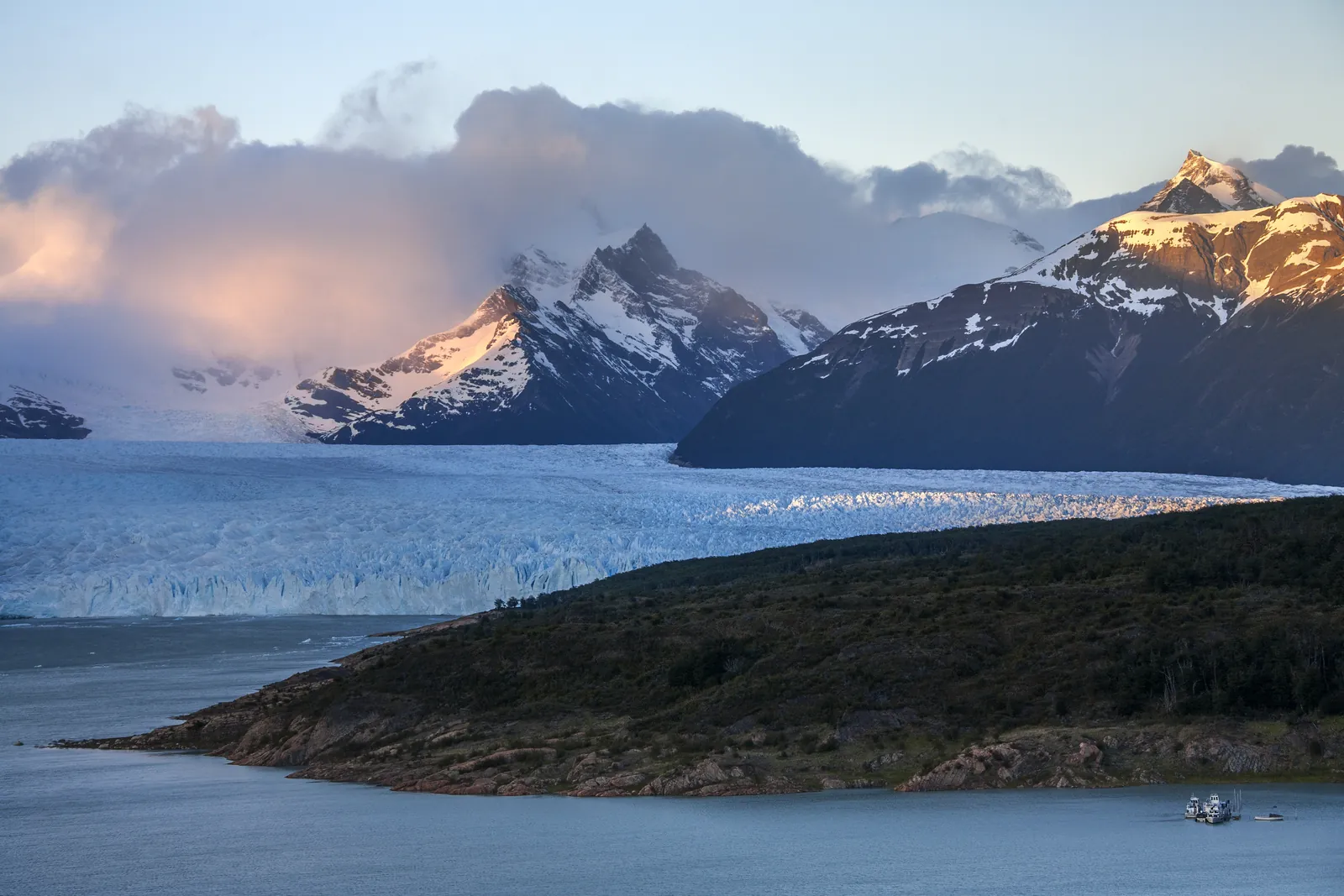
3. Perito Moreno Glacier and El Calafate
Why it made the list: the Perito Moreno Glacier, in Los Glaciares National Park, is a wall of blue ice that you can watch from walkways just across a narrow channel, as towers of ice crack and crash into the lake. Few glaciers anywhere are this easy to see up close.
Best time to go: November to March, the Patagonian summer, with January highs of about 19°C (66°F) and very long days. The walkways are open all year.
Don’t miss: the glacier walkways, more than 4.5 km of paths and viewpoints with accessible options, and a boat trip on Lago Argentino to the Upsala and Spegazzini glaciers. Adventurous visitors can join a guided ice trek on the glacier itself.
Getting there and how long: fly to El Calafate (about 3 hours 15 minutes from Buenos Aires); the park’s Río Mitre entrance is 50 km (31 miles) from town. Stay two or three nights.
Practical note: the park charges foreign visitors ARS 50,000 a day in the southern zone, payable in pesos or by card at the entrance or online. Bring layers: wind is constant in Patagonia. See our Los Glaciares National Park travel guide.
4. El Chaltén and Mount Fitz Roy
Why it made the list: a small mountain village in the north of Los Glaciares, with some of the most spectacular day hikes in South America leaving straight from town to the granite spires of Fitz Roy and Cerro Torre.
Best time to go: November to March; many services close in winter, and the park requires registration for trails from May to September.
Don’t miss: the hike to Laguna de los Tres at the foot of Fitz Roy, about 25 km (16 miles) round trip and 8 to 9 hours, or the easier walk to Laguna Torre, three to four hours each way.
Getting there and how long: El Chaltén is about 200 km (124 miles) by paved road from El Calafate, around three hours by bus. Stay three nights to allow for a cloudy day.
Practical note: the northern zone’s park fee (ARS 50,000 a day) is paid online only, by card or QR, with no cash at the trailheads, so pay before you set out. See our Los Glaciares National Park travel guide.
5. Bariloche and the Lake District
Why it made the list: San Carlos de Bariloche sits on the shore of Lake Nahuel Huapi, ringed by forested mountains, with Alpine-style chalets, chocolate shops and outdoor adventures year-round: hiking and kayaking in summer, skiing in winter.
Best time to go: December to March for hiking and lakes, with January highs of about 23°C (73°F), or July to September for skiing at Cerro Catedral. June is the wettest month.
Don’t miss: the Circuito Chico, a scenic loop of about 60 km (37 miles) along the lakes, with a chairlift ride up Cerro Campanario for one of the region’s best views.
Getting there and how long: fly from Buenos Aires (about 2 hours 20 minutes). Stay three or four nights, more if you drive the Seven Lakes Road.
Practical note: Nahuel Huapi National Park charges foreign visitors ARS 35,000 a day at its paid access points. See our San Carlos de Bariloche travel guide.
6. Mendoza
Why it made the list: Argentina’s wine capital, at the foot of the Andes, produces most of the country’s wine, above all Malbec. Days are spent visiting wineries by bike or car, with long lunches among the vines and the snowy peaks behind.
Best time to go: March to May for the harvest and autumn colors, and September to November for spring. Mendoza is very dry, with only about 240 mm (9 in) of rain a year, and summer highs near 33°C (91°F). The Vendimia harvest festival is held in early March.
Don’t miss: a day in the Uco Valley or Luján de Cuyo wine regions, and a drive into the Andes for views of Aconcagua, at 6,961 m (22,838 ft) the highest mountain outside Asia.
Getting there and how long: fly from Buenos Aires (about 1 hour 50 minutes). Stay three nights.
Practical note: book winery visits and lunches ahead, especially at weekends, and do not drive after tastings; hire a driver or join a tour. See our Mendoza travel guide.
7. Salta and Cafayate
Why it made the list: Salta is a handsome colonial city in the Andean northwest, the base for road trips through red-rock canyons, cactus valleys and high-altitude wine country around Cafayate.
Best time to go: April to November, the dry season; about 80% of the year’s rain falls from December to March, and January is the wettest month.
Don’t miss: the drive south through the Quebrada de las Conchas to Cafayate for its high-altitude Torrontés wines, and the loop west over the Cuesta del Obispo to Los Cardones National Park and the village of Cachi.
Getting there and how long: fly from Buenos Aires (about 2 hours). Stay four nights with a rental car.
Practical note: Los Cardones National Park charges foreign visitors ARS 25,000 a day. Roads climb above 3,000 m (9,800 ft), so take it slowly on your first days. See our Salta travel guide.
8. Quebrada de Humahuaca
Why it made the list: a valley about 155 km (96 miles) long in Jujuy province, north of Salta, with mountains striped in red, green and violet and adobe villages that have been inhabited for thousands of years. It has been a UNESCO World Heritage Site since 2003.
Best time to go: April to November, the dry season in the northwest.
Don’t miss: the Hill of Seven Colors above the village of Purmamarca, and the pre-Columbian hilltop fortress, the Pucará, at Tilcara.
Getting there and how long: drive north from Salta through Jujuy; it works as a long day trip, but two nights in Purmamarca or Tilcara is better.
Practical note: the valley floor sits above 2,000 m (6,600 ft), and the higher roads to the salt flats go much higher, so drink water and avoid rushing. We do not have a Humahuaca page yet; see the day trips in our Salta travel guide.
9. Puerto Madryn and Península Valdés
Why it made the list: on the Atlantic coast of Patagonia, Península Valdés is a protected area where southern right whales come to breed, alongside elephant seals, sea lions and penguins. Few places in the world offer whale watching this close.
Best time to go: June to December for whales, with the peak in September and October.
Don’t miss: a whale-watching boat trip from Puerto Pirámides, the only place in Chubut province where boat-based whale watching is allowed (trips last about two hours), and the penguin colony at Punta Tombo, south of Madryn, from about September to April.
Getting there and how long: fly to Trelew or Puerto Madryn (about 2 hours from Buenos Aires). Stay three nights.
Practical note: foreign adults pay ARS 50,000 to enter the peninsula, and the “Doble Día” ticket lets you re-enter free within seven days. Distances on the peninsula are long, so start early. See our Puerto Madryn travel guide.
10. Ushuaia and Tierra del Fuego
Why it made the list: the southernmost city in Argentina sits between snowy mountains and the Beagle Channel. It is the starting point for most Antarctic cruises and a base for hikes and boat trips in Tierra del Fuego National Park.
Best time to go: December to February, when highs reach only about 13–14°C (55–57°F) but days are long. The Antarctic cruise season runs from October to March.
Don’t miss: a boat trip on the Beagle Channel past sea lion islands and the Les Eclaireurs lighthouse, and the coastal trails of Tierra del Fuego National Park.
Getting there and how long: fly from Buenos Aires (about 3 hours 30 minutes). Stay two or three nights, longer if you are joining a cruise.
Practical note: Tierra del Fuego National Park charges foreign visitors ARS 40,000 a day; the half-price second day is available only when you buy online. Pack for wind and rain in any month. See our Ushuaia travel guide.
How to fit them into one trip
Argentina is the eighth-largest country in the world, so pick a few regions and fly between them.
One week: three nights in Buenos Aires, then fly to Iguazú for two nights, and back to the capital.
Ten days: Buenos Aires, then Patagonia: El Calafate for the Perito Moreno Glacier (two nights) and El Chaltén (three nights). Add Iguazú if you have two more days.
Two weeks: Buenos Aires and Iguazú, Patagonia’s glaciers, and then either Bariloche, Mendoza’s wine country, or Salta and the Quebrada de Humahuaca. Between June and December, swap in Península Valdés for the whales; for Antarctica, end in Ushuaia.
Timing changes the route: Patagonia is best from November to March, the northwest from April to November, and the wine country in autumn and spring. Our best time to visit Argentina guide goes month by month, and our AI trip planner builds the day-by-day plan for your dates.
Plan your trip
Start with our Argentina travel guide for entry, money and getting around. Use the AI trip planner to turn this list into a route, check temperatures and wind for your dates with the Destination weather tool, and convert pesos with the Money exchange tool.
Frequently asked questions
What is the most beautiful place in Argentina?
Most travelers name the Iguazú Falls, the Perito Moreno Glacier, or Mount Fitz Roy seen from El Chaltén at sunrise. The striped mountains of the Quebrada de Humahuaca are a close contender.
How many days do you need in Argentina?
A week covers Buenos Aires and the Iguazú Falls. Ten days lets you add the glaciers of Patagonia, and two weeks or more lets you add the Lake District, Mendoza or the northwest.
What is the best place in Argentina for first-time visitors?
Buenos Aires. It is where international flights land, it has the food, tango and culture that define Argentina, and it is the hub for flights to every other place on this list.
Should I see Iguazú Falls from Argentina or Brazil?
Both, if you can. The Argentine side has the longer walkways and the Devil’s Throat and needs a full day; the Brazilian side gives the big panoramic views in a half day.
When is the best time to visit Patagonia?
November to March, the southern summer, when days are long and trails and boat trips run fully. January and February are the busiest months, so book flights and lodging early.