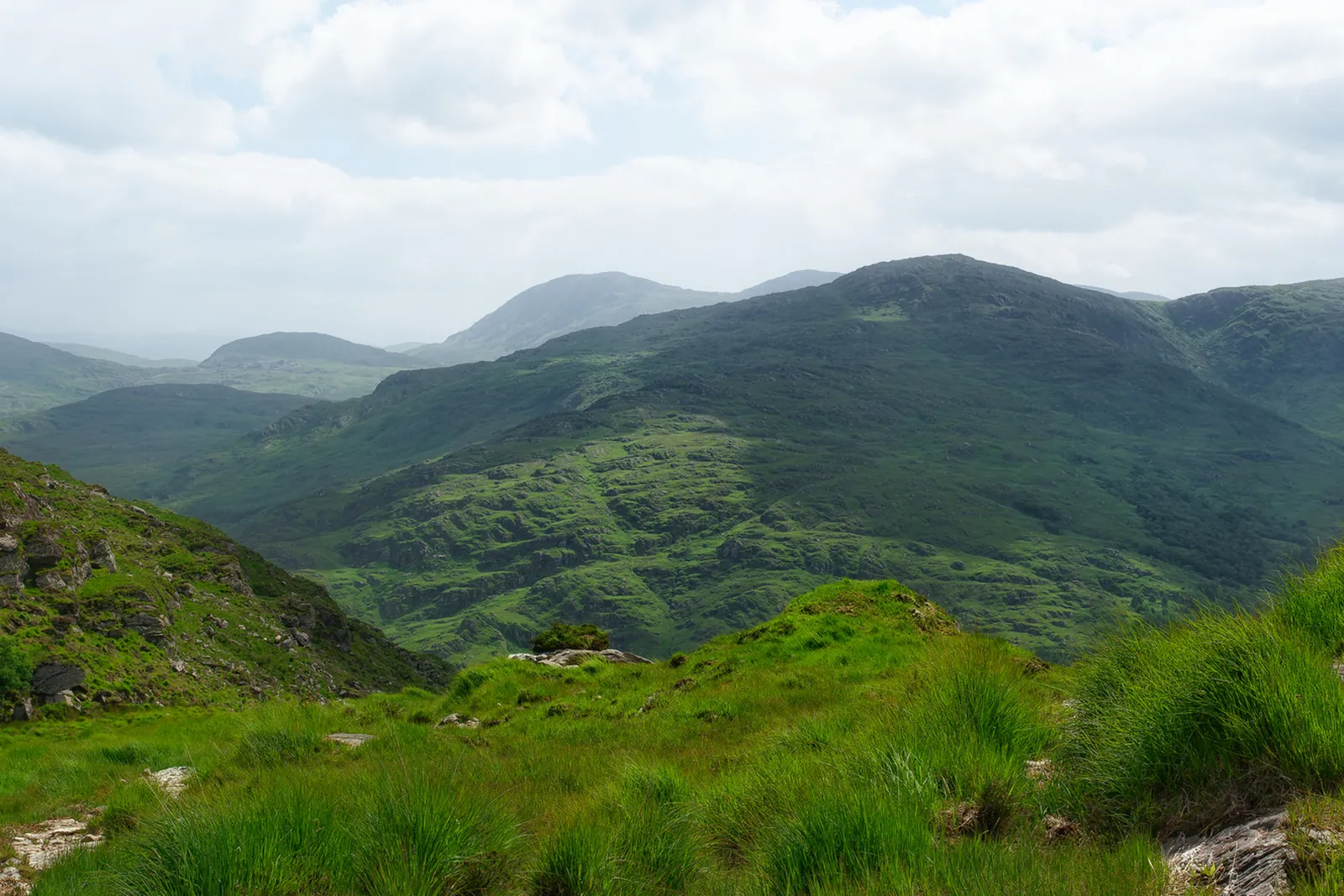
Short answer: The top places to visit in Ireland are Dublin, the Cliffs of Moher and the Burren, Galway, Connemara, Killarney National Park, the Ring of Kerry, the Dingle Peninsula, the Aran Islands, Cork with Cobh and Kinsale, and the ancient tombs of Brú na Bóinne. Together they cover the capital, the Atlantic coast, lakes and mountains, island life and some of Europe’s oldest monuments.
Ireland’s roads are narrow and winding, so on a first trip it pays to choose well. The list is in the order we would recommend, with when to go, what not to miss and how long to stay.
It covers the Republic of Ireland. The Giant’s Causeway is on the same island but in Northern Ireland, part of the United Kingdom; see our Belfast travel guide. For the whole country, start with our Ireland travel guide.
1. Dublin
Why it is on the list: almost every trip starts here. Dublin is compact and walkable, with Georgian squares, two medieval cathedrals, free national museums and a pub on almost every corner. It is also the driest part of the country.
Best time: May to September for long days and mild weather. Hotels fill and prices jump around St Patrick’s Festival (13 to 17 March 2027), so book months ahead for that week.
Don’t miss: the Book of Kells and the Long Room at Trinity College, and the guided tour of Kilmainham Gaol, the most moving history lesson in the city.
Getting there and how long: Dublin Airport is about 10 km north of the center, 25 to 40 minutes by express coach. Give the city two to three days, or four to five to add Howth, Glendalough in the Wicklow Mountains or Brú na Bóinne (number 10).
Practical note: Dublin Castle is closed to the public until January 2027, and the Long Room has had almost all its books removed for a restoration project (Trinity says it stays open until the end of 2027). Book timed tickets online in summer. See our Dublin travel guide.
2. The Cliffs of Moher and the Burren
Why it is on the list: this is Ireland’s most famous natural sight. On the coast of County Clare, the cliffs reach 214 meters (702 feet) just north of O’Brien’s Tower, and more than 30,000 pairs of seabirds nest on their ledges. Inland, the Burren is a strange, beautiful plateau of bare limestone, wildflowers and ancient tombs.
Best time: puffins are on the cliffs from late March to mid-July, and May and June are the best months to see them, which is also when the Burren flowers.
Don’t miss: the cliff-top path to O’Brien’s Tower, and the Poulnabrone dolmen in the Burren, a tomb more than 5,000 years old.
Getting there and how long: about 1 hour 30 minutes by car from Galway, or on one of many day tours from the city. Plan about two hours at the cliffs, and a full day with the Burren.
Practical note: the busiest hours are 11:00 to 16:00, so come early or late. Booking online is cheaper than paying on the day, and children under 12 go free with a parent. On the longer coastal walk, the edge is unfenced: keep well back.
3. Galway
Why it is on the list: Galway is the lively, creative little city of the west, with painted medieval streets, buskers on Shop Street and traditional music in its pubs every night.
Best time: May to September. July is liveliest, with the Galway International Arts Festival (12 to 25 July 2027) and the Galway Races, but hotels fill and prices rise sharply.
Don’t miss: an evening music session in a Latin Quarter pub, and a sunset walk along the Salthill promenade on Galway Bay.
Getting there and how long: trains and coaches from Dublin take about 2 hours 30 minutes. One or two days covers the city; four or five add the islands, the cliffs and Connemara.
Practical note: you do not need a car in the small, mostly pedestrian center; hire one when you head out to Connemara or the Burren. See our Galway travel guide.
4. Connemara
Why it is on the list: west of Galway, Connemara is Ireland at its wildest: quartzite mountains, brown bog, countless lakes, stone walls and white-sand beaches. It is one of the largest Irish-speaking areas in the country.
Best time: April to June and September for the best chance of clear days. Some guesthouses and restaurants close in winter.
Don’t miss: Kylemore Abbey, reflected in its lake, with its Victorian Walled Garden; the walk up Diamond Hill in Connemara National Park, where entry and parking are free; and the Sky Road above Clifden.
Getting there and how long: Clifden is about 80 km from Galway, roughly 1 hour 30 minutes by car on the N59 or about 2 hours by Citylink coach. One long day from Galway shows you the highlights; three or four days let you walk, cruise Killary Harbour and visit Inishbofin.
Practical note: mobile coverage and cash machines are patchy in the hills, so fill up in Galway, Oughterard or Clifden, and check Kylemore’s hours on its own website. See our Connemara travel guide.
5. Killarney National Park
Why it is on the list: Ireland’s first national park starts at the edge of Killarney town: three lakes, oak and yew woods, waterfalls and the McGillycuddy’s Reeks, Ireland’s highest mountains. It is a UNESCO Biosphere Reserve with Ireland’s only native red deer, and it is free and open to walkers all day.
Best time: May, June and September, with fewer coaches. May brings rhododendrons to Muckross; October brings autumn colors and the deer rut.
Don’t miss: a bike ride to Ross Castle, Muckross House and Torc Waterfall, and a day on the Gap of Dunloe, a mountain pass crossed by jaunting car (horse-drawn cart), bike or on foot, with a boat back across the lakes.
Getting there and how long: trains from Dublin take about 3 hours 20 minutes, usually changing at Mallow, and Kerry Airport is about 20 minutes away. Give the park two days.
Practical note: Ross Castle is seen only on guided tours of up to 15 people, with tickets sold on site, so arrive early in summer, and carry cash for jaunting cars. See our Killarney travel guide.
6. The Ring of Kerry and Skellig Michael
Why it is on the list: the Ring of Kerry is Ireland’s classic scenic drive, a loop of about 180 km from Killarney around the Iveragh Peninsula, through Killorglin, Cahersiveen, Waterville, Sneem and Kenmare. Off its tip lies Skellig Michael, an early medieval monastery of stone beehive huts on an ocean rock, and one of only two UNESCO World Heritage Sites in the Republic.
Best time: May, June and September; in July and August coaches fill the road. Skellig landings run only in a short summer season (12 May to September in 2026). The island closed early for 2026 because of bad weather and reopens in 2027.
Don’t miss: Ladies View over the lakes, the Skellig Ring detour around Portmagee and, in season, the 618 steep steps up to the Skellig monastery.
Getting there and how long: base yourself in Killarney and allow a full day; without stops the drive takes 3 to 4 hours.
Practical note: tour coaches drive anticlockwise, so many drivers go clockwise via Kenmare and pull in to let coaches pass. Skellig boats sell out months ahead, and children under 12 may not land. Our Killarney travel guide covers both.
7. The Dingle Peninsula
Why it is on the list: north of the Ring, Dingle is quieter, wilder and many people’s favorite: beehive huts and stone forts above white beaches, the Blasket Islands offshore, an Irish-speaking countryside, and a colorful fishing town full of music pubs and seafood restaurants.
Best time: May to September. Blasket Island Ferries has announced sailings from 6 May to 8 September 2027, weather permitting.
Don’t miss: the Slea Head Drive, a loop from Dingle past Ventry beach, Dunbeg Fort, Slea Head and the Blasket Centre to Gallarus Oratory, a stone church shaped like an upturned boat.
Getting there and how long: about 1 hour 15 minutes by car from Killarney, or by train or bus to Tralee and then Bus Éireann route 275. Allow one full day, ideally two or three.
Practical note: drive Slea Head clockwise, heading west to Ventry first, as the road signs ask, and follow the signs rather than your phone. See our Dingle Peninsula travel guide.
8. The Aran Islands
Why it is on the list: Inis Mór, Inis Meáin and Inis Oírr lie across the mouth of Galway Bay: low limestone islands of stone walls, tiny fields and Irish-speaking villages. On Inis Mór, the stone fort of Dún Aonghasa sits on the edge of a sheer sea cliff about 87 meters high.
Best time: May to September, for calmer crossings. Atlantic weather can cancel boats, especially from October to March.
Don’t miss: Dún Aonghasa, a 1 km walk over rough, rising ground from the visitor center, and a bike ride around Inis Mór, with bikes rented by the pier.
Getting there and how long: Aran Island Ferries sail all year from Rossaveel, west of Galway, with a shuttle bus from the city; the crossing to Inis Mór takes about 40 minutes. In season, boats also leave from Doolin and Galway city docks. A day trip works; a night lets you see Inis Mór after the day-trippers leave.
Practical note: there is no fence at the cliff edge, so wear sturdy shoes and keep back, and check sailings on the morning of travel. Ferry details are in our Galway travel guide.
9. Cork, Cobh and Kinsale
Why it is on the list: Ireland’s second city is proud, friendly and food-loving, and its harbor holds some of the country’s most moving stories: Cobh was the departure point for about 2.5 million Irish emigrants and the Titanic’s last port of call. Kinsale, to the south, is a pretty harbor town known for its restaurants.
Best time: May to September for harbor trips; late October for the Guinness Cork Jazz Festival, when hotels book out months ahead.
Don’t miss: the English Market, trading on the same site since 1788, and the Shandon bells, which you can ring yourself. Then take the train to Cobh for the Titanic Experience, or kiss the Blarney Stone.
Getting there and how long: trains from Dublin Heuston run hourly, Monday to Saturday, in about 2 hours 30 minutes. Two days for the city, three or four with Cobh, Kinsale and Blarney.
Practical note: the Blarney Stone queue can take an hour or more in summer, so arrive at opening time. See our Cork travel guide.
10. Brú na Bóinne: Newgrange and Knowth
Why it is on the list: in the Boyne Valley north of Dublin, the passage tombs of Newgrange and Knowth were built around 3200 BC, centuries before the pyramids of Giza. Brú na Bóinne is a UNESCO World Heritage Site with the largest collection of megalithic art in Western Europe.
Best time: any time of year. From 1 March to 1 November tours cover both sites, including the chamber inside Newgrange; in winter only the Newgrange tour runs.
Don’t miss: the walk into the chamber at Newgrange, and the carved stones around the great mound at Knowth, whose chambers are closed to visitors.
Getting there and how long: about 50 km north of Dublin, an easy day trip. All visits start at the Brú na Bóinne Visitor Centre, where a shuttle bus takes you to the monuments; allow half a day.
Practical note: access is by guided tour only and pre-booking is essential. Tickets are released on the official Heritage Ireland site 30 days ahead from April to 1 November and 7 days ahead in winter; resale tickets are not valid.
How to fit them into one trip
The places pair up naturally: Dublin with Brú na Bóinne; Galway as the base for the Cliffs of Moher, Connemara and the Aran Islands; Killarney for the national park, the Ring of Kerry and Dingle; and Cork on the way back east.
A good first loop takes about ten days: three nights in Dublin (with Newgrange as a day trip), three in Galway for Connemara and the islands, then south through the Burren and past the Cliffs of Moher to Killarney for three nights, including a day in Dingle, and a night in Cork before the train back to Dublin. With a week, drop Cork and the Aran Islands.
To pick your dates, read our best time to visit Ireland guide. Then our AI trip planner builds the day-by-day plan for your dates, travelers and budget.
Plan your trip
Check the Destination weather tool for typical conditions on your dates. Ireland uses the euro: the Money exchange tool converts it, and Travel costs by country compares Ireland with the rest of Europe. For Diamond Hill, Torc and the Gap of Dunloe, see our hiking guide; for islands and lake cruises, our boat trips guide.
Frequently asked questions
What is the most beautiful place in Ireland?
Many visitors would name the Dingle Peninsula or Connemara for wild coast and mountains, or the lakes of Killarney seen from Ladies View. For a single sight, the Cliffs of Moher are the most famous.
What is the best place in Ireland for first-time visitors?
Start in Dublin, then head west to Galway and south to Killarney. That classic loop covers the capital, the Cliffs of Moher, the Burren and the Ring of Kerry in about a week.
How many days do you need to see Ireland?
Five days covers Dublin and a quick trip to Galway and the Cliffs of Moher. A week covers Dublin, Galway, Clare and Kerry, and ten days to two weeks adds Dingle, Connemara, Cork and the Aran Islands.
When is the best time to visit Ireland’s top places?
May, June and September: long days, often the driest weather and quieter roads than July and August, when Dublin’s highs reach about 19.5°C (67°F) but Kerry, Dingle and the Cliffs of Moher are crowded.
Is the Giant’s Causeway in Ireland?
It is on the island of Ireland but in Northern Ireland, part of the United Kingdom. There are no checks at the land border, but UK entry rules apply, including the UK Electronic Travel Authorisation for many visitors. Our Belfast travel guide explains how to combine it with Ireland.
Can you see Ireland’s top places without a car?
Yes, for the main bases: trains and coaches link Dublin with Galway, Killarney and Cork, and day tours reach the main sights. For remote coasts and villages, a car gives far more freedom.