Short answer: with 7 days, see Cairo and Giza, then fly south to Luxor and Aswan, with an early trip to Abu Simbel. With 10 days, swap the hotels in the south for a four-night Nile cruise between Luxor and Aswan, the classic way to see the temples along the river. With 14 days, finish with four or five days on the Red Sea at Hurghada or El Gouna, or add Alexandria and the Sinai coast at Dahab. Domestic flights and the overnight sleeper train make the long distances easy, and you don’t need to drive.
This guide turns the sample trips on our Egypt travel guide into day-by-day plans, with travel times between stops and the best area to sleep in each night. Choose your month with our best time to visit Egypt guide, see the highlights in our top 10 places to visit in Egypt, and for a plan built around your dates and interests, use our AI trip planner. Everything was checked as of October 2026.
The three routes at a glance
| Route | Days | Stops and nights | Best for |
|---|---|---|---|
| The highlights by air | 7 | Cairo or Giza 3, Luxor 2, Aswan 1–2 | First trip, pyramids and temples in a week |
| Cairo and a Nile cruise | 10 | Cairo 3, Nile cruise 4, Aswan 1, Cairo 1 | The classic trip, unpacking once in the south |
| Nile and the Red Sea | 14 | Cairo 3, Aswan 1, Nile cruise 3, Luxor 1, Hurghada or El Gouna 5 | History, then beaches, snorkeling and diving |
| Alexandria, the Nile and the Sinai | 14 | Cairo 3, Alexandria 1, sleeper train 1, Aswan 2, Luxor 2, Dahab or Sharm El Sheikh 4 | The Mediterranean, the Nile by train, and the Red Sea’s best reefs |
Most long-haul flights land at Cairo International; Sphinx International, west of Giza, is closest to the pyramids. Charter and low-cost flights from Europe also fly straight to Luxor, Hurghada, Sharm El Sheikh and Marsa Alam, which makes open-jaw trips easy. Most visitors need a visa: the official e-Visa costs US$30 for a single entry, or buy a visa on arrival at the airport.
Travel times between the main stops
These are the legs used in the plans below. “Abela” marks times from the sleeper-train operator’s timetable for October 2026; the rest are approximate.
| Leg | Fastest way | Time | Source |
|---|---|---|---|
| Cairo – Luxor or Aswan | Domestic flight | about 1–1.5 h | Approximate |
| Cairo (Giza) – Luxor – Aswan | Abela sleeper train, nightly | e.g. Cairo 19:20, Giza 20:00, Luxor 05:35, Aswan 08:35 | Abela |
| Luxor – Aswan | Train (or road) | about 3 h by train | Abela (sleeper times); day trains approximate |
| Luxor – Aswan by river | Nile cruise, stopping at Esna, Edfu and Kom Ombo | 3–4 nights | Approximate |
| Aswan – Abu Simbel | Road (early-morning departures) or flight | about 280 km (175 miles), 3.5 h by road | Approximate |
| Luxor – Hurghada | Road (private car or bus) | about 3.5–4 h | Approximate |
| Cairo – Alexandria | Day train | about 2.5–3 h | Approximate |
| Sharm El Sheikh – Dahab | Road | about 1–1.5 h | Approximate |
| Downtown Cairo – Giza pyramids | Uber, Careem or a hired driver | about 45 min–1 h, depending on traffic | Approximate |
Sleeper cabins on the Abela trains have two berths, a washbasin, dinner and breakfast; foreigners book online on the operator’s site or at the station and pay in US dollars. Northbound sleepers leave Aswan from about 16:20 to 20:20 and Luxor from about 19:45 to 23:30 (Abela, October 2026).
7 days: Cairo, Giza, Luxor, Aswan and Abu Simbel
The fast version of the classic trip, using two short domestic flights. Book the Grand Egyptian Museum and your domestic flights before you leave home.
- Day 1, Cairo: Arrive and settle in; an evening walk and dinner in Zamalek or on the Corniche. Sleep: Zamalek or the Corniche, or a pyramid-view hotel in Giza.
- Day 2, the pyramids and the Grand Egyptian Museum: The Giza Plateau when it opens, before the heat and the tour buses: the Great Pyramid, the Sphinx and the panorama point. In the afternoon, the Grand Egyptian Museum, about 2 km away, on a timed ticket bought online, for the Tutankhamun Galleries and the Grand Staircase. Sleep: same.
- Day 3, Islamic and Coptic Cairo: The Citadel and the Mosque of Muhammad Ali, Al-Muizz Street and Khan el-Khalili, and Coptic Cairo by metro. Or swap in Saqqara’s Step Pyramid and Dahshur. Sleep: same.
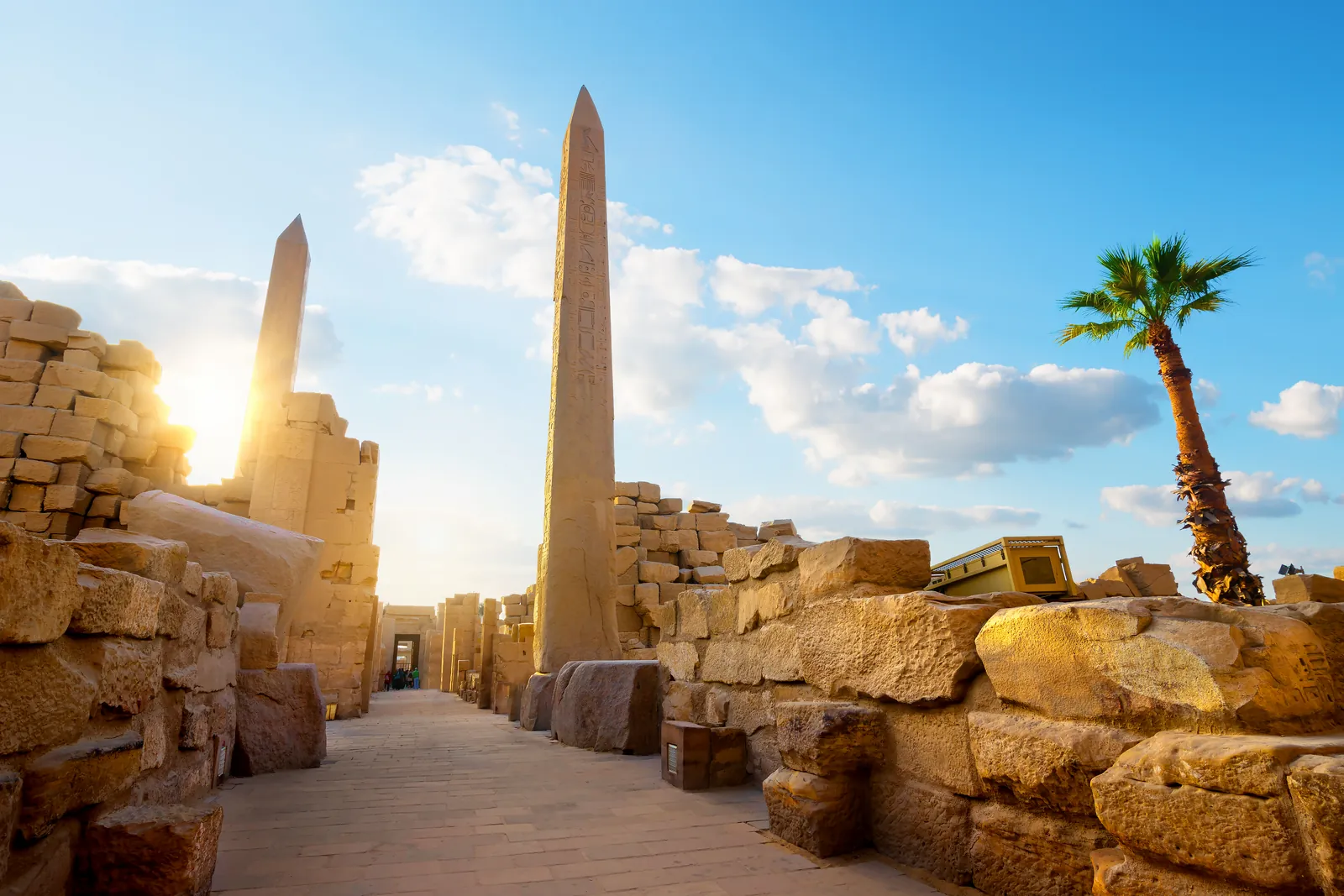
- Day 4, to Luxor: Morning flight (about an hour). Karnak Temple in the afternoon and Luxor Temple lit up after dark. Sleep: Luxor East Bank Corniche, or the West Bank (2 nights).
- Day 5, the West Bank: An optional hot-air balloon at dawn, then the Valley of the Kings (Tutankhamun’s tomb is an extra ticket), Hatshepsut’s temple and the Colossi of Memnon, done early before the midday heat.
- Day 6, to Aswan: Train south (about three hours) or a car stopping at Edfu and Kom Ombo. Philae Temple by boat in the afternoon and a felucca at sunset. Sleep: the Corniche or Elephantine Island.
- Day 7, Abu Simbel and home: Leave about 4 a.m. for the 280 km (175-mile) drive, or fly, to the temples of Ramesses II and Nefertari; back in Aswan for an evening flight via Cairo. Stay a second night in Aswan if you can.
Swap it: rather sleep on the train than fly? Take the Abela sleeper from Giza on the evening of day 3 and wake up in Luxor at about 05:35; it saves a hotel night. More detail on each stop is in our Cairo, Giza, Luxor and Aswan guides.
10 days: Cairo and a Nile cruise
The trip most first-time visitors dream of: Cairo and the pyramids, then four nights on the river, waking up to a different temple each day. Most boats sail Luxor to Aswan or the reverse in three or four nights, with full board and guided visits.
- Days 1–3, Cairo and Giza: as in the 7-day plan: the pyramids and the Grand Egyptian Museum, Islamic and Coptic Cairo, and Saqqara if you have time. Sleep: Zamalek, the Corniche or Giza (3 nights).
- Day 4, fly to Luxor and board: Board your cruise boat, then visit Karnak and Luxor Temple. Sleep: on the boat (4 nights).
- Day 5, the West Bank: The Valley of the Kings, Hatshepsut’s temple and the Colossi of Memnon, then the boat sails south through the lock at Esna.
- Day 6, Edfu and Kom Ombo: Edfu’s Temple of Horus, one of the best preserved in Egypt, in the morning, and the riverside temple of Kom Ombo at sunset.
- Day 7, Aswan: Philae Temple, the Unfinished Obelisk and a felucca around Elephantine Island; a Nubian village in the evening.
- Day 8, Aswan: Disembark, then the Nubia Museum and the souk, or relax by the river. Sleep: the Corniche or Elephantine Island (1 night).
- Day 9, Abu Simbel and back to Cairo: The early trip to Abu Simbel, then an evening flight to Cairo. Sleep: Heliopolis near the airport, or Zamalek (1 night).
- Day 10, home: Fly home from Cairo.
Swap it: for a slower, quieter river, choose a dahabiya, a sailing boat for 8 to 20 passengers on a 4- to 6-night trip. River traffic and lock queues at Esna can change a cruise’s timings, so check what is included (tickets, guide, drinks) before you book.
14 days: the Nile and the Red Sea
Two weeks lets you add a real beach break. This route sails north from Aswan to Luxor, so you can drive on to the Red Sea coast and fly home from Hurghada.
- Days 1–3, Cairo and Giza: the pyramids, the Grand Egyptian Museum, Islamic Cairo and Saqqara. Sleep: Zamalek, the Corniche or Giza (3 nights).
- Day 4, to Aswan: Fly south; Philae Temple and a felucca at sunset. Sleep: the Corniche or Elephantine Island (1 night).
- Day 5, Abu Simbel and board: The early trip to Abu Simbel, then board a three-night cruise to Luxor. Sleep: on the boat (3 nights).
- Days 6–7, down the river: Kom Ombo and Edfu, the Esna lock, and Luxor’s West Bank.
- Day 8, Luxor: Disembark; Karnak in the morning, the Luxor Museum and Luxor Temple at night. Sleep: Luxor East Bank or West Bank (1 night).
- Day 9, to the Red Sea: A dawn balloon flight if you like, then the drive to Hurghada or El Gouna (about 3.5 to 4 hours). Sleep: El Gouna, Hurghada or Sahl Hasheesh (5 nights).
- Days 10–13, beach and reef: A boat trip to the Giftun Islands, a dive or snorkel day at the reefs, and lazy days by the sea.
- Day 14, home: Fly home from Hurghada, directly or via Cairo.
For quieter reefs, swap Hurghada for Marsa Alam, further south and known for dolphins and turtles; it is a longer drive from Luxor, so you may prefer to fly. Beach areas and boat trips are in our Hurghada and El Gouna guides.
14 days: Alexandria, the Nile and the Sinai
A route for travelers who like trains and variety: the Mediterranean city of Alexandria, the overnight sleeper to Aswan, the Nile Valley by day train, and the laid-back Sinai town of Dahab to finish.
- Days 1–3, Cairo and Giza: as above. Sleep: Zamalek, the Corniche or Giza (3 nights).
- Day 4, Alexandria: Day train from Cairo (about 2.5 to 3 hours). The Bibliotheca Alexandrina, the Citadel of Qaitbay on the site of the ancient lighthouse, and seafood on the Corniche. Sleep: the Corniche (1 night).
- Day 5, the catacombs and the sleeper: The Catacombs of Kom el-Shoqafa and Pompey’s Pillar, then the Abela sleeper that leaves Alexandria at 19:20 and reaches Aswan at about 12:00 the next day. Sleep: on the train.
- Day 6, Aswan: Arrive at midday; Philae and a sunset felucca. Sleep: the Corniche or Elephantine Island (2 nights).
- Day 7, Abu Simbel: The early trip south, and the Nubia Museum in the afternoon.
- Day 8, to Luxor: Morning train (about three hours); Karnak in the afternoon. Sleep: Luxor (2 nights).
- Day 9, the West Bank: The Valley of the Kings, Hatshepsut’s temple and Medinet Habu.
- Day 10, to the Sinai: Fly to Sharm El Sheikh via Cairo and transfer to Dahab (about 1 to 1.5 hours by road). Sleep: Dahab, around Masbat and Mashraba (4 nights).
- Days 11–13, Dahab: Snorkel or dive the Lighthouse reef and the edge of the Blue Hole, ride out to Ras Abu Galum, or take a night trip to Mount Sinai for sunrise.
- Day 14, home: Fly home from Sharm El Sheikh, directly or via Cairo.
Details for each stop: Alexandria, Dahab and Sharm El Sheikh.
Where to sleep, by stop
| Stop | Best area for a short stay | Why |
|---|---|---|
| Cairo | Zamalek, Downtown, or Garden City and the Corniche | Calm and leafy (Zamalek), cheapest and central (Downtown), Nile views (Corniche) |
| Giza | Pyramid-view hotels near the plateau | Be at the pyramids and the Grand Egyptian Museum at opening time |
| Luxor | East Bank Corniche, or the West Bank | Restaurants and river views, or quiet guesthouses near the tombs |
| Aswan | The Corniche, or Elephantine Island | Station and souk on foot, or village calm a short ferry away |
| Alexandria | The Corniche downtown | Sea views, the library and the old cafés |
| Red Sea coast | El Gouna, Hurghada’s Marina and Village Road, or Sahl Hasheesh | Lagoon town, restaurants and boat trips, or quiet resorts with house reefs |
| Sinai | Dahab (Masbat and Mashraba), or Sharm El Sheikh’s resorts | Relaxed small hotels by the reefs, or big resorts near the airport |
Many visitors split Cairo into two or three nights in the city and one or two in Giza. Restaurants usually add a 12% service charge and 14% VAT to the bill, and small tips are part of daily life; keep small notes handy.
Alternatives by interest
History lovers
Give Cairo four nights to add Saqqara, Dahshur’s Bent and Red pyramids and the Egyptian Museum at Tahrir, and choose a longer cruise or a car day from Luxor to Dendera and Abydos, whose temple reliefs are among the finest in Egypt. The Ministry of Tourism and Antiquities sells Cairo and Luxor passes for visitors who will see many sites in a few days.
Divers and snorkelers
Spend a week on the Red Sea: Sharm El Sheikh for Ras Mohammed and the Thistlegorm wreck, Dahab for shore diving at the Lighthouse and the Canyon, or Marsa Alam for dolphins, dugongs and turtles. Pair it with three or four days in Cairo and Luxor for a week of history, then a week underwater.
Desert and oasis
From Alexandria, continue west by train or bus to Marsa Matruh and on to Siwa Oasis for three nights of palm groves, salt lakes and dunes; a sleeper also runs from Cairo to Marsa Matruh. Siwa is best from October to April, when the desert is comfortable.
Families
Keep the temple days short and early, and mix them with treats: a felucca, a hot-air balloon, a camel ride at Giza and a few days on a calm Red Sea beach in El Gouna or Hurghada. The Grand Egyptian Museum is air-conditioned and wheelchair accessible, and children under 6 enter the monuments free.
Tips for planning your route
- Pick the season. October to April suits every route; November, February and March are the most comfortable months, and December to February is peak season. From June to September, Luxor and Aswan top 40 °C (104 °F), so plan the Nile for dawn and spend more time on the coast. See our best time to visit Egypt guide.
- Carry a card for the monuments. Tickets are sold on the ministry’s official site egymonuments.com, its app, kiosks and counters, and many ticket offices no longer take cash.
- Book the Grand Egyptian Museum online. It sells timed tickets only on its own site; the foreign adult price rises by US$5 from November 1, 2026.
- Start early. Karnak and the Valley of the Kings open at 6 a.m.; go then, rest at midday, and go out again in the evening.
- Watch Ramadan. In 2027, Ramadan begins around February 8; sites stay open, often with shorter hours, and evenings are lively.
- Use apps or a driver, not a rental car. Uber, Careem and inDrive work in the main cities, and a car with a driver for the day is easy to arrange.
Egypt itinerary FAQ
Is 7 days enough for Egypt?
Yes for Cairo, Giza, Luxor, Aswan and Abu Simbel if you fly between them. It is tight for a Nile cruise or the Red Sea; for those, plan 10 to 14 days.
Should I do a Nile cruise or stay in hotels?
A cruise means unpacking once, guided visits and Edfu and Kom Ombo on the way. Hotels give more freedom, more time in Luxor and Aswan, and a wider choice of food and rooms. Both work; the cruise is easier for a first trip.
Should I cruise from Luxor to Aswan or Aswan to Luxor?
Either works. Sailing north from Aswan, usually three nights, makes it easy to finish in Luxor and drive on to the Red Sea; Luxor to Aswan, often four nights, ends near Abu Simbel.
How do I get from Cairo to Luxor?
By domestic flight in about an hour, or overnight on the Abela sleeper: the 19:20 from Cairo stops at Giza at 20:00 and reaches Luxor at 05:35 (operator timetable, October 2026).
Is Abu Simbel worth the trip from Aswan?
Yes. It means a very early start for the 280 km (175-mile) road trip, or a short flight, but the four colossal statues of Ramesses II are one of the great sights of Egypt. On February 22 and October 22, the rising sun lights the sanctuary statues.
Do I need a car in Egypt?
No. Flights, sleeper and day trains, cruises, ride-hailing apps and drivers hired by the day cover every route here, and most visitors don’t drive.
What is the best month for an Egypt itinerary?
November, February or March: warm, sunny days and cool nights for the temples, with a Red Sea still pleasant for snorkeling in November and from March. October and April are good too, a little warmer.
Sources
Researched and last reviewed by TravelerCenter on 8 October 2026. Sleeper-train times come from the Abela operator’s timetable for October 2026; visas from Egypt’s Ministry of Interior e-Visa portal; monument tickets, opening hours and payment from the Ministry of Tourism and Antiquities’ official sites; the Grand Egyptian Museum’s ticketing, hours and accessibility from the museum; the Abu Simbel sun days from the ministry; and climate from the Egyptian Meteorological Authority’s WMO 1991–2020 normals, as cited on our Egypt guides. Flight, road and day-train times, cruise lengths and the GEM price rise (press report) are approximate or secondary. Timetables, prices and rules change, so check with the operator before you travel.
Data: Wikidata (CC0)