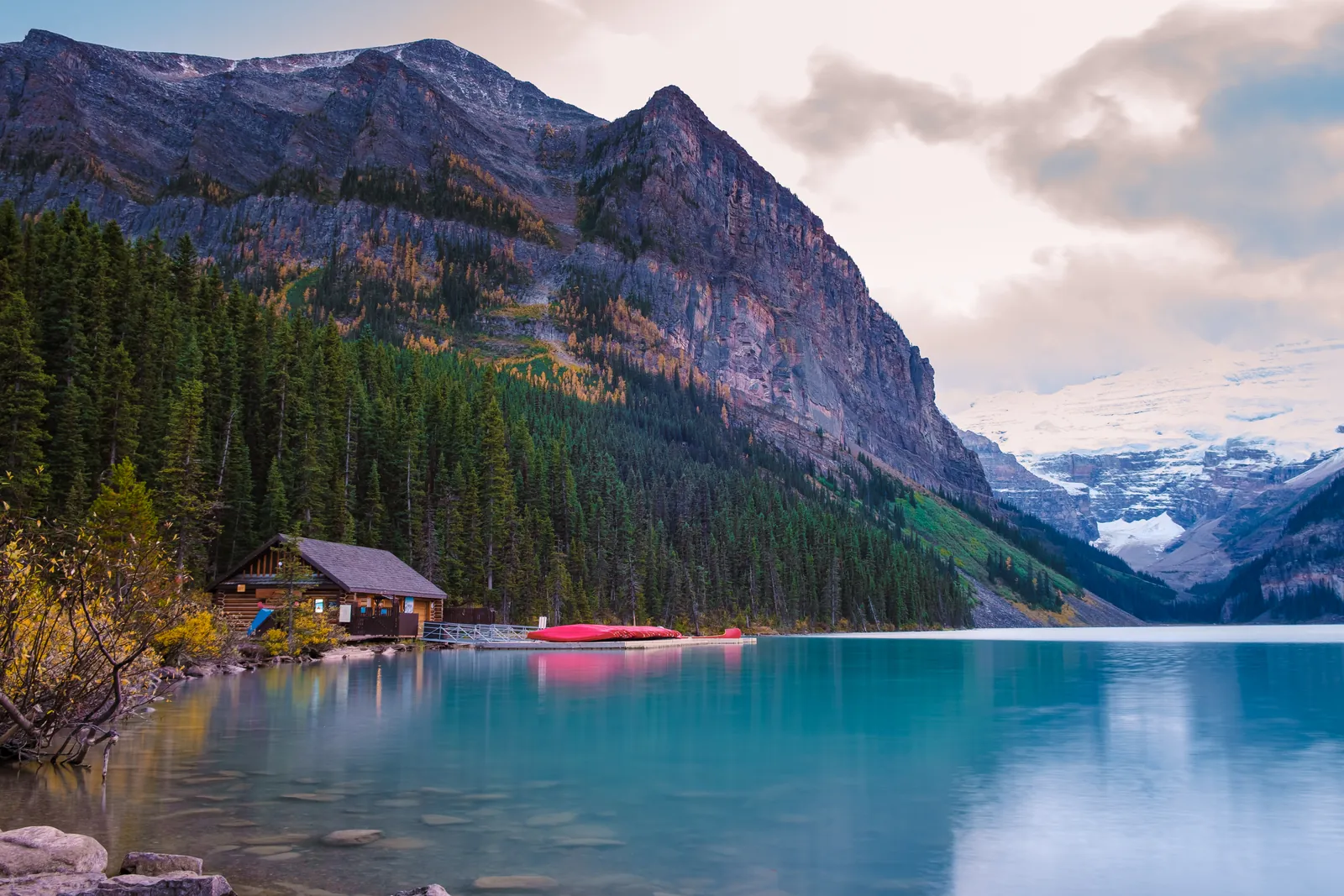
Short answer: the best time to visit Canada is late June to early October, when most of the country is warm, the national parks, ferries and mountain roads are fully open, and the days are long. Mid-September to mid-October is often the sweet spot, with golden larches in the Rockies, red maples in Ontario, Quebec and the Maritimes, and fewer people; July and August are warmest but busiest and most expensive. For skiing, winter festivals and the northern lights, come from December to March.
This page goes through Canada month by month as of October 2026: the weather in Toronto, Montreal, Vancouver and the Rockies, crowds and prices, wildfire and blackfly seasons, and the dates of the big festivals, ski seasons and nature events. For the eTA, taxes, trains and park passes, see our Canada travel guide, and plan your days with our AI trip planner.
Best time to visit Canada at a glance
| Goal | Best months | Why |
|---|---|---|
| Best weather overall | Late June to early September | Warm days of 20–27 °C (68–81 °F) in most cities; everything open |
| Fall colors and fewer crowds | Mid-September to mid-October | Larches in the Rockies, maples in Ontario, Quebec and the Maritimes |
| Lowest prices | April to mid-June, and November | The quiet shoulder seasons, outside Easter and long weekends |
| Hiking in the Rockies | July to September | High trails are free of snow; larches turn gold in late September |
| Skiing | December to March (Lake Louise 6 November 2026 to 2 May 2027) | Reliable snow in the Rockies, Whistler and Quebec |
| Northern lights | Mid-August to September, and mid-November to early April | The two aurora seasons in the Northwest Territories |
| Whale watching | June to September | Tadoussac, Bay of Fundy, Cape Breton, Newfoundland and British Columbia |
| Winter festivals | Late January to February | Winterlude in Ottawa, the Quebec Winter Carnival and Montréal en Lumière |
Canada weather month by month
Weather month by month
The climate table shows average daily highs and lows and monthly precipitation. The figures on this page are Environment and Climate Change Canada’s (ECCC) 1981–2010 climate normals, mainly for Toronto, Montreal (Trudeau airport), Vancouver airport and Calgary airport, the same normals our country guide uses. Canada’s climates differ enormously: Vancouver’s winters are mild and wet, with highs around 6–8 °C (43–47 °F); Montreal’s are snowy, with January highs of about −5 °C (22 °F) and about 210 cm (83 in) of snow a year; and Calgary is dry and sunny, with warm chinook winds that can thaw a cold spell in hours. Mountain towns such as Banff are colder than these city figures.
Canada month by month
January
The coldest month: Toronto highs about −1 °C (31 °F), Montreal about −5 °C (22 °F) with lows near −14 °C (7 °F), and Calgary about −1 °C (30 °F) with lows near −13 °C (8 °F). Vancouver is mild and wet, about 7 °C (44 °F) with 168 mm (6.6 in) of rain. It is peak ski season and good for the northern lights in Yellowknife and Whitehorse. Cities are quiet and cheap after New Year; Niagara Falls’ Winter Festival of Lights runs until 10 January 2027.
February
Winter festival month. Winterlude in Ottawa runs from 29 January to 15 February 2027, with the Rideau Canal Skateway when the ice allows; the Quebec Winter Carnival from 5 to 14 February 2027; and Montréal en Lumière from 18 to 28 February 2027. Family Day (15 February 2027) is a long weekend in several provinces, busy at ski hills. Vancouver’s first blossoms can appear late in the month.
March
Still winter in the east and the mountains, with Montreal about 3 °C (37 °F) and lots of snow on the ground, but spring skiing is at its best, with long, sunny days. Vancouver warms to about 10 °C (51 °F), with cherry blossoms in March and April, and grey whales start passing Tofino. Daylight saving time starts on 14 March 2027. Good Friday falls on 26 March 2027.
April
A quiet shoulder month: snowmelt and mud in the east, Toronto about 12 °C (53 °F) and Calgary about 11 °C (52 °F). Mountain trails are still under snow, and many lakes are frozen, but spring skiing continues at Lake Louise and Whistler. Hotels in the cities and Rockies are at some of their lowest rates outside Easter.
May
Spring arrives: Toronto about 18 °C (65 °F), Montreal about 19 °C (66 °F), Vancouver about 17 °C (62 °F). Ottawa’s tulips bloom in May, and whale-watching boats start running in Tadoussac. Victoria Day (24 May 2027) is the first big long weekend of the year. In the Rockies, lakes thaw in late May and June; in Muskoka, Mont-Tremblant and the forests, blackflies arrive from mid- to late May.
June
Early summer: Toronto and Montreal about 24 °C (75 °F), Vancouver about 20 °C (67 °F). Calgary’s wettest month, with about 94 mm (3.7 in) of rain and thunderstorms. Crowds and prices rise from late June. The Montreal International Jazz Festival starts on 25 June 2027, and Saint-Jean-Baptiste Day (24 June) is Quebec’s big holiday. Newfoundland’s humpback whale season peaks in June and July.
July
Peak summer: Toronto about 27 °C (80 °F), Montreal about 26 °C (79 °F), Calgary and Vancouver about 22–23 °C (72–74 °F). Vancouver’s driest month, with only about 36 mm (1.4 in) of rain. Canada Day (1 July) and the Calgary Stampede (9–18 July 2027) are among the busiest times; book Rockies hotels, park shuttles and ferries months ahead. Wildfire smoke can haze the views in the West.
August
Still warm and busy, with Toronto about 26 °C (78 °F). The best month for warm lakes in Muskoka and the Maritimes, and whale watching in the Bay of Fundy and around Cape Breton. The Civic Holiday (2 August 2027) is a long weekend in many provinces. Wildfire smoke remains possible in the West. The first aurora season in the Northwest Territories starts in mid-August.
September
Often the loveliest month: warm days and cool nights, Toronto about 21 °C (70 °F), Calgary about 18 °C (64 °F) and Vancouver about 19 °C (66 °F), and far fewer people after Labour Day (6 September 2027). Larches turn gold in the Rockies in the second half of the month, and maples start to change in Algonquin and Muskoka. The National Day for Truth and Reconciliation is on 30 September.
October
Fall colors peak in early to mid-October in Quebec, Cape Breton and the Maritimes; Celtic Colours runs on Cape Breton Island from 9 to 17 October 2026. Canadian Thanksgiving (12 October 2026; 11 October 2027) is the last busy weekend: afterwards, many seasonal businesses, park facilities and tours close, and Moraine Lake’s shuttle season ends (12 October in 2026). Vancouver’s rains return, with about 121 mm (4.8 in).
November
The quietest month in much of the country: Toronto about 8 °C (46 °F) and Montreal about 6 °C (43 °F), with the first snow, and Vancouver’s wettest month, about 189 mm (7.4 in). Lake Louise Ski Resort opens on 6 November 2026, and winter tires or chains are required on the Icefields Parkway from 1 November. Niagara’s Winter Festival of Lights opens on 14 November 2026, and the second aurora season begins in mid-November.
December
Winter returns: Toronto about 2 °C (36 °F), Montreal about −1 °C (29 °F) with lots of snow, and Calgary about −1 °C (30 °F). Christmas markets in Toronto, Montreal and Quebec City, and most big ski resorts open between late November and mid-December. Christmas and New Year are busy at the ski resorts and in Quebec City.
Best time to visit by region
Ontario: Toronto, Niagara Falls, Ottawa and Muskoka
Late May to mid-October. Summer is warm and humid, with festivals and island beaches; September and early October bring the best walking weather and fall colors in Muskoka and Algonquin. Niagara’s boats run from spring to autumn, and the falls are spectacular in winter ice. Ottawa is best in May (tulips), in fall and in February for Winterlude. See our Toronto, Niagara Falls, Ottawa and Muskoka travel guides.
Quebec: Montreal, Quebec City and Mont-Tremblant
June to mid-October for festivals, terraces and fall colors, or February for winter carnivals and snow. Quebec City is magical at Christmas and during the Winter Carnival; Mont-Tremblant has skiing from December to March and colors in late September and early October. See our Montreal, Quebec City and Mont-Tremblant travel guides.
The Rockies: Banff, Jasper and Calgary
July to September for hiking, with September often the best month: clear, cool and calmer, with golden larches. October is quiet, with first snow and closures after Thanksgiving; December to April is ski season. Calgary is busiest during the Stampede (9–18 July 2027). See our Banff National Park, Jasper National Park and Calgary travel guides.
British Columbia: Vancouver, Victoria, Tofino, Whistler and the Okanagan
Late May, June and September are the best balance of dry weather and prices in Vancouver and Victoria; July and August are driest and busiest. Tofino’s storm season, from November to February, brings big surf and cheap rooms. Whistler has two seasons, skiing from late November to April and summer from July to mid-September; the Okanagan is hot and sunny in summer, with harvest in September and October. See our Vancouver, Victoria, Tofino, Whistler and Okanagan travel guides.
Atlantic Canada: Halifax, Cape Breton Island and Prince Edward Island
July to early October. Summer has the warmest water and busiest roads; late September and early October bring the Cabot Trail’s colors and Celtic Colours. Many inns, restaurants and tours close by late October, and PEI is very quiet from November to April. See our Halifax, Cape Breton Island and Prince Edward Island travel guides.
The North: Yukon and the Northwest Territories
Mid-August to September and mid-November to early April for the northern lights; summer brings the midnight sun. Winter temperatures in Yellowknife fall to −20 to −30 °C (−4 to −22 °F), so book tours with heated cabins and warm gear.
Best time for hiking, skiing, whale watching, fall colors and the northern lights
Hiking
July to September in the Rockies and Whistler, when high trails are clear of snow; June and September on the coasts and in the Maritimes. See our hiking guide.
Skiing
December to March at most resorts. In 2026/27, Lake Louise Ski Resort is open from 6 November 2026 to 2 May 2027 and Banff’s Mt Norquay until 18 April 2027; Whistler Blackcomb, Mont-Tremblant and Big White usually open between late November and mid-December.
Whale watching
Tadoussac in Quebec from about May to October; British Columbia from about April to October, with grey whales off Tofino in March and April; the Bay of Fundy and Cape Breton from about June to early October; Newfoundland’s humpbacks peak in June and July. See our boat trips guide.
Fall colors
Larches in the Rockies in the second half of September; maples from late September in Algonquin and Muskoka to early or mid-October in Quebec, Cape Breton and the Maritimes.
Northern lights
The Northwest Territories’ tourism board lists two seasons: mid-August to the end of September, and mid-November to early April. In Jasper and Banff, auroras appear only on some clear nights.
Seasons to plan around
- Long weekends: Family Day (15 February 2027, several provinces), Easter, Victoria Day (24 May 2027), Canada Day (1 July), the Civic Holiday (2 August 2027), Labour Day (6 September 2027) and Thanksgiving (11 October 2027) are very busy on roads, ferries and in parks.
- Wildfire season (mostly July and August in the West): smoke can haze the views for days. It rarely stops a trip, but check park bulletins and air quality and keep plans flexible.
- Blackflies and mosquitoes (late May to June): in the forests of Ontario, Quebec and the North; bring repellent.
- Seasonal closures: many attractions, park facilities, whale tours and island ferries close after Thanksgiving in October and reopen in May or June.
- Winter driving: winter tires or chains are required on the Icefields Parkway from 1 November to 31 March and on most British Columbia highways from 1 October to 30 April; some mountain roads close.
- Atlantic storms: the remnants of hurricanes occasionally bring heavy rain and wind to the Maritimes from August to October.
How long to stay
A week covers Toronto, Niagara Falls, Ottawa and Montreal by train, or Calgary and the Rockies. Allow ten days for Vancouver, Victoria and Whistler or a Maritimes road trip, and two to three weeks to cross the country. See the sample itineraries in our Canada travel guide.
Best time to visit Canada: FAQ
What is the best month to visit Canada?
September: warm days, cool nights, the first fall colors and far fewer people than in July and August. Late June is a close second.
What is the cheapest time to visit Canada?
April to mid-June and November, the shoulder seasons, outside Easter and long weekends. Ski resorts are cheapest in early December and late in the season.
When is the best time to see fall colors in Canada?
The second half of September for golden larches in the Rockies and maples in Algonquin and Muskoka, and late September to mid-October in Quebec, Cape Breton and the Maritimes.
When can you see the northern lights in Canada?
In the North, from mid-August to the end of September and from mid-November to early April. Yellowknife and Whitehorse are the main bases.
Is winter a good time to visit Canada?
Yes, if you want skiing, winter festivals, skating and the northern lights. Dress for −10 to −30 °C (14 to −22 °F) in the east and the Prairies; Vancouver and Victoria stay mild but wet.
What is the rainiest month in Vancouver?
November, with about 189 mm (7.4 in) of rain at the airport. July is the driest, with about 36 mm (1.4 in).
When is the best time to visit Banff?
July to September for hiking, with September often the best month. December to April is ski season, and October and May are quiet shoulder months.
Sources · last reviewed 9 Oct 2026
Researched and last reviewed by TravelerCenter on 8 October 2026. Monthly temperatures and precipitation are Environment and Climate Change Canada’s 1981–2010 climate normals for Toronto, Montreal Trudeau airport, Vancouver airport and Calgary airport; aurora seasons come from the Northwest Territories’ tourism board; ski dates from Lake Louise Ski Resort and Mt Norquay; Moraine Lake shuttle and Icefields Parkway rules from Parks Canada; festival dates from the Calgary Stampede, Celtic Colours, the Niagara Winter Festival of Lights, Winterlude, the Quebec Winter Carnival, Montréal en Lumière and the Montreal Jazz Festival. Public holiday dates are calendar dates, and whale, wildfire, blackfly and fall-color seasons, British Columbia winter tire exceptions and seasonal price patterns are from general reference and our destination guides, flagged for checking. Check with your hotel and airline before you travel.
Also: ECCC Canadian Climate Normals 1981–2010, Toronto (climate)
Data: Natural Earth (PUBLIC DOMAIN) · © OpenStreetMap contributors (ODBL) · Wikidata (CC0)