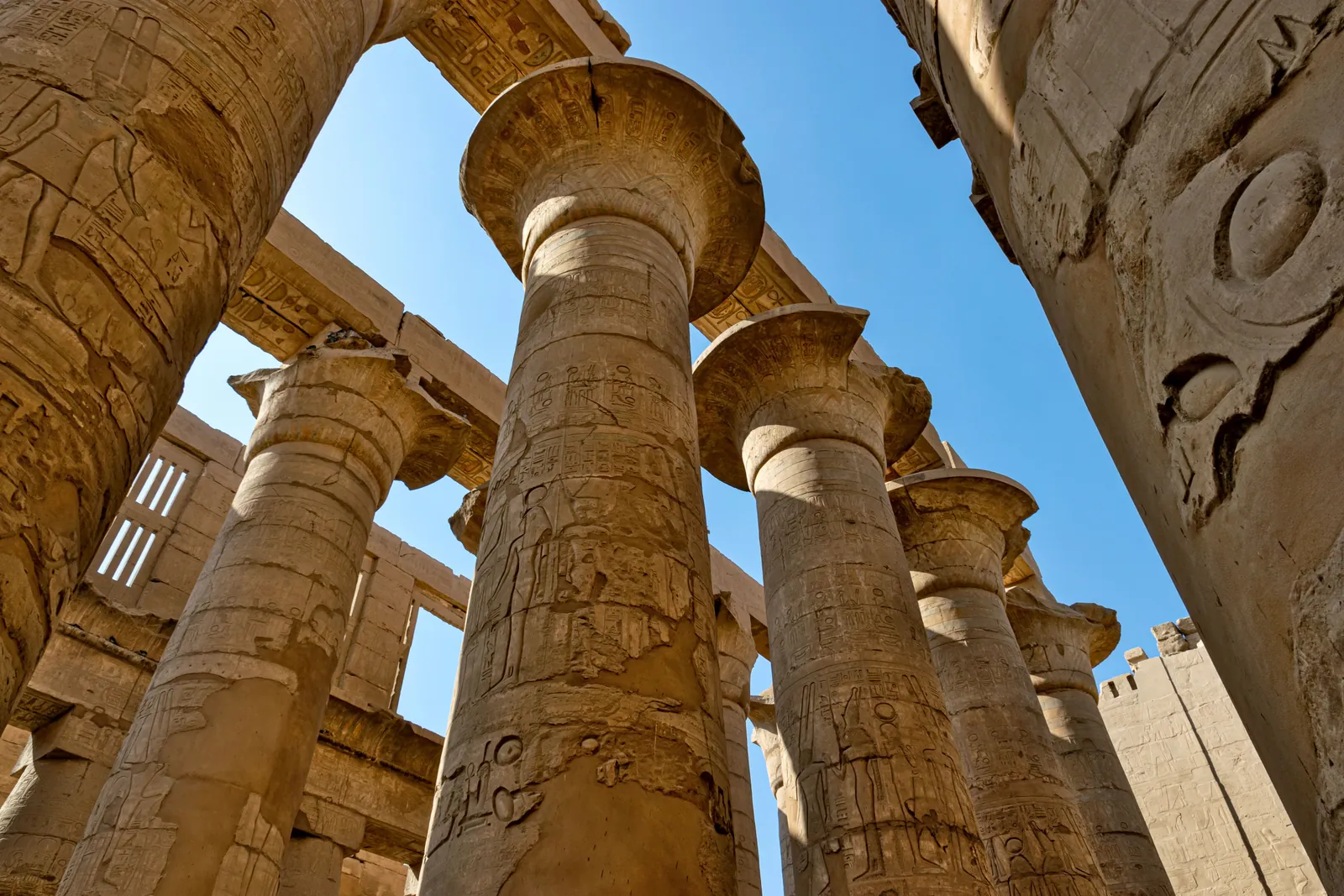
Short answer: the best time to visit Egypt is October to April, when Cairo, Luxor and Aswan have warm, sunny days and cool nights, ideal for the pyramids, temples and a Nile cruise; November, February and March are the most comfortable months. The trade-off is crowds and prices: December to February is peak season, especially around Christmas and New Year. Summer (June to September) is very hot inland, with highs above 40 °C (104 °F) in Luxor and Aswan, but it is beach season on the Red Sea and the Mediterranean.
This page goes through Egypt month by month as of October 2026: the weather in Cairo, the Nile Valley and on the coasts, sea temperatures for swimming and diving, crowds and prices, Ramadan and the Eid holidays, and events such as the Abu Simbel sun festival. For visas, monument tickets, trains and Nile cruises, see our Egypt travel guide, and plan your days with our AI trip planner.
Best time to visit Egypt at a glance
| Goal | Best months | Why |
|---|---|---|
| Sightseeing in Cairo, Luxor and Aswan | October to April | Highs of 19–30 °C (66–86 °F) in Cairo and 23–35 °C (73–95 °F) in Luxor; cool nights |
| Most comfortable overall | November, February and March | Warm days without the midwinter chill or the spring heat |
| Nile cruise | October to April | Pleasant days on deck; summer cruises are cheap but very hot |
| Red Sea beaches and swimming | May to November | Sea about 28 °C (82 °F) in August and September; warm days in spring and autumn |
| Diving and snorkeling | All year; best April to June and September to November | Warm water and calm weather; oceanic whitetips at Marsa Alam from about October to December |
| Lowest prices on the Nile | June to August | The low season inland, when hotels and cruises cut rates |
| Fewest crowds at the temples | May and September | Between the winter season and the summer heat |
| Festivals | 22 February and 22 October; mid-October | The Abu Simbel sun festival; the El Gouna Film Festival (15–23 October 2026) |
Egypt weather month by month
Weather month by month
The climate table shows average daily highs and lows and monthly rain. The figures on this page are the Egyptian Meteorological Authority’s (EMA) 1991–2020 climate normals as submitted to the World Meteorological Organization (WMO), mainly for the Cairo airport, Luxor, Aswan, Hurghada and Sharm El Sheikh stations. Egypt is one of the driest countries on Earth: Cairo gets about 25 mm (1 in) of rain a year, Luxor less than 10 mm (0.4 in) and Aswan about 2 mm (0.1 in). Only the Mediterranean coast has a real rainy season, with about 210 mm (8.3 in) a year in Alexandria, almost all from October to March.
Egypt month by month
January
The coolest month: in Cairo, highs about 19 °C (66 °F) and lows about 10 °C (50 °F); in Luxor, sunny days around 23 °C (73 °F) but nights near 7 °C (45 °F), so bring a jacket for early balloon flights. It is peak season on the Nile, especially in the New Year week. Coptic Christmas is on 7 January. The Red Sea is cool, about 22 °C (72 °F), and Alexandria has its wettest, stormiest month.
February
Mild and sunny: Cairo about 21 °C (69 °F), Aswan about 26 °C (79 °F). On 22 February, the rising sun lights the inner sanctuary of the Great Temple at Abu Simbel, and the temple’s ticket costs more that day. Ramadan is expected to begin around 8 February 2027; most sites stay open, often with shorter hours, and evenings are lively after sunset. It is still high season, and the coasts can be windy.
March
Warming: Cairo about 24 °C (75 °F) and Luxor about 30 °C (85 °F), with cool nights. Hot, dusty khamsin winds can blow in from the desert in spring. Eid al-Fitr, the end of Ramadan, is expected around 10 March 2027 (it depends on the moon sighting), and Egyptians travel to the coasts and the Nile for a few days. European Easter (28 March 2027) is busy at the Red Sea resorts.
April
Warm days, around 28 °C (83 °F) in Cairo and 35 °C (95 °F) in Luxor and Aswan, with hot spells in the south. The Red Sea warms up and it is one of the best months for the beach and diving. Prices on the Nile ease after Easter. Sham el-Nessim, the national spring festival, falls on the Monday after Coptic Easter, which is 3 May in 2027.
May
Hot inland, with Luxor about 39 °C (102 °F); plan sightseeing for dawn and late afternoon. The temples are quieter and prices fall. On the coasts, it is pleasant and the sea is warming, with calm mornings for snorkeling. Eid al-Adha is expected around 16 May 2027, a busy holiday week for domestic travel.
June
Very hot in the Nile Valley: about 41 °C (106 °F) in Luxor and 42 °C (107 °F) in Aswan, the start of the low season, with the cheapest cruises. Cairo is about 35 °C (94 °F). The Red Sea and Alexandria beach season starts, and Egyptian school holidays begin, filling the North Coast. Divers look for hammerheads at Elphinstone, off Marsa Alam, around this time.
July
The hottest stretch begins: Luxor and Aswan about 41–42 °C (107 °F), with warm nights. Hurghada is about 37 °C (99 °F), but sea breezes help. It is high season on the coasts, with European summer holidays and Egyptian families in Alexandria and the North Coast.
August
The hottest month in Cairo, about 35 °C (95 °F) with warm, humid nights, and peak season on the beaches. The Red Sea is warmest, about 28 °C (82 °F) in Hurghada and up to 28–29 °C (82–84 °F) in Sharm El Sheikh and Marsa Alam. Inland, sightseeing is only comfortable at dawn.
September
Still hot, with Luxor about 39 °C (103 °F) and the sea at its warmest; it is one of the best diving months. Crowds thin on the coasts as schools go back, and prices start to rise again on the Nile toward the end of the month.
October
Warm and pleasant again, with Cairo about 30 °C (86 °F); early October can still be hot in the south. The Nile season starts. On 22 October, the second Abu Simbel sun festival takes place. The El Gouna Film Festival runs from 15 to 23 October 2026, and Siwa holds its Siyaha festival around the October full moon. Oceanic whitetip sharks start to appear off Marsa Alam.
November
One of the best months overall: Cairo about 25 °C (77 °F), Luxor and Aswan about 29–30 °C (84–86 °F), with clear skies and cool evenings. The Red Sea is still warm for swimming, and diving is very good. It is busy, but less so than in December.
December
Mild days and chilly nights: Cairo about 21 °C (69 °F) and Luxor about 24 °C (76 °F), with nights near 9 °C (47 °F). Christmas and New Year are the busiest and most expensive weeks of the year, at the pyramids, on the Nile and at the Red Sea resorts; book well ahead. The sea is cooling, about 22–23 °C (72–73 °F).
Best time to visit by region
Cairo and Giza
October to April, with November, February and March the most comfortable. In summer, be at the pyramids at opening time and spend the afternoon in the air-conditioned Grand Egyptian Museum. Fridays and Egyptian holidays are busiest. See our Cairo travel guide and Giza travel guide.
Luxor
November to February is ideal, with sunny days around 23–29 °C (73–84 °F) and cold nights. From May to September, highs average 39–41 °C (102–107 °F); visit the sites from 6 a.m. to about 11 a.m. See our Luxor travel guide.
Aswan and Abu Simbel
November to February, with warm, clear days and perfect sailing weather. Abu Simbel’s sun festival falls on 22 February and 22 October. Summer is extremely hot, around 42 °C (107 °F). See our Aswan travel guide.
Hurghada and El Gouna
April to June and September to November for the beach. Winter is sunny but the evenings and sea are cool, and summer is hot but breezy. El Gouna’s film festival is in October, and kitesurfing is good all year. See our Hurghada and El Gouna travel guides.
Marsa Alam
March to May and September to November, with a warm sea and calm weather. Winter is a little warmer than in Hurghada; oceanic whitetips are seen most often from about October to December. See our Marsa Alam travel guide.
Sharm El Sheikh and Dahab
March to May and October to November for diving, hiking and Mount Sinai at night. Summer highs are around 38 °C (100 °F), but the sea is warmest and visibility excellent. Dahab is breezier, good for windsurfing. See our Sharm El Sheikh and Dahab travel guides.
Alexandria
April to June and September to November, warm and pleasant for sightseeing. July and August are humid and packed with Egyptian holidaymakers, and winter brings wind, rain and high waves. See our Alexandria travel guide.
Siwa Oasis
October and November, and February to April, with warm days and cool nights. Winter nights in the desert are close to freezing, and from May to September safaris run only early and late. See our Siwa Oasis travel guide.
Best time for temples, Nile cruises, diving and Red Sea beaches
Temples and monuments
October to April. In any season, start at opening time: the sites are cooler and quieter, and the light is better for photos.
Nile cruises
October to April for comfortable days on deck; December and January are busiest. June to August cruises are much cheaper, but sightseeing must be done at dawn. See our boat trips guide.
Diving and snorkeling
All year on the Red Sea. Spring and autumn combine warm water with comfortable air temperatures; in winter many divers wear 5–7 mm wetsuits. See our diving and snorkeling guides.
Red Sea beaches
May to November for warm water, with April and October to November the most comfortable for sunbathing. See our beaches guide.
Seasons to plan around
- Summer heat (May to September): highs of 39–42 °C (102–107 °F) in Luxor and Aswan. Sightsee at dawn, rest at midday, drink plenty of water and wear a hat.
- Khamsin winds (March to May): hot, dusty desert winds can blow for a day or two, reducing visibility.
- Ramadan (expected from about 8 February 2027): sites stay open, often with shorter hours; some restaurants outside hotels close until sunset. The dates move about 11 days earlier each year.
- Eid holidays: Eid al-Fitr (around 10 March 2027) and Eid al-Adha (around 16 May 2027) fill the coasts, trains and Nile hotels with Egyptian travelers.
- Peak weeks: Christmas and New Year, and European Easter at the Red Sea; book months ahead.
- Winter on the coasts: Alexandria’s winter storms bring wind and high waves, and rare winter storms can cause flash floods in the Sinai and Red Sea wadis.
How long to stay
A week covers Cairo and Giza with Luxor and Aswan; ten days adds a Nile cruise and Abu Simbel; two weeks adds four days on the Red Sea. See the sample itineraries in our Egypt travel guide.
Best time to visit Egypt: FAQ
What is the best month to visit Egypt?
November is often the best all-round month: warm, clear days for sightseeing, cool evenings and a still-warm Red Sea. February and March are close behind.
Is it too hot to visit Egypt in summer?
Inland, it is very hot: Luxor and Aswan average 41–42 °C (106–107 °F) in June to August. The Red Sea and Mediterranean coasts are hot but bearable, and summer is their high season.
What is the cheapest time to visit Egypt?
June to August on the Nile, when hotels and cruises cut their prices because of the heat. On the coasts, summer is busy, and late November to mid-December and January (after New Year) are better value.
Does it rain in Egypt?
Hardly. Cairo gets about 25 mm (1 in) a year and Luxor and Aswan almost none. Only Alexandria and the Mediterranean coast have a winter rainy season, from October to March.
Is December a good time to visit Egypt?
Yes, for sightseeing: mild, sunny days around 21–24 °C (69–76 °F). Nights are chilly, and Christmas and New Year are the busiest, most expensive weeks.
Is the Red Sea warm in winter?
Cool for swimming, about 21–23 °C (70–73 °F). Many divers wear thicker wetsuits from December to March; the water is warmest in August and September.
When is the Abu Simbel sun festival?
On 22 February and 22 October, when the rising sun lights the statues in the temple’s inner sanctuary. Tickets cost more on those days, and the site is very crowded at dawn.
Sources · last reviewed 9 Oct 2026
Researched and last reviewed by TravelerCenter on 8 October 2026. Monthly temperatures and rainfall are the WMO 1991–2020 climate normals submitted by the Egyptian Meteorological Authority for Cairo airport, Alexandria, Luxor, Aswan, Hurghada and Sharm El Sheikh; the Abu Simbel festival days and ticket rule come from the Ministry of Tourism and Antiquities’ ticket platform; the El Gouna Film Festival dates from the festival’s announcements. Ramadan and Eid dates are expected dates that depend on the moon sighting; Coptic Christmas, Sham el-Nessim, sea temperatures, khamsin winds, marine-life seasons and seasonal price patterns are from general reference and our destination guides, flagged for checking, and are not official figures. Check with your hotel and airline before you travel.
Also: EMA normals 1991–2020, Cairo International Airport (climate)
Data: Wikidata (CC0)