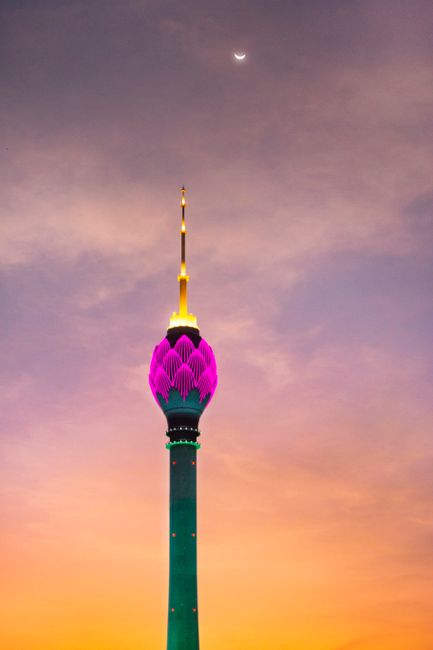
Short answer: December to March is the best time to visit Sri Lanka for most trips: the west and south coasts, Colombo, Galle, Mirissa and the hill country are dry and sunny, whales are off the south coast, and the Cultural Triangle is dry too from January. It is also peak season, busiest around Christmas and New Year. If you travel from May to September, head for the east coast (Trincomalee, Pasikudah, Arugam Bay) and the Cultural Triangle, which are dry while the southwest monsoon soaks the west and south.
This page explains Sri Lanka’s two monsoons, what each month is like on each coast and in the hills, and when the whale seasons, the Kandy Esala Perahera and the full-moon holidays fall, as of October 2026. For the ETA, trains and money, see our Sri Lanka travel guide, and plan your days with our AI trip planner.
Best time to visit Sri Lanka at a glance
| Goal | Best months | Why |
|---|---|---|
| West and south coasts (Colombo, Galle, Mirissa) | December to March | Dry season and calm seas; February is the driest month in Galle |
| East coast (Trincomalee, Pasikudah, Arugam Bay) | May to September | Dry and sunny while the southwest monsoon hits the other side |
| Cultural Triangle (Sigiriya, Anuradhapura, Dambulla) | January to September | Driest from June to September; wettest October to December |
| Hill country (Kandy, Nuwara Eliya, Ella) | January to April | Clearest, driest weather; Ella is driest from June to August |
| Whale watching | November to April (south); May to October (Trincomalee) | Seasons published by the Sri Lanka Navy’s whale-watching project |
| Leopards at Yala | February to June | Open park, active animals; main blocks often close for drought around September |
| Surfing | November to April (south); May to September (Arugam Bay) | Each coast has its swell in its dry season |
| Festivals | April, May, August | Sinhala and Tamil New Year (April 13–14), Vesak, and Kandy’s Esala Perahera |
| Lowest prices | May to June, September to October (west and south) | Monsoon and inter-monsoon low season |
Sri Lanka weather month by month
Weather month by month
The climate table shows average daily highs and lows and rain for each month from the 1991–2020 climate normals of Sri Lanka’s Department of Meteorology, as submitted to the World Meteorological Organization (WMO). On the coasts and in the lowlands it is warm all year, with highs of 29–32 °C (84–90 °F) in Colombo and Galle, while Nuwara Eliya, at about 1,900 m (6,200 ft), averages only 20 °C (68 °F) by day and 10 °C (51 °F) at night in January. The seasons are about rain. The southwest monsoon brings rain to the west, the south and the western hills from about May to September: Colombo gets about 314 mm (12.4 in) in May. The northeast monsoon wets the east and north from about November to February: Trincomalee gets about 376 mm (14.8 in) in November. Between them, inter-monsoon storms in April and especially October and November can bring heavy rain almost anywhere; October is Colombo’s wettest month, with about 359 mm (14.1 in).
Sri Lanka month by month
January
Dry and sunny in the west, south and hills: peak beach season in Galle and Mirissa, with blue whales offshore, and cool, clear mornings in Nuwara Eliya. The east coast is still wet. Thai Pongal falls on January 15 and Duruthu Poya on January 22, 2027, the full moon of the Duruthu Perahera at Kelaniya near Colombo.
February
Mostly dry and hot across much of the island, and the driest month in Galle (about 71 mm / 2.8 in) and one of the driest in Nuwara Eliya. The Adam’s Peak (Sri Pada) pilgrimage season is in full swing. Independence Day is on February 4, and Navam Poya on February 20, 2027.
March
Hot and still dry in the south and west, with whales still off the south coast; Anuradhapura reaches about 35 °C (95 °F). A good month for safaris and the Cultural Triangle before the April storms. Crowds start to ease.
April
Very hot and humid, with inter-monsoon thunderstorms in the afternoons. The Sinhala and Tamil New Year falls on April 13–14, a family holiday when transport is crowded and many businesses close for several days; it is also the busy holiday season in Nuwara Eliya. Bak Poya is on April 20, 2027.
May
The southwest monsoon arrives in the west and south, and seas turn rough off Galle and Mirissa. The east coast season begins, and whales move to Trincomalee. Vesak, on May 19, 2027 (with May 20 also a holiday), fills towns with lanterns and roadside stalls handing out free food. Low season prices on the south coast.
June
Wet in the southwest, dry and hot in the east and the Cultural Triangle, where Anuradhapura gets only about 15 mm (0.6 in) of rain. Poson Poya (June 18, 2027) brings pilgrims to Anuradhapura and Mihintale. It is one of the best months for Sigiriya and Arugam Bay.
July
Showery in the southwest but drier than May and June; dry and hot in the east, where Trincomalee averages about 35 °C (95 °F). Surf season at Arugam Bay. Esala Poya is on July 18, 2027, and the Kataragama festival is usually held around this full moon.
August
Similar to July, and festival month in Kandy: the Esala Perahera’s ten nights of torchlit processions ran from August 18 to 28 in 2026, according to the Temple of the Sacred Tooth Relic (2027 dates were not yet announced). Elephants gather at Minneriya as the dry season goes on. Kandy and the east coast are busy.
September
The southwest monsoon eases but rain picks up again in Colombo and Galle late in the month; the east stays dry. At Yala, Blocks 1 and 2 are often closed by drought; in 2026 they closed from September 14 to October 15. Prices are moderate.
October
Inter-monsoon rains island-wide: the wettest month in Colombo and Galle, and heavy in Kandy (about 303 mm / 11.9 in) and the hills. Landscapes are green and prices low. Vap Poya is on October 25, 2026, and the end of the Buddhist Lent season brings robe-offering ceremonies at temples.
November
Heavy inter-monsoon and northeast monsoon rain, with the highest risk of tropical cyclones; Cyclone Ditwah crossed the island in late November 2025. The whale season begins off the south coast. Deepavali falls on November 8 and Ill Poya on November 24, 2026.
December
The west and south dry out and high season starts, with Christmas and New Year the busiest, most expensive weeks on the south coast. The east is at its wettest (about 469 mm / 18.5 in at Batticaloa). Unduvap Poya, on December 23, 2026, traditionally opens the Adam’s Peak pilgrimage season.
Best time to visit by region
Colombo and the west coast
December to March, when it is drier and sunny. The southwest monsoon brings heavy rain from May to September, and October and November are the wettest months. See our Colombo guide.
Galle, Mirissa and the south coast
December to April, when the sea is calm and whales are close; May to September brings showers and rough seas, with red flags on many beaches. See Galle and Mirissa.
Kandy and the hill country
January to April for Kandy and Nuwara Eliya, which are driest and clearest then; October and November are the wettest. Ella, on the drier eastern side of the hills, is driest from June to August, and February and March are good too. The hill-country railway was still being restored after Cyclone Ditwah in October 2026, so check which sections are running.
Sigiriya and the Cultural Triangle
January to September, with the driest weather from June to September; October to December is the rainy season here. Climb Sigiriya at opening time to beat the heat.
Yala and the dry southeast
February to June and late October to December, when the animals are active and the park is open. The driest months, August to October, are best for sightings, but often bring closures of the main blocks. See our Yala guide.
The east coast
May to September for Trincomalee, Pasikudah and Arugam Bay, with calm seas on the beaches north of Arugam Bay, whales off Trincomalee and surf at Arugam Bay. From November to January it is the wettest part of the island.
Best time for beaches, whales, safaris and surfing
Beaches
Follow the dry coast: the south and west from December to April, the east from May to September. See our beaches guide.
Whale watching
According to the Sri Lanka Navy’s whale-watching project, off the south coast (Mirissa and Galle) from November to April, and off Trincomalee from May to October. Early-morning trips have the calmest seas. See our boat trips guide.
Safaris
February to June at Yala for leopards; August and September at Minneriya for the elephant gathering. Check for drought closures in September and October.
Surfing
November to April at Weligama, Mirissa and Hikkaduwa; May to September at Arugam Bay. See our surfing guide.
Seasons to plan around
The southwest monsoon (about May to September): rain and rough seas on the west and south coasts and in the western hills; floods and landslides are most common in the southwest from May to September. Choose the east coast for beaches.
The inter-monsoon and northeast monsoon (October to January): heavy rain almost everywhere in October and November, and on the east and north coasts until January; tropical cyclones, when they come, usually fall in these months. Follow forecasts from the Department of Meteorology and warnings from the Disaster Management Center, and build spare days into a trip.
Poya days: every full moon is a public holiday, when alcohol sales stop and many Buddhists visit temples dressed in white. In 2027: January 22, February 20, March 22, April 20, May 19, June 18, July 18, August 16, September 15, October 15, November 13 and December 13.
Busy holidays: Christmas and New Year on the south coast, the Sinhala and Tamil New Year in mid-April, Vesak in May and the Kandy Perahera in July or August fill trains, buses and hotels.
How long to stay
Ten to fourteen days covers the Cultural Triangle, Kandy, the hill country, a safari and a beach; a week is enough for one region plus a beach. Pick your coast by season: the south and west from December to April, the east from May to September. Our Sri Lanka travel guide has sample 7-, 10- and 14-day and three-week itineraries.
Best time to visit Sri Lanka: FAQ
What is the best month to visit Sri Lanka?
February: dry on the south and west coasts and in the hills, dry in the Cultural Triangle, and whales off Mirissa. January and March are close behind.
When is monsoon season in Sri Lanka?
The southwest monsoon brings rain to the west, south and hills from about May to September; the northeast monsoon wets the east and north from about November to February. October and November bring heavy inter-monsoon rain almost everywhere.
What is the rainiest month in Sri Lanka?
October in Colombo and Galle (about 345–360 mm / 14 in), November in Trincomalee and Anuradhapura, and December on the east coast around Batticaloa.
Is July a good time to visit Sri Lanka?
Yes, if you plan around the weather: the east coast, the Cultural Triangle and Ella are dry, and whales are off Trincomalee. The south and west coasts get showers and rough seas.
When can you see whales in Sri Lanka?
From November to April off the south coast, from Mirissa and Galle, and from May to October off Trincomalee, according to the Sri Lanka Navy’s whale-watching project.
What is the cheapest time to visit Sri Lanka?
May, June, September and October, when the south and west coasts are in low season and hotel rates drop. Combine them with the dry east coast and Cultural Triangle.
Sources · last reviewed 9 Oct 2026
Researched and last reviewed by TravelerCenter on 8 October 2026. Monthly temperatures and rain come from the Department of Meteorology’s 1991–2020 climate normals as submitted to the WMO (archived by NOAA NCEI); poya and public holiday dates for 2026 and 2027 from the Central Bank of Sri Lanka’s holiday lists; whale seasons from the Sri Lanka Navy’s whale-watching project and Sri Lanka Tourism; Esala Perahera dates from the Temple of the Sacred Tooth Relic; railway restoration from Sri Lanka Railways. The Yala drought closure, the Adam’s Peak season, the Kataragama and Duruthu festivals, surf seasons, Minneriya’s elephant gathering and price patterns come from secondary sources and are flagged for checking. Check event and park dates before you travel.
Also: Department of Meteorology normals 1991–2020, Colombo (climate)
Data: Wikidata (CC0)