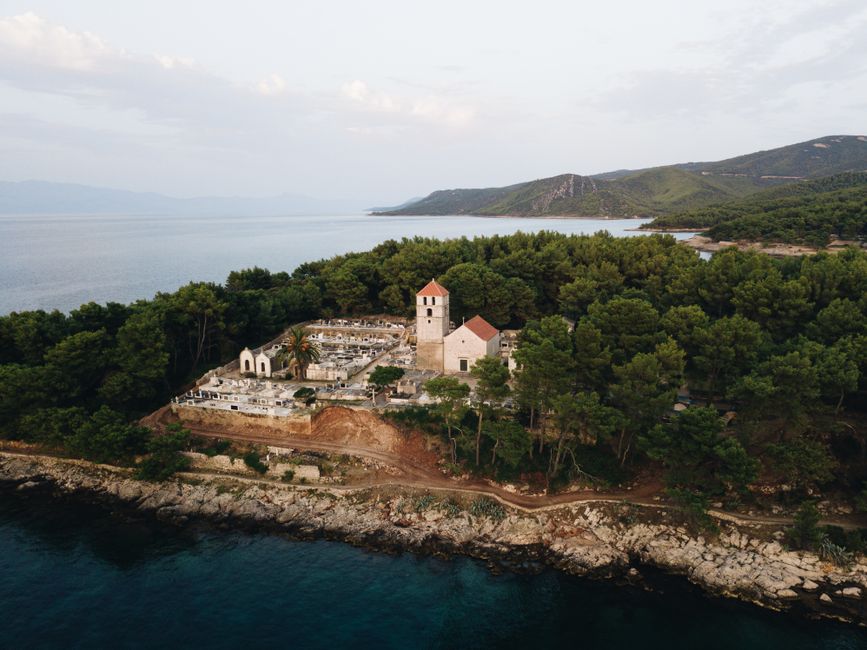
Hvar is the long, sunny island off the Dalmatian coast south of Split, famous for lavender fields, vineyards, Renaissance towns and some of the clearest water in the Adriatic. Hvar Town, with its marble square, cathedral and hilltop fortress, is the glamorous heart of the island, full of yachts in summer and with a lively bar scene; just offshore, the pine-covered Pakleni islands hide coves you reach by water taxi. The rest of the island is quieter: Stari Grad, one of the oldest towns in Europe, the UNESCO-listed farmland of the Stari Grad Plain, and the harbours of Jelsa and Vrboska. Hvar Town has also clamped down on party behaviour with fines, so the summer crowd is calmer than its reputation. Come in June or September, and give it three to five days.
Right now in Hvar (Hvar town)
- Wed19–26°C66–78°FClear
- Thu19–24°C67–75°F4 mm rain
- Fri20–22°C67–72°F16 mm rain
Top tours in Hvar
See all tours for Hvar →
From local operators, with prices and reviews; you check availability and book on Viator, our partner. We may earn a commission at no extra cost to you. How we earn money
Hvar at a glance
- Best months: June and September; late May and early October for walking and quiet. Mean temperatures run from about 19 °C in May to 25 °C in July and August (DHMZ, Hvar station), and Hvar is one of the sunniest places in Croatia.
- Days needed: 2–3 for Hvar Town and the Pakleni islands; 4–5 to add Stari Grad, Jelsa and the interior.
- Getting there: catamarans from Split to Hvar Town take about 1 hour; car ferries from Split to Stari Grad about 2 hours. Catamarans also link Hvar with Brač, Vis, Korčula and Dubrovnik.
- Getting around: buses connect the main towns, timed with the ferries; scooters, cars and water taxis for the rest.
- Budget level: Hvar Town is one of the most expensive places in Croatia in July and August; Stari Grad and Jelsa are cheaper. See our Croatia guide for money, entry rules and costs.
Hvar’s towns and who each one suits
- Hvar Town: the island’s showpiece, with the main square, the harbour, the fortress, beach clubs and nightlife. For first-timers, couples and anyone who wants to be in the middle of things; busy and loud in peak season.
- Stari Grad: on a long, sheltered bay on the north coast, where the car ferry arrives. Calm, historic and good value, ideal for families and anyone with a car.
- Jelsa: a friendly harbour town in the middle of the north coast, with pine-shaded beaches and a laid-back café scene.
- Vrboska: a tiny fishing village on a narrow inlet, nicknamed “little Venice”, next to Jelsa.
- The south coast (Zavala, Sveta Nedjelja, Ivan Dolac): steep vineyards, small pebble beaches and wineries, reached through the tunnel at Pitve or by the road from Hvar Town.
Top things to see in Hvar
Prices and hours below are as of October 2026; small sites change them each season and some are flagged in our sources.
Hvar Town and St Stephen’s Square
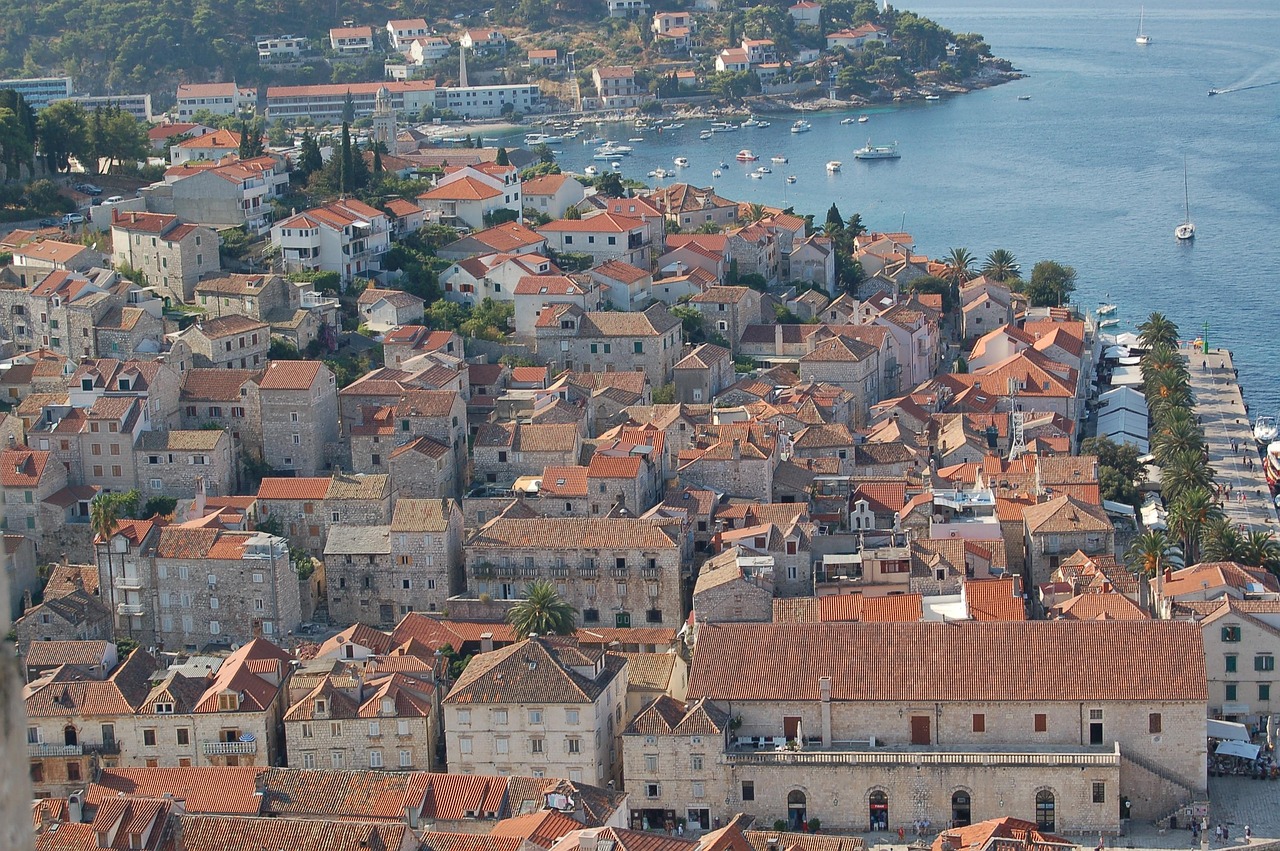
St Stephen’s Square (Trg Sv. Stjepana) is the largest square in Dalmatia, paved in marble-like limestone and opening onto the harbour. At its top stands the Cathedral of St Stephen, with a Renaissance façade and a slender bell tower. On the south side of the harbour is the Arsenal, where Venetian galleys were repaired, and above it the Hvar Theatre, opened in 1612 and one of the oldest public theatres in Europe. Wander the lanes behind the square to the Benedictine convent, where the nuns make lace from agave fibres, and walk the seafront east to the Franciscan Monastery, whose refectory holds a large painting of the Last Supper and whose cloister garden has a centuries-old cypress.
The fortress (Fortica, or Španjola)
The fortress on the hill above Hvar Town was built in the 16th century under Venetian rule, on the site of earlier defences, and gives the best view of the town, the harbour and the Pakleni islands. A path zigzags up through a park of pines and agaves from the old town in about 20 minutes. Entry was reported at about €12 for adults in 2026; go in the late afternoon for the light, and take water.
Stari Grad and the Stari Grad Plain
Stari Grad was founded by Greek colonists from the island of Paros in 384 BC as Pharos, making it one of the oldest towns in Europe. Its stone lanes, the Renaissance Tvrdalj, a fortified summer house built by the poet Petar Hektorović with a fishpond, and the Dominican monastery are worth an afternoon. Behind the town, the Stari Grad Plain is a landscape of vineyards and olive groves still divided by the Greeks’ original stone walls and field system, 24 centuries old; it became a UNESCO World Heritage Site in 2008. Walk or cycle its farm tracks in the early morning or evening.
Lavender, villages and wine
Hvar was once famous for its lavender oil, and in June and early July purple fields still colour the hills around Velo Grablje and Brusje, the old lavender villages above Hvar Town; Velo Grablje holds a lavender festival in summer. The interior has abandoned stone hamlets such as Malo Grablje and the panoramic Sveti Nikola peak, the island’s highest point at 628 m. Hvar’s vineyards produce the red Plavac Mali, from the steep south slopes around Sveta Nedjelja, Ivan Dolac and Zavala, and the white Bogdanjuša; many wineries offer tastings.
Caves
- Grapčeva Cave
Protected areas
- Stari Grad Plain
Castles and forts
- Fortica (Hvar Fortress)
- Tvrdalj Castle
Churches and cathedrals
- Franciscan Monastery, Hvar
- Hvar Cathedral
Nature
- Pakleni Islands
The Pakleni islands
Just off Hvar Town lies a chain of about 20 small, wooded islands, the Pakleni otoci, with coves of clear, shallow water. Their name probably comes from paklina, the pine resin once used to seal boats. Water taxis leave the harbour all day in summer, taking about 10–30 minutes.
- Jerolim, the nearest, has a long-established naturist beach as well as shady rocks.
- Marinkovac has the coves of Ždrilca and Stipanska, home to a beach club that hosts day parties.
- Sveti Klement is the largest island, with the marina and restaurants of Palmižana, a botanical garden and quieter bays such as Vinogradišće.
Go early to find shade, take water and a snorkel mask, and check the time of the last boat back. Kayak tours from Hvar Town also paddle to the islands.
Beaches on Hvar
Like most of Dalmatia, Hvar’s beaches are pebble and rock. Near Hvar Town, Pokonji Dol and Mekićevica are short walks or boat rides east of town; Dubovica, a cove with a small stone hamlet, is a short drive and steep walk down from the road to Stari Grad. On the south coast, Zavala, Sveta Nedjelja and the bays around them have clear water and few people. Jelsa and Vrboska have family-friendly beaches under the pines. For sand, take a boat to Bol’s Zlatni Rat on Brač or to the Pakleni islands’ shallow bays. Water shoes help with rocks and sea urchins.
Activities and best months
- Beaches and swimmingHvar town's tourist board lists the beaches around the town and on the Pakleni islands; Palmižana is part pebble, part sand and suits families with children.
- Boat tripsDaily water taxis run from Hvar town to the Pakleni islands, wooded islets with hidden coves, beaches, sailing and kayaking; Palmižana is the best-known beach there.
Hvar’s behaviour rules and fines
Hvar Town has spent the last decade trying to shed its image as a party island. Its public order rules fine visitors who walk around town in swimwear or without a shirt: as reported in July 2026, the fines are €600 for swimwear and €500 for a bare chest away from the beach, the highest in Croatia. Drinking alcohol in public places, shouting, fighting and drunken behaviour are also fined, with much higher penalties for serious public disorder. The town also limits music volume at bars and clubs in the old town in summer.
In August 2026 the Town Council also voted to ban the sale of alcohol in shops and other retail outlets between 21:00 and 06:00 across the town, under a new national law that lets towns introduce such bans; bars and restaurants are not affected. Signs at the harbour and the town entrances explain the rules. In short: dress normally in town, drink in bars rather than on the street, and keep the noise down after midnight.
Other things to do on Hvar
Jelsa, Vrboska and the north coast
Jelsa, halfway along the north coast, is a pretty harbour town with a square of plane trees, a fortified church and pine-shaded beaches within walking distance, such as Mina and Grebišće. A 20-minute walk or short drive away, Vrboska sits on a narrow inlet crossed by little bridges; its fortified church of St Mary and the parish church of St Lawrence, with an altarpiece long attributed to Titian, are worth a look. Both towns are good bases for families, with calmer evenings than Hvar Town, and Jelsa has catamarans to Bol on Brač in summer.
Hiking, kayaking and diving
Hvar has old mule tracks and marked paths between its villages. The walk from Hvar Town up through Brusje and Velo Grablje to the abandoned hamlet of Malo Grablje, where a family restaurant now cooks in the old stone houses, is a lovely half-day. The climb to Sveti Nikola, the island’s highest point, starts from Svirče or Vrisnik and gives views across to Brač, Vis and the mainland. Sea kayaking tours paddle from Hvar Town to the Pakleni islands, and dive centres explore walls, caves and amphora sites around the Pakleni islands and the south coast. See our hiking guide and our diving guide.
Day trips by boat
Fast-boat tours from Hvar Town combine the Blue Cave on Biševo, Stiniva cove and Vis in one long day; the cave closes in rough seas, so be flexible. Catamarans make Korčula and Vis easy day trips in summer, and from Jelsa you can cross to Bol to see Zlatni Rat. See our boat trips guide.
Food and drink
Try gregada, a white stew of fish and potatoes, Hvar’s version of peka, lamb from the interior, and wild asparagus in spring. Hvar’s traditional biscuits, paprenjaci, are spiced with pepper and honey, and lavender turns up in honey, oils and soaps sold in every market. The local red Plavac Mali grows on the south-facing slopes above Sveta Nedjelja and Zavala; the north coast around Jelsa and Svirče produces whites such as Bogdanjuša and Pošip. Many family wineries offer tastings by appointment. See our wine tasting guide.
Nearby destinations
- Makarska Riviera30 km
- Split47 km
- Međugorje75 km
- Mostar88 km
- Krka National Park96 km
- Dubrovnik124 km
- Sarajevo155 km
- Zadar163 km
Getting there and getting around
Ferries and catamarans
- Split – Hvar Town (catamaran, about 1 hour): several a day in summer with Jadrolinija, Krilo and TP Line; fewer in winter. Buy tickets ahead in July and August.
- Split – Stari Grad (Jadrolinija car ferry, about 2 hours): the main route for cars. Arrive early in summer even with a ticket. Buses meet the ferries for Hvar Town (about 20–25 minutes) and Jelsa.
- Drvenik – Sućuraj (car ferry, about 30 minutes): a short crossing to the island’s eastern tip from the mainland south of Makarska, but Sućuraj is about 80 km of winding road from Hvar Town.
- Catamarans to other islands: from Hvar Town to Korčula, Mljet, Dubrovnik and Vis, and from Jelsa to Bol on Brač, mostly from June to September.
Strong winds can cancel catamarans; check the operator’s site on the day. See our Split guide for island-hopping routes.
On the island
Buses link Stari Grad port, Stari Grad town, Hvar Town and Jelsa, timed with the main ferries. Hvar Town’s old centre is car-free, and parking is limited. Scooters and small cars can be rented in every town; roads are good but narrow and winding, and the old road over the hills between Hvar Town and Stari Grad is beautiful. Water taxis serve the Pakleni islands and south-coast beaches.
When to go and how long to stay
Hvar gets about 2,750 hours of sunshine a year, among the most in Croatia, with very dry summers: July and August average only about four days with rain. June brings lavender and long days; July and August are hot and crowded, and Hvar Town’s prices peak; September is perfect, with the warmest sea; by late October many hotels and restaurants close until spring. Winter is mild but sleepy.
| Season | Mean temperature | Days with rain a month | What it’s like |
|---|---|---|---|
| Spring (Mar–May) | 11–19 °C | 8–10 | Wildflowers and walking weather; the sea is still cool; towns wake up in May. |
| Summer (Jun–Aug) | 23–25 °C | 4–6 | Hot, sunny and dry; lavender in June; peak crowds and prices in Hvar Town. |
| Autumn (Sep–Nov) | 22 °C falling to 14 °C | 6–11 | September is ideal; grape harvest; quieter in October; wet November. |
| Winter (Dec–Feb) | 9–10 °C | 9–12 | Mild and quiet; few ferries; many places closed. |
Figures are DHMZ long-term monthly averages for the Hvar station (1858–2024). They are means over day and night: summer afternoons usually reach about 29–30 °C. Hvar gets about 750 mm of rain a year, mostly from October to January.
Weather month by month
3 days on Hvar
Day 1: Hvar Town, St Stephen’s Square, the Franciscan Monastery and sunset at the fortress. Day 2: a water taxi to the Pakleni islands, with lunch at Palmižana. Day 3: Stari Grad, the Stari Grad Plain and Velo Grablje, with a swim at Dubovica on the way back.
5 days on Hvar
Add Jelsa and Vrboska, a wine tasting on the south coast at Sveta Nedjelja or Zavala, a boat trip to Vis and the Blue Cave, and a hike to Sveti Nikola. Then continue by catamaran to Korčula and Dubrovnik.
Where to stay on Hvar
- Nightlife and restaurants: Hvar Town, ideally a few minutes’ walk from the harbour to avoid the noise.
- Families and drivers: Stari Grad or Jelsa, calmer and better value.
- Romance and quiet: Vrboska, the south-coast villages, or a stay on Sveti Klement in the Pakleni islands.
- Without a car: Hvar Town, with catamarans to Split and water taxis to the beaches.
A tourist tax per person per night is added to most bills; children under 12 are exempt, and 12- to 18-year-olds pay half.
Practical tips for Hvar
- Book ahead: rooms and catamaran seats sell out in July and August.
- Dress code: no swimwear or bare chests in town; fines are high.
- Water taxis: agree the price and the return time before you set off.
- Scooters: wear a helmet, and take care on gravel and bends.
- Fire risk: the island is dry and pine-covered in summer; never light fires or drop cigarettes.
- Emergencies: call 112.
What to pack for Hvar
Pack light summer clothes for town (remember the dress code), a sun hat, sunglasses and high-factor reef-friendly sunscreen. Bring swimwear, a quick-dry towel, water shoes for pebble beaches and sea urchins, and a snorkel mask for the Pakleni islands. Good sandals or trainers help on the fortress path and the stone lanes, and walking shoes for Sveti Nikola. Add a light layer for evening catamarans and a dry bag for boat days.
What to pack
- Day packs and anti-theft bagsCarries water, towel and sunscreen down the long stairways to Algarve coves.
- Dry bags and phone pouchesProtects phones and cameras from sand and spray on beaches reached by ferry or steep paths.
- Fleeces and warm layersIt is cooler at sea than on land, especially on morning whale-watching trips.
- Quick-dry beach towelsA sand-shedding quick-dry towel packs small for beach days and lido visits.
- Rain jacketsA windproof, waterproof shell keeps you warm on open boats, where wind and spray cool you quickly.
- Reef-friendly sunscreenSummer UV is strong on Portuguese beaches and there is little shade below the cliffs.
- Water shoesRocky coves, lava pools and weever fish in shallow sand make water shoes useful.
- WetsuitsOn the west and north coasts the sea stays around 16–18 °C even in summer, so a thin suit helps for long swims.
Hvar travel FAQ
What are the fines in Hvar Town?
As reported in July 2026, walking around town in swimwear away from the beach can cost €600 and going shirtless €500. Drinking in public, noise and drunken behaviour are also fined.
Can you buy alcohol in shops at night in Hvar?
In August 2026 the town voted to ban alcohol sales in shops and other retail outlets from 21:00 to 06:00. Bars and restaurants can still serve drinks.
How do I get to the Pakleni islands?
By water taxi from Hvar Town harbour, about 10–30 minutes depending on the island. Boats run all day in summer; agree the return time.
How do I get from Split to Hvar?
By catamaran to Hvar Town in about 1 hour, or by car ferry to Stari Grad in about 2 hours, then a bus or drive of about 20–25 minutes.
Is Hvar still a party island?
Hvar Town still has lively bars and beach clubs, but strict rules, fines and noise limits have made it calmer. The rest of the island is quiet and family-friendly.
When is lavender season on Hvar?
Usually June to early July, around Velo Grablje and Brusje above Hvar Town, before the harvest.
Is Hvar Town or Stari Grad better to stay in?
Hvar Town for nightlife, restaurants and the Pakleni islands; Stari Grad for calm, history, value and easy car-ferry access.
How many days do you need on Hvar?
Two or three for Hvar Town and the Pakleni islands; four or five to explore Stari Grad, Jelsa, the south coast and the interior.
Does Hvar have sandy beaches?
Very few. Most beaches are pebble or rock with clear water; the Pakleni islands have some shallow bays, and Zlatni Rat on Brač is a short catamaran ride from Jelsa.
What is the best beach near Hvar Town?
The coves of the Pakleni islands, a short water-taxi ride away, are the best near town. On Hvar itself, try Pokonji Dol or Mekićevica just east of town, or Dubovica, a short drive away.
Can you visit Vis and the Blue Cave from Hvar?
Yes. Fast-boat tours from Hvar Town visit the Blue Cave on Biševo, Stiniva and Vis in a day. The Blue Cave closes when the sea is rough.
Do I need a car on Hvar?
Not if you stay in Hvar Town and use boats. A car or scooter is useful for the south coast, the interior villages and quieter beaches.
Plan your trip
Partner links: TravelerCenter may earn a commission if you book, at no extra cost to you.
🇭🇷 Useful Croatian phrases for Hvar
All 38 Croatian phrases: restaurant, hotel, emergencies, romance (printable) →
Sources · last reviewed 4 October 2026
Researched and last reviewed on 4 October 2026. Ferry and catamaran routes come from Jadrolinija, Krilo and TP Line; climate from the Croatian Meteorological and Hydrological Service (DHMZ); UNESCO dates from UNESCO. The fines for swimwear and going shirtless, the August 2026 shop alcohol ban, the noise limits and the fortress ticket price come from Croatian press reports and are flagged for checking. Prices, timetables and rules change, so check the official sites and operators before you travel.
Also: visithvar.hr · DHMZ normals 1991–2020, Split-Marjan (temperature); DHMZ Hvar 1858–2024 averages (rain, sun) (climate)
Data: Weather: MET Norway (CC BY 4.0) · Sea temperature: NOAA CoastWatch · Rates: ECB · Costs: World Bank ICP and price levels · © OpenStreetMap contributors (ODBL) · Wikidata (CC0)