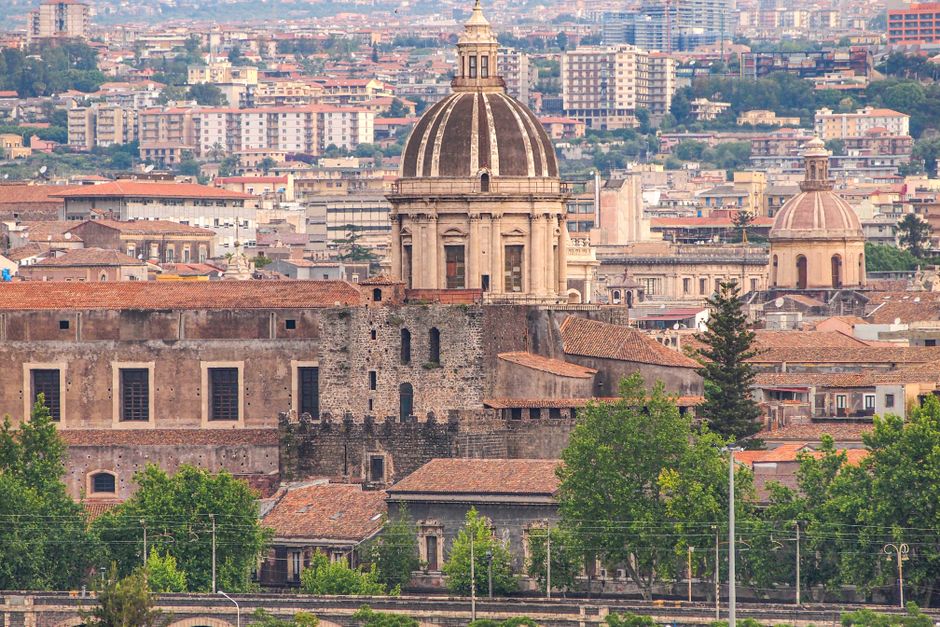
Catania is Sicily’s second city and its most energetic: a port of black lava-stone churches and palaces at the foot of Mount Etna, rebuilt in grand baroque style after an eruption in 1669 and the earthquake of 1693, and now part of a UNESCO World Heritage Site with the other late-baroque towns of the Val di Noto. It is a place to live like a local rather than tick off monuments: coffee and granita on Via Etnea, the shouting and glistening swordfish of the fish market, a Roman theatre hidden among houses, a huge Benedictine monastery, and streets that fill with students and music after dark. It is also the easiest base in eastern Sicily, with the island’s busiest airport, trains to Taormina and Syracuse, and Etna’s craters about an hour away. The best months are April to June and September to October.
Right now in Catania
- Wed21–29°C69–83°F1 mm rain
- Thu21–29°C69–84°FPartly cloudy
- Fri21–30°C69–85°F8 mm rain
Top tours in Catania
See all tours for Catania →
From local operators, with prices and reviews; you check availability and book on Viator, our partner. We may earn a commission at no extra cost to you. How we earn money
Catania at a glance
- Best for: baroque architecture, street food and markets, nightlife, and day trips to Etna, Taormina and Syracuse.
- How long: 2 days for the city; 4–5 days as a base with Etna and one or two day trips.
- Best time: April–June and September–October. July and August are very hot; early February brings the feast of Sant’Agata.
- Book ahead: the guided tour of the Benedictine monastery, an authorised guide for Etna’s summit area, and hotels for the Sant’Agata festival.
- Getting in: Catania Fontanarossa airport (CTA) is a short ride from the centre on the Alibus, €4 as of October 2026; trains and buses link the city with the rest of Sicily.
- Before you go: entry rules, money, trains and general safety are on our Italy travel guide.
Catania’s neighbourhoods and who each one suits
The historic centre is compact and flat, laid out on a grid after 1693, with Via Etnea running straight north from the cathedral towards the volcano. Most of what you want to see is within a 20-minute walk.
Piazza Duomo and the fish market
The heart of the city: the cathedral of Sant’Agata, the town hall and the lava-stone elephant fountain, u Liotru, the city’s symbol. Just behind, down a flight of steps, the morning fish market, La Pescheria, spills into the lanes around Porta Uzeda, with trattorias that cook the catch. Best for: first-timers who want everything on the doorstep; it is noisy at night.
Via Etnea and Villa Bellini
The main shopping street runs past Piazza Università, the collegiate church and Piazza Stesicoro, with its sunken Roman amphitheatre, to the city’s favourite park, the Villa Bellini, with Etna framed at the end on clear days. Around it are cafés and pastry shops for granita and arancini. Best for: shopping, cafés and good transport links.
Via dei Crociferi and the old acropolis
West of Via Etnea, Via dei Crociferi is the city’s most beautiful baroque street, lined with churches and convents, climbing towards the Benedictine monastery on the hill where the Greek city once stood. Around Via Vittorio Emanuele and the Roman theatre, the lanes are full of students, bars and small restaurants. Best for: atmosphere, architecture and evenings out.
The seafront: Ognina and La Plaia
North of the port, the lava-rock coast runs past Ognina towards Aci Castello, with a seafront promenade and swimming platforms. South of the city, La Plaia is a long sandy beach lined with lidos. Best for: summer stays combining the city and the sea; you will use buses or a car.
Top things to see in Catania
Prices and hours below were checked on the official sites in October 2026, unless we say otherwise; check again before you go. Churches ask for covered shoulders and knees.
The cathedral and Piazza Duomo
The cathedral of Sant’Agata stands on Norman foundations, with a baroque façade by Giovanni Battista Vaccarini, the architect who shaped much of the rebuilt city. Inside are the tomb of the composer Vincenzo Bellini, born in Catania, and the chapel of Sant’Agata, whose relics are carried through the streets every February. Entry to the church is free. In the square, the elephant fountain carries an Egyptian obelisk; the Badia di Sant’Agata next door has a dome you can climb for views over the rooftops to Etna.
The Roman theatre and Odeon
Off Via Vittorio Emanuele, a Roman theatre built over a Greek one is wedged among later houses, with the smaller Odeon beside it; underground springs still flood the orchestra. As of October 2026 the Region of Sicily’s archaeological park of Catania lists tickets at €8 (€4 reduced) and opening hours of 9:00–19:00 every day of the year, last entry 18:30. The Roman amphitheatre in Piazza Stesicoro, partly visible from the street, is run with the city and costs €6 (€3 reduced); several smaller Roman baths in the centre are free.
The Benedictine monastery of San Nicolò l’Arena
One of the largest monasteries in Europe, rebuilt after the 1669 lava flow surrounded it, the monastery is now the humanities department of the University of Catania. You can walk into the student areas freely during university hours, but the best parts, the cloisters, Roman houses found beneath the floors, the novices’ garden, the 18th-century kitchens and the monumental staircase, are seen on guided tours run by the Officine Culturali association. As of October 2026 tours run every day from 10:00 to 17:00, in Italian and English, and you must book and buy the ticket online first. The huge church of San Nicolò next door is one of the largest in Sicily.
La Pescheria and the street food
Go in the morning, from Monday to Saturday, when fishmongers sing out prices over swordfish, tuna, sea urchins and anchovies. The fruit and vegetable market of Piazza Carlo Alberto, called ‘a Fera ‘o Luni, is just as lively. Catania’s street food is the best introduction to the city: arancini (here pointed like Etna and called arancino), cartocciate, horse-meat grills in the evening around Via Plebiscito, pasta alla Norma and almond or pistachio granita with a brioche.
More to see
- Castello Ursino: a 13th-century castle built by Frederick II, now the city museum; lava from 1669 pushed the coastline away from its walls.
- Palazzo Biscari: the most lavish private palace in the city, with a rococo ballroom; open for visits on set days.
- Teatro Massimo Bellini: the opera house named after the composer; see a performance or join a tour.
- Via dei Crociferi: a short street of baroque churches, best in the late afternoon light.
Other things to do in Catania
Walking the baroque city
A good half-day loop starts at Piazza Duomo, follows Via Vittorio Emanuele past the Roman theatre, climbs Via dei Crociferi to the monastery, returns along Via Etnea to Piazza Università and ends at the Villa Bellini. Look for the contrast of dark lava stone and pale limestone that gives Catania its look. See our city sightseeing guide.
Beaches and the Riviera dei Ciclopi
For sand, head south to La Plaia, a long beach of lidos and free stretches. For clear water and rocks, go north to Aci Castello, with its Norman castle on a lava headland, and Aci Trezza, where the basalt sea stacks of the Faraglioni dei Ciclopi stand in a marine protected area; legend says the blinded Cyclops threw them at Ulysses. The rocks are good for snorkeling and diving, and boats run trips along the coast in summer. See our beaches guide.
Evenings
Catania is a university city and stays up late. The lanes around Piazza Teatro Massimo, Via Gemmellaro and the Roman theatre fill with bars and young crowds, especially from Thursday to Saturday. Etna wines, reds from Nerello Mascalese and whites from Carricante, are on every list.
Day trips from Catania
Mount Etna
Europe’s highest active volcano rises straight behind the city. A daily bus runs from Catania to the Rifugio Sapienza on the south side, at about 1,900 m, where you can walk round the Silvestri craters on your own; from there a cable car climbs to about 2,500 m, with 4x4s and guided walks higher. The summit zone, roughly everything above 2,500 m, is open only with authorised alpine or volcanological guides under the mayors’ orders published by the Etna Park, and areas close at short notice during eruptions. Many tours from Catania combine the craters with a winery lunch on the slopes. Bring warm, windproof clothes even in summer. See our Sicily guide for the full rules, and our hiking and wine tasting guides.
Taormina
About 45 minutes by train to Taormina-Giardini station, then a bus or taxi up the hill, or about an hour and a quarter by direct bus from the airport. Visit the Ancient Theatre with Etna behind it and walk the Corso; see our Taormina guide.
Syracuse, Ortigia and the baroque towns
Syracuse is about 1 hour 15 by train or bus: the island of Ortigia and the Neapolis archaeological park make a full day. With a car, Noto, Modica and Ragusa are within two hours. Going west, Palermo is about two and a half to three hours by bus or car, better as an overnight stop.
Nearby destinations
- Taormina43 km
- Sicily95 km
- Aeolian Islands111 km
- Palermo166 km
- Gozo178 km
- St. Julian's184 km
- Valletta186 km
Getting there and getting around
From the airport
Catania Fontanarossa (CTA) is Sicily’s busiest airport, a few kilometres south of the centre, with flights from all over Italy and Europe. The city bus company AMTS runs the Alibus from the terminal to the central station and the city centre; as of October 2026 a ticket costs €4, valid for 90 minutes on all AMTS city lines, and you can pay on board in cash or by card, in the AMTS app or at ticket sellers. Ordinary city tickets are not valid on the Alibus. Taxis take about 15–20 minutes to the centre. Direct buses also run from the airport to Taormina, Syracuse and other towns.
Trains and long-distance buses
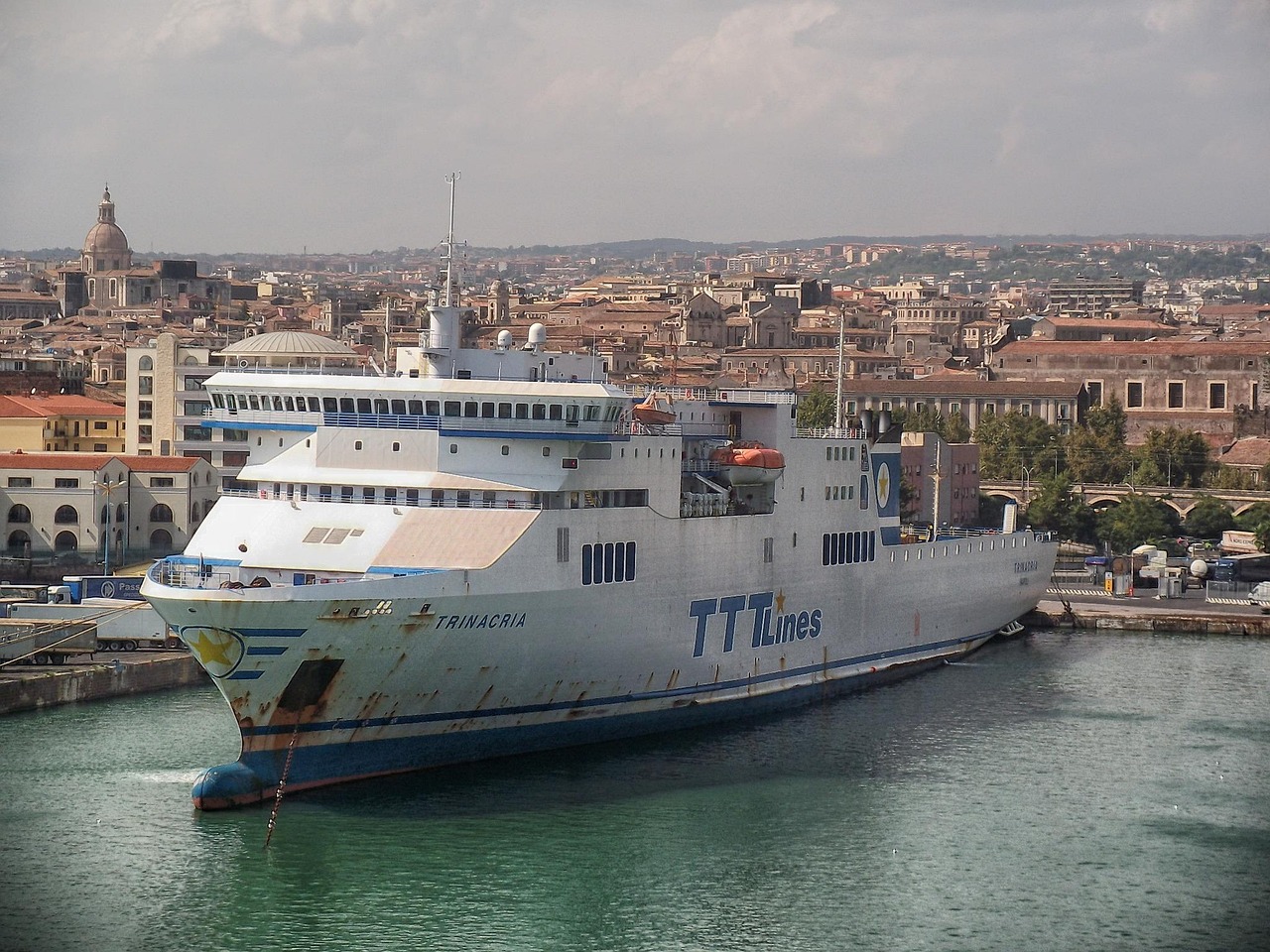
Catania Centrale, on the seafront east of the centre, has Trenitalia regional trains to Taormina-Giardini and Messina (about 45 minutes to Taormina) and to Syracuse (about 1 hour 15), and Intercity trains to the mainland, which cross the Strait of Messina on a ferry. Long-distance buses leave from the bus station near Catania Centrale for Palermo, Syracuse, Noto, Agrigento and Etna; they are often faster than trains between cities, but services drop on Sundays. Overnight ferries also link Catania’s port with Naples.
Getting around the city
The centre is easy on foot. A single metro line, run by the Ferrovia Circumetnea (FCE), runs from Stesicoro, at the top of the old centre, past the railway station area to the western suburbs; AMTS buses cover the rest, including the seafront and La Plaia in summer. The FCE also runs the old Circumetnea railway around the base of Etna, a slow, scenic ride through lava fields and villages; check its timetable, as parts of the line are sometimes served by buses.
Driving, the ZTL and parking
Do not drive in the historic centre: parts of it are pedestrian areas and limited-traffic zones (ZTL) with camera gates, and the traffic is chaotic. If you rent a car for Etna and the countryside, pick it up at the airport on the day you leave the city, or use a guarded car park and ask your hotel how to reach it. AMTS manages the city’s large car parks.
When to go and how long to stay
Catania is one of the warmest and sunniest cities in Italy, with long, hot, dry summers and mild winters. The table uses the WMO 1991–2020 climate normals of the Italian Air Force station at Catania Sigonella, on the plain about 15 km south-west of the city: average daily highs and lows, and days with at least 1 mm of rain. The city centre, by the sea, has milder nights than the figures show, especially in winter. Summer heatwaves often push past 40 °C.
| Season | Average high / low | Rainy days per month | What it’s like | Good for |
|---|---|---|---|---|
| Winter (Dec–Feb) | 16–17 °C / 5–7 °C | 6–8 | Mild, sunny spells, snow on Etna; the Sant’Agata festival in February | Sightseeing, markets, Etna in snow |
| Spring (Mar–May) | 19–26 °C / 6–12 °C | 3–6 | Warm and bright; almond and orange blossom inland | Walking, Etna hikes, day trips |
| Summer (Jun–Aug) | 31–35 °C / 17–20 °C | 1–2 | Very hot and dry; locals head to the beach | Beaches, evenings out, early-morning sightseeing |
| Autumn (Sep–Nov) | 31 °C falling to 21 °C / 18 °C falling to 10 °C | 5–6 | Warm sea in September and October; occasional heavy storms | Swimming, wine harvest on Etna, city breaks |
Spring and autumn are best for combining the city with Etna; in July and August, sightsee early, rest at midday and go out late like the Catanesi.
Events worth planning around
- 3–5 February: the feast of Sant’Agata, one of the biggest religious festivals in the world, with candle-bearing processions, giant wooden candelore and the saint’s silver reliquary pulled through the city day and night. Book well ahead.
- 17 August: a smaller summer feast of Sant’Agata.
- Season: opera and concerts at the Teatro Massimo Bellini, and summer events in the city’s courtyards and on Etna.
How long to stay: 1-, 2- and 4-day plans
1 day: the fish market in the morning, the cathedral and Piazza Duomo, the Roman theatre, a monastery tour, then Via dei Crociferi and Via Etnea to the Villa Bellini, with street food on the way.
2 days: add Castello Ursino, the Badia dome and an evening in the bar district, plus a swim at Aci Castello or Aci Trezza. 4 days: add a full day on Etna with a winery, and a day trip to Taormina or Syracuse.
Where to stay in Catania and the tourist tax
- Around Piazza Duomo and Via Vittorio Emanuele: central and atmospheric, close to everything; can be noisy.
- Via Etnea and Villa Bellini: elegant palazzi converted into hotels and B&Bs, near cafés and buses.
- Near the station: handy for early trains and buses; less charming.
- Aci Castello and Aci Trezza: seaside hotels a short drive or bus ride north.
Catania is good value compared with Taormina. The city charges a tourist tax (imposta di soggiorno) per person per night, for up to four nights, paid at your accommodation. Local reports give 2026 rates of €2 in hotels up to 3 stars, €3 in 4- and 5-star hotels and €1.50 in B&Bs and holiday flats; ask your hotel to confirm.
Practical tips for Catania
- Market hours: La Pescheria is a morning affair and closed on Sundays.
- Watch your things: keep bags closed in markets, on buses and in crowds, and do not leave anything visible in a parked car.
- Etna changes fast: check the current mayors’ orders and weather, and book authorised guides for the summit area.
- Volcanic ash: eruptions occasionally close the airport for a few hours; check your flight status on eruption days.
- Emergencies: call 112.
What to pack for Catania
Pack light, breathable clothes for the heat, a sun hat, sunglasses, high-factor sunscreen and a refillable bottle. Comfortable shoes with grip matter: lava-stone paving is slippery when wet or polished. A scarf or light shirt covers shoulders in churches. For Etna, add hiking shoes, long trousers and a warm, windproof jacket, as it can be 20 °C colder at the craters than in the city. For the coast, bring a swimsuit, water shoes for the lava rocks and a snorkel mask, and from November to March a light rain jacket.
Catania travel FAQ
Is Catania worth visiting?
Yes. It has a UNESCO-listed baroque centre, great street food and markets, a lively evening scene and the best position for Etna, Taormina and Syracuse, at lower prices than the resorts.
How do I get from Catania airport to the city centre?
By the AMTS Alibus to the central station and the centre: €4 as of October 2026, valid 90 minutes on city buses, payable on board. A taxi takes about 15–20 minutes.
How many days do you need in Catania?
Two days for the city itself, and four or five if you use it as a base for Etna, Taormina and Syracuse.
Can I visit Etna from Catania without a car?
Yes. A daily bus runs from Catania to the Rifugio Sapienza, and many guided tours pick up in the city. For anything above about 2,500 m you must go with authorised guides.
How much is the Roman theatre in Catania?
€8, or €4 reduced, as of October 2026, open every day 9:00–19:00 with last entry at 18:30. The Roman amphitheatre costs €6.
Can you visit the Benedictine monastery?
Yes. Student areas are open during university hours, and guided tours of the cloisters, kitchens and underground ruins run daily from 10:00 to 17:00, in Italian and English. Book online in advance.
When is the feast of Sant’Agata?
From 3 to 5 February, with processions day and night through the city, and a smaller feast on 17 August.
Is Catania or Taormina a better base?
Catania is cheaper, livelier and better connected; Taormina is prettier, calmer in the evening and closer to the beaches below it. Many travellers spend a couple of nights in each.
Are there beaches near Catania?
Yes: the long sandy beach of La Plaia south of the city, and lava-rock swimming spots at Ognina, Aci Castello and Aci Trezza to the north.
What food is Catania famous for?
Pasta alla Norma, pointed arancini, granita with brioche, fresh fish from La Pescheria, pistachios from nearby Bronte and Etna wines.
Plan your trip
Partner links: TravelerCenter may earn a commission if you book, at no extra cost to you.
🇮🇹 Useful Italian phrases for Catania
All 38 Italian phrases: restaurant, hotel, emergencies, romance (printable) →
Sources · last reviewed 4 October 2026
Researched and last reviewed on 4 October 2026. Roman theatre and amphitheatre prices and hours: the Region of Sicily’s archaeological park of Catania and the Valle dell’Aci; Benedictine monastery tours: Officine Culturali, which runs them; Alibus fare: AMTS Catania; Etna rules: the mayors’ orders published by the Etna Park, as on our Sicily page; climate: WMO 1991–2020 normals of the Italian Air Force station at Catania Sigonella. The City of Catania’s website could not be reached, so the tourist tax, the ZTL and Castello Ursino details come from secondary sources and are flagged for checking; train and bus times are typical. For entry rules, money and general safety, see our Italy travel guide.
Data: Weather: MET Norway (CC BY 4.0) · Sea temperature: NOAA CoastWatch · Rates: ECB · Costs: World Bank ICP and price levels · Wikidata (CC0)