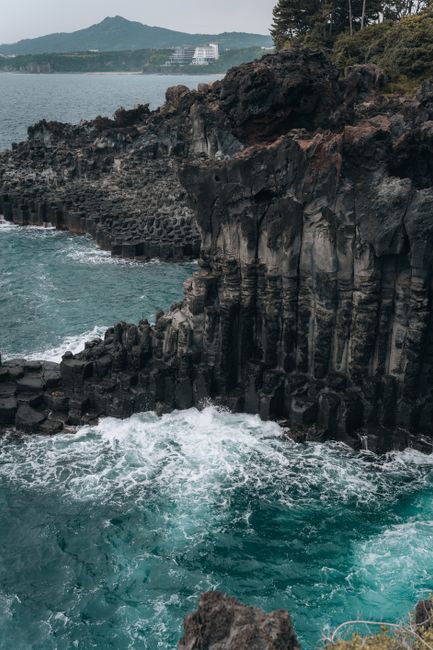
Jeju Island, off South Korea’s south coast, is a volcanic island of black lava rock, green tangerine groves and some 360 small volcanic cones (oreum), crowned by Hallasan, at 1,947 m (6,388 ft) the highest mountain in the country. Its volcanic landscapes, lava tubes and the crater of Seongsan Ilchulbong are a UNESCO World Natural Heritage site. Come to climb Hallasan, watch the sunrise from a crater, walk the coastal Jeju Olle trails, swim at white-sand beaches, see the waterfalls of Seogwipo, eat black pork and fresh seafood, and meet the haenyeo, the island’s women divers. Jeju is about an hour’s flight from Seoul or Busan. It is mild all year, but rainy in early summer and exposed to typhoons from July to September; spring and fall are the best seasons.
Right now in Jeju Island (Jeju City)
- Thu17–22°C63–72°FMostly clear
- Fri18–23°C65–73°FPartly cloudy
- Sat20–24°C67–75°F5 mm rain
- Fri 9 Oct Hangul Day (한글날)
Top tours in Jeju Island
See all tours for Jeju Island →
From local operators, with prices and reviews; you check availability and book on Viator, our partner. We may earn a commission at no extra cost to you. How we earn money
Jeju Island at a glance
- Best for: volcanic landscapes, hiking Hallasan and the oreum, coastal walks, beaches, waterfalls, cafés with sea views, seafood and black pork.
- How long: 3–4 days for the highlights; a week to walk part of the Olle trail and explore slowly.
- Best time: April to early June and September to November, with highs of about 18–26 °C (64–79 °F); beach season in July and August.
- Getting there: about 1 hour 10 minutes by air from Seoul’s Gimpo Airport, with flights every few minutes; also from Busan and other cities, direct from several Asian cities, and by ferry from the south coast.
- Getting around: a rental car is easiest; buses cover the whole island, and taxis start at 4,300 won.
- Entry rules: visa-exempt visitors need a K-ETA (or the temporary exemption) to fly in from abroad; citizens of most other countries can visit Jeju visa-free for up to 30 days if they arrive directly from abroad and stay on the island.
- Before you go: the K-ETA, the e-Arrival card, money and general safety are in our South Korea travel guide; see also our Busan and Seoul guides.
Jeju Island’s areas: where things are
Jeju is an oval about 73 km (45 miles) from east to west and 31 km (19 miles) from north to south, with Hallasan in the middle. A coastal road circles the island in about 3 to 4 hours of driving. The island is divided into two cities: Jeju City in the north and Seogwipo in the south, which is a little warmer.
Jeju City and the north
The capital and airport, with Dongmun Market, the old government office of Gwandeokjeong and the Yongduam dragon-head rock. Practical, with the most hotels and restaurants, but less scenic.
The west: Aewol, Hallim and Hyeopjae
The northwest coast is lined with cafés and sunset views around Aewol, and the beaches of Hyeopjae and Geumneung, with turquoise water facing Biyangdo island. Inland are the Hallim Park gardens and the O’sulloc tea fields. The Songaksan headland and the ports for Gapado and Marado islands are in the southwest.
Seogwipo and Jungmun
The south coast has the island’s waterfalls, the Jusangjeolli basalt columns, the Jungmun resort area with big hotels and Jungmun Saekdal beach, and Seogwipo’s harbor, Olle market and art street. The best base for the south and for Hallasan’s Yeongsil and Donnaeko trails.
The east: Seongsan, Udo and Hamdeok
Seongsan Ilchulbong rises from the sea at the eastern tip, with ferries to Udo island nearby. The northeast coast has Hamdeok and Woljeongri beaches, Gimnyeong’s lava fields and the Manjanggul lava tube area; inland are oreum such as Darangshi and Yongnuni.
Top things to see on Jeju Island
Hallasan
The shield volcano at the center of the island has a crater lake, Baengnokdam, at its summit, and its slopes change from subtropical forest to alpine shrubs. The Jeju provincial government’s Hallasan National Park office lists seven trails. Only two reach the summit, and both require a free online reservation for the upper section:
- Seongpanak: 9.6 km (6 miles) to the summit, about 4 hours 30 minutes one way; the gentlest route. Reservation needed from Jindallaebat shelter to the summit.
- Gwaneumsa: 8.7 km (5.4 miles), about 5 hours one way; steeper and more scenic. Reservation needed from Samgakbong to the summit. The upper section reopened on September 24, 2026, after construction work.
- Eorimok (6.8 km, 4.2 miles) and Yeongsil (5.8 km, 3.6 miles): no reservation needed; they lead to Witse-oreum (about 2 hours and 1.5 hours) and the Nambyeok junction below the summit cliffs. Yeongsil is the shortest route into the high mountain.
- Donnaeko (7 km, 4.3 miles, to the Nambyeok junction), and the short Eoseungsaengak (1.3 km, 0.8 miles, 30 minutes) and Seokguram (1.5 km, 0.9 miles, 50 minutes) walks.
Reservations open on the Hallasan reservation website at 9 a.m. on the first working day of the previous month (for example, May bookings open on April 1); you can book up to four people, once a week. There is no entry fee. Trails open at 5 a.m. from October to March, and each has a cut-off time at the shelters, after which you must turn back; trails close in heavy rain, snow, strong winds and weather warnings. Start early, carry water, warm layers and a rain jacket, and expect it to be much colder at the top. See our hiking guide.
Seongsan Ilchulbong
“Sunrise Peak,” a tuff cone that rose from the sea about 5,000 years ago, has a bowl-shaped crater 600 m (2,000 ft) across. A steep staircase leads to the rim in about 20 to 30 minutes. According to Visit Jeju, the provincial tourism site, the summit trail opens before dawn so you can watch the sunrise (as early as 5 a.m. in spring and fall), the summit section has an entry fee, and the site closes on the first Monday of every month.
Udo Island
A low island shaped like a lying cow, 15 minutes by ferry from Seongsan port, with white-sand and coral beaches, peanut ice cream and the Eight Sights of Udo. Explore by bus, bicycle or small electric car; visitors’ rental cars are restricted on the island. Ferries stop in rough seas.
Waterfalls and the south coast
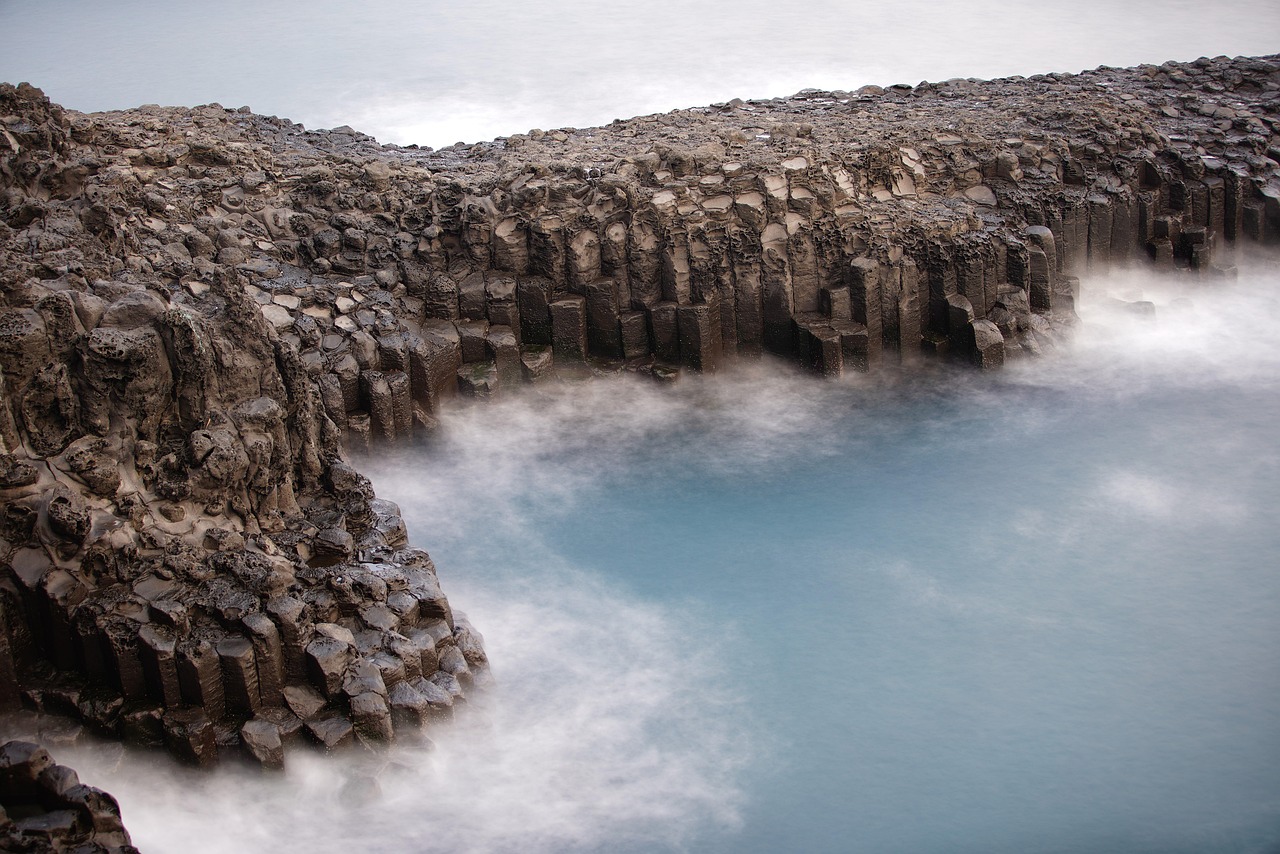
Jeongbang Waterfall falls straight into the sea; Cheonjiyeon Waterfall, in Seogwipo, is lit up in the evening; and Cheonjeyeon, near Jungmun, drops in three tiers. Along the coast west of Jungmun, the Jusangjeolli Cliff is a wall of hexagonal basalt columns formed when lava met the sea.
Lava tubes and oreum
The Geomunoreum lava tube system, part of the UNESCO site, includes Manjanggul, one of the longest lava tubes in the world; it has been closed for safety work in recent years, so check whether it has reopened before you go. Climb an oreum for the views: Saebyeol Oreum in the west (with a fire festival in spring) and Darangshi and Yongnuni in the east are short, steep walks with views to Hallasan and the sea.
More classic sights
- Jeju Olle Trail: 27 courses totaling 437 km (272 miles) around the island, according to the Korea Tourism Organization (KTO); course 7 along the cliffs west of Seogwipo is the classic day walk.
- Haenyeo Museum: the story of Jeju’s women free divers, whose culture is on UNESCO’s intangible heritage list.
- Jeju April 3rd Peace Park: a memorial to the victims of the 1948 Jeju uprising and its suppression.
- O’sulloc Tea Museum and the tea fields: green tea fields and cafés in the southwest.
- Gapado and Marado: flat islands off the southwest coast; Marado is Korea’s southernmost point.
Peaks and mountains
- Hallasan
- Seongsan Ilchulbong
Nature
- Cheonjiyeon Waterfall
- Daepo Jusangjeolli Cliff
- Jeongbang Waterfall
Beaches
- Hyeopjae Beach
Caves
- Manjanggul Cave
Museums
- Haenyeo Museum
Beaches, snorkeling and diving
Jeju’s beaches mix white sand, black basalt and clear water. Hyeopjae and Geumneung in the west, Hamdeok and Woljeongri in the northeast, and Pyoseon in the southeast are the best for swimming; Jungmun Saekdal is the surf beach. Beaches have lifeguards only during the official season in July and August. The water is coolest in spring and warmest from August to October.
Diving around Seogwipo’s Munseom, Beomseom and Seopseom islands, in a marine protected area, is among the best in Korea, with soft corals, kelp and fish; the best visibility is in late summer and fall. Snorkeling is good in calm weather at sheltered coves such as Hwangu-ji near Oedolgae. See our beaches, snorkeling, diving and surfing guides.
Activities and best months
- HikingHallasan's summit is reached on the Seongpanak (9.6 km, about 4 h 30 up) and Gwaneumsa (8.7 km, about 5 h) trails, which need a reservation for the summit section; Eorimok and Yeongsil are shorter trails to the crater wall; there is no entry fee.
Other things to do on Jeju Island
Food and drink
Jeju’s signature dish is heukdwaeji, black pork grilled at the table and dipped in anchovy sauce (meljeot). The island’s seafood includes galchi (hairtail, grilled or in a stew), okdom (tilefish), abalone porridge (jeonbok-juk), sea urchin seaweed soup and raw fish platters caught by the haenyeo. Try gogi-guksu (pork noodle soup) and bingtteok (buckwheat crepes). Jeju is famous for its citrus: gamgyul tangerines in winter and the large, sweet hallabong. Dongmun Market in Jeju City and the Maeil Olle Market in Seogwipo are the places for street food and night markets.
Culture and cafés
See stone grandfathers (dol hareubang), basalt walls and thatched farmhouses at the Seongeup Folk Village, and stop at the sea-view cafés of Aewol and Woljeongri.
Festivals
The Jeju Fire Festival on Saebyeol Oreum is held in early spring, canola flowers bloom from March to April along the coast near Seongsan and Sangumburi, and the Jeju Haenyeo Festival takes place in the fall. In 2026, the KTO’s forecast (from Weather i) put the first cherry blossoms on March 25, with full bloom from about April 1.
Day trips around the island
- The east: Seongsan Ilchulbong at sunrise, Udo by ferry, then Woljeongri beach and an oreum such as Darangshi.
- The south: the Seogwipo waterfalls, Olle course 7, Jusangjeolli and Jungmun.
- The west: Hyeopjae beach, Hallim Park, O’sulloc tea fields and Songaksan’s coastal walk.
- Hallasan: a full day for the summit, or a half day on the Yeongsil trail.
- Gapado and Marado: ferries from Moseulpo and Songaksan, best in calm weather.
- Busan: a one-hour flight away for a city break. See our Busan guide.
Getting there and getting around
By air
Jeju International Airport (CJU) is in Jeju City. The route from Seoul’s Gimpo is one of the busiest in the world, with Korean Air, Asiana, Jeju Air, Jin Air, T’way and others flying about 1 hour 10 minutes; there are also flights from Busan, Daegu, Gwangju, Cheongju and other cities, and direct international flights from several Asian cities. According to the KTO, Jeju Air resumed a direct Incheon–Jeju route in May 2026, on a limited schedule (two flights a week in summer 2026); check whether it is running, as most international arrivals still connect via Gimpo, about an hour by AREX from Incheon.
Entry rules for international arrivals
Visitors flying or sailing directly to Jeju from abroad go through immigration at Jeju. According to the Ministry of Justice, citizens of the visa-exempt countries need a K-ETA to board, as for the mainland (the K-ETA was extended to Jeju on September 1, 2022), unless they are covered by the temporary exemption for 22 countries, including the US, Canada, the UK and Australia, which runs until December 31, 2026. Jeju also has a visa-free program that lets citizens of most other countries stay up to 30 days without a visa if they arrive directly from abroad, but only on Jeju: they cannot travel on to the mainland.
By sea
According to the KTO, ferries sail to Jeju from Mokpo (about 4 to 4.5 hours), Wando (about 2 hours 40 minutes), Jindo (1.5 to 2 hours), Goheung’s Nokdong port (about 3.5 hours), and overnight from Samcheonpo and Incheon. Car ferries let you bring a vehicle; bring your passport for boarding.
From the airport
Airport limousine buses 600 and 601 run to Jungmun and Seogwipo from outside gate 5; according to the KTO, they take only transportation cards, not cash. City buses to Aewol, Hyeopjae, Pyoseon and Seongsan leave from gates 1, 2 and 4. Taxis take about 40 minutes to Aewol or Hamdeok, 50 minutes to Jungmun and 80 minutes to Seongsan.
Rental cars, buses and taxis
A rental car is the most practical way to explore; you need an International Driving Permit and your license, roads are good and parking is easy outside Jeju City, but speed cameras are everywhere. Jeju’s bus network covers the whole island with express red buses and slower local blue and green buses; pay with a T-money card. Taxis start at 4,300 won (about US$3.20), and you can hire a taxi with a driver for the day, including tourist taxis with English-speaking drivers booked through the 1330 helpline. Use Naver Map or Kakao Map for routes.
When to go and how long to stay
Jeju has a humid subtropical climate: milder winters than the mainland, warm and humid summers, and wind all year. The table uses the 1991–2020 normals of the Korea Meteorological Administration (KMA) for its Jeju City station, as submitted to the World Meteorological Organization: average daily highs and lows, total rain and days with at least 1 mm of rain.
| Month | Average high / low | Rain (days with 1 mm or more) | What to expect |
|---|---|---|---|
| January | 9 °C (47 °F) / 4 °C (39 °F) | 68 mm (2.7 in), 8 days | Mild by Korean standards but windy and gray; snow on Hallasan |
| February | 10 °C (50 °F) / 4 °C (39 °F) | 57 mm (2.3 in), 7 days | Tangerine season ends; camellias |
| March | 13 °C (56 °F) / 7 °C (44 °F) | 91 mm (3.6 in), 8 days | Canola flowers; cherry blossoms from the last week |
| April | 18 °C (64 °F) / 11 °C (51 °F) | 90 mm (3.5 in), 8 days | Mild and sunny; green tea harvest begins |
| May | 22 °C (72 °F) / 15 °C (59 °F) | 96 mm (3.8 in), 7 days | Warm and fresh; one of the best months |
| June | 25 °C (77 °F) / 19 °C (66 °F) | 171 mm (6.7 in), 9 days | Humid; jangma usually starts around June 19 |
| July | 29 °C (85 °F) / 24 °C (75 °F) | 210 mm (8.3 in), 9 days | Hot; jangma ends late in the month; beaches open |
| August | 30 °C (86 °F) / 25 °C (77 °F) | 272 mm (10.7 in), 10 days | The hottest month; typhoons possible |
| September | 26 °C (79 °F) / 21 °C (70 °F) | 228 mm (9.0 in), 8 days | Warm sea; typhoons possible |
| October | 22 °C (71 °F) / 16 °C (60 °F) | 95 mm (3.7 in), 5 days | Clear and mild; silver grass on the oreum |
| November | 16 °C (62 °F) / 10 °C (51 °F) | 70 mm (2.7 in), 7 days | Fall colors on Hallasan; tangerine harvest begins |
| December | 11 °C (52 °F) / 6 °C (42 °F) | 56 mm (2.2 in), 8 days | Cool and windy; snow on the summit |
Jeju City gets about 1,500 mm (59 in) of rain a year; the south coast is wetter, with about 1,990 mm (78 in) at Seogwipo, where winter highs reach 11 °C (51 °F). According to the KMA, the jangma monsoon normally begins on Jeju around June 19, earlier than anywhere else in Korea, and lasts about 32 days. Typhoons, most likely from July to September, often pass close to Jeju and can cancel flights and ferries for a day or two. Hallasan is far colder than the coast, with snow from about December to March.
Weather month by month
Fall colors: the KTO’s 2026 forecast (from Weather i) put Hallasan’s first fall colors around October 31, with the peak around November 13.
4 days on Jeju Island
Day one, Jeju City’s Dongmun Market and the west coast: Aewol, Hyeopjae beach and sunset at Geumneung. Day two, Hallasan by the Yeongsil trail or, with a reservation, the summit from Seongpanak. Day three, the south: Jusangjeolli, Cheonjeyeon, Jungmun and the Seogwipo waterfalls, with dinner at the Olle market. Day four, sunrise at Seongsan Ilchulbong, Udo by ferry and Woljeongri beach.
A week on Jeju
Add a day walking an Olle course, a day for Gapado or Marado, and time for the oreum, the tea fields and the lava tubes.
Where to stay on Jeju Island
- Jeju City: the widest choice and the airport; good for short stays and nightlife.
- Jungmun: resort hotels by the sea and golf, best for families and beach holidays.
- Seogwipo: a friendly harbor town close to waterfalls, the Olle trail and Hallasan’s southern trails.
- Aewol and the west coast: boutique stays and cafés with sunset views.
- Seongsan and the east: guesthouses and pensions for the sunrise and Udo.
Many visitors split their stay between the north or west and the south or east to cut driving time. Prices rise in July and August and on holiday weekends.
What a trip to Jeju Island costs
Prices are approximate, for October 2026, converted at about 1,365 won to the US dollar.
| Item | Typical cost |
|---|---|
| Flight, Seoul (Gimpo) to Jeju, one way, booked ahead | 40,000–100,000 won (about US$29–73) |
| Rental car per day, small car | 40,000–90,000 won (about US$29–66) |
| Bus ride with T-money | about 1,200–3,000 won (about US$0.90–2.20) |
| Taxi, base fare | 4,300 won (about US$3.20) |
| Hallasan entry | free (reservation needed for the summit) |
| Black pork barbecue, per person | 25,000–40,000 won (about US$18–29) |
| Abalone porridge or galchi stew | 15,000–35,000 won (about US$11–26) |
| Mid-range hotel double, per night | 100,000–200,000 won (about US$73–147) |
| Resort hotel in Jungmun | 250,000 won and up (about US$183 and up) |
Practical tips for Jeju Island
- Book Hallasan early: the summit reservations for fall weekends go fast.
- Check the wind: ferries to Udo, Gapado and Marado stop in rough seas; plan island trips with a spare day.
- Driving: fill up and charge before crossing the mountain roads, which can be icy in winter.
- Monday closures: Seongsan Ilchulbong closes on the first Monday of the month; many museums close on Mondays.
- Help in English: call the 1330 Korea Travel Helpline.
Safety
Jeju is very safe, and most risks are natural. Typhoons, mainly from July to September, can bring violent winds and huge waves; stay off seawalls and coastal paths when warnings are issued, and keep your plans flexible, as flights and ferries are canceled. On Hallasan, weather changes fast: obey the trail cut-off times and closures, and don’t go off the trail. At the coast, basalt rocks are sharp and slippery, currents can be strong, and you should swim only on lifeguarded beaches in season. Jellyfish can appear in late summer. In an emergency, call 112 for the police or 119 for an ambulance or fire.
What to pack for Jeju Island
Hiking shoes and layers for Hallasan, where it can be 10 °C (18 °F) colder than the coast, a windproof rain jacket, swimwear and water shoes for the rocky shore, sunscreen, and a warm jacket from November to March. Korea uses 220 V and round two-pin plugs.
What to pack
- Day packs and anti-theft bagsA 20–30 litre pack carries layers, water, a head torch and snacks on full-day levada walks.
- Fleeces and warm layersSummits like Pico do Areeiro averaged about 11 °C over 2024, so a fleece is needed even in summer.
- HeadlampsLevada routes such as PR1 and PR9 pass through long, dark, wet tunnels.
- Hiking shoes and bootsMadeira's levadas and the Azores' crater rims are wet, rocky and slippery, so grippy shoes matter more than anywhere else in Portugal.
- Rain jacketsMountain and island weather changes fast; a real shell beats an umbrella in the wind.
- Trekking polesLong stone staircases and steep descents on Madeira's peaks and the Azores' crater rims are easier on the knees with poles.
- Water bottles and hydration packsAlgarve and Alentejo trails are hot and exposed with few refill points.
Jeju Island travel FAQ
Do I need a visa or K-ETA to visit Jeju?
Visa-exempt visitors flying in from abroad need a K-ETA, unless their country is on the temporary exemption list until December 31, 2026. Citizens of most other countries can stay on Jeju visa-free for up to 30 days if they arrive directly from abroad.
Do I need a reservation to climb Hallasan?
Yes, for the summit. The Seongpanak and Gwaneumsa trails need a free online booking for the upper sections; Eorimok and Yeongsil need none.
How long does it take to climb Hallasan?
About 4.5 hours up by Seongpanak or 5 hours by Gwaneumsa, so 8 to 9 hours for the round trip. The Yeongsil trail to Witse-oreum takes about 1.5 hours.
When is the best time to visit Jeju?
April to early June and September to November; July and August are best for beaches but humid and busy.
When is the rainy season on Jeju?
The jangma usually begins around June 19 and lasts about a month; typhoons are possible from July to September.
Do I need a car on Jeju?
It is the easiest way to explore, but buses reach all the main sights, and taxis can be hired for the day.
How do I get to Jeju from Seoul?
Fly from Gimpo in about 1 hour 10 minutes; flights leave every few minutes. Ferries from the south coast are an alternative.
Is Seongsan Ilchulbong open every day?
No. It closes on the first Monday of each month and opens before dawn for the sunrise on other days.
Can I swim on Jeju in October?
Yes, on calm days the sea is still warm, but the beaches no longer have lifeguards after the summer season.
What should I eat on Jeju?
Grilled black pork, galchi (hairtail), abalone porridge, gogi-guksu noodles and hallabong citrus.
Plan your trip
Partner links: TravelerCenter may earn a commission if you book, at no extra cost to you.
🇰🇷 Useful Korean phrases for Jeju Island
All 38 Korean phrases: restaurant, hotel, emergencies, romance (printable) →
Sources · last reviewed 4 October 2026
Researched and last reviewed on 4 October 2026. Hallasan trails, distances, times, reservations, opening times and fees, and the Gwaneumsa reopening: the Hallasan National Park office of the Jeju Special Self-Governing Province; Seongsan Ilchulbong hours and closures: Visit Jeju; K-ETA rules and K-ETA on Jeju: the Ministry of Justice’s K-ETA website; the Olle trail, ferries, airport buses, taxis, the Incheon–Jeju route and the 2026 cherry blossom and fall foliage forecasts (from Weather i): the Korea Tourism Organization (KTO); climate normals and jangma dates: the Korea Meteorological Administration (KMA), via the World Meteorological Organization; exchange rate: the US Federal Reserve. The Jeju visa-free program details, Manjanggul’s status, the Seongsan fee, island dimensions, beach seasons, festival dates, ferry times and typical prices are general references or estimates, flagged for checking. Rules and prices change, so check the official sites before you go. For entry rules, money and general safety, see our South Korea travel guide.
Also: jeju.go.kr · KMA normals 1991–2020, Jeju (Jeju City) (climate)
Data: Weather: MET Norway (CC BY 4.0) · Sea temperature: NOAA CoastWatch · Rates: ECB · Holidays: Nager.Date · Costs: World Bank ICP and price levels · © OpenStreetMap contributors (ODBL) · Wikidata (CC0)